Plums become a filling for dumplings, a base for meat sauces, and even help balance the flavor of richer dishes.
Read more Beer during lunch break: can the employee afford it?
What distinguishes the plum varieties currently available in stores and offers a look at how this seasonal fruit is prepared in other world cuisines, according to a press release.
“At the beginning of August, plums reach their harvest peak – at this time their supply is the greatest, and the fruits have the best flavor qualities. Therefore, it is now that we can offer buyers a more diverse selection of different plum varieties. Currently, they arrive in our stores from Spain and Moldova – regions where it is now plum harvest time. By cooperating with growers from different countries, we can select fresh, high-quality plums and also ensure that buyers can purchase them cheaper during the season,” says Gintarė Kitovė, communications manager at “Iki”.
Blue, red, or yellow – which plum to choose?
Currently, the “Iki” fruit and vegetable department offers several different plum varieties. The “Lepotica Stanley” from Moldova is one of the most popular plum varieties in the world. They are easy to recognize by their blue color and elongated shape. The yellowish-green flesh is juicy, sweet, but also has a mild tartness.
“Lepotica Stanley” plums are considered very versatile – they can be eaten fresh, dried, used for desserts, cooked into jams or compotes, and preserved. This variety also retains its qualities well during transport, so it is widely spread in various countries around the world,” says Jolanta Sabaitienė, an employee of the fruit and vegetable department of the retail chain.
According to her, the “Fortuna” from Spain looks quite different. These are Japanese-type plums, distinguished by their large size, round shape, and dark red skin. Their flesh is light orange or yellow, juicy, firm, and has a delicate texture. The taste is sweet but milder than some other red plums. The “Fortuna” grown in the Murcia region of Spain ripens around mid-July. They can be eaten fresh, used for desserts and salads, and can also add a special flavor to meat or fish baked in the oven.
“Another Japanese-type variety grown in Spain is the yellow ‘Golden Globe.’ These plums ripen about a week later than ‘Fortuna,’ their flesh is firm, and the taste is sweet, juicy, and gently reminiscent of honey. Therefore, they are especially suitable for eating fresh or using in desserts. Additionally, ‘Golden Globe’ stores well,” says J. Sabaitienė.
Read more Paradox: queues in kindergartens have disappeared, but the reasons are not encouraging
Plum, potatoes, and breadcrumbs – a combination that can surprise
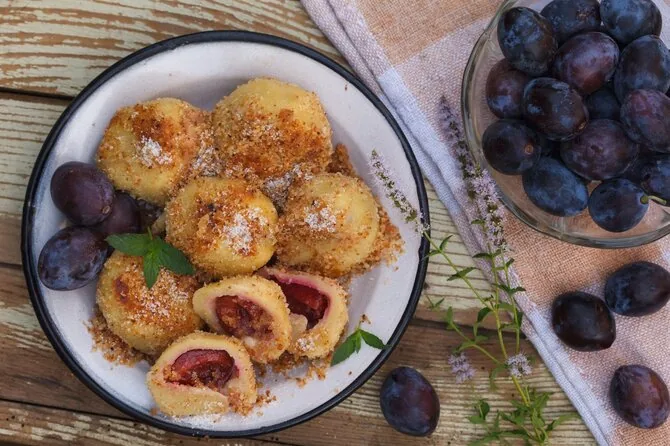
In Moldova, as in other Central and Eastern European countries, găluște cu prune – plum dumplings – are popular. They are usually made from boiled potatoes and flour dough, with a fresh plum placed inside. However, in different recipes, the dough is also made without potatoes – for example, from flour, water, and eggs.
“The cooked dumplings are rolled in breadcrumbs toasted in butter, often flavored with sugar and cinnamon. This dish is especially suitable for well-ripened, sweet but slightly tart plums – when thermally processed, they soften, and their juices and flavor remain inside the dough. So this can be a way to use the ‘Lepotica Stanley’ plums arriving from Moldova, whose sweetness is complemented by a gentle tartness,” says chef Jolita Tamoševičienė.
In Spain, plums are combined with pork
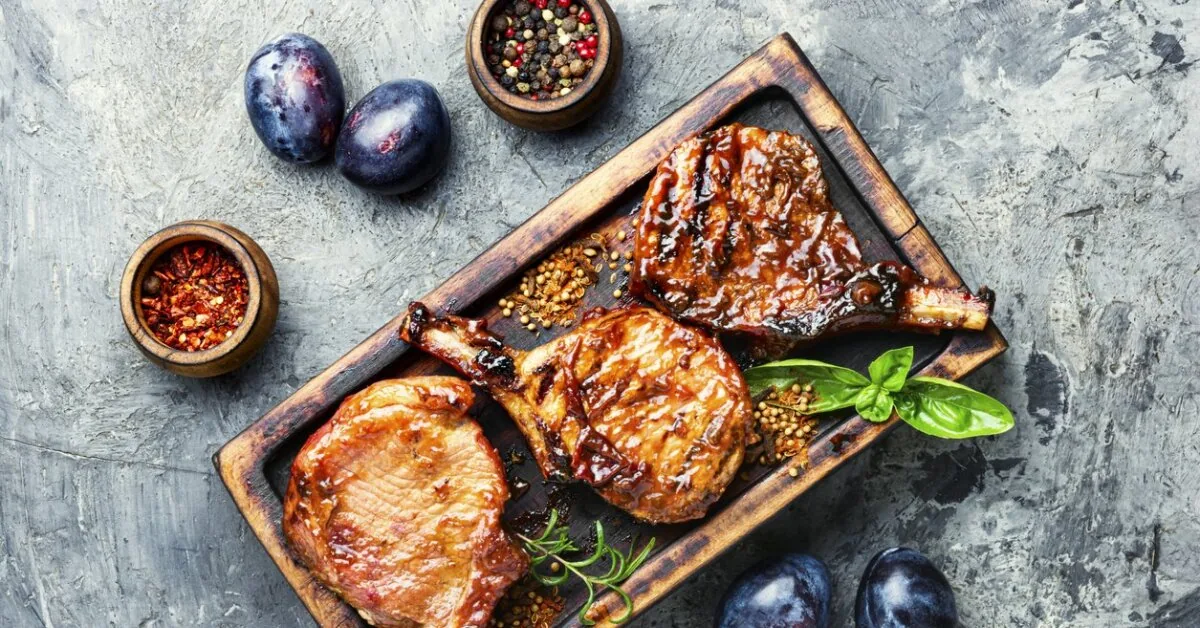
Another unexpected way to use plums can be found in Spanish cuisine. Here, they are used not only for sweet dishes – one example is lomo de cerdo en salsa de ciruela, or pork loin in plum sauce. When preparing this dish, plums become the base of the sauce and give the meat a sweet and sour flavor.
“Plums go well with pork because their sweetness and tartness help balance the richer flavor of the meat. Heated plums soften, their flavor becomes more intense, so a thick sauce can be made from them. In Spain, there are various versions of this dish – plums are combined with thyme, non-alcoholic wine, garlic, and other spices. In summer, this combination can also be adapted for grilling – grilling the pork loin and preparing the plum sauce separately,” says J. Tamoševičienė.
For those who want to try plums not only in traditional desserts, J. Tamoševičienė shares two recipes – the popular plum dumplings from Moldova and Spanish pork loin in plum sauce.
Read more 14 people died in India during a temple stampede and hotel fire
Plum dumplings with cinnamon
Ingredients:
- 500 g flour,
- 15 plums,
- 50 ml oil,
- a pinch of salt,
- 2 eggs,
- 100 g butter,
- 500 ml water,
- 40 g breadcrumbs,
- 20 g cinnamon,
- 200 g sugar.
Preparation:
- Wash the plums, cut them lengthwise, and carefully remove the pits without separating the plum halves. Place the plums in a bowl, sprinkle with some sugar and cinnamon.
- In a pot, bring 500 ml of water to a boil with oil and a pinch of salt. When the water boils, add the flour and stir constantly to prevent the mixture from sticking to the pot edges. When the dough becomes uniform, let it cool slightly. Then add the eggs one at a time, mixing well each time.
- Divide the prepared dough into three parts. Shape each part by hand into an elongated roll and cut into five equal pieces. With slightly moistened hands, flatten each dough piece, place a plum in the center, and wrap it with dough to form a dumpling.
- Bring water to a boil in a pot and cook the dumplings over medium heat for about 10 minutes.
- Toast the breadcrumbs in a pan and mix them with the remaining sugar and cinnamon from the plums. Roll the cooked plum dumplings first in melted butter, then in the toasted breadcrumbs.
- The dumplings can be served warm or cooled – alone or with sour cream and jam.
Grilled pork tenderloin with fresh plum sauce
Ingredients:
- 700 g pork tenderloin,
- 450 g fresh plums,
- 1 small onion,
- 3 tbsp olive oil,
- 120 ml non-alcoholic white wine,
- 60 ml water,
- 1 sprig fresh rosemary,
- salt and black pepper to taste.
Preparation:
- Cut the pork tenderloin into two similar-sized pieces, drizzle with some olive oil, season with salt and pepper, and let rest for about 30 minutes. Cut the plums in half, remove the pits, and slice them; finely chop the onion.
- Place the pork on a well-heated grill and sear on all sides. Then move to a lower heat zone and cook, turning occasionally, until the meat is done. Remove from the grill and let rest for about 5 minutes.
- While the meat cooks, heat the remaining olive oil in a pan, add the onion, and cook for about 3 minutes. Add the plums and cook for another 2 minutes. Pour in the non-alcoholic white wine and water, add the rosemary sprig, and simmer until the plums soften.
- Remove the rosemary sprig from the sauce, then blend the remaining plums with the liquid until smooth. For a completely smooth sauce, strain it through a sieve. Serve with sliced pork.