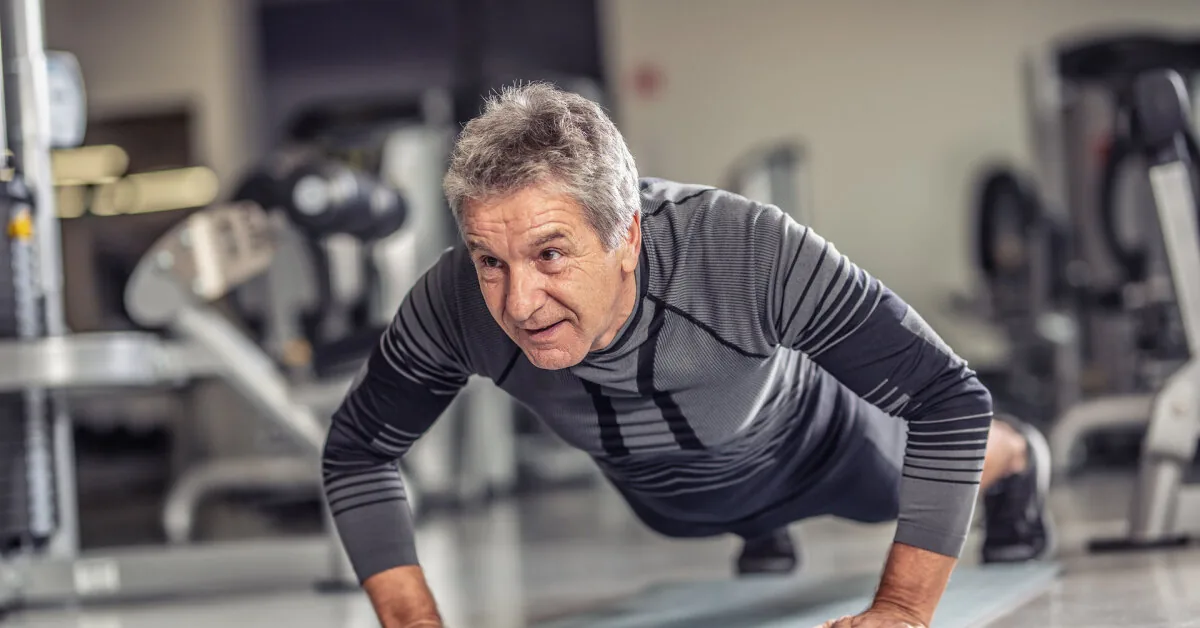
Climbing stairs becomes harder, shopping bags feel heavier, and getting up from the floor requires more effort than before.
Medically, this gradual decrease in muscle mass, strength, and function is called sarcopenia. It is directly related to mobility, balance, and the ability to remain independent as one ages. In the long run, sarcopenia also increases the risk of falls and bone fractures.
Muscle mass decreases in all people as they age, but studies show that this process occurs slightly faster in men, especially after the age of 75.
One of the most important reasons is decreasing testosterone levels, as this hormone directly contributes to maintaining muscle mass and strength.
“Muscles are closely related to strength, balance, metabolism, and overall independence. When they are lost, daily activities – standing up from a chair, carrying groceries, or avoiding a fall – become more difficult,” says family doctor Timothy Duerler.
One of the most reliable ways to slow down this process and even regain some lost muscle is strength training.
“Strength training not only slows down muscle loss but can also reverse it,” says sports medicine doctor Connie Oh.
Read more Tragedy in Australia: diver attacked by shark died
Full-body workout after 50
This program was created by certified personal trainer Eric North. It is designed to strengthen the most important muscle groups involved in daily activities:
- leg and gluteal muscles, necessary for standing, walking, and climbing stairs;
- back and core (torso) muscles, which are important for posture and balance;
- chest, shoulder, and arm muscles, which help push, pull, and carry objects.
“It is especially important to strengthen the quadriceps, hip stabilizers, hip flexors, and core. They are essential for daily activities and good balance,” emphasizes Dr. C. Oh.
Is this workout suitable for everyone?
For most men over 50, this full-body program is safe if started gradually and with a strong focus on correct technique.
However, before starting to exercise, it is recommended to consult a doctor or physiotherapist if:
- you suffer from heart disease;
- you have experienced back, knee, or shoulder injuries;
- you have balance disorders;
- you have fallen;
- you suffer from uncontrolled hypertension or diabetes.
How often to train?
It is recommended to perform each exercise for 2–3 sets, with 8–12 repetitions. The plank should be held for 30–60 seconds. Start with a weight that suits you and gradually increase the load.
1. Goblet Squat
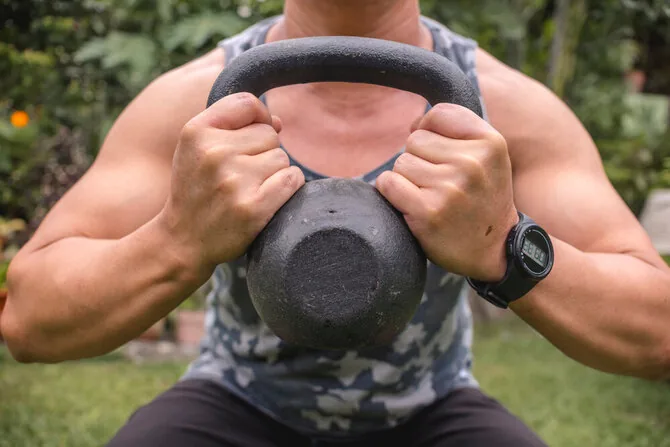
- Stand with your feet shoulder-width apart.
- Hold one dumbbell to your chest with both hands.
- Push your hips back.
- Bend your knees and lower yourself as if sitting on a chair.
- Keep your chest up, back straight.
- Your heels should remain on the floor.
- Stand up, returning to the starting position.
Beginners can hold onto a chair or railing with one hand.
2. Push-ups
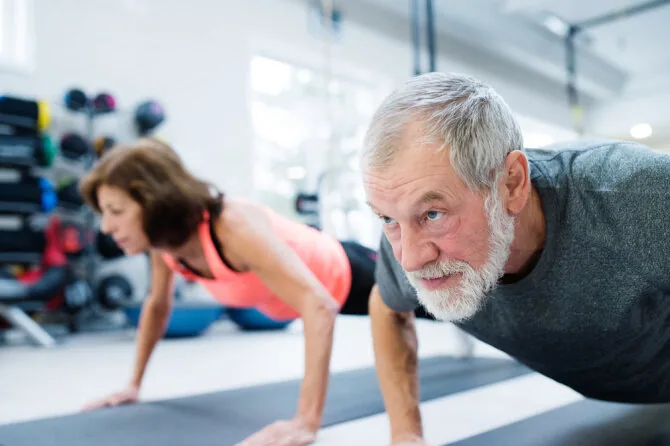
- Place your hands on the floor.
- Your palms should be slightly wider than shoulder-width apart.
- Your body should form a straight line from head to heels.
- Slowly lower your chest.
- Your elbows should be at approximately a 45-degree angle from your torso.
- Push up, returning to the starting position.
If push-ups from the floor are too difficult, perform them by leaning against a bench or countertop.
Read more Minister: many «Auksis» apple trees froze, large areas will need to be replanted
3. One-Arm Dumbbell Row
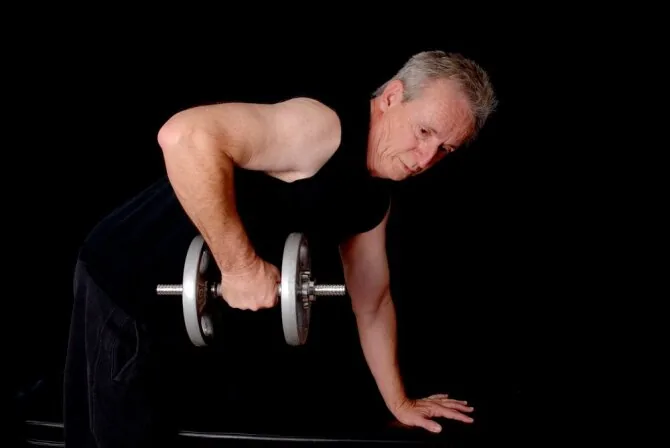
- Stand next to a bench.
- Place your left hand and left knee on the bench.
- Hold a dumbbell in your right hand.
- Pull the dumbbell towards your hip, keeping your elbow close to your body.
- Squeeze your shoulder blade at the top.
- Slowly lower it.
Perform all repetitions with one arm, then switch sides.
4. Romanian Deadlift
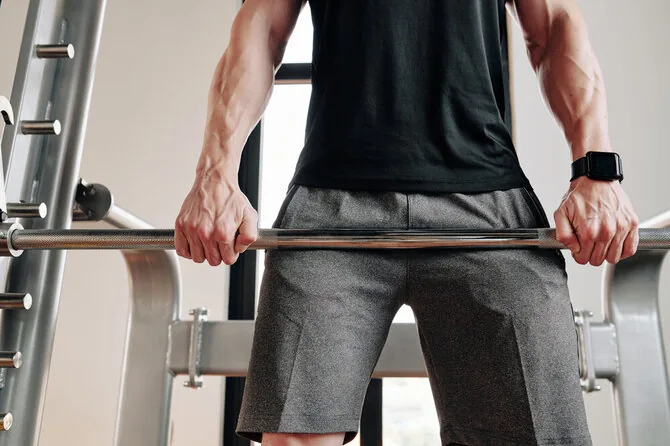
- Stand with your feet hip-width apart.
- Hold a dumbbell in each hand.
- Push your hips back.
- Lower the dumbbells down along your legs.
- Your back should remain straight.
- Once you feel a stretch in the back of your thighs, return to the starting position by squeezing your glutes.
Keep your knees slightly bent throughout the exercise.
5. Forearm Plank
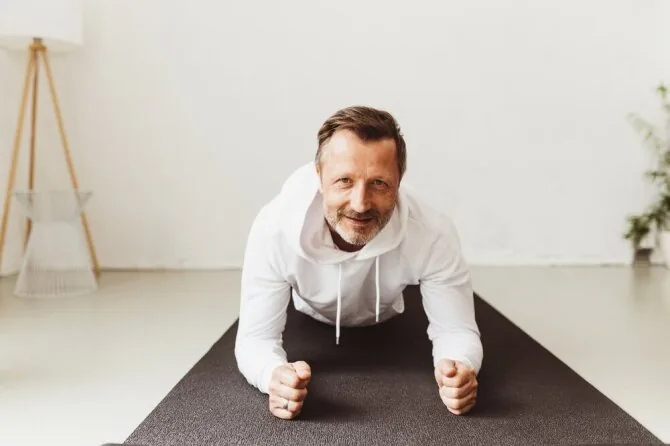
- Rest your forearms on the floor.
- Your elbows should be directly under your shoulders.
- Extend your legs back.
- Tighten your abdominal muscles.
- Your body should form a straight line from head to heels.
- Hold the position for 30–60 seconds.
If it’s too difficult, you can rest on your knees or perform the exercise by leaning against a bench.