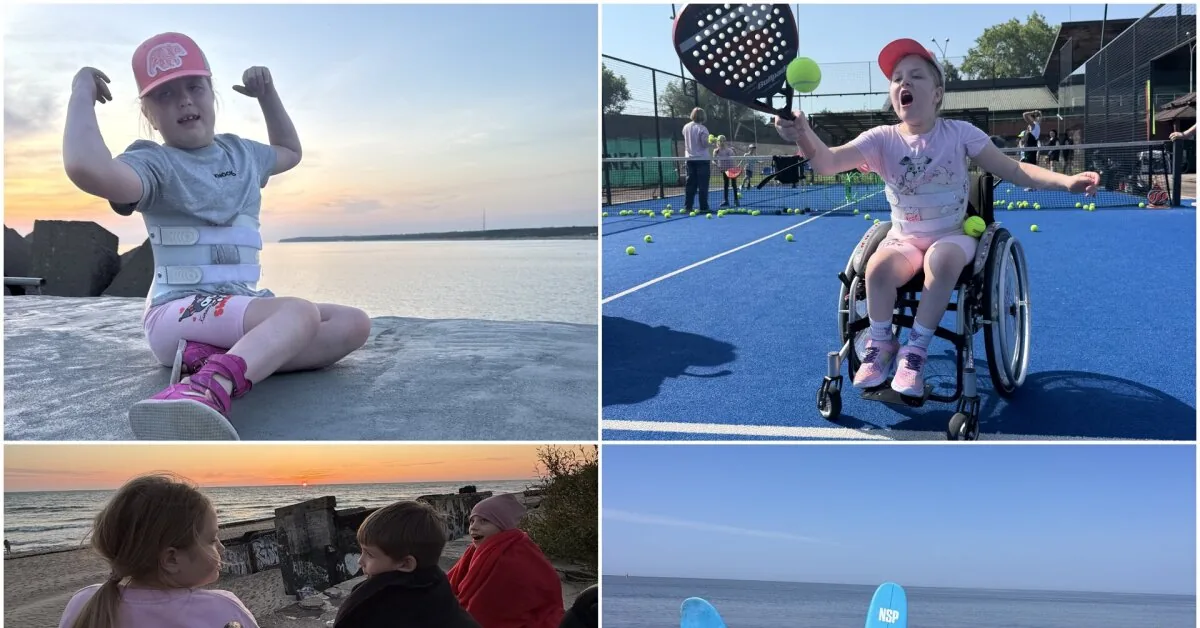
“In the beginning, the hardest part was feeling completely alone,” recalls Aistė, the mother of now eight-year-old Morta. When the girl was only three months old, the family heard about a disease whose name they had never heard before. Morta was diagnosed with the rare genetic Pompe disease, becoming the first such patient in Lithuania.
But today Aistė says they no longer feel alone. A few years ago, the community of the “EIK” club became a place where there is no need to explain why a child moves differently, and every victory, even the smallest, is understood and celebrated together. That is why, according to Morta’s parents, such communities help not only children but the whole family.
A disease almost unheard of in Lithuania
The parents remember that the search for a diagnosis began after a lung X-ray showed a significantly enlarged heart of the then 3-month-old baby. Soon the family was at Santaros Clinics. At that time, doctors even considered the possibility of a heart transplant. “Morta’s heart was four times larger than it should have been and practically no longer functioning. Our lives turned upside down in a few days,” she says.
While doctors searched for answers, genetic tests were performed on Morta. They confirmed a rare diagnosis – the infantile form of Pompe disease. This genetic disease means the body does not produce the enzyme that breaks down glycogen. As a result, it accumulates in muscle cells and gradually weakens all the muscles in the body, especially the heart.
“Morta was the first such patient in Lithuania. Therefore, doctors also had to go a long way – not only to diagnose the disease but also to ensure that the necessary enzyme could be brought to Lithuania, which allowed Morta to live,” says father Skomantas.
Enzyme replacement therapy was started when Morta was 5 months old. This treatment continues to this day.
Every week planned in advance
Although the treatment helped save their daughter’s life, it became an inseparable part of the family’s daily routine. For many years, Morta spent about seven hours every week in the hospital – the duration of the enzyme infusion (intravenous drip). Only recently did the family get the opportunity to use a newer preparation, so the procedures now take place every two weeks.
“Life follows a weekly rhythm. We plan everything according to the treatment,” says Aistė. But enzyme therapy alone is not enough.
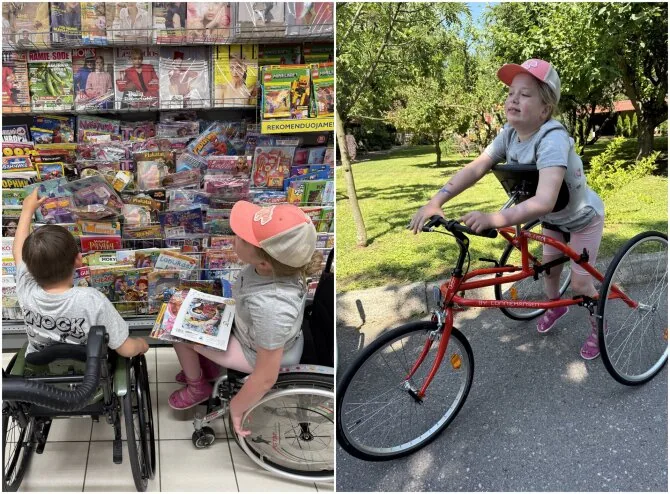
“Since the disease weakens all muscles, a lot of physiotherapy, various exercises, and constant work are needed. It becomes part of everyday life,” adds Skomantas. Despite the disease, today eight-year-old Morta attends a general education school together with her twin brother Jogaila.
“She goes to a regular class, she likes school. Of course, there are sometimes social challenges because children are very active, but she is eager to learn,” says the father. According to the parents, after classes Morta attends piano lessons, likes to draw, play LEGO, and participates in concerts. Still, a large part of the day is taken up by various therapies and exercises.
“She can stand briefly only when leaning. The walker is not an everyday tool – more of a trainer. She usually moves in a wheelchair. Earlier, a special tricycle helped a lot, but now she has outgrown it,” says the mother.
A place where you don’t have to explain why you are different
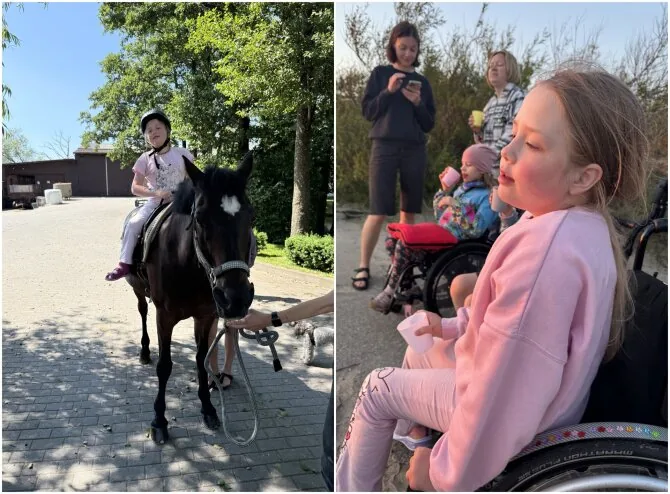
A few years ago, the family discovered the “EIK” club, which organizes activities for children with movement difficulties.
“We were looking for activities online. We met the club leader Vida. At that time, there was no suitable tricycle for her to exercise with, but after a few years she called and said she already had one suitable for Morta. That’s how it all started,” recalls Aistė. Later, more activities appeared – camps, therapeutic sessions, “Frame Running” training.
Read more Champion evaluated Žalgiris’ newcomer from Nigeria: «A logical and interesting move»
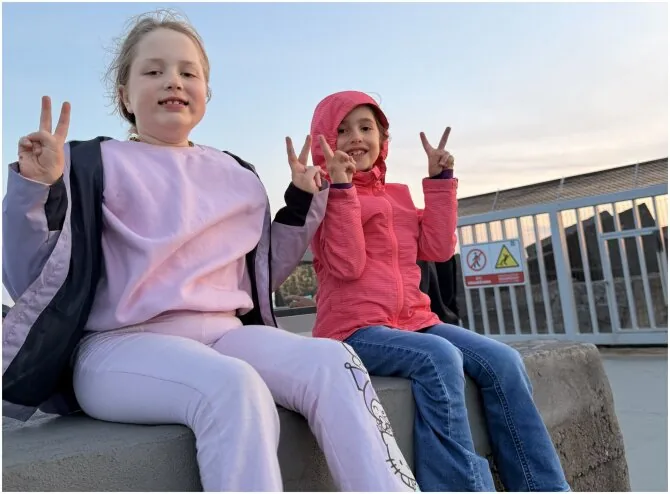
In mid-July, Morta spent time in Klaipėda with other children from the “Eik” center, where a surfing camp was held. Experienced coaches gave children with disabilities the opportunity to try this water sport.
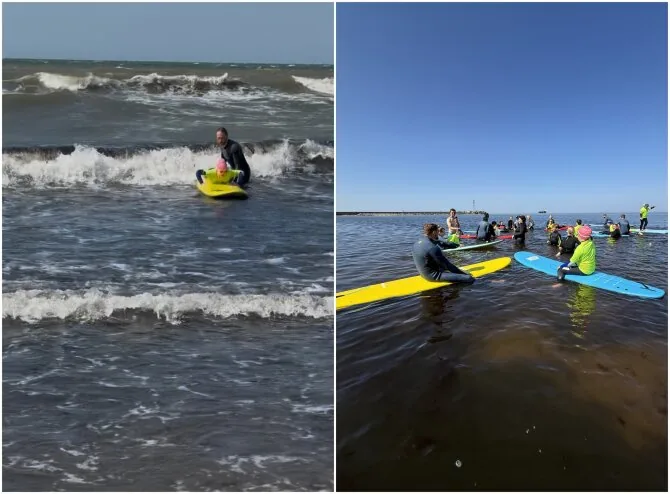
According to the girl’s father, water is a special place for Morta. “Since she was 2 years old, we took her to the pool. Over the years, pools and coaches changed, and Morta’s diving skills keep improving. In the water, she can move much more independently, so she looks forward to camps with water activities the most,” smiles the girl’s father Skomantas.
The parents say the greatest value of such camps is not only physical activity. “Different movement at school still somewhat isolates. It seems that children accept it, but since Morta does not walk, she cannot always participate everywhere. But here everyone moves in their own way. That different movement becomes completely normal, and you no longer feel different,” says Aistė.
There were not enough people in the same situation
Aistė admits that at first the biggest difficulty was the feeling of loneliness: “Since Morta was the first such child in Lithuania, there were no other families with whom we could share experiences. There was no one to lean on.” That is why the community became so important.
“Although all children’s stories are different, here you don’t feel alone. Children accept each other, make friends. And you realize that even if the diseases are different, the feelings and daily challenges are very similar,” said the girl’s mother.
“Everyone can move, you just need to create opportunities for it”
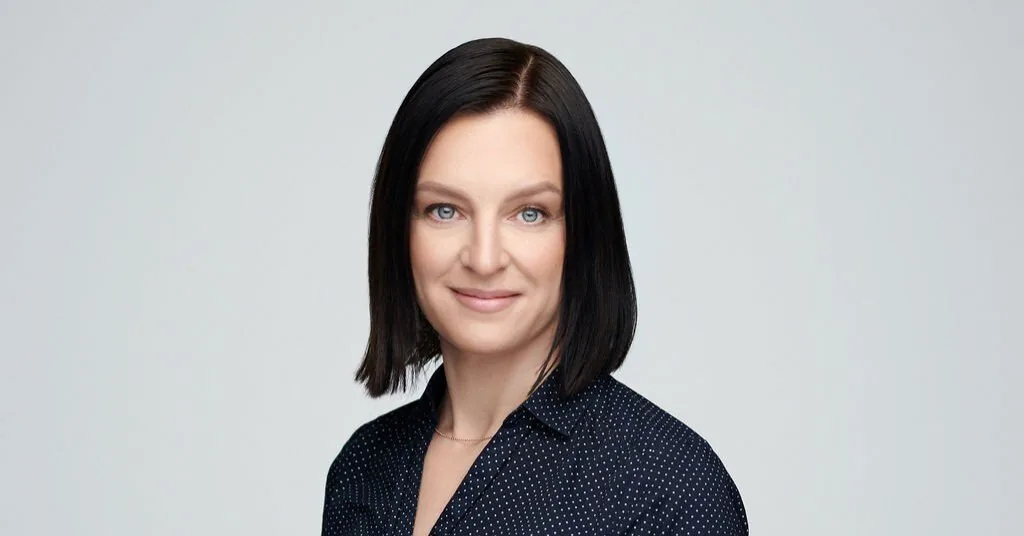
“Eik” club leader Jūratė Mackevičiūtė says that this year the first surfing camp for children with disabilities was held in Klaipėda. According to her, the idea to organize it came from realizing that if such initiatives are successful abroad, they can also be implemented in Lithuania.
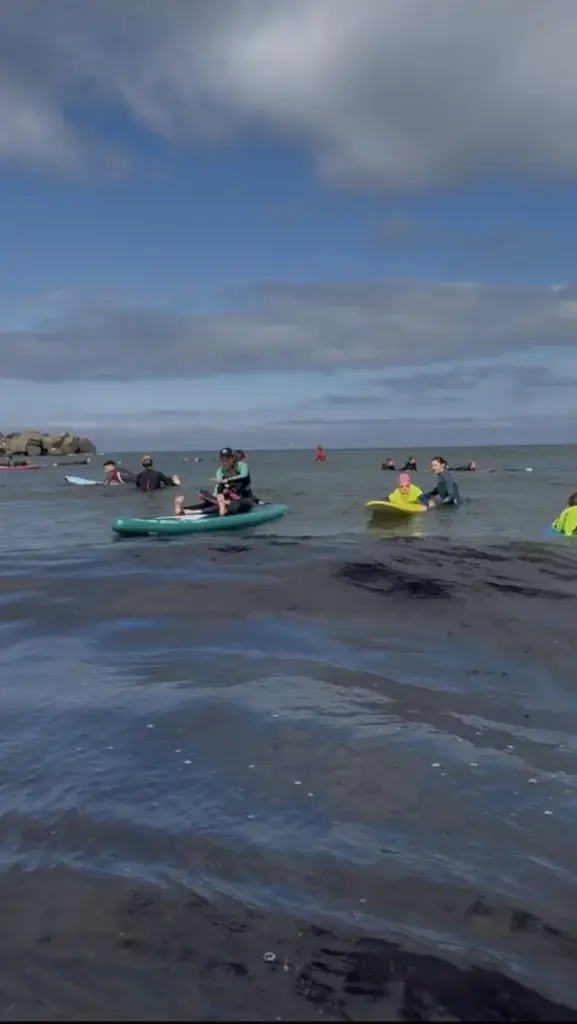
This year, 11 children with disabilities and their families participated in the camp. Not only club members but also their brothers and sisters tried surfing. Besides surfing, participants tried other active activities daily – padel, hippotherapy, climbing, and other experiences.
“We know that everything is possible, you just need conditions and means,” says J. Mackevičiūtė. According to her, this summer camp became not only a sports but also a community space where children gained more independence, and parents could breathe easier seeing their children confidently engaging in activities.
“I myself raise a son with a disability, and that’s how I ended up in the ‘Eik’ club. Usually, he constantly needs our help, but at the camp, he was so busy that he kept saying: ‘Wait, I’m busy now!’ Such camps greatly increase children’s independence,” said the “Eik” club leader.
According to her, the club aims not only to create opportunities for people with disabilities and their families but also to change society’s attitude: “We want everyone to see – this is normal, we can all be together and jointly create more opportunities for everyone to move.”
The first camp, according to the interlocutor, was so successful that even before it ended, club members began planning how to organize it next year: “We are already talking about how to repeat it. We know what we can do better, but we will definitely repeat it.”