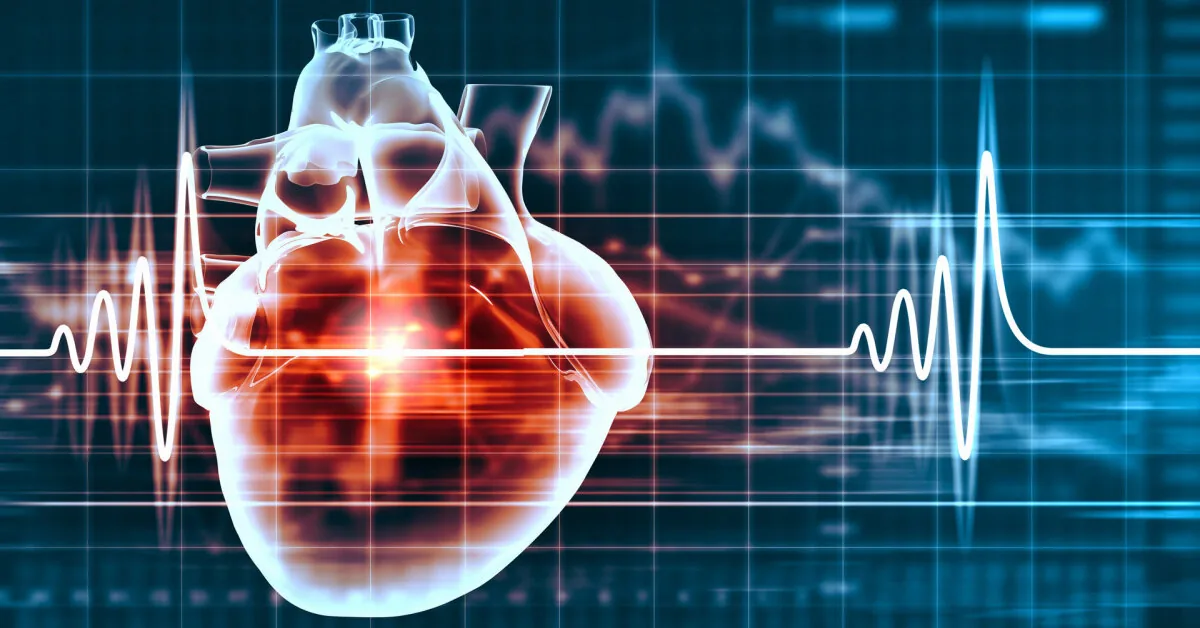
Robertas Pranevičius, a cardiologist at LSMU Kaunas Clinics Heart Center and head of LSMU Kaunas Hospital Emergency Center, reassures that 8 out of 10 felt palpitations are not dangerous. However, according to the expert, not all of them should be ignored. Therefore, we asked R. Pranevičius how to distinguish when the heart is simply reacting to daily factors and when it is already sending a signal that we must hear?
Read more „Poetic Druskininkai Autumn“ guest: „Feminism is the foundation and cement for my literary home“
Notices a common mistake
Most people have experienced changes in heart rhythm at least once. However, as cardiologist R. Pranevičius states, this does not mean that every such episode signals a disease.
„About 80 percent of all felt heart “malfunctions” consist of so-called extrasystoles – isolated extra or seemingly “skipped” heartbeats. Most often, they occur in a structurally healthy heart and are not dangerous,” he says.
When this happens, the expert adds, a person feels a palpitation. Most often, it passes after a few seconds, so the brain quickly learns to ignore similar episodes. However, according to the interviewee, the problem begins when a person starts to believe that a serious heart disease must manifest dramatically.
„Many expect strong crushing chest pain or loss of consciousness. And a brief palpitation or a few seconds of faster heartbeat often seems too insignificant to warrant consulting a doctor,” explains the cardiologist.
No less important, according to him, is the psychological aspect. According to the doctor, some people simply do not want to appear overly sensitive or “dramatizing unnecessarily,” so they wait for symptoms to pass on their own. Others, especially younger patients, tend to associate heart palpitations or shortness of breath with anxiety or panic attacks and therefore consult the wrong specialist or generally delay seeking the cause.
„In my practice, I constantly see two completely different patient behavior patterns. One group of people attributes symptoms to fatigue, stress, or age for months or even years, even though palpitations are becoming more frequent. This is the most dangerous mistake, as a delayed diagnosis also means delayed treatment. If some rhythm disorders, such as atrial fibrillation, are left untreated for a long time, the risk of stroke increases,” warns R. Pranevičius.
„Another extreme reaction,” he continues, “is the opposite. Younger people, after one stronger heartbeat, often start constantly checking their pulse, repeating tests, and frequently visiting emergency departments. There are situations where a real heart rhythm disorder is mistaken for panic attacks for a long time, but the opposite also happens – an anxiety disorder is mistakenly considered a heart disease. Therefore, it is often impossible for a person to decide what is happening on their own.”
Coffee is not the biggest influence
Asked what to do when observing changes in heart activity, the cardiologist notes that the best solution is not to guess, but to discuss recurring or unclear symptoms with a doctor. Only a specialist, according to him, can objectively assess the situation and, if necessary, prescribe additional tests.
„You need to constantly monitor and check your heart. Especially in summer, when many risk factors accompany us. And the biggest influence on heart rhythm during this period is dehydration. Along with fluids, the body loses sodium, potassium, and magnesium, the circulating blood volume decreases, and the heart’s electrical system becomes more sensitive to abnormal impulses. Therefore, in hot weather, especially for older people or those taking diuretics, palpitations may increase,” says R. Pranevičius.
He adds that although many are accustomed to thinking that coffee most imbalances heart rhythm in summer, scientific data shows quite the opposite. The reputation of this caffeine-containing beverage, according to the doctor, has changed significantly in recent years.
Read more Putin spoke about the fuel crisis gripping Russia
„Recent scientific studies do not confirm that regular coffee consumption increases the risk of heart rhythm disorders. As a result, caffeine is no longer included in the recommendations of the European Society of Cardiology as a factor that should be limited due to arrhythmias. However, this does not apply to large quantities of energy drinks. They can provoke symptoms in more sensitive people,” notes the cardiologist.
Like energy drinks or dehydration, long journeys or flights similarly affect the body. Then a lot of time is spent sitting and too little fluid is consumed. Lack of sleep, intense physical exertion without adequate preparation or hydration can also contribute to changes in heart rhythm.
„I would also like to emphasize increased alcohol consumption. Atrial fibrillation that suddenly appears after it even has a separate name in medicine – “holiday heart syndrome.” This is one of the best scientifically proven triggers for heart rhythm disorders,” emphasizes R. Pranevičius.
One should not self-diagnose
Upon noticing recurring symptoms, the doctor first advises not to panic. Instead, it is better to start observing the changes more closely, noting when palpitations occur, how long they last, and under what circumstances they manifest.
„It is important to record whether the symptoms are accompanied by physical exertion, stress, eating, or other factors. Such information is often no less valuable to the doctor than the examination itself,” he asserts.
R. Pranevičius also reminds that a single electrocardiogram does not always allow for the detection of a rhythm disorder, as it records only a few seconds of heart activity.
„If the heart is beating normally at that moment, the test may be completely normal, even if the person felt a distinct rhythm disorder a few hours earlier. Therefore, longer-term monitoring is often required. The longer we monitor the heart rhythm, the greater the chance of recording rare episodes and accurately determining their cause,” says the cardiologist.
Therefore, the expert encourages everyone to get to know their body better, but also reminds that self-observation should not turn into an attempt to self-diagnose.
„A brief and self-resolving isolated palpitation is usually not a cause for concern. However, if symptoms recur, become more frequent, last longer, or appear together with shortness of breath, fainting, chest pain, or other ailments, one should not delay. Today we have significantly more opportunities to understand our body than before, but the final answer can still only be provided by a doctor who has evaluated the entire situation,” concludes the head of LSMU Kaunas Hospital Emergency Center.