„Eurovaistinės“ pharmacist Elvyra Ramaškienė explains how to properly take care of your oral hygiene and how to distinguish when a more detailed consultation with a medical specialist is needed, according to a press release.
Read more Iran: US not participating in talks with Oman regarding the Strait of Hormuz
Having recovered from an illness – change your toothbrush too
One of the most common mistakes in oral hygiene routine is using a toothbrush for too long. It is recommended to change your toothbrush every 2-3 months, but it often happens that people only change them when they notice that the tool is already significantly worn out.
„A toothbrush used for too long not only cleans teeth less effectively but can also become a breeding ground for bacteria. It’s worth changing the brush even earlier if you’ve recently had a cold or flu, or if the brush irritates your gums,“ advises the pharmacist.
When choosing a new toothbrush, it is recommended to consider the condition of your gums; for people with sensitive or bleeding gums, soft bristles are suggested, as medium or hard bristles can mechanically damage gum tissue. Electric toothbrushes with pressure sensors are recommended for those who tend to brush their teeth too hard.
Tongue cleaner – an often forgotten tool
According to the pharmacist, a significant number of people use only a toothbrush and toothpaste for oral hygiene, although a wider range of tools would be needed for complete care.
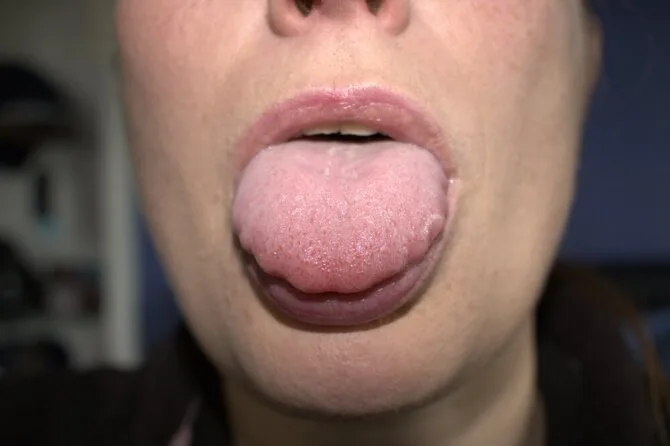
„The surface of the tongue is uneven, with many microscopic indentations where dead cells, food residues, and bacteria accumulate. This is where most of the volatile sulfur compounds that cause bad breath are formed. For this reason, it is recommended to use a special tongue cleaner, which will remove the dirt accumulating on the tongue,“ explains E. Ramaškienė.
A regular toothbrush does not clean the entire tooth surface, as interdental spaces remain uncleaned if interdental brushes or dental floss are not used when caring for teeth; over time, tooth decay can accumulate in these areas, and gum inflammation may occur.
Read more Only gasoline got cheaper: what are the prices of diesel and gas?
A common, but rarely discussed problem
Although bad breath, also known as halitosis, can arise due to insufficient oral hygiene, such as an uncleaned tongue, sometimes this condition can also be caused by health problems.
„Bad breath can also be caused by gastritis, reflux, respiratory tract infections, such as sinusitis, tonsillitis, or throat inflammation. A common cause of bad breath is dry mouth, a condition called xerostomia, which occurs when too little saliva is produced in the mouth or the composition of saliva changes,“ says E. Ramaškienė.
According to the pharmacist, saliva performs many different functions in the mouth: it naturally washes the oral cavity, neutralizes acids, inhibits bacterial growth, and helps tooth enamel recover after meals. When saliva decreases, this natural protection weakens, and odor-causing bacteria multiply more rapidly in the mouth.
„If bad breath is caused by dry mouth, drink more water, at least two liters per day, and you can also try special oral mucosa gels or moisturizing sprays.
If bad breath does not go away within a few days, it is worth contacting an oral hygienist or dentist. If you have no dental problems, it is recommended to review your diet or consult a doctor for digestive, respiratory, or endocrine system examinations,“ adds E. Ramaškienė