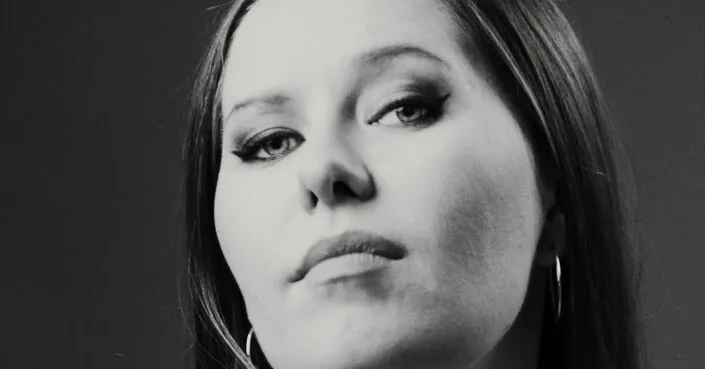
The strength of Sveta Grigorjeva’s poetry lies in her refusal to conform to what is expected of a poet or a woman. Her poems explore themes of corporeality, power, gender, historical traumas, and societal contradictions, which the poet examines openly, boldly, without fear of hurting the reader. Perhaps because of this, as the interviewee herself says, she is still referred to as an “angry” or “rebellious” woman.
Read more Putin spoke about the fuel crisis gripping Russia
Sveta Grigorjeva is the author of three poetry collections: “kes kardab sveta grigorjevat?” (“who is afraid of sveta grigorjeva?”, 2013), recognized as the best poetry debut of the decade in Estonia, “American Beauty” (2018), and the Jaan Kross Literary Prize-winning collection “Frankenstein” (2023). For her collection of feminist cultural criticism and essays “Kliitor on anarhist” (“The Clitoris is an Anarchist”, 2024), Grigorjeva received the Estonian Cultural Endowment Award. As a choreographer and researcher, the author explores the political aspects of contemporary dance, and as a creator, she raises another question – could we imagine a different world where schools would teach not to chase achievements, but to learn… body language?
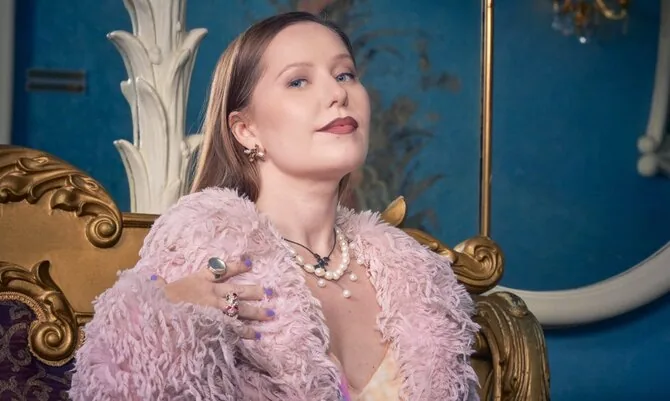
– Sveta, in September you will participate in the international literary festival “Poetic Druskininkai Autumn”. Have you visited Lithuania before? What do you first think of, remember, what associations come to mind when you hear the name of our country, or perhaps – the PDR festival?
– Indeed, I have already been to “Poetic Druskininkai Autumn”. I visited here ten, or perhaps more, years ago, when my then-partner was invited as a poet from Estonia, and I simply went along. I remember that when the participants introduced themselves, I introduced myself as Sveta – the love of this poet’s life. Today it sounds funny. And now, when I am invited as a poet, I think Druskininkai will acquire a completely different meaning for me. On the other hand, I still warmly remember your country and “Poetic Druskininkai Autumn”. I recall that Druskininkai that year seemed to be immersed in a gentle grey.
– You come from Estonia, where you are a well-known, prominent poet, choreographer, cultural researcher, and critic of your generation. Although we are different, the Baltic countries share a common historical experience. How do you envision this meeting of Lithuanian and Estonian poetic worlds? Perhaps you are already more familiar with Lithuanian literature, or perhaps you even have favorite authors?
– True, I forgot to mention – I recently visited Lithuania again. I went to the international festival “New Baltic Dance” in Vilnius. I was pleasantly surprised: I really liked the city’s atmosphere, its vibe, the people’s relaxation. Your capital reminds me a bit of a smaller Berlin. Of course, Vilnius is much calmer, but there was something Berlin-like in the locals’ communication. And generally, I think that due to their geographical location, Lithuanians are closer to Central Europe. Even the architecture in Lithuania is completely different from Estonia. Although the Baltic countries share a similar historical experience, we are actually quite different.
Although the Baltic countries share a similar historical experience, we are actually quite different.
Perhaps it is worth talking about these differences more often. I hope that the meeting in autumn will be interesting and valuable precisely for this reason. To be honest, I am not yet closely familiar with Lithuanian literature, so I am very much looking forward to the opportunity to meet, read the texts of other authors, and together create common PDR rituals. I hope (and I think!) that it will be a great festival. I also remember that there was a water park in Druskininkai that I didn’t visit last time. So I hope that this time I will finally manage to do it!
– Poet Giedrė Kazlauskaitė writes in the festival almanac that poets sometimes sense impending wars, catastrophes, or political turning points. She states that such an attitude often pushes the poet into a certain “prophet” role. Is the idea of a poet as a person who not only reflects but, in a sense, foresees the near reality, close to you? Do you perceive literature as one of the possible forms of responsibility?
– The word “prophet” perhaps sounds a bit too mystical, too grand and romantic. Nevertheless, this idea is not alien to me. However, I imagine poets more as canaries in a coal mine – the first to sense impending danger and to warn others about it. I believe that a poet (or an artist in general) should be able to critically look at both the society in which they live and the world.
A poet’s responsibility, in a sense, can indeed be like an alarm signal, even if sensing and reporting unsettling, chaotic, or even very bad news is quite dangerous. After all, unfortunately, we still often attack those who bring unpleasant news, instead of listening to the warning itself… On the other hand, I believe that poets, through their work, allow us to try on different “ways of being” in this world. Therefore, I don’t think they should be perceived solely as social critics, talking about pain, sadness, evil, and societal problems. I myself primarily support the idea of spreading joy and fullness of being through language.
Let’s not forget that poets are also dreamers, weaving even stranger, more wonderful, and exciting thoughts, creating new worlds, unusual spaces, and unexpected ideas. So they are not only “prophets” but also manifestors, creators of alternative worlds, magicians. You might say we encounter a certain paradox here. Ideally, poets are people who sense the world and its state earlier than others, but at the same time have the ability to change it – by imagining that the world could be different. At least that’s what I strive for myself!
– In the poems “Flamingos and Wars” and “Belarusian author Svetlana Alexievich / in the book The Unwomanly Face of War” you write about war and genocide. In the latter poem, you recall T. Adorno’s statement that writing poetry after Auschwitz is barbaric, yet you still write (“and so here I am – a barbarian / a person who is supposedly greater than war / who wants to be less than human / no longer wants to be human at all”). These lines create the impression that the poem itself is an attempt to answer the question of what poetry can do in the face of catastrophe. How do you resolve the internal conflict, the tension between choosing to remain silent and the duty to write?
– It seems to me that everything we do should stem from a certain sense of responsibility – otherwise, what’s the point? It just so happens that I write and create performances. If I were a shop owner, a taxi driver, or a president, I would still feel obliged to remain a responsible co-creator of this world through my actions, work, and even my very existence. We live in times when the desire to fit into a community cannot outweigh the desire to remain honest and speak the truth.
Poets are people who sense the world and its state earlier than others, but at the same time have the ability to change it.
The words of writer Audre Lorde are close to me: “Your silence will not protect you,” because essentially we might think the opposite – that silence will protect us, but that almost never happens. Even when spoken words provoke a reaction (and words spoken out of a need for truth always do), we should dare to call things by their true names. We cannot soften the image of war, just as we cannot remain silent about genocide or climate change.
– Nevertheless, not only themes of historical trauma are important to you, but also corporeality. In the poem “Sensitive to Touch” you write: “we can be gardeners of our / bodies / sprout new sensitivity in the true sense of the word.” You are a choreographer – you explore the political aspects of contemporary dance. To what extent is the body a political, and not just a personal, space for you? Can the ability to feel one’s body become a form of resistance in the context of the modern world, which operates by rapidly changing rules and often “teaches” us to detach from the body?
– This is precisely one of the greatest tragedies of our time – we simply no longer understand that we are corporeal, material beings, that we not only have bodies but are bodies ourselves. This is clearly related to the dualistic Cartesian separation of mind and body, which remains deeply ingrained in our thinking and in how we create our world. In this sense, I am a Spinozist: there is no separation of mind and matter; it is a single substance. Due to new and rapidly developing technologies, we are increasingly distancing ourselves from our bodies, and I fear that this problem will only deepen over time.
But can we imagine a different world? For example, one where schools exist, but in them we wouldn’t have to learn to run faster, jump higher, or otherwise try to outperform each other, but would be taught to know our own bodies and those of others more thoroughly? To understand them, to respect our own and others’ boundaries more? To dance, run, move not to compete, but to feel better? Most often, the opposite happens – outside of romantic relationships, we touch neither ourselves nor other people.
But what would happen if corporeality and touch were not associated solely with sexual pleasure? If it became a common, non-sexual thing – something we do respectfully, communicating attentively and caring for each other? I believe that then we would feel a closer connection with ourselves, with others, with the world. Probably there would also be fewer various perversions. Fascism, by the way, essentially arises from a person feeling bad in their own body and not accepting other bodies. After all, fascism itself is closely related to the strict boundaries we draw, separating ourselves not only from those around us but also from our own (corporeal) nature.
– Your poetry and academic research also feature a strong feminist perspective. For your collection of feminist cultural criticism and essays “Kliitor on anarhist” (“The Clitoris is an Anarchist”), you received the Estonian Cultural Endowment Award. Do you notice how your relationship with feminist themes changes when moving from criticism and essays to poetry?
– Probably every form of expression or genre has its own logic, which determines the final result. For example, when writing criticism, I think more about the future reader and about the author of the book, film, or exhibition I am reviewing. I try to be attentive and empathetic. When I write poems, I hardly think about others; I usually talk to myself or to some (usually deceased) author whom I admire and from whom I draw inspiration. There are far fewer filters in poetry, and I particularly enjoy that.
However, this approach has consequences. To this day, I am considered an angry or rebellious woman. Although it seems to me that this is more related to prevailing stereotypes about what a “real” woman is: how she should behave, write, and so on. For a man, being a rock star is perfectly acceptable. But from me, as a woman and a poet, it is still expected that I will be modest, patriotic, non-sexual, submissive, and avoid violence in my texts. I simply am not like that and do not want to “adjust” myself to the status quo – to what a woman or femininity is supposed to be. I do not intend to act that way in life, in art, or in my poetry.
Feminism is like the foundation and cement for the literary house I have been building for many years. Being a feminist did not hinder me, but rather helped me establish myself in both literature and literary criticism. In my texts, I speak from a woman’s perspective and as a woman – a person from the working class, the first in my family to acquire a university education. Also, as a representative of a mixed national identity (Estonian and Russian), originating from a small country whose collective body is still haunted by the deep trauma of occupations and wars. I simply cannot and do not want to erase the assumptions from which my understanding (and my position, stance per se, in general) arises.
Nevertheless, this is not a fetishization of some marginality or trauma, but rather an acknowledgment of history that has shaped the different sociological, biological, and cultural categories by which I (like all of us) operate.
– You are the author of three poetry collections: “kes kardab sveta grigorjevat?” (“who is afraid of sveta grigorjeva?”), “American Beauty,” and “Frankenstein.” The titles of your books instantly evoke strong associations: from questions about fear, threat, and public stance to popular culture and literary archetypes. What would you identify today, more than a decade after your successful debut, as the most important question in your poetry?
– It seems to me that this question has always been the same: could life be different? Of course, how I write has changed, but the main idea, the essential axis of my creativity, always revolves around the same idea – to demand more magic and magical thinking from this world. Fewer suffocating binary oppositions, less boring life and worrying about such foolish things as status, literary fame, and wealth, but more care, empathy, and the ability to enjoy small, simple things, accepting the fact that we came into this world not only to suffer but also to ask interesting questions. And most importantly – to PLAY: with words, with our being, with each other. And by no means only in childhood!
– This year’s “Poetic Druskininkai Autumn” theme is “Poetry Rituals.” A ritual often means the conscious repetition of certain actions to maintain a connection with oneself, another, or what is important to us. Does poetry perform a similar function for you? Can writing, reading be a kind of ritual that helps preserve attentiveness and sensitivity to the world?
– To be honest, I don’t know why I write. Probably mostly for myself. It’s a way for me to orient myself in my thoughts and in the world. However, writing poetry and the poems per se evoke certain intense states that continue to draw one into their strange embrace. It’s like being between different spheres, their liminality.
I believe that a good poem, whether written by someone else or by yourself, can disrupt you in the best possible way. To recreate you, to change your direction. So yes – it is essentially a transformative, alchemical, and magical practice.
– Finally, of course, there’s no escaping the perhaps predictable question about your own rituals. Do you have any habits that help a poem settle onto a piece of paper or into a new “Word” document?
– Unfortunately, when it comes to rituals that help with writing, I am a poor interlocutor. At this stage of my life, perhaps the habit of writing itself is my ritual. (smiles)