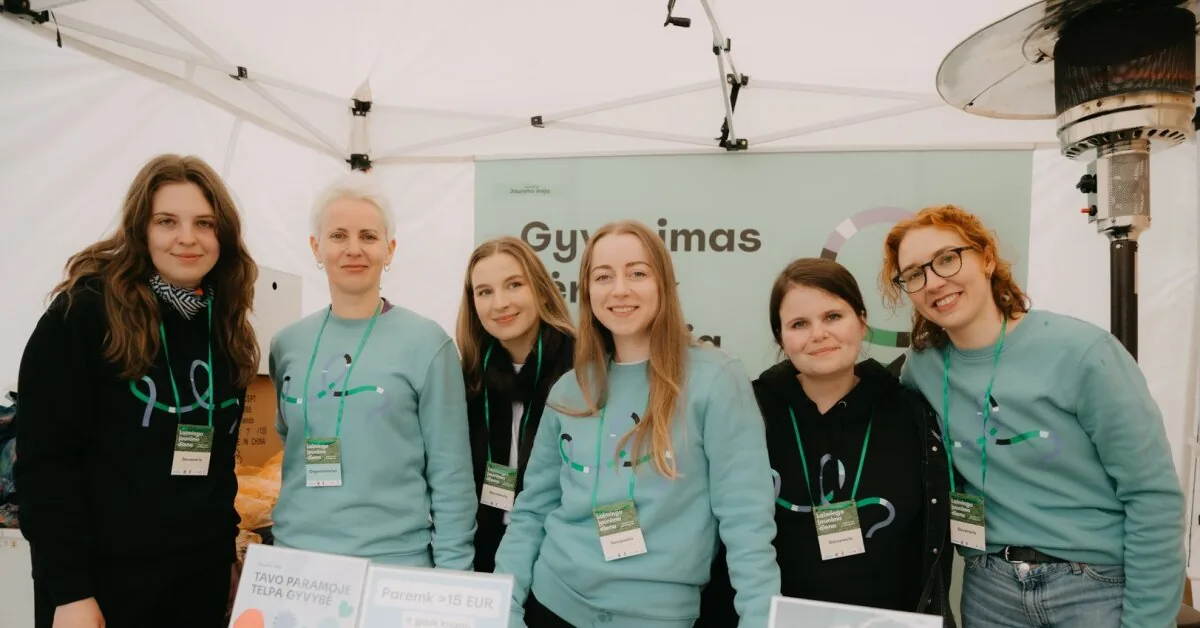
On September 11, doctors psychiatrists, a family doctor, a medical psychologist, social workers, health institution and municipality leaders, as well as T. Kanapeckas (Varkė Labdarkė), who shared his personal mental health experience, met at the Klaipėda Mental Health Center, according to a press release.
Read more Complete collapse: Monaco not accepted even into the 3rd league
Three discussions were held at the festival: “Mental health in the workplace,” “When anxiety turns into panic,” and “Life in the face of constant anxiety.”
The discussions covered not only how to recognize mental health difficulties but also issues that affect many today – whether it is safe to say “I am struggling” at work, when anxiety becomes a disorder, and how to live knowing that the world cannot guarantee complete safety.
Varkė Labdarkė – about the moment when it felt like dying
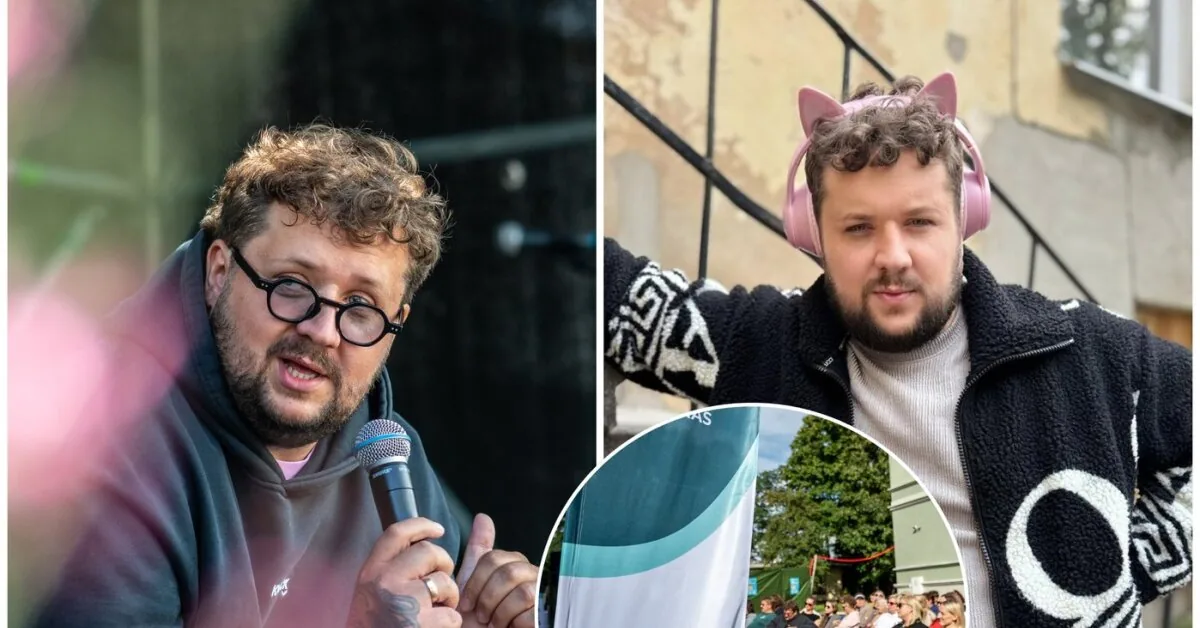
The discussion “When anxiety turns into panic” was especially open, featuring the head of the Klaipėda Mental Health Center, psychiatrist Dr. Aistė Leleikienė, head of the Family Medicine Department at the Seamen’s Polyclinic, family doctor Lina Jokubynaitė, and content creator, TV project participant T. Kanapeckas (Varkė Labdarkė).
Tadas mentioned that it was the first time he openly shared his experience with the festival audience – talking about anxiety, panic attacks, and the moment in Iceland when, after experiencing a severe panic attack, he was convinced he was dying.
Tadas emphasized several important points: that it is not shameful to see a psychiatrist and how important it is not to self-medicate with drugs.
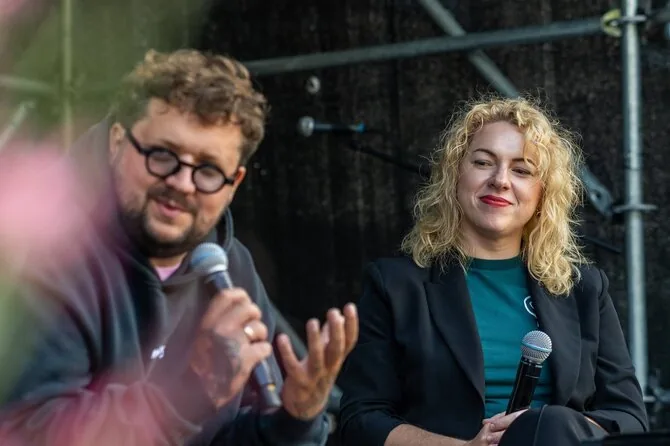
The conversation also touched on the signs the body and psyche send before reaching a critical point, the search for professional help, and what changes one has to make in life when the body and mind finally say “stop.”
Dr. Aistė Leleikienė explained where the line lies between normal anxiety familiar to everyone and an anxiety disorder, what happens during a panic attack, and what help can be effective. Family doctor Lina Jokubynaitė looked at the problem from the primary health care perspective – after all, a panic attack often manifests with very strong physical symptoms: heart palpitations, shortness of breath, dizziness, or chest pain. The discussion included how to distinguish anxiety-induced symptoms from conditions requiring urgent medical attention in such cases.
Can a person say “I am struggling” at work?
Equally relevant was the festival discussion dedicated to mental health in the workplace.
It featured Ingrida Urbonavičienė, director of the Education and Health Department of Klaipėda City Municipality Administration, chief social worker of the Klaipėda Mental Health Center Raimonda Šoparienė, chief medical psychologist of the center Vaida Figorienė, and director of the Seamen’s Polyclinic, doctor and health management specialist Saulius Dabravalskis.
The discussion raised the question of who is truly responsible for an employee’s mental health – the person themselves, their manager, or the organization?
They talked about burnout and the first signs of emotional exhaustion, creating a psychologically safe work environment, the manager’s responsibility, employees’ fear to admit they are struggling, and support for people who try to stay in or return to the labor market despite mental health difficulties.
Read more After drone attacks on Saudi Arabia’s oil pipeline, Iraq closed three border crossings
One of the most important questions raised in the discussion was whether today a person in Lithuanian workplaces can truly say “I am struggling” without fearing consequences for their career?
From Vilnius – with experience from war-affected Ukraine
The third discussion, “Life in the face of constant anxiety,” addressed what has become the backdrop of our daily lives in recent years – the threat of war, geopolitical insecurity, uncertainty, and their impact on the mental health of individuals and society as a whole.
Specially for the festival, Martynas Marcinkevičius, director of the Vilnius City Mental Health Center, psychiatrist, who has visited Ukraine multiple times and witnessed firsthand how war affects people’s mental health, came from Vilnius.
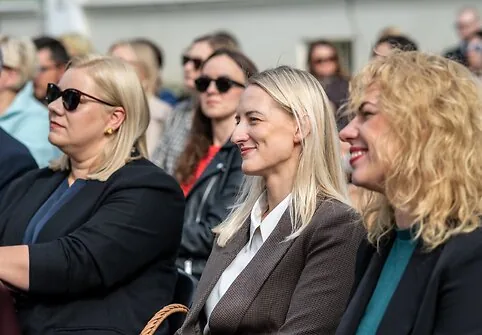





He was joined in the discussion by Klaipėda Mental Health Center psychiatrist and lecturer at Klaipėda University Mindaugas Būta, and Klaipėda Mental Health Center social worker, command soldier of the Klaipėda Regional War Command, active reservist Giedrius Zaturskis.
Martynas Marcinkevičius shared his experience gained in Ukraine and spoke about what happens to a person’s psyche when the threat of war turns from theoretical to a real daily reality, and what the long-term consequences of war can be for the individual, their family, and society.
Mindaugas Būta examined another side of our reality – how much anxiety about war and the safety of loved ones is a normal reaction, and when living long-term with the thought “something might happen” begins to harm a person’s mental health. Giedrius Zaturskis looked at the topic both as a social worker and an active reservist – discussing whether preparation for a possible threat increases fear or, conversely, knowing how to act reduces feelings of helplessness.
The discussion concluded with a question that is relevant to a much broader part of society today: how to live a normal life knowing the threat is real but not letting it take over our daily lives?
Not only a psychiatrist but also the soul of the band “Gatunko”
The end of the festival revealed a completely different side of the head of the Klaipėda Mental Health Center, Dr. Aistė Leleikienė.
On the same day, she was both a psychiatrist and an expert in the discussion about anxiety and panic attacks, and one of the souls of the band “Gatunkas.” After serious, sensitive, and sometimes difficult conversations, the festival ended with a concert by this band.
And perhaps such an ending best reflected the whole idea of the festival: mental health is not just talking about illness or difficulties. It is also connection, community, music, being together, and the ability to live, according to the press release.
Read more After losing to the Czech once again, Alekna: «I tried to take a risk, the discus flew into the net»