This decision was made after a drone attack on a Saudi Arabian oil pipeline, which, according to Riyadh and Baghdad, was carried out by individuals operating from Iraqi territory.
Read more After losing to the Czech once again, Alekna: «I tried to take a risk, the discus flew into the net»
Iraqi Prime Minister Ali al Zaidi (Ali Zaidis) dismissed the military commander in Misan province, located near the border with Iran, on Friday evening after officials determined that the drones were launched from there.
Two Iraqi security officials said on Saturday that drone launch devices were found near the border crossing in Misan.
No group claimed responsibility for the attack, and the powerful alliance of Tehran-backed Iraqi armed groups stated that they did not target the oil pipeline, although Riyadh has previously accused these groups of attacks on its oil infrastructure.
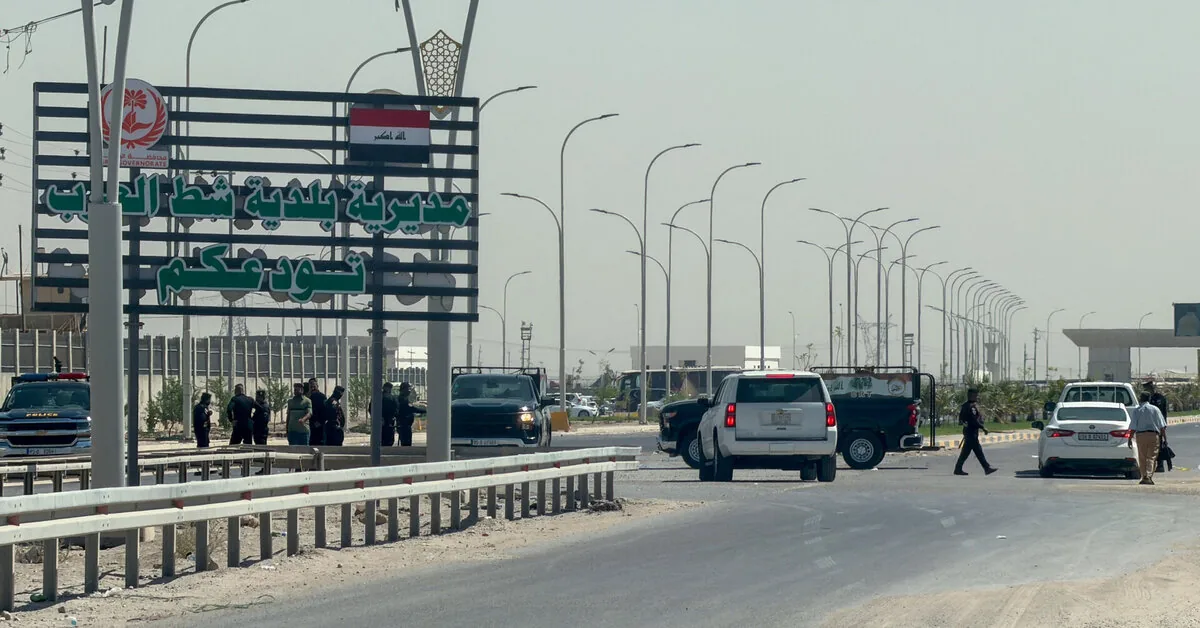
One Iraqi security source and a government official indicated that authorities ordered the closure of three border crossings with Iran.
According to the security official, this decision is “part of intelligence efforts to track down criminals and prevent their escape (…) and to hinder drone smuggling through these crossings.”
Both sources, who wished to remain anonymous as they were not authorized to speak to the media, could not specify when the crossings would be reopened.
The security official confirmed that “security forces found drone launch devices near the Iraq-Iran border in the Al Tibo region,” a remote part of Misan, very close to the Al Shibo crossing. The second security source confirmed the same.
A. al Zaidi’s military press representative Sabah al Numan (Sabah Numan) reported that the prime minister approved “Iran’s request to conduct a joint investigation to find drone launch platforms near the Iraq-Iran border.”
Read more England: no home wins in 5 matches
The government’s security media unit earlier stated that authorities “have started administrative and security restructuring operations at several border crossings.”
It was also added that “intelligence activity” has been intensified to identify “violations that occurred at these crossings.”
Later, it was reported that passengers stuck for hours at two crossings were allowed to cross the border.
In July, the US and Saudi Arabia reported strikes against Iran-backed fighters in Iraq in response to attacks on US forces and Saudi oil facilities.
Pro-Iranian armed groups supported Tehran during the Middle East war, claiming responsibility for hundreds of attacks on US bases in Iraq and across the region.
On Saturday, these groups, operating under the “Islamic Resistance in Iraq” umbrella, stated that they did not target the oil pipeline.
“It is an honor we do not claim,” said the “Islamic Resistance.”
Due to increasing US pressure, A. al Zaidi pledged to ensure that armed factions hand over their weapons to the state.
This issue has fueled tension in recent weeks as several groups refused to disarm.