









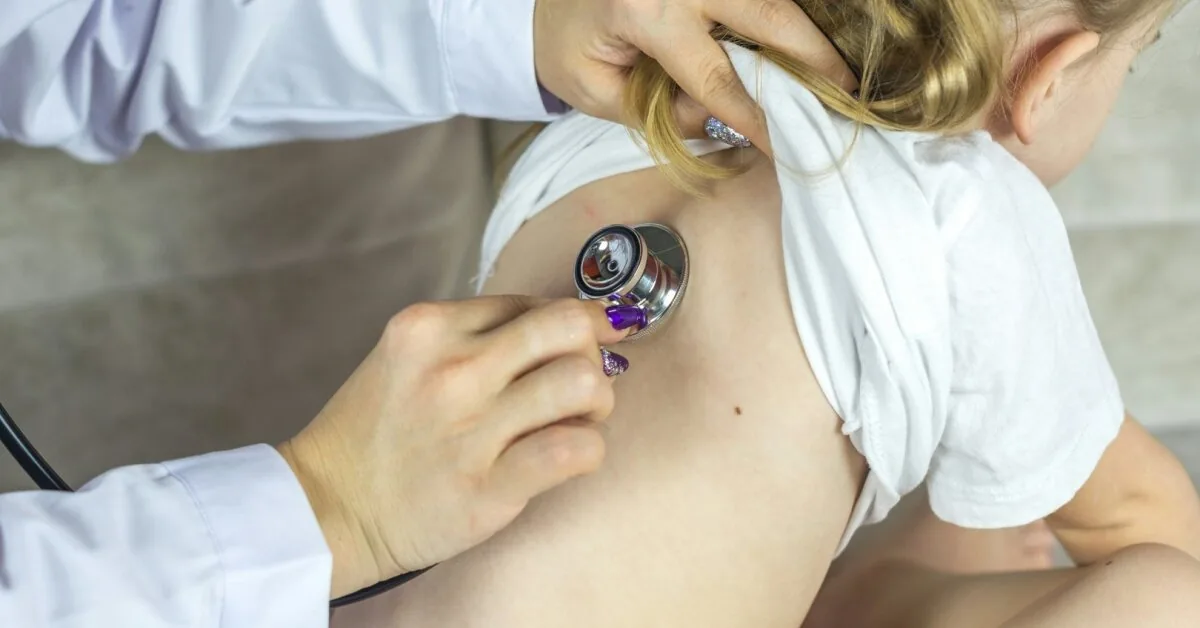
Even when both parents arrive, the main conversation more often takes place with the mother, according to a press release.
Read more LAT will examine Andrius Vyšniauskas’s «receipts» case
Specialists see the need to more actively involve fathers, but admit that there is still a lack of clear, easily applicable recommendations in everyday practice. If such were prepared, more than 82.2% of specialists would use or most likely use them.
This was revealed by a healthcare professionals’ survey conducted by the non-governmental organization European Life Science and Knowledge Institute (ELSKI). The aim was to assess how communication with both parents of the child takes place, what challenges in fathers’ involvement specialists notice, and what practical measures they lack. The study was conducted as part of the European Union-funded project “Stronger Together: Fathers’ Contribution to Child Health and Disability Care,” which ELSKI implements together with the partner “Namų mama.”
“The legal equality of both parents is not just a declaration. Mother and father, if their rights are not restricted, cannot be pre-assigned as primary and secondary representatives of the child. On the other hand, this does not mean the doctor is obliged to consult both parents simultaneously every time or obtain two consents. The practical guideline must be the child’s welfare, protection of their rights and legitimate interests, and proper representation,” says life sciences law expert and ELSKI partner Andrej Rudanov.
The child is most often accompanied to the consultation by the mother
86.7% of specialists participating in the study indicated that the child is most often accompanied to the consultation by the mother. Only 6.7% of respondents noted the father as the person most often accompanying the child.
This does not mean that fathers do not participate in the child’s healthcare. However, the mother more often communicates directly with specialists, receives information, follows test results and treatment recommendations, thus gradually accumulating more knowledge about the child’s health.
Even when both parents attend the consultation, the main or more intensive dialogue more often takes place with the mother – indicated by 58.9% of study participants. The doctor naturally talks more with the parent who knows the child’s health history better and can answer questions more accurately.
Over time, this can create a self-reinforcing cycle: the mother more often receives information, so at the next visit she again becomes the main interlocutor of the specialist, while the father has fewer opportunities to accumulate the knowledge needed for the child’s healthcare.
Fathers’ involvement is also influenced by the consultation dynamics
71.1% of specialists participating in the study noted that fathers more often listen and speak less during consultations. However, doctors’ comments show that the father’s role also depends on the circumstances of the consultation – whether he comes alone or with the mother, who is first involved in the conversation, and who is asked questions.
“Some fathers who come alone more often have information about the child’s health and show interest. When they come with mothers, they almost do not participate in exchanging information,” notes a doctor with over 20 years of hospital experience.
This observation shows that lower father activity in the consultation does not always mean unwillingness to engage. When the mother, who has more information, naturally takes over a larger part of the conversation, the father has fewer opportunities to answer questions, express his observations, and directly receive new information.
Therefore, fathers’ involvement is shaped not only by their own initiative but also by how the conversation is organized: which parent the doctor addresses first, to whom the treatment plan is explained, and whether both are given the opportunity to actively participate in the consultation.
Read more According to Moscow, Ukraine targeted the «Wildberries» warehouses again
Specialists also draw attention to roles formed within the family
Specialists participating in the study noted that fathers’ involvement is also influenced by the division of responsibilities within the family. When tasks related to the child’s health fall to one parent for a long time, it becomes harder for the other to take on part of the responsibility and act independently.
“Sometimes mothers themselves limit fathers’ involvement,” noted one pediatric gastroenterologist participating in the study.
This idea was expanded by an oral hygiene specialist: “We would like more awareness in families and for mothers to have the courage to sometimes reduce control and allow fathers to act. Trust in fathers should be nurtured, so they can do everything as well. Perhaps training on how to be a team in the family would be useful.”
Specialists’ insights show that more active father participation cannot be achieved simply by urging them to be more involved. Change also depends on how responsibility is shared in the family for planning visits, implementing doctors’ recommendations, medication use, rehabilitation, and other decisions related to the child’s health.
Specialists’ observations are complemented by data from state institutions. In 2025, 138.4 thousand cases of care by women and 51 thousand by men were recorded, with women making up about 73% of sickness benefit recipients for care. Although these figures include not only child care, they reflect a broader trend – caregiving functions in families still fall much more often to women.
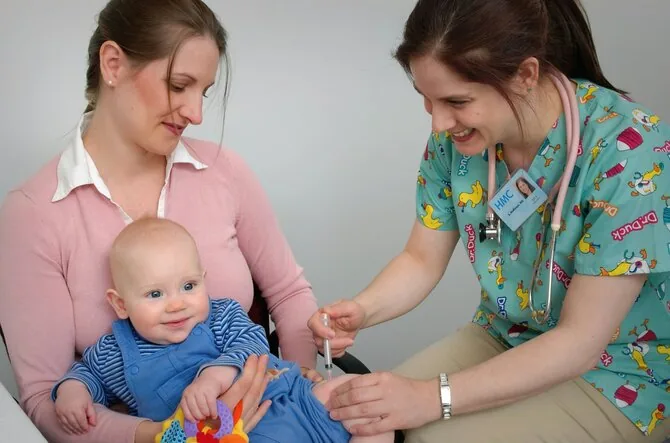
Not always knowing how to encourage change
Although nine out of ten specialists participating in the study recognize the benefits of both parents’ involvement in the child’s treatment process, only 25.6% of respondents agreed that they know how to encourage fathers to participate more actively in the child’s healthcare. 38.9% disagreed with this statement.
The study revealed a clear gap between attitude and everyday practice: specialists see the benefits of both parents’ participation and notice established communication habits but miss specific methodological tools to change the situation.
As many as 82.2% of respondents indicated that they would use practical advice and guidelines to help more effectively involve fathers in the child’s healthcare. Specialists need not general calls but specific communication examples, short action algorithms, and legal explanations that could be applied in everyday practice.
Based on the study results and specialists’ insights, methodological material for healthcare professionals will be prepared during the project. Its goal is to help practically involve both parents without shifting the responsibility for family relationships onto the doctor.
“A doctor cannot force a father to actively participate in the child’s life and should not become an arbitrator of family relationships. However, the doctor’s office can be a place where the father is not considered a random accompanying person but recognized as an equal partner in the child’s healthcare,” summarizes A. Rudanov.
Read more Instead of the former cinema – a store