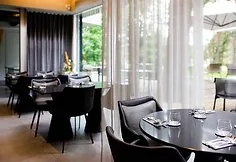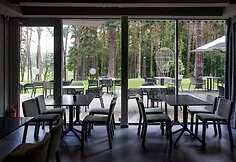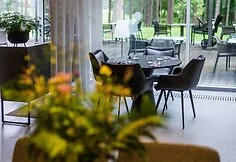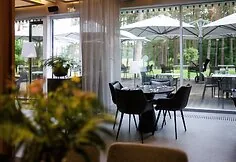









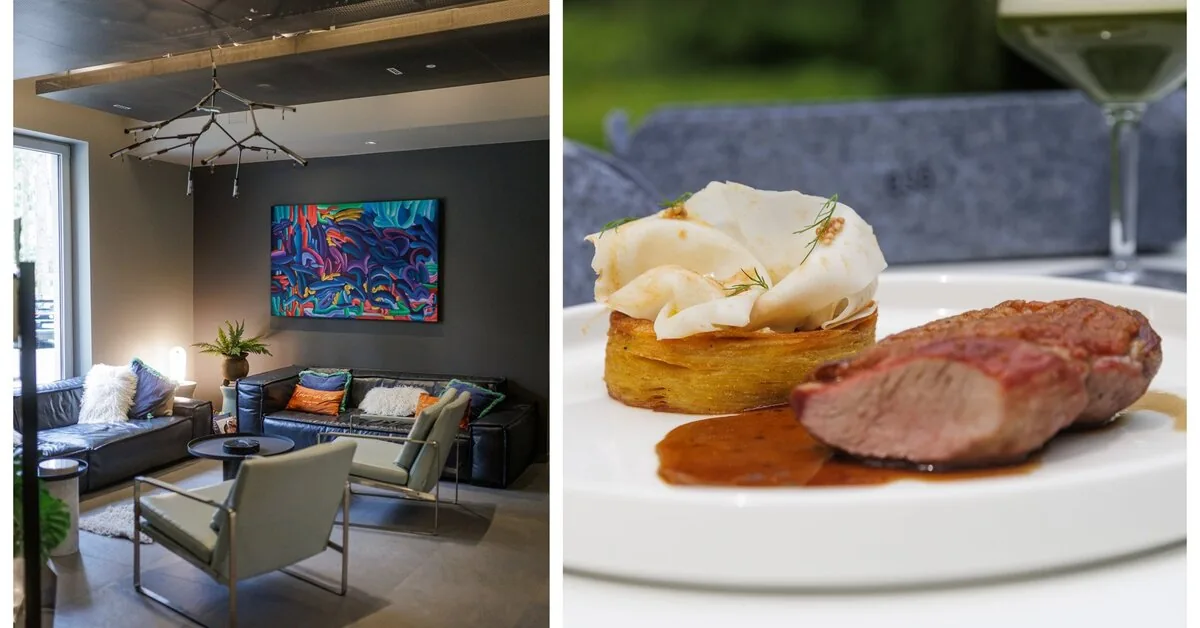
The hotel has forty rooms, accommodating about one hundred guests who can also relax in the SPA center. The greatest attention in the gastrobar is primarily given to them: classic breakfasts are served here in the mornings. And from noon, dishes from the à la carte menu can be chosen. Other Birštonas vacationers also stop by “Esė” to enjoy them.
Salvijus, who has been leading the kitchen for five years, is pleased that a gastrobar format was chosen for this place instead of a restaurant. This gives him and his team the opportunity to embark on broader gastronomic experimental journeys, and the results of their searches are reflected in the menu updated twice a year.

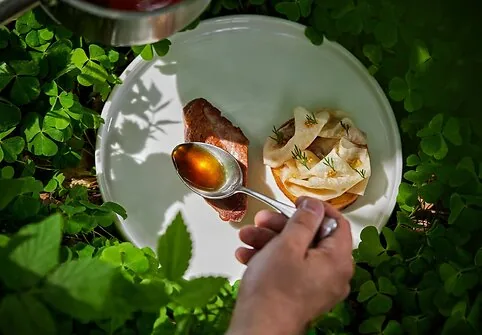
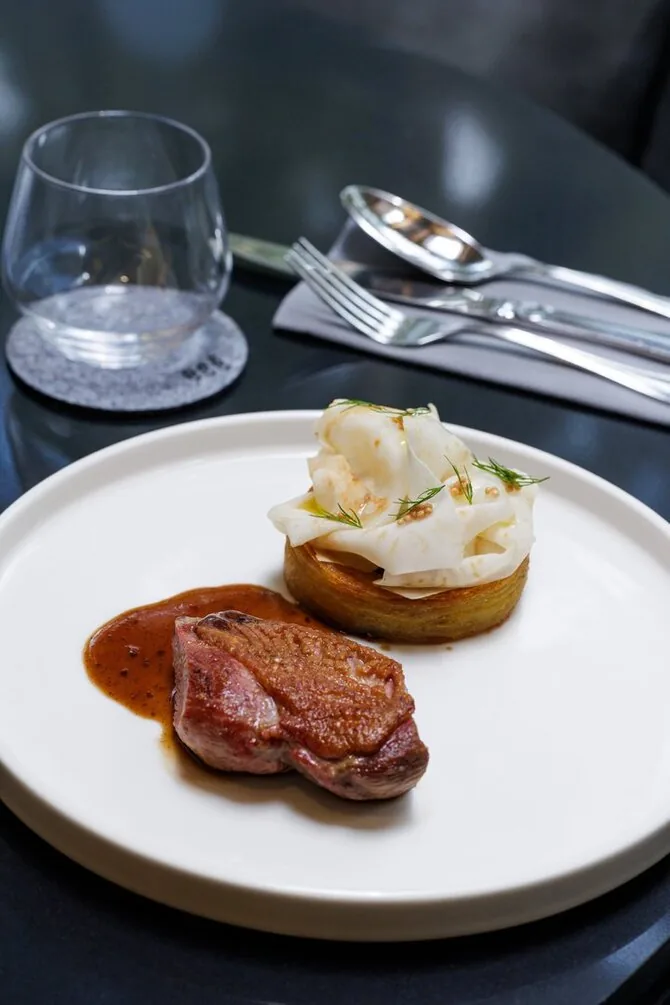
The chef says that over time both he himself and the gastrobar change. Salvijus constantly wants to move forward, learn, and improve. It is important to absorb the knowledge of colleagues who have more experience and are Michelin-rated, so he participates in “Bocuse d’Or” training. And he himself keeps experimenting, delighting “Esė” guests with new flavors. It is especially pleasant when they return for a favorite dish or to try new items. The pork ribs, marinated for four days and smoked for seven hours, have become the place’s calling card. This season’s pride is the duck breast steak aged in Japanese seaweed leaves konbu, served with potato pavé, pickled celery roots, and cherry sauce. Salvijus admits he enjoys creating duck dishes and is very satisfied with this version.
The head chef emphasizes that all dishes and their components on the “Esė” menu are aged, marinated, smoked, baked, and boiled right here on site. Therefore, you definitely won’t find, for example, handmade spring rolls filled with bacon jam, creamy cheese, and semi-dried tomatoes anywhere else. He is interested in combining Asian and Lithuanian flavors on one plate. Thus, the menu also includes “Cabbage Roll in Asia” and “Miso Cabbage.”
The local fried bread deserves a separate story. “I used to have the notion that wherever I worked, there would be no fried bread. It seemed too simple to me,” the kitchen head reveals. “But after starting to work at ‘Esė,’ I decided I had to create some special interpretation of a Lithuanian favorite snack. The idea arose to bake mini loaves of black bread with a garlic smoked cheese sauce inside. Many trials were needed, but it worked! Now it is one of our most popular snacks.”

Salvijus admits that what drives him forward is a constant desire to experiment and create. He sometimes laughs about waking up in the morning with an idea for a new combination or dish. He tries to immediately test that “dreamed” recipe. Memories of summers spent in the countryside inspire his creations, so he wants to bring back forgotten garden and orchard delights to the kitchen and give them a modern presentation. For example, gooseberries are fermented and pickled. He understands the strong influence of nature on people and how much untapped potential it holds. He aims for this to be somewhat felt in the everyday menu and decorates the rhubarb tartlet with fresh hare cabbage leaves gathered right here in the pine forest. Sometimes he offers guests special chef’s dishes with forest delicacies. “I am always on a path of searching and experimenting,” he admits. “So I am very happy to work with like-minded people. It’s great that Justinas Stonkus, who started managing the bar a couple of years ago, shares our views: we want to create and pleasantly surprise gastrobar guests.”
Read more Conflict over «Apple» charger in Vilnius café: police are looking for these men
Roasted duck breast with cherry sauce
For the duck breast steak:
- 200–250 g duck breast
- salt and ground pepper
- 20 g butter
“In the gastrobar kitchen, the duck is aged in Japanese seaweed leaves konbu. Since it would be difficult to do this at home, I suggest those who want to try to replicate the recipe prepare the duck in a simpler but equally excellent way,” says Salvijus. He removes the inner fillet of the duck breast and makes gentle diamond-shaped cuts in the skin. The skin is sprinkled with salt, and the other side also with pepper.
He places the breast skin-side down in a cold pan and cooks it over low heat until the skin becomes crispy and golden. Then he turns off the heat. He adds cold butter to the pan, flips the breast, and bathes it in the bubbling butter. “It is important not to overheat the butter!” he warns.
The seared breast, skin side up, is placed in an oven preheated to 180 degrees and baked for 8–9 minutes. Then it is left to rest for 1–2 minutes. At this time and temperature, the breast will be medium cooked.
For the cherry sauce:
- 500 g fresh or frozen pitted cherries
- 20–30 g honey
- 20–30 g butter
- a pinch of salt
Half of the cherries are crushed with an electric blender and set aside. The remaining berries are poured into a saucepan with the other ingredients and heated until the butter and honey melt. According to taste, the cherry puree is added and served with the duck.
Read more Warning messages on the phone: what everyone should check