Spanish researchers have found that older adults who have difficulty quickly sitting down and standing up from a chair may have a higher risk of falls, bone fractures, and repeated hospitalizations, all of which increase their risk of death, according to the Daily Mail.
Read more At the Canoe World Cup stage in Seville – Lithuanian silver and bronze
In a new study, scientists asked nearly 2,000 older adults to sit down on a chair and stand up again, fully extending their hips and knees. They were then instructed to repeat the process as many times as they could within 30 seconds. What is considered a “low” number of repetitions varies depending on age and gender – for example, a 60–64-year-old adult male should perform 14 sit-to-stand repetitions in 30 seconds, while a 90–94-year-old man would be considered to have “low sit-to-stand strength” if he could not perform at least seven.
Participants with low sit-to-stand strength died up to twice as often during the 10-year study follow-up period compared to those with higher scores. For women, who are more likely to experience orthopedic problems such as hip fractures due to menopause-related bone density loss, the risk increased up to three times.
Additionally, people with low sit-to-stand scores had longer hospital stays after a fall. Researchers believe the 30-second test could help measure muscle strength in older adults without expensive or inaccessible equipment, identifying problems before catastrophic injury occurs.
These results come at a time when about 14 million adults over 65 experience falls annually, which is roughly one in four older adults. These falls result in approximately nine million injuries, three million emergency room visits, and one million hospitalizations.
Older adults have weaker bones and muscles, so falls more often result in severe head injuries and fractures requiring hospitalization.
Hospitalization, in turn, increases the risk of complications such as pneumonia, sepsis, and blood clots, and the immune system of older adults is less able to fight these.
A new study published in the Journal of Sports and Health Science examined 1,876 adults over 65, 56 percent of whom were women. The average age was 75 years.
Scientists from the Toledo Healthy Aging Study in Spain divided participants into two groups: low and normal sit-to-stand power. The cutoff for men was 2.5 watts per kilogram of body weight, and for women, 2.01 watts per kilogram.
Read more Government – against the inclusion of sign language in elective subjects in schools
About 57 percent of participants did not reach these threshold values.
They were monitored annually for a total of 10 years, and researchers recorded hospitalizations and deaths in this group.
Researchers found that women with low scores had about twice the risk of death compared to those within normal limits, while men had a 57 percent increased risk.
Additionally, women with low scores were 3.2 times more likely to suffer a hip fracture and 29 percent more likely to be hospitalized during the follow-up period compared to those with higher scores.
For men, low power was more associated with falls rather than specific fractures. During check-ups, men with low sit-to-stand scores were 73 percent more likely to report a fall in the past year and had an 86 percent higher risk of any type of fracture.
Women tend to lose bone density faster than men due to hormonal changes during menopause, making their hips especially vulnerable in the event of a fall.
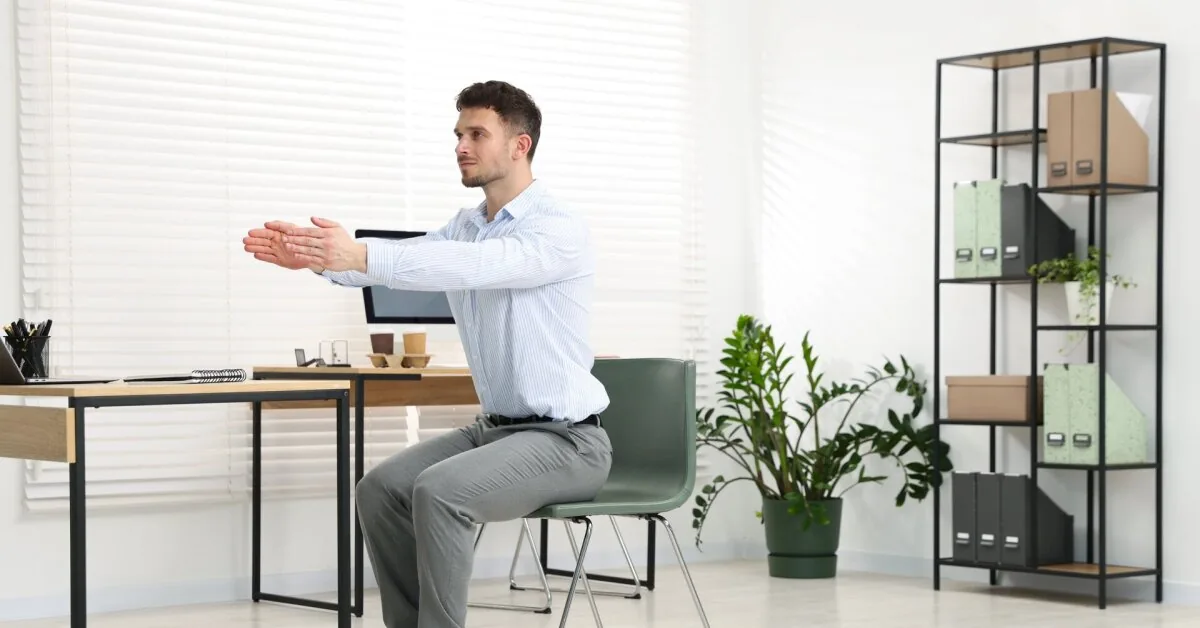
To self-assess, scientists recommend using a standard 17-inch (about 43 cm) armless chair, a timer, and another person to ensure safety and count repetitions.
They suggest sitting on the front edge of the chair, keeping the back straight, feet flat on the floor, and arms crossed over the chest. When the timer starts, fully stand up and sit down as many times as possible within 30 seconds.
Read more BNS Sprint: weekly events in brief