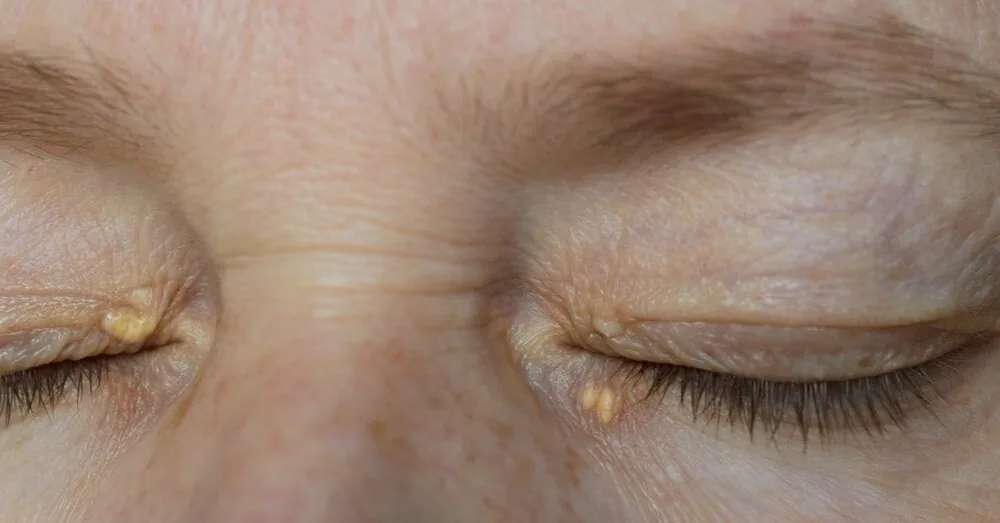
A post circulating on social media presents the carnivore diet as an almost universal remedy for restoring health, while balanced or plant-based diets are portrayed as supposedly weakening “propaganda.”
Read more The irreplaceable teacher of Trakai Gymnasium has died
The author of the post relies on personal experience and stories about people who, after abandoning plant-based foods, allegedly recovered from autoimmune diseases, depression, diabetes, fibromyalgia, or other health disorders. It is claimed that meat and animal fats are the “cleanest” food sources, while substances found in plants can irritate the body and promote inflammation.
The narrative also asserts that “meat does not cause diseases,” animal husbandry supposedly does not harm the environment, seed oils are a “deception,” and doctors promoting the carnivore diet achieve results that traditional treatment allegedly cannot.
The overall message of the post is summarized by the statement “you were deceived,” and those doubting the carnivore diet are dismissed in advance as either not understanding or spreading propaganda.
15min checked seven main claims of this narrative and investigated where facts end and manipulation begins.

Claim: “Meat does not cause diseases; never in history has a person been so disabled and frail”
Verdict: false. The claim that meat does not cause diseases does not align with scientific data.
The International Agency for Research on Cancer (IARC) of the World Health Organization has established that consumption of processed meat is associated with colorectal cancer.
Processed meat was classified in Group 1 carcinogens – meaning there is sufficient evidence of its carcinogenicity to humans. This category includes salted, smoked, or otherwise processed meat, including bacon.
Red meat was classified in Group 2A – considered probably carcinogenic to humans.

It is important not to confuse the meaning of this classification. IARC groups indicate how strong the scientific evidence is that a certain factor can cause cancer, but they do not specify the magnitude of risk. Therefore, the fact that processed meat and tobacco are assigned to the same group does not mean their risk levels are equal.
Nevertheless, WHO’s position on the claim “meat does not cause diseases” is clear. According to IARC experts, consuming 50 grams of processed meat daily increases the risk of colorectal cancer by about 18 percent.
The claim that modern humans are supposedly more “frail” than ever before is also unfounded. Before the COVID-19 pandemic, the global average life expectancy increased by more than six years from 66.8 to 73.1 years between 2000 and 2019. During the same period, the indicator of healthy life years rose by 9 percent.
Claim: “Animal products practically have no allergens or irritants”
Verdict: false. The claim that animal-derived products practically have no allergens or irritants does not correspond to medical knowledge or European Union food safety regulations.
EU legislation identifies 14 allergen groups that must be clearly indicated on food product labels. This list includes gluten-containing cereals, crustaceans, eggs, fish, peanuts, soy, milk, nuts, celery, mustard, sesame, sulfur dioxide and sulfites, lupins, and mollusks.
– milk, eggs, fish, crustaceans, and mollusks – are of animal origin. Moreover, allergy to cow’s milk and eggs is among the most common food allergies in childhood.
Therefore, the claim that animal food “almost has no allergens” contradicts the very basis of EU food safety regulation.
Rarely, allergy can also be caused by mammalian meat itself. The so-called alpha-gal syndrome is an IgE-mediated allergy to the carbohydrate alpha-gal found in non-primate mammal meat and other products derived from them.
This syndrome is associated with tick bites, and allergic reactions may begin several hours after consuming beef, pork, lamb, or other mammal products.
It is important not to confuse food allergy with food intolerance. Allergy is caused by an immune system reaction, while intolerance may be related, for example, to enzyme deficiency. Lactose intolerance is not a milk allergy, but it also shows that animal products can cause undesirable symptoms in some people.
Therefore, animal-derived food cannot be generally called “non-allergenic.” Milk, eggs, fish, crustaceans, and mollusks are officially recognized important allergens, and in certain cases, allergic reactions can even be caused by mammalian meat.

Claim: diet cures Crohn’s disease, psoriasis, rheumatoid arthritis, depression, diabetes, fibromyalgia; their studies show results that traditional treatment does not achieve
Verdict: false. On social media, the carnivore diet, also called the “carnivore diet,” which is based almost entirely on animal products, is presented as a remedy for Crohn’s disease, psoriasis, rheumatoid arthritis, depression, diabetes, or fibromyalgia. Sometimes it is claimed that studies have proven this, showing better results than traditional treatment.
However, current scientific data do not allow such conclusions.
In a January 2026 publication in the journal “Nutrients,” scientists from Münster University of Applied Sciences reviewed literature from PubMed, LIVIVO, Web of Science, and Cochrane databases about the carnivore diet. Only nine human-related studies were included in the final analysis.
None of them were randomized controlled trials, considered one of the most reliable methods for evaluating treatment effectiveness. Five were case reports, two were based on social media surveys, one was an observational study, and another was a theoretical dietary modeling study.
Such a research base can help generate hypotheses but cannot prove that the carnivore diet cures the listed diseases, especially that it works better than medical treatment. The review authors rated the quality of available evidence as .
Some studies included in the review described subjectively assessed improvements in well-being or certain health indicators. However, due to small sample sizes, short observation periods, lack of control groups, and high risk of bias, it is impossible to determine whether changes were truly caused by the carnivore diet.
Moreover, the review highlighted possible risks of such a diet. It was found that the diet may lack vitamins C and D, calcium, magnesium, iodine, and fiber. Some studies also reported increased levels of total and low-density lipoproteins, the so-called LDL cholesterol. One case described a deterioration in a person’s health condition.
A separate modeling study of the carnivore diet composition also found that such menus may not provide recommended amounts of vitamin C, magnesium, calcium, iodine, folates, potassium, and other nutrients, and fiber content was very low.
The review authors did not exclude that in the short term, some people may experience improvements in certain indicators or well-being. However, this is not the same as proven disease treatment. There is insufficient research to assess long-term effectiveness or safety.
Therefore, the claim that scientific studies have already proven the carnivore diet’s ability to treat Crohn’s disease, psoriasis, rheumatoid arthritis, depression, diabetes, or fibromyalgia and achieve better results than traditional treatment is false. Whether this diet can have a therapeutic effect on specific diseases cannot be determined based on current data.
The review authors concluded that due to limited evidence and possible nutrient deficiencies and cardiovascular disease risks, the long-term carnivore diet cannot currently be recommended.

Claim: Saladino, Baker, Berry, and Chaffee are not charlatans but medical professionals with decades of experience
Verdict: lacks context. All four individuals have medical education, but presenting them as a unified and equally authoritative expert group does not correspond to the facts.
Anthony Chaffee is a US medical doctor currently working in Australia. He completed medical studies at the Royal College of Surgeons, having previously studied molecular and cellular biology and chemistry. In his presentations, A. Chaffee claims to have studied the effects of nutrition on human health and physical performance for over 20 years, but this is not the same as specialized qualifications in dietetics or nutritional science.
He actively promotes the carnivore diet and claims that some chronic diseases can be improved or even reversed by diet, but such claims should be evaluated based on the quality of scientific evidence, not just his medical degree.
Shawn Baker is a US orthopedic surgeon and one of the most well-known promoters of the carnivore diet.
In 2017, the New Mexico Medical Board revoked Shawn Baker’s medical license voluntarily and permanently, stipulating that he cannot apply for license reinstatement or a new license to practice medicine in New Mexico, .
In 2019, S. Baker applied for license reinstatement and regained it with supervision requirements. He did not return to surgical practice and focuses mainly on promoting a meat-based diet through books, social media, and telemedicine clinics.
S. Baker’s role became prominent in 2019 during resistance to the EAT–Lancet report. This report was prepared by 37 scientists from 16 countries aiming to propose the so-called planetary health diet – a nutrition model balancing human health and environmental sustainability. After the report’s release, the #Yes2Meat campaign spread on the social network “X” (then Twitter), opposing the report’s conclusions and calls to reduce meat consumption.
In a study by the Changing Markets Foundation analyzing online reactions to the EAT–Lancet report, S. Baker was named the most influential promoter of misleading information about meat consumption on platform “X” based on audience engagement. The study authors noted his significant role in promoting the #Yes2Meat campaign and spreading misleading claims about the report’s findings.
Paul Saladino completed a psychiatry residency and later obtained a functional medicine certificate. However, functional medicine is not recognized as an accredited medical specialty.
The author of the book “The Carnivore Code,” Paul Saladino, himself abandoned the strict carnivore diet. He publicly stated that he started following it in 2018 but reintroduced fruits, honey, and raw milk into his diet after a year and a half.
In interviews, P. Saladino also reported that after five years on such a diet, his testosterone levels decreased, and he experienced sleep disorders, joint, and muscle pains.
Ken Berry is a certified family medicine physician. In 1996, he graduated with honors from Middle Tennessee State University with a bachelor’s degree in animal biology and psychology, and in 2000, he earned his medical degree from the University of Tennessee Health Science Center.
For over a decade, K. Berry worked as a family doctor in rural Tennessee. He also holds the status of Fellow of the American Academy of Family Physicians. However, his professional specialization is family medicine, not dietetics or nutritional science.
Therefore, medical education alone does not confirm the validity of their claims, and presenting all four as a unified authoritative group is manipulative.

Claim: “Animal husbandry does not pollute; all fauna have always spoiled the air”
Verdict: false. The claim that animal husbandry does not pollute the environment contradicts data from international institutions.
The 2023 report by the United Nations Food and Agriculture Organization (FAO) states that in 2015, livestock agri-food systems emitted about 6.2 billion tons of carbon dioxide equivalent. This accounted for approximately 12% of all human-induced greenhouse gas emissions and about 40% of all agri-food system emissions.
In 2020, the livestock sector was responsible for at least 27% of all human-induced methane emissions worldwide. According to the latest FAOSTAT data, in 2023, livestock emissions reached 4.3 billion tons of carbon dioxide equivalent and were the largest single source of agri-food system pollution.
The argument that the air has always been “spoiled by all fauna” conflates natural ecosystems with human-created livestock systems. Wild ruminants also emit methane, but their populations and emissions are part of the natural carbon cycle. The number of animals, species composition, feed production, and manure management are determined by human activity, so emissions from this sector are considered anthropogenic.
The impact of animal husbandry is not limited to methane emitted during animal digestion – emissions from manure, feed production, energy use, and land-use change are also evaluated.
Moreover, the scale of modern farm animals does not compare to natural wild animal populations. A global biomass assessment by scientists showed that livestock raised by humans constitute a much larger portion of mammal biomass than all wild mammals combined.
This means that current livestock emissions are not simply a continuation of a natural phenomenon – they result from an artificially maintained very large population of animals raised for food and other purposes.

Claim: “Seed oils are a deception and harmful”
Verdict: false. On social media, the harmfulness of seed oils is sometimes illustrated by a layer of fat and dirt accumulated on a kitchen hood filter. However, this is merely a visual analogy, not scientific evidence. Fat residues deposited and altered over time on kitchen surfaces do not indicate how fats consumed with food are processed by the human body.
Scientific data also do not confirm the claim that commonly used seed oils promote inflammation.
Clinical trial results show that linoleic acid – one of the main polyunsaturated fatty acids in such oils – does not increase markers of inflammation or oxidative stress.
Observational studies associate higher linoleic acid intake not with increased but with decreased cardiovascular disease risk. Scientific data also show that replacing saturated fats in the diet with polyunsaturated fats reduces cardiovascular disease risk.
According to researchers at Johns Hopkins University, people with higher blood biomarkers of linoleic acid had lower cardiovascular disease risk. Controlled trials also show that linoleic acid can reduce so-called bad, or LDL, cholesterol and increase good, or HDL, cholesterol.
Therefore, the categorical claim that seed oils are inherently deceptive and harmful does not align with available scientific evidence.

Claim: antinutrients in plants prove they should be avoided
Verdict: lacks context. Lectins, oxalates, phytates, and tannins do exist, and their effects on the absorption of some minerals are described in scientific literature. However, concluding that all plant foods should be avoided because of these substances is unfounded.
The amount of so-called “antinutrients” can be significantly reduced by common food preparation methods – thermal processing, soaking, fermenting, or pickling. Moreover, their effects depend on the amount consumed, overall diet, and the individual’s health status.
Plant foods are also important sources of fiber, vitamin C, folates, and potassium. Deficiencies in these nutrients are cited in scientific literature as one of the possible risks of a strict carnivore diet.
This is a typical case where a true fact leads to an unfounded conclusion. The mere fact that a certain substance can have undesirable effects in large amounts or under specific conditions does not mean that an entire food group must be eliminated.
Eliminating individual intolerable or symptom-causing foods can be part of personalized treatment or dietary plans. However, this is not an argument to eliminate all plant foods.

15min verdict: partly false. Personal experiences and isolated examples are presented on social media as proof that the carnivore diet can cure diseases, while plant foods and seed oils are harmful. However, scientific studies do not confirm that such a diet cures chronic diseases or can replace conventional medical treatment.
Other claims in the post are also false – that meat does not cause diseases, animal products almost have no allergens, seed oils are inherently harmful, and animal husbandry does not pollute. Thus, the overall message of the post is misleading: complex nutrition and health issues are simplified to the claim that meat heals and plants harm.
Publication prepared by 15min in cooperation with Meta, aiming to stop the spread of misleading news on social media. More about the program and its rules – here