Can an interior be long-lasting and stylish at the same time, what trends prevail and are likely to remain in Lithuanian interiors? The communication agency “Axon” talks about this in this article.
Read more Roland Garros tennis championships – 19-year-old’s triumph
Lithuanian interior – an integral part of the European aesthetic concept
The origins of Lithuanian interior design in the times of the Grand Duchy of Lithuania, when noble estates and palaces began to rise in place of defensive fortifications and castles, show them to have been an integral part of the then Western European aesthetic concept.
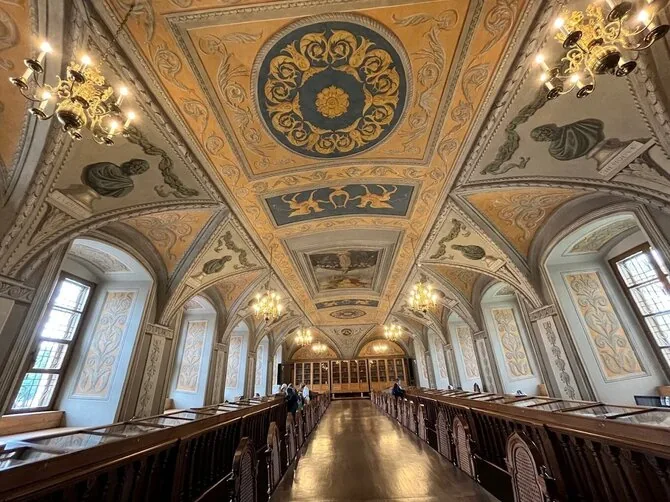
The second wife of the King of Poland and Lithuania, Sigismund the Old, the Italian-born Queen Bona Sforza d’Aragona, was a great patron of Renaissance culture, introducing the prominent traditions of that time in the palaces of the Grand Duchy of Lithuania rulers. The interiors of Vilnius University, founded in the 16th century and considered one of the oldest universities in Central and Eastern Europe, which have survived to this day, reflect the architects’ aspiration of that time to become an integral part of European Catholic culture.
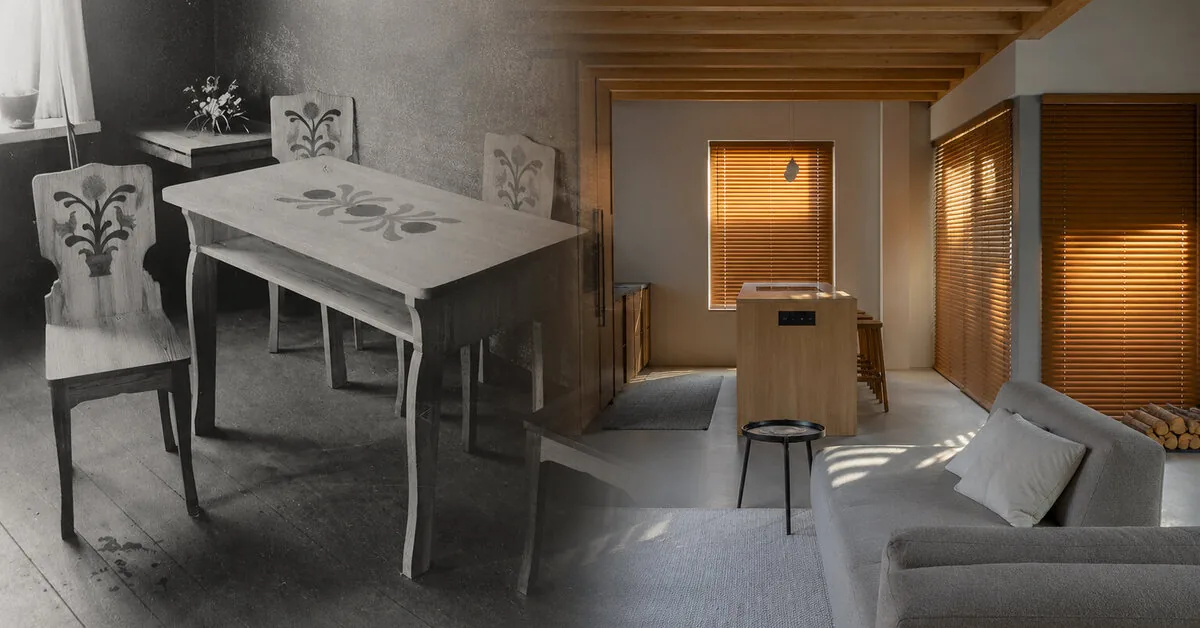
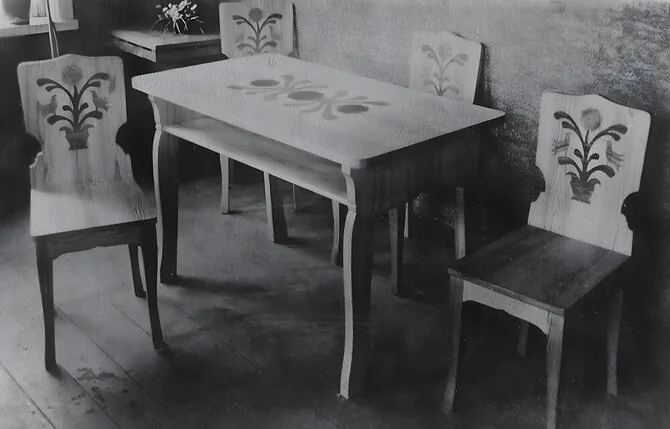
After the subsequent wars and occupations, the true revival of modern Lithuanian architecture and interior design became particularly evident in the early 20th century in the temporary capital of Lithuania – Kaunas. Although the influence of the Art Deco style prevalent in European countries at that time was felt, the search for national identity led to the use of elements reflecting Lithuanian identity in interiors, as evidenced by the prominent artifacts of the artist, craftsman, and first Lithuanian furniture and interior designer Jonas Prapuolenis (1900-1980). In 1934–1935.
J. Prapuolenis studied in the interior design department of the Paris Higher School of Applied and Decorative Arts (Conservatoire national des Arts et Métiers). At the “Art and Technology in Modern Life” World Exhibition in Paris in 1937, he was awarded a gold medal for a unique set of Lithuanian living room furniture decorated with national motifs, and a silver medal for artistic parquet and other wooden products.
These awards internationally proved J. Prapuolenis’s talent to combine Art Deco with national style. In his latest creative period – 1956-1970 – the designer managed to form a harmonious synthesis of the essential principles of innovation and folk art.
Therefore, if we seek Lithuanian identity in contemporary interiors, it can be drawn from both the royal court and the folk craft traditions of our country, reviving historical memory and traditions by interpreting them in a modern way.
Understanding context, experience, and craftsmanship save from the whims of fleeting fashion
Often, when furnishing an interior, there is a fear that “fashion” will quickly pass and the interior will become boring. Therefore, it is important to understand that interior design is one of the design directions, whose main trends are refined by authorities in the design world – renowned interior or product (furniture) designers, as well as organizers of international exhibitions (“iSaloni” in Milan, “Tendence” in Frankfurt am Main, “Maison” – in Paris).
The teams organizing these exhibitions bring together sociologists, architects, designers, and other specialists in this field, whose collective insights help predict likely directions. Prominent names also set the tone, so an interior or piece of furniture created by a renowned architect or designer only gains value over time. There is no need to look far for examples – have the interiors of the Lithuanian National Opera and Ballet Theatre in Vilnius (architect Elena Nijolė Bučiūtė) or the Neringa cafe (architects Algimantas and Vytautas Nasvyčiai) become outdated or boring? And they were created during the Soviet era, when the choice of materials was extremely scarce.
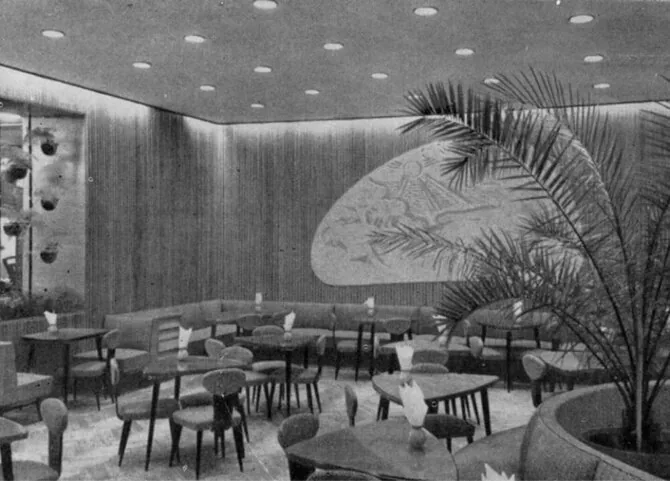
Limited material arsenal – not an obstacle for a talented creator
It is obvious – a limited arsenal of materials is not an obstacle for a talented creator to implement an idea, and scarcity only stimulates creativity. Working at the then Furniture Design and Construction Bureau in Vilnius (Baldų PKB), I had to convince myself of this many times.
Talented designers working in this state institution adapted even mass-produced furniture parts and skillfully used the experience of skilled carpenters: from the originally designed offices for the Soviet nomenclature to the postmodern interior of the “Astorija” (now “Radisson Blu Royal Astorija”) hotel in the representative part of Vilnius Old Town, created in 1985 by designer Jonas Gerulaitis (together with architect A. Šarauskas), which, unfortunately, did not survive.
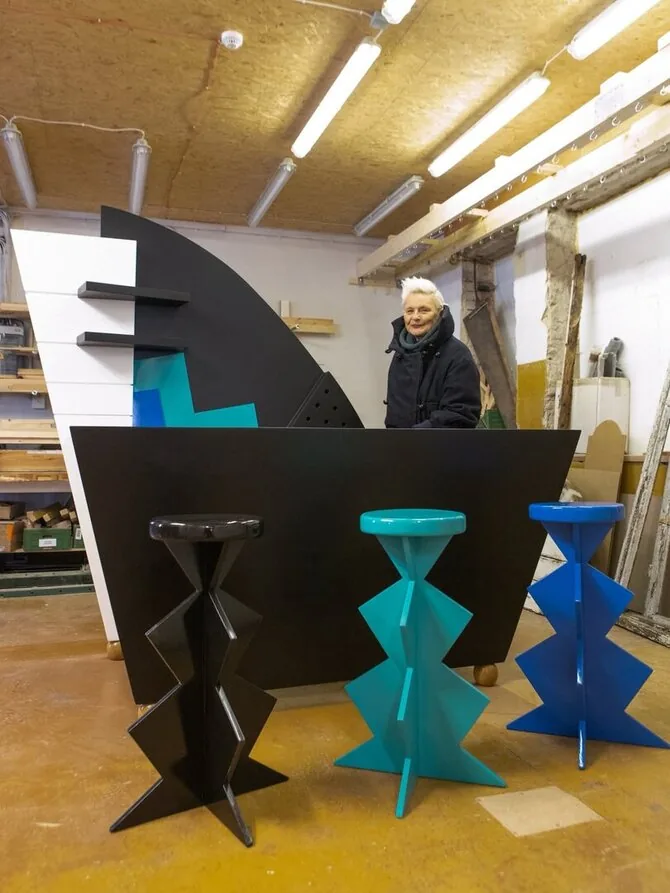
Similarly, the interiors of “Vidudienis” on Gediminas Avenue in Vilnius, “Le Provence” restaurant, and “Ritos slėptuvė” pizzeria, designed by architect Audra Kaušpėdienė and her colleagues during the period of regained independence, also did not survive. However, an artifact created by the architect, imbued with the spirit of postmodernism – the bar of the “Jungtinės pajėgos” architects’ office, restored by woodcraft professionals – recently became the first interior design exhibit of the National Architecture Institute in Kaunas (NAI). Artifacts from the past, testifying to creative searches and manufacturers’ craftsmanship, only gain value over time.
Concept helps to refine choices
Scandinavian minimalism, a Mediterranean interior saturated with ochre shades, or a Mexican-style interior bursting with colors – depends on the purpose of the object and the vision agreed upon with the client. If it’s a restaurant or a hotel, bolder solutions can attract visitors. However, interpretations of other cultures and traditions are less resistant to time, and if fragments of such interiors can be preserved, they serve more as objects of study than timeless design works.
We see exotic interiors reminiscent of distant lands less and less often, although thematic interiors still prove successful in the HORECA (Eng. Hotel, Restaurant, and Café/Catering – accommodation, services and catering) sector, but their number is decreasing, with more attention being paid to context, spatial characteristics, and functionality.
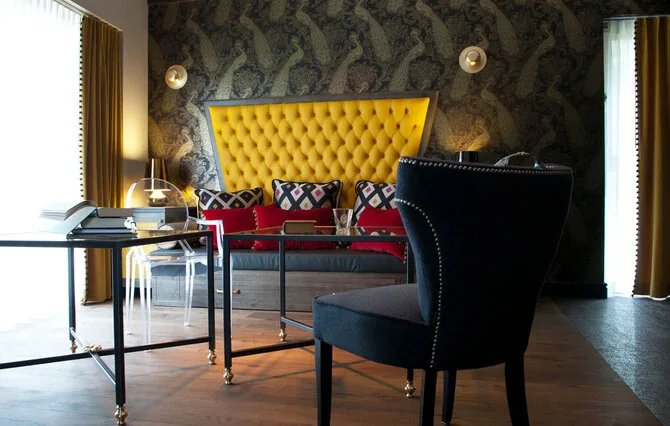
To avoid getting lost in the current unlimited offer, it is important to clarify the future task. Interior designers are increasingly guided by a concept more resistant to the tests of time than by seeking a short-term effect.
Eternal classics and moderate, laconic modernism hold strong positions – time-tested solutions. Recently, along with changing attitudes towards consumption and the need for sustainability, a trend is emerging to preserve what is still valuable and adapt it in modern interiors, creating the most valuable layer – that of memories.
Authenticity – every layer is valuable
Having tried various styles – both classicism and minimalism, as well as pseudo-ethno – we realized that there is another very important dimension of interior design: authenticity. It can be assumed that the breakthrough occurred when people appreciated the uniqueness of apartments – lofts – set up in former factory buildings.
Read more Police detained 8 people during the «Lithuanian Pride» march: one of them released black smoke
Lofts probably achieved their biggest breakthrough when, due to their authentic high-ceilinged spaces, even with industrial elements, their future residents were willing to sacrifice comfort and spatial privacy – choosing the absence of a more isolated bedroom or children’s room, as lofts usually have one large window and only on one side. Some of the first loft real estate developments were set up in the Sapieha Palace complex, Antakalnis district, Vilnius, in an authentically reconstructed building, and a little later – the “Telegrafo” lofts in Kaunas. Both of these buildings are cultural heritage, which is especially emphasized in real estate advertisements as special values that give character to interiors.
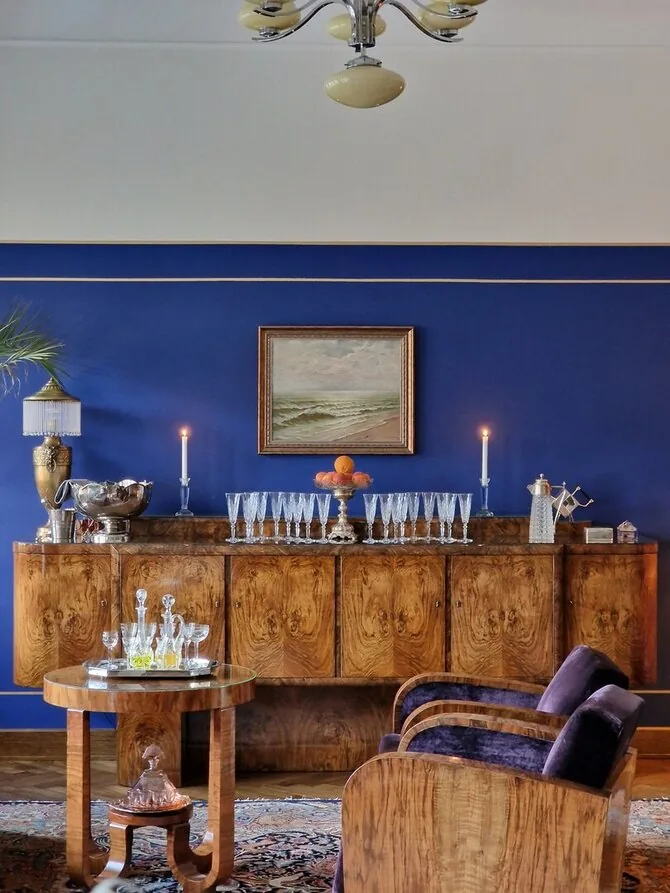
The valuable features of heritage buildings – preserved structures, interior elements, and especially the character of the spaces themselves – should be emphasized in the interior if we seek uniqueness and connections with our country’s history, which is also unique.
Bringing buildings and their interior spaces back to life, adhering to the principles of the circular economy, is not only sustainable – the spaces of such buildings breathe respect for past generations who lived and worked in them.
Many buildings, even during the Soviet era, were designed by Lithuanian architects following the best examples of advanced Western European countries. During their reconstruction, many valuable works of art – stained glass, frescoes – are found, which until recently were destined for landfills. The trend in recent years is that if they cannot be preserved in their authentic location, they serve as decorative elements for other spaces – restaurants, cafes, offices.
Search for identity – contextualism, genius loci
If we are currently creating a new layer – building a new building and furnishing its interior – we can look for inspiration in the existing environment. Where is the building located, what are the characteristics of this place, what is the region, city, or district famous for? What urban structure is characteristic of it, what vegetation?
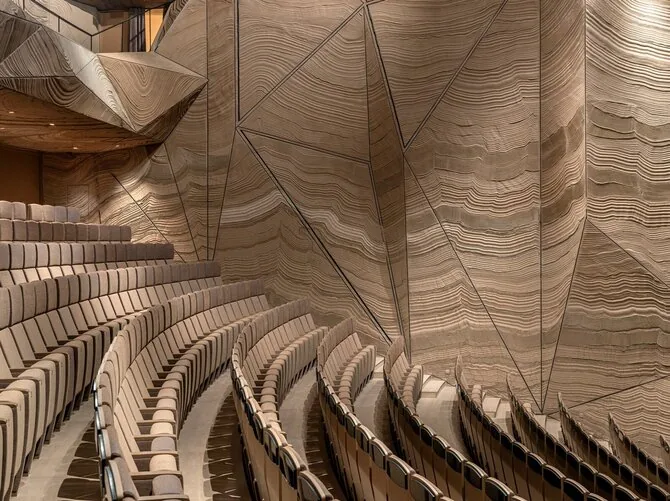
Nothing reflects the creator’s mastery as much as the feeling of the spirit of the place (Latin: genius loci). If we are ourselves, if we value our heritage, we will always be interesting to the world. At the “World Architecture Festival 2025” (WAF) in Miami, the interior of the Klaipėda State Musical Theatre, created by the “MAMA architects” studio led by architect Marius Mateika, was selected from 780 projects submitted by representatives from over 37 countries, alongside architectural giants such as “Foster + Partners”, “Bjarke Ingels group”, “Studio Gang”, “Grimshaw”, and “Perkins&Will”, as an exemplary public building interior.
The project became a focal point due to its unique clay decor, which required as much as 32 tons of clay and a specially developed technology that allowed transforming a traditional material into an innovation. “This recognition is a message that the world misses authenticity,” said M. Mateika.
Changing concept of longevity – sustainability (local materials) and adaptability to changes
Until the early 20th century, humans lived in harmony with nature, observing it. Almost 100 years later, architects and interior designers are once again turning to traditional materials, understanding both the importance of social responsibility – involving local manufacturers in processes – and the necessity of a healthy environment.
Architects Aidas Krutejavas and Ieva Baranauskaitė designed and built a house in Kaunas district, also conducting research work on sustainable construction: they compiled a catalog of sustainable products manufactured in the Baltic Sea region, aiming to reduce the carbon footprint and long-term environmental impact.
According to the architect, modern industrialization and global supply chains allow materials to be brought from any country in the world, but this levels architectural expression and loses “know-how”. Therefore, many architects and interior designers prioritize materials whose production promotes the economic development of the region close to the project and supports crafts such as wood and metal processing.
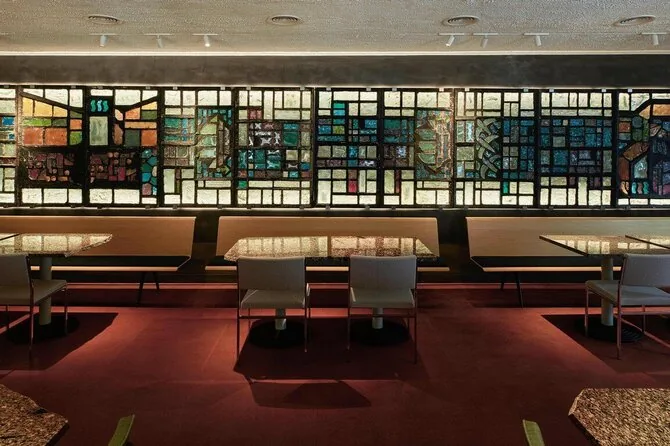
The interior of the restaurant and sauna club, designed by architect Mantas Peteraitis, is furnished using all used and restored furniture, and a block stained glass window salvaged from a demolished building in Klaipėda is also exhibited. By maintaining respect for the past, we can create an original interior that reflects our country’s development and different, even recent, historical stages.
When designing a modern interior, the value is no longer longevity, but flexibility – the ability to adapt to changes. The main planning process should start with setting priorities. Therefore, it is important to consider future transformations, anticipate future changes, and create a long-term object development strategy.
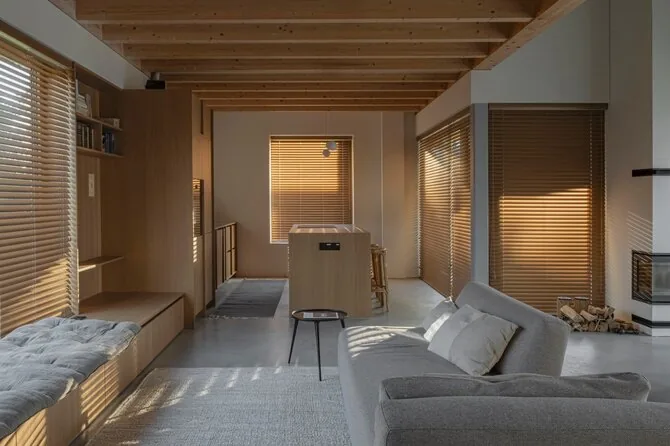
Interior design solutions, combining the main more enclosed rooms with common ones, can ensure less costly adjustments in the future – the transformation of certain partitions or furniture is much simpler than changes in engineering networks.
In summary
Does the Lithuanian interior already have those special features that would distinguish it from the interiors of other European countries?
For now, the “Lithuanianness” of interiors is still forming, and only creativity will determine whether we can stand out. To achieve uniqueness and longevity in interior design, it is important to adhere to the following main principles:
- attention to the needs and self-expression of each individual or company;
- respect for history: where possible, preserving cultural layers to create a narrative about the stages of interior development;
- sustainability: use local materials; rely more on preserved traditional technologies – woodworking, ceramics, furniture industry, textiles.