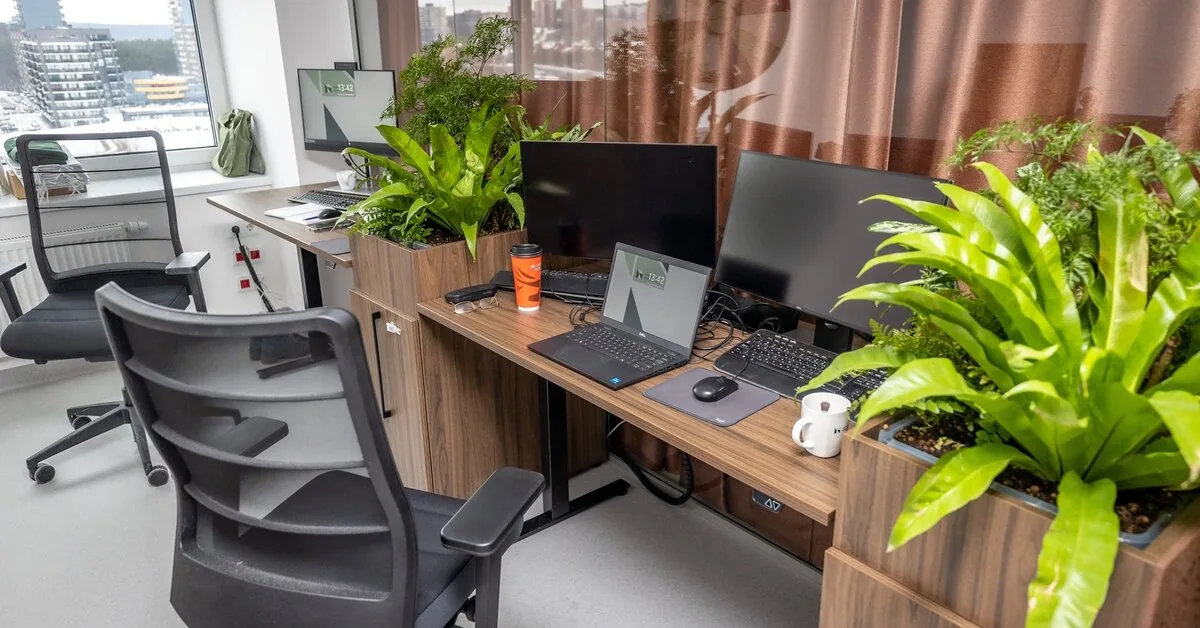
Scientific research shows that the problem of dry eyes is much more common than it might seem. For example, a study conducted in 2025 revealed that almost 54 percent of office workers who work daily in front of screens experience dry eye syndrome. Researchers found that the biggest risk factors are long hours working at a computer, reduced blinking frequency, and air conditioning systems.
Read more War veteran: Ukraine launched the first phase of the counteroffensive in Crimea
Today, when designing offices, including workspaces for state institutions, great attention is paid not only to functionality or energy efficiency, but also to employee health and comfort.
Not only screens harm the eyes
Although it is often thought that the main enemy of the eyes is long hours in front of a computer, specialists emphasize that the entire working environment is also important.
“The working environment has a significant impact on eye health, especially when most of the day is spent in front of screens. Prolonged viewing of a monitor reduces the blinking frequency, causing eyes to dry out and tire faster. In summer, air conditioners additionally dry the indoor air, and in winter – heating and lack of natural light. Inadequate lighting or reflections on the screen also have an impact,” says Monika Korbutienė, public health specialist at “Vilnius sveikiau”.
A study published a few years ago found that employees who spend more than six hours a day in front of screens and work in rooms with central air conditioning are significantly more likely to experience dry eye disease.
Gerda Krasauskė, Director of the Projects and Maintenance Department at Turto bankas, says that when renovating workspaces for state institutions, they consider not only the building’s engineering solutions or the number of offices.
“We are creating an environment where employees can not only work productively but also briefly step away from screens, change their workspace, rest their eyes and minds,” says G. Krasauskė.
Read more Ukrainian strikes in occupied territories and a border village claimed six lives
She notes that modern LED lighting solutions are being implemented in the renovated premises, ensuring uniform, high-quality lighting and allowing for more comfortable working conditions. Modern ventilation and air conditioning systems are also installed, which can be adjusted in different areas of the building as needed. Outside working hours, the systems reduce their operating intensity according to a set schedule, thus not only maintaining a comfortable microclimate but also saving energy.
Not only eyes, but also brains get tired
Dry eyes are often considered merely a discomfort, but their impact on work performance can be significantly greater.
“Tired eyes often cause a feeling of dryness, stinging, headaches, and reduced concentration. This directly affects work efficiency, as it becomes harder for a person to maintain focus and read or analyze information. In the long run, the number of errors may increase and the work pace may slow down. Even short-term eye fatigue reduces overall work capacity,” says public health specialist M. Korbutienė.
It is observed that dry eye symptoms often manifest not only as a burning or gritty sensation in the eyes. They are accompanied by blurred vision, eye fatigue, headaches, and difficulty concentrating.
How to protect your eyes?
While completely avoiding screen work may not be possible for many, specialists say that a few simple habits can significantly reduce eye fatigue.
It is important to take regular breaks when working with screens, following the 20-20-20 rule – every 20 minutes, look into the distance for 20 seconds. It is also recommended to ensure proper lighting at the workplace and avoid direct airflow from air conditioners. It is beneficial to consciously blink more often and, if necessary, use moisturizing eye drops. General body hydration and sufficient sleep are no less important.