









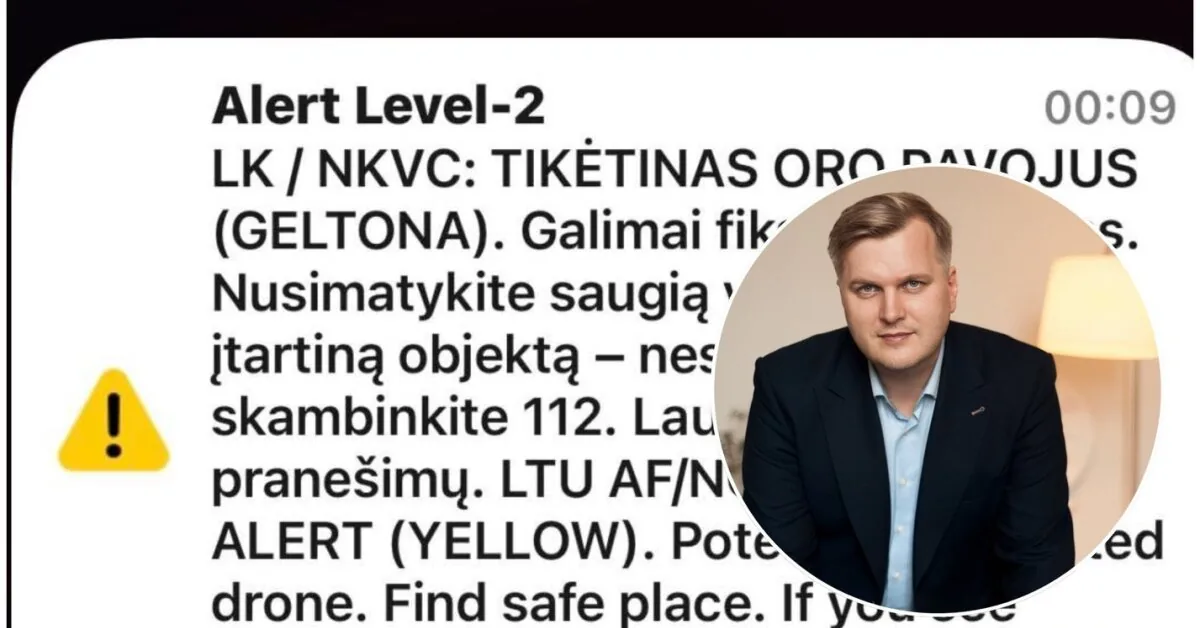
An unexpected warning about a possible danger, a notification on the phone, or an alarming message naturally causes stress. However, after the initial reaction, another process often begins – we rush to check news portals, social networks, read comments, and look for new information. We do this hoping to calm down, but often achieve the opposite result – anxiety grows.
“Anxiety in such situations is not inherently a sign of a disorder. What matters more is what we do with this feeling: whether we can distinguish facts from scenarios created in our imagination, whether we seek reliable information, or whether we get caught up in an endless stream of anxiety-provoking content,” says Antanas Mockus, founder of the Depression Overcoming Center and psychologist, to 15min.
– Last night, a “yellow” air danger warning woke a significant part of Lithuania’s population from sleep. It soon became clear that a drone was spotted in Lithuanian airspace. Although it was safely neutralized shortly after, people complained about being unable to sleep, feeling anxious, and unsafe.
Read more German Foreign Minister after drone incident in Lithuania: NATO will not be intimidated by Russia
Some even required emergency medical assistance due to increased blood pressure and other health issues that could have been triggered by the unexpected message received in the middle of the night.
– Explain how a sudden message about a possible threat psychologically affects a person?
Read more Want amaryllis flowers for Christmas? Here’s what you need to do right now