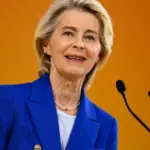



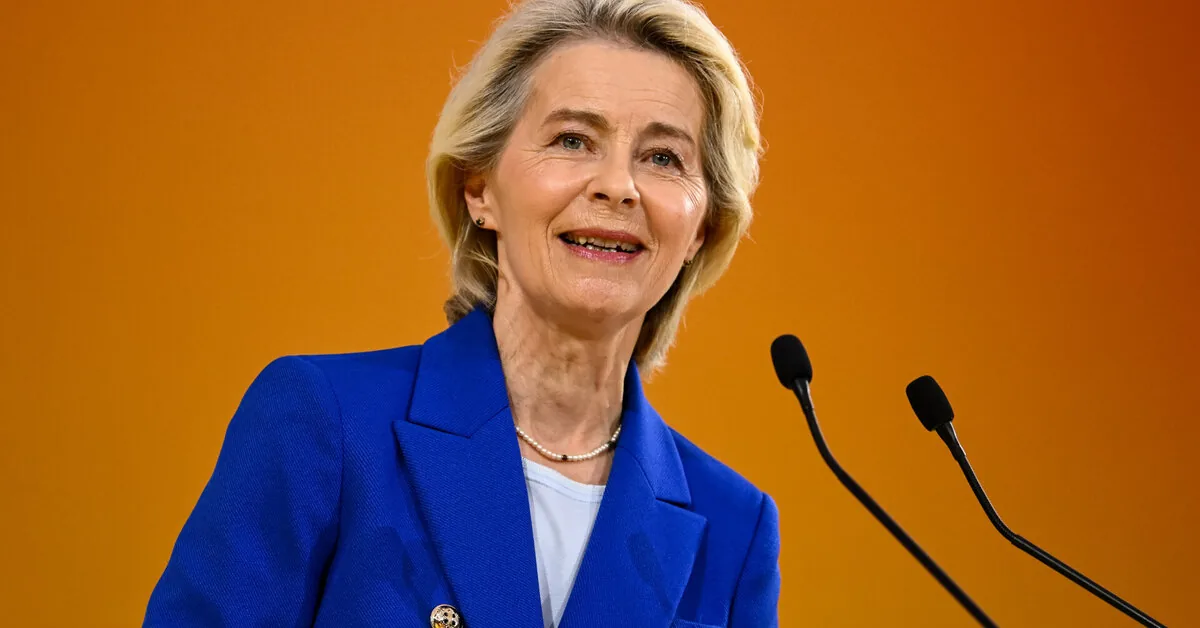
In this speech, she will outline the priorities for the coming year and her vision for addressing the challenges facing the world’s largest trading bloc.
Read more Psychologist on anxiety after the danger signal: by trying to calm down this way, we make a mistake
The content of U. von der Leyen’s address to the European Parliament (EP) in Strasbourg, France, is kept secret. EP political groups have actively sought to have their priorities and important projects included in it.
However, it is likely that the speech will mention artificial intelligence (AI), climate change, the fires that ravaged Europe this summer, as well as child protection online, Russia’s war in Ukraine, the conflict in the Middle East, and tensions in international trade.
Last year, she stated that Europe must assert its independence, as the US continues to impose tariffs on other countries, and Donald Trump’s administration criticized the bloc’s migration policy and warned of a “civilizational erasure.”
“Europe is fighting,” said U. von der Leyen. “Fighting for our values and our democracies.”
“New world orders are currently being drawn, based on force, front lines,” she said, adding that the EU “must fight for its place in a world where many great powers view Europe either ambivalently or openly hostile.”
A political spectacle to demonstrate Europe’s ambitions
This event has become an annual ritual modeled on the US presidents’ annual addresses to Congress, but it will not be widely broadcast, and it is unlikely that many of the 450 million EU citizens in the 27 member states will watch it.
It is a carefully prepared communication event in front of often applauding legislators, most appreciated by EU insiders.
U. von der Leyen tends to conclude her speech with the words that have become her slogan: “Long live Europe.”
Usually, the topics discussed relate to hopes and plans for the European Commission – the bloc’s executive body – for the coming year, but they often lack specificity. Critics say the Commission’s work is not transparent enough.
Eric Maurice, an analyst at the European Policy Centre’s analytical research center, said the chairwoman should not use her speech “to appease political groups or increase her visibility and expand the Commission’s political and institutional scope.”
“The EU is facing the collapse of all the assumptions on which it was created. The rules-based order with favorable free trade and friendship and support from the US is disappearing,” said E. Maurice.
Increasing institutional power
The Commission proposes laws applicable in all 27 countries and oversees that existing ones are not violated. It negotiates trade on behalf of all its members and is the main enforcer of European antitrust investigations.
It is led by the 67-year-old former German defense minister, who has become a prominent figure at summits with world leaders.
U. von der Leyen is hard to miss. In seven years in this position, she has amassed enormous influence: securing vaccines during the COVID-19 pandemic, managing the energy crisis caused by the Russian invasion, and supporting Ukraine during the war.
She also seems to have earned some respect from D. Trump. She and her team made great efforts to reduce the damage caused to the European economy by D. Trump’s tariff war.
However, the Trump administration was also angered by the Commission’s tough measures against major tech companies, many of which are based in the US, for allegedly violating European data protection rules.
Before this speech, the Commission created a special website dedicated to its leader and this event, and distributed brochures presenting their achievements over the past 12 months.
The list is considerable: it includes new trade agreements, increasing economic competitiveness, reducing energy costs, promoting defense investments, billions of euros in support for Ukraine, and sanctions against hundreds of Russian officials and organizations.
Read more German Foreign Minister after drone incident in Lithuania: NATO will not be intimidated by Russia