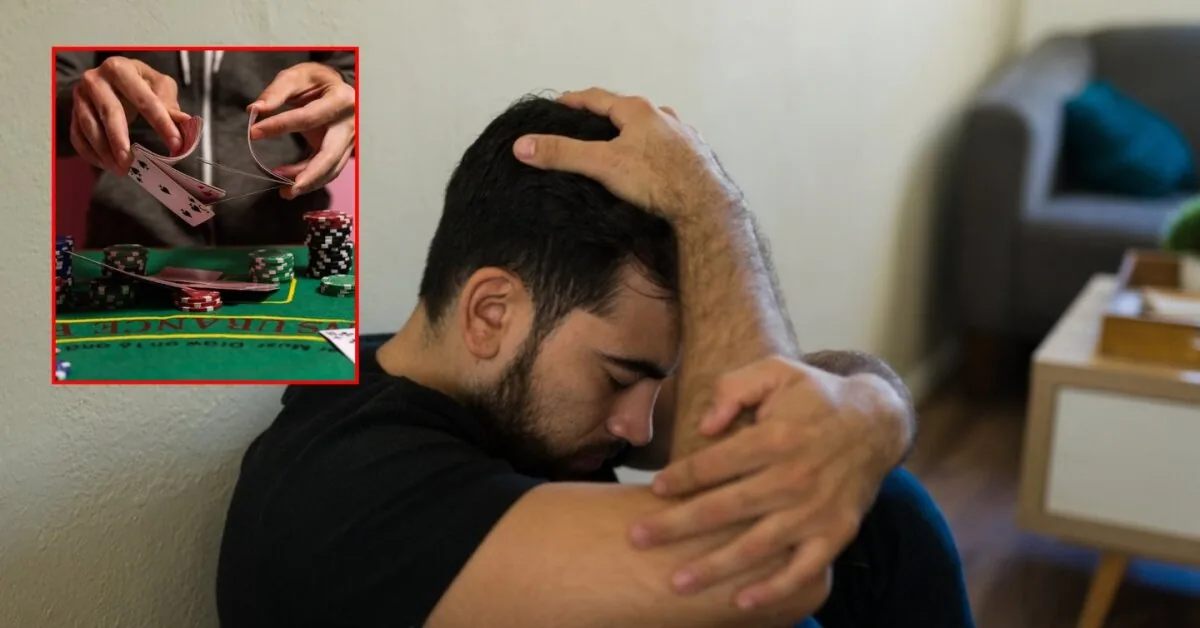
Every day, they consult relatives who have faced a dementia diagnosis in the family, according to a press release.
Read more „KN Energies“ will request 100 million euros of EU funding for the CO2 terminal this year
According to the psychologist, hearing a close person’s dementia diagnosis is a moment when the whole world briefly shakes. It is not just a medical entry in the disease history. It is a threshold that, once crossed, changes the family’s daily life, communication language, relationships, and future plans:
“In this new reality, relatives often feel as if they have entered an unfamiliar labyrinth where previously effective communication methods no longer apply, and each day demands more emotional strength. And this is where another, often unspoken part of the story begins – not only of the person diagnosed with dementia but also of the one who decides to stay by their side.”
What is dementia and what determines its risk?
According to the mental health specialist, it is important to understand that the term “dementia” does not describe a single specific disease but different conditions affecting the brain. As they progress, they affect memory, thinking, language, spatial orientation, and the ability to perform the simplest daily tasks.
Today, more than 55 million people worldwide live with this diagnosis, and every 3 seconds, a new case of dementia is diagnosed somewhere in the world.
The most common cause of dementia is Alzheimer’s disease, accounting for about 60–70 percent of all cases, but this condition can also be caused by vascular damage, Lewy body disease, and other neurological causes. Understanding that objective brain damage underlies sudden anger or memory mistakes helps relatives realize that the patient does not behave this way intentionally.
Scientists identify several main factors that determine susceptibility to this condition, among which age is the most important. Although dementia is not a usual or mandatory part of natural aging, sensitivity to various biological factors that can trigger its development naturally increases as the body ages.
“For example, after passing the age of 65, the likelihood of developing dementia doubles every five years, and among seniors over 85 years old, every third person faces this challenge. Family history also plays a role, as it is observed that individuals with a close relative already diagnosed with dementia have a slightly higher risk than those who do not have such relatives in their family history,” says E.M. Adejevaitė.
Statistical data also reveal intriguing and sad disparities between genders. Women have a much higher risk of developing Alzheimer’s disease – worldwide, two-thirds of these patients are women.
According to the World Health Organization, a 60-year-old woman has a higher chance of developing Alzheimer’s disease during her remaining lifetime than breast cancer. Meanwhile, men statistically more often develop Lewy body disease and vascular dementia, often triggered by strokes or cardiovascular problems.
“Finally, genes also contribute to these factors, although only in very rare cases – about one percent or less – does dementia development directly result from specific genetic mutations that can be passed from generation to generation and cause very early disease onset, manifesting before the age of 40 or 50. In other cases, genes act only as a risk-modifying factor, not a determinant,” says the medical psychologist.

First stage: allow yourself to feel everything
The first stage of this difficult journey is to allow yourself to feel and stay with all the emotions that arise. After the diagnosis, relatives often try to put on a mask of strength and keep emotions deep inside so as not to burden the patient.
Psychologist E.M. Adejevaitė sees in her practice that this is one of the most dangerous paths leading to emotional exhaustion. Hearing the diagnosis causes a real storm of feelings – from shock, anger, and deep sadness to anxiety, fear, or even unexpected relief that unclear symptoms finally have a name.
The psychologist emphasizes that it is very important to understand that all these feelings are a normal human reaction to loss because we begin to mourn the person as we knew them before the illness. Accepting this new reality takes time, so one should not close off inside. These emotions need to be experienced, not suppressed, by talking with someone – another family member, a psychologist, or people who are already on the same path in mutual support groups.
When a relative openly speaks about their experience and allows themselves to grieve, when they accept the idea that life with this diagnosis is possible, they free themselves from inner tension and later find much more strength to be patient and gentle with the patient.
Second stage: change your attitude towards your role
The second step requires fundamentally changing the attitude towards your role. Many relatives automatically take on the entire burden and become caregivers twenty-four hours a day, seven days a week. However, dementia is a gradually progressing condition, and it is very important not to forget to take care of yourself.
Read more Bomb threat: an item that millions of people have at home caused suspicion at the airport
“One of the most important things is timely respite, which must be understood not as a luxury but as a daily necessity,” says the psychologist.
According to the current regulations, caregivers of a person who has been determined to need individual assistance cost compensation can receive up to 720 hours, or 30 days, of temporary respite services per year.
Specialists emphasize that this is the time when your loved one is safely and qualitatively cared for by professionals providing services at home, and you can finally just sleep, go to the doctor, meet friends, or quietly be in silence. Those who regularly use respite services avoid the risk of emotional burnout and later return to their relative calmer, more patient, and with more inner energy.
Third stage: learn a new way of communication
The third stage invites learning a completely new way of communication. A person with dementia is no longer the same as before, and this realization deeply hurts. However, behind the veil of diagnosis, the same unique personality remains, requiring respect, love, and security.
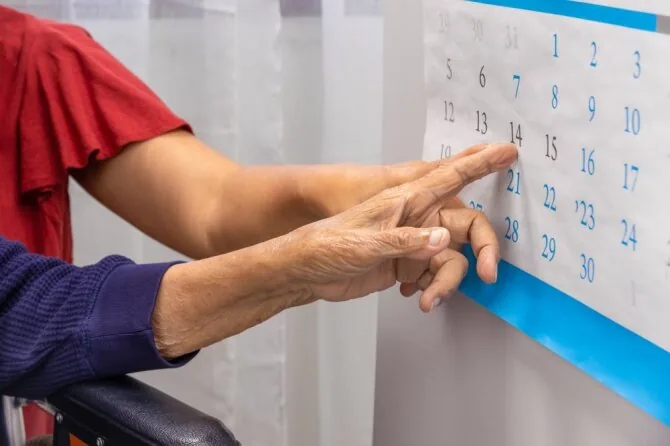
When the patient gets lost in time or facts, instead of desperately trying to bring them back, constantly correcting their mistakes, or proving your truth, switch to the principle of calm togetherness. If the person claims to see a long-deceased relative or wants to return to their childhood home, bluntly proving reality will only cause additional anger, fear, and irritation, which is very difficult for them to control later. Instead, follow the rule of emotional safety – accept the emotion the person feels, speak more slowly, in simple sentences, maintain eye contact, and direct attention to joyful, familiar things.
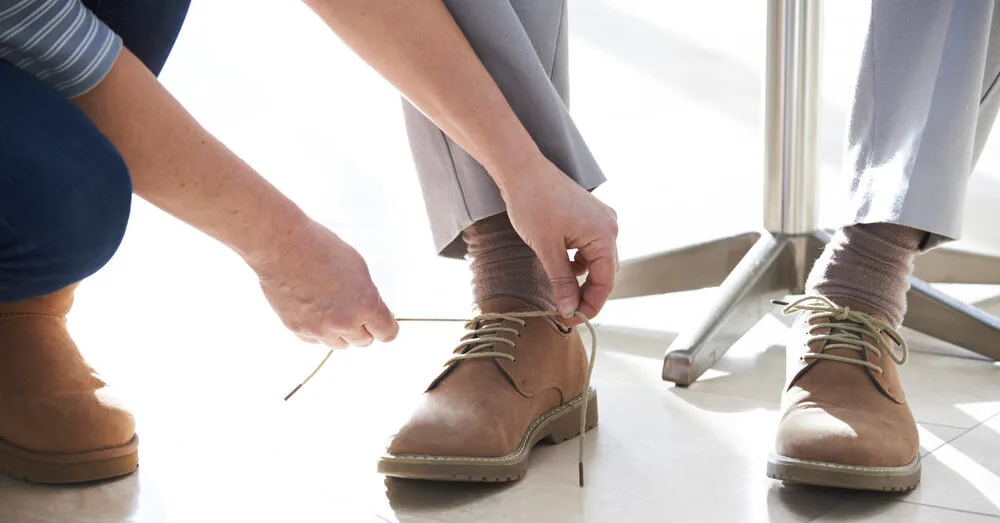
It is also important to simply accept that they may easily forget what they said a few minutes ago, and it is not necessary to remind or emphasize memory gaps every time. In the daily environment, a constant daily routine provides the greatest peace and stability for the patient, as environmental clarity and stability directly reduce confusion caused by the disease. Try to always put important items in the same place, do not rush the patient, and allow them to maintain dignity – even if they can no longer dress smoothly by themselves, let them choose the shirts they want.
In the early stage, it is useful to write a diary together, look through old photos, listen to favorite music, or simply enjoy a shared sense of humor that relieves daily tension. A simple hand-holding and being nearby often say more than a thousand words.
Fourth stage: plan the future while you still can
The fourth stage is to plan the future while it is still possible. Anticipating and preparing for what awaits in later stages can be emotionally difficult, but while the person can still make decisions independently, it is necessary to do this homework in advance and consider legal and financial matters.
Legal measures such as advance directives, power of attorney, or decision-making assistance agreements, notarized, allow the family to clearly state wishes regarding the person’s future care, treatment, property, or financial management. These are not just dry legal documents; they are a true act of love that ensures the person’s interests, dignity, and will are protected even when they can no longer express it themselves.

You are not alone on this path
However, the greatest danger on this path lies in the fact that caregivers often completely forget to take care of themselves, losing their own lives.
Medical psychologist E.M. Adejevaitė reminds the classic airplane rule – we must first put on our own oxygen mask.
According to her, a burned-out, emotionally exhausted, and sleep-deprived relative will not be able to create a safe and calm environment for a person with dementia. Taking care of your psychological and emotional health is not selfishness – it is a strict necessity.
“The most important thing is to know that you are not alone. Specialists who perfectly understand your experiences and can offer free individual or group psychological consultations, emotional support lines, and mutual support groups work at St. Roko Nursing Clinic, mental health centers, public health bureaus, community family homes, and associations,” says the psychologist.
Start caring for the patient by caring for yourself because if you break down, there will be no one to support your loved one. And if you remain strong and emotionally safe, together you can go a much longer, calmer, and more dignified journey.
“Dementia changes a lot, but it does not eliminate love; it only invites you to learn to love differently – more patiently, wisely, and with more self-care. If you now feel like you are drowning, accompanied by guilt or sometimes anger arises – understand that this is completely normal. Do not carry everything alone, reach out, talk, accept help, and allow yourself to be not only a self-sacrificing caregiver but also a person with the full right to live,” concludes E.M. Adejevaitė.
Read more News about a possible takeover lifted easyJet’s share price by more than 10%.