“The exhibition at the Vilnius Picture Gallery challenges the notion once expressed with considerable skepticism by Théophile Thoré-Bürger, that ‘a museum is a cemetery of art.’ The painting from Ukraine gives meaning to the museum as a living space for research and dialogue, where objects at the center of attention are surrounded by questions, and answers are patiently pieced together from intuitions, technological analysis, and factual fragments, where identities are formed and won, where cultural paths worn through centuries intersect and new ones are created.
Read more European Commission and INVL intend to create a private equity fund in Moldova
So visitors to the gallery can expect a story not only about the painting, its plot, and authenticity. Here we talk about how knowledge is born and why sometimes the greatest value lies in doubt,” says one of the exhibition’s curators, director of the Vilnius Picture Gallery Dr. Aistė Bimbirytė.
“The most important mission for us and our project partners in Ukraine was to remove the painting from the war zone. Now the museum exhibit is in the hands of researchers, restorers, and museum professionals. For two years, we will exhibit the painting at the Vilnius Picture Gallery and the Pranas Domšaitis Gallery,” says Skaistis Mikulionis, senior project curator of the LNDM International Cooperation Department.
In Caravaggio’s Shadow: A Four-Century History of the Original and the Copy
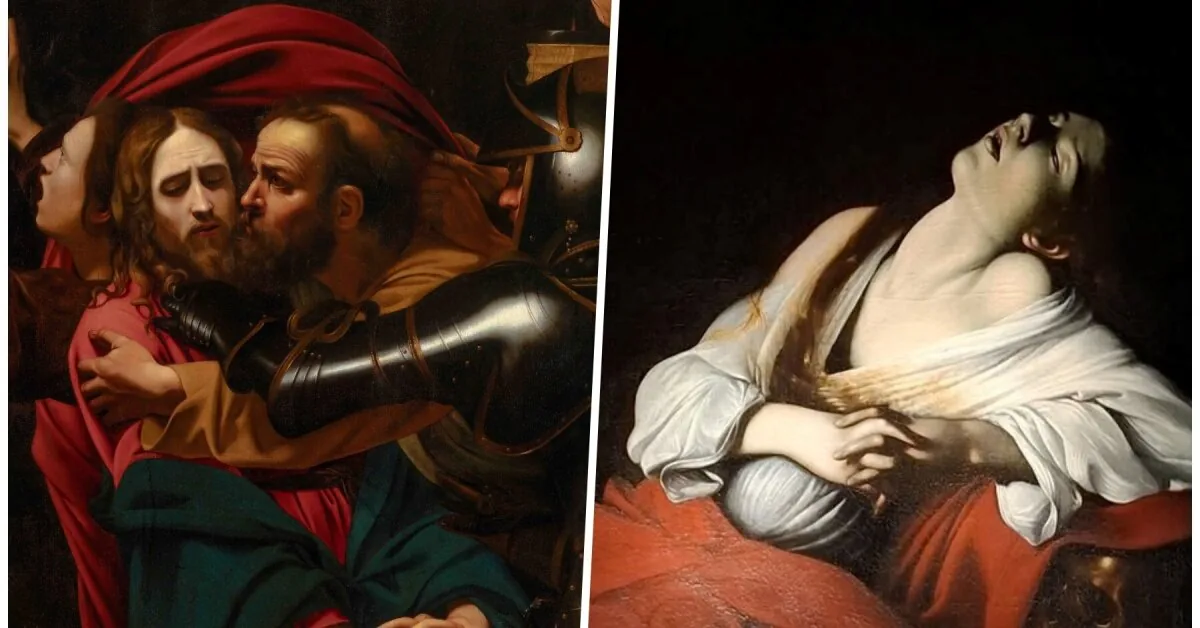
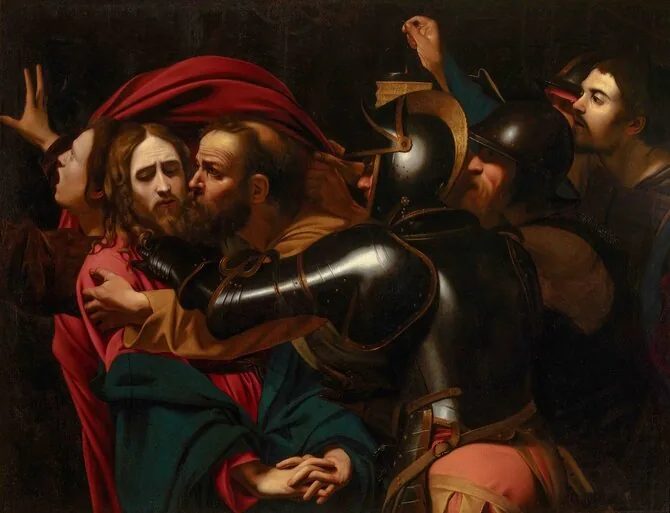
In 1602, the Mattei family collection was enriched by Caravaggio’s painting “The Taking of Christ” – a dramatic scene in which Judas betrays Christ with a kiss, and on the right side of the composition, it is believed, the artist himself is depicted holding a lantern.
The artist was paid 125 scudi for this work. More than a decade later, Giovanni di Attilio created a copy of the painting for the same family, costing only 12 scudi. Both works were mentioned in the Mattei collections as late as 1729, but later their paths diverged. One of these canvases ended up in Dublin and was associated with Caravaggio only at the end of the 20th century.
In the 19th century, works attributed to Caravaggio appeared several times on the Paris art market. In 1868, such a work was acquired by Alexander Bazilevsky, a diplomat and collector of Ukrainian origin. It is believed that this could have been one of the canvases kept in the Mattei collection. Thus began an intriguing art history mystery that researchers still disagree on today.
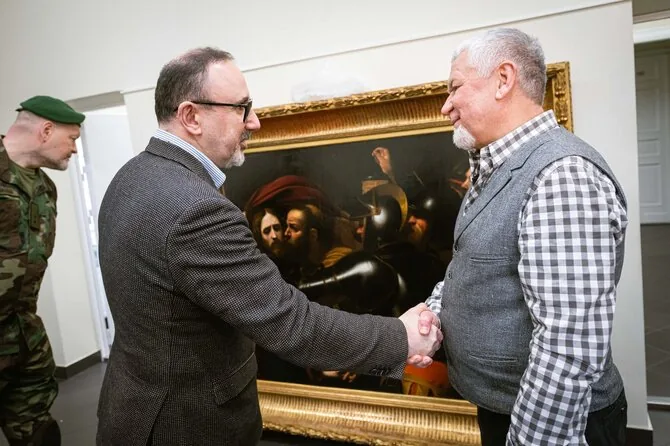
Currently, at least twelve versions of “The Taking of Christ” are known worldwide. One of the most popular hypotheses is that the painting held at the Odessa Museum of Western and Eastern Art is the earliest copy created based on Caravaggio’s original.
The story of the work’s origin is dramatic, as is its fate in recent decades: in 2008, the painting was cut out of its frame and stolen, found two years later in Berlin severely damaged, and a decade after the theft, restoration began in Ukraine.
Read more Ivanauskas – about changes in „Žalgiris“: „The team must be in its place“
This year, after the statute of limitations court process was interrupted, the work was presented in Kyiv and, after a difficult journey through a war-torn country, reached the LNDM Pranas Gudynas Restoration Center. Here, a team of restorers and researchers – Linas Lukoševičius, Regimantas Paulionis, Lukas Rakauskas, Tomas Ručys, Jūratė Senvaitienė, Algimantas Vaineikis, and Rolandas Vičys – ensured the safe exhibition of the work and conducted physical examinations.
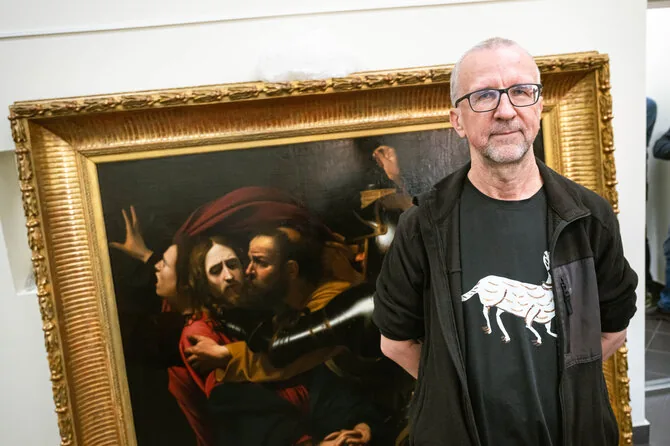
Now the painting is being presented to the Lithuanian public for the first time, giving a rare opportunity to observe up close how art history is born, verified, and rewritten. The experience of the work will also be enhanced by the atmospheric exhibition architecture created by Ūla Žebrauskaitė-Malinauskė, subtly correlating with the painting’s light and color, and the design solutions by Dominyka Gurskaitė that respond to it.
Events Accompanying the Exhibition in Search of the Painting’s Secrets
The Vilnius Picture Gallery presents the multilayered history and iconography of the painting. The exhibition invites exploration of the scene of Judas’s kiss, whose significance has transcended the biblical narrative over the centuries and become a symbol of betrayal and deceit. Visitors will be able to get closer to the baroque chiaroscuro (Italian chiaroscuro) adorning the painting, unexpected iconographic solutions, and other details that help reveal the uniqueness of this work.
To solve the puzzles posed by the painting, the exhibition will be accompanied by a rich educational program. In creative workshops “The Story of One Painting,” “Light and Shadow Laboratory,” and “I Observe the Painting,” visitors will be invited to delve into the depicted plot and the artistic language of the work. There will also be guided tours with the exhibition curators, the museum guide, and the restorer.
On September 10 at 5 p.m., in a special lecture-tour, former Special Operations Department employee and author of the book “Judas’s Kiss,” Denis Fomichov, will talk about the theft of the painting and the operation to recover it.
On October 15–16, the Vilnius Picture Gallery will host the international scientific conference “The Same, Yet Different: Copy, Study, and Forgery in Visual Art.”
Read more Peteris Magyaras: Hungary could become the venue for Ukraine and Russia peace talks