








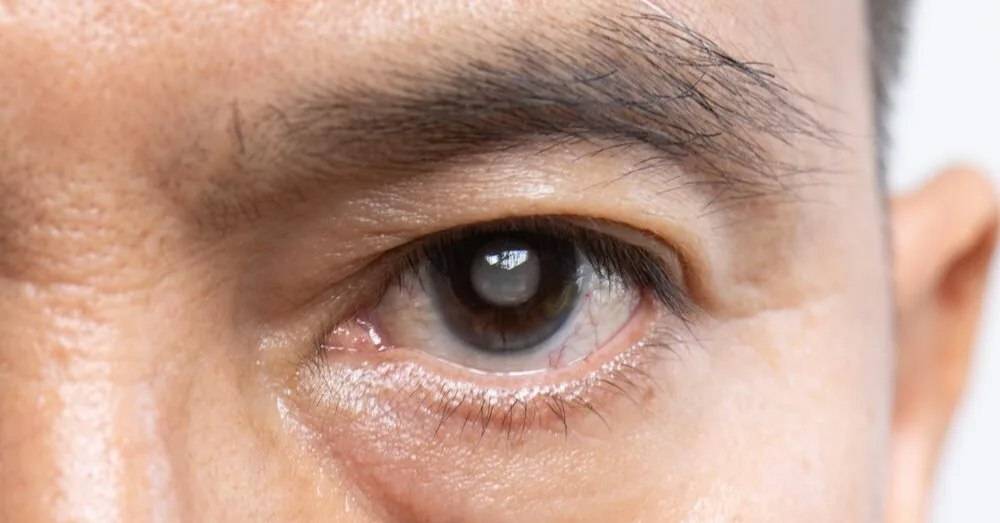
Pharmacist Irena Garuckienė from the pharmacy network “Camelia” notes that although patients usually suspect a magnesium deficiency when experiencing eyelid twitching, there may be entirely different, seemingly unrelated reasons behind it, according to a press release. So what really can cause eyelid twitching and why is it important to pay attention to it?
Read more China urges Brussels to abandon the proposed ban on Chinese equipment
Many people have experienced involuntary spasms of the muscles around the eye, usually the upper or lower eyelid – according to statistics, about 70% of the world’s population. This condition, called myokymia, is often completely harmless and can occur for various reasons, but according to the pharmacist, most patients who experience eyelid twitching first suspect a magnesium deficiency.
“Since ancient times, people have associated magnesium with almost all changes in muscle function, so it is not surprising that when myokymia occurs, this microelement is immediately considered. In fact, magnesium plays a very important role in muscle contraction processes and energy production, and its deficiency can cause unpleasant symptoms such as fatigue, general weakness, and muscle spasms,” explains I. Garuckienė.

She adds that the most commonly recognized effect of magnesium deficiency on muscles is involuntary muscle contractions, such as cramps. Since magnesium blocks excess calcium in muscle tissues, a lack of this mineral allows more calcium to reach the muscles themselves, causing spasms. Moreover, magnesium deficiency can also affect nerve impulse transmission, which again can contribute to involuntary muscle spasms.
“However, magnesium deficiency rarely causes eyelid twitching; more often, other reasons lie behind it, so it is better to look at the overall health and daily habits of the person,” says the pharmacist.
We should review our daily routine
Pharmacist I. Garuckienė points out that more often than magnesium deficiency, eyelid twitching is caused by greater fatigue, lack of sleep, constant smoking, eye strain and dryness, experienced stress, or even excessive caffeine intake. When consulting patients in the pharmacy, I. Garuckienė notices that these reasons are often not even considered.

“Eyelid twitching is often triggered by several daily factors at once, as some of them are closely related, for example, stress, lack of sleep, and fatigue. Overall, stress can affect the body so strongly that the levels of certain hormones change, muscle tension increases, and the sensitivity of the nervous system rises. Elevated adrenaline and cortisol affect the nerve impulses that control muscle movements, so muscle tissue twitches can appear in the limbs and around the eyes,” the pharmacist explains and adds that stress is one of the most common causes of myokymia.
Read more Which manufacturers’ cars ruled the Lithuanian market in August?
According to her, another common cause of twitching of the upper or lower eyelid is eye fatigue, dryness, or irritation, which can be caused by long hours at the computer, not wearing corrective glasses or lenses when needed, allergic reactions, or simply dry air due to changing environmental conditions.
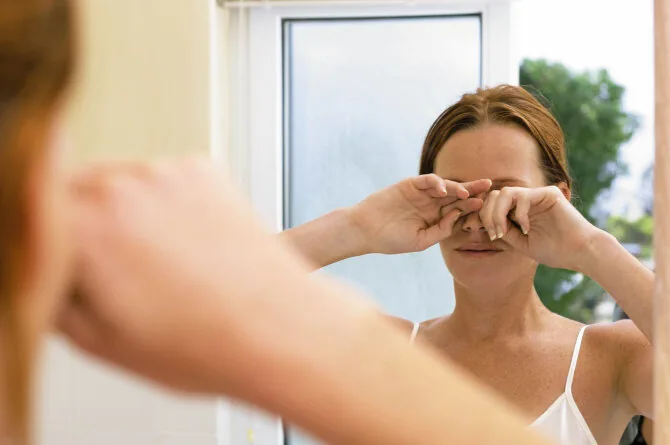
“In such cases, it is important to take regular breaks from intensive eye activity, blink more consciously, and ensure proper lighting at the workplace. If eye dryness, stinging, or irritation is felt, moisturizing eye drops – so-called artificial tears – can be used. Their composition may include hyaluronic acid, which helps to moisturize the eye surface. Supplements for the eyes containing omega-3 fatty acids, vitamin E, lutein, or zinc may also help, but a few capsules are not enough for normal vision – supplements should be taken for at least a month or two. Of course, after consulting a doctor or pharmacist,” advises the pharmacist.
When should you be concerned?
Pharmacist I. Garuckienė emphasizes that it is important to observe not only how long the eyelid twitches but also the nature of the twitching itself. Typical eyelid myokymia is usually mild and localized, but there are other forms of involuntary muscle contractions that should be evaluated by a specialist doctor.
“You should see a doctor if the eyelid twitching does not go away after several weeks, worsens, or begins to interfere with daily life. You should also not delay if the eyelid droops or completely closes during the contraction, other parts of the face or body start twitching, muscle weakness appears, vision changes, or it becomes difficult to open the eye,” she lists.
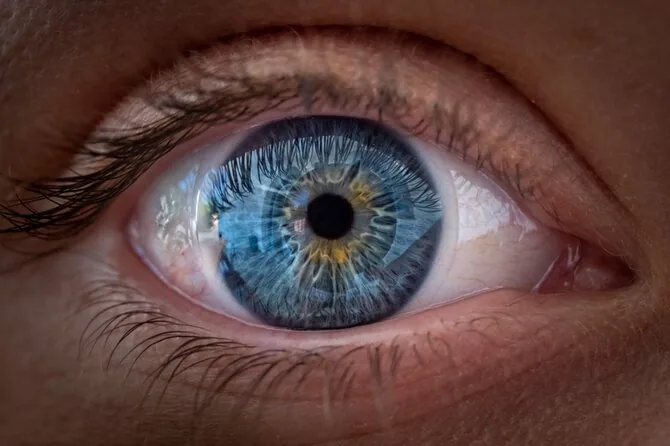
According to the pharmacist, if the eyelid started twitching recently and there are no other worrying symptoms, it is first recommended to devote a few days to more sleep and rest, reduce the amount of coffee and energy drinks, limit nicotine and alcohol, and take regular breaks when working at screens. Sometimes these small changes are enough for the twitching to stop.
“Most often, myokymia is a temporary response of the body to daily irritants, but prolonged, worsening, or twitching accompanied by other symptoms is a signal to look for the cause together with a doctor,” adds I. Garuckienė.


