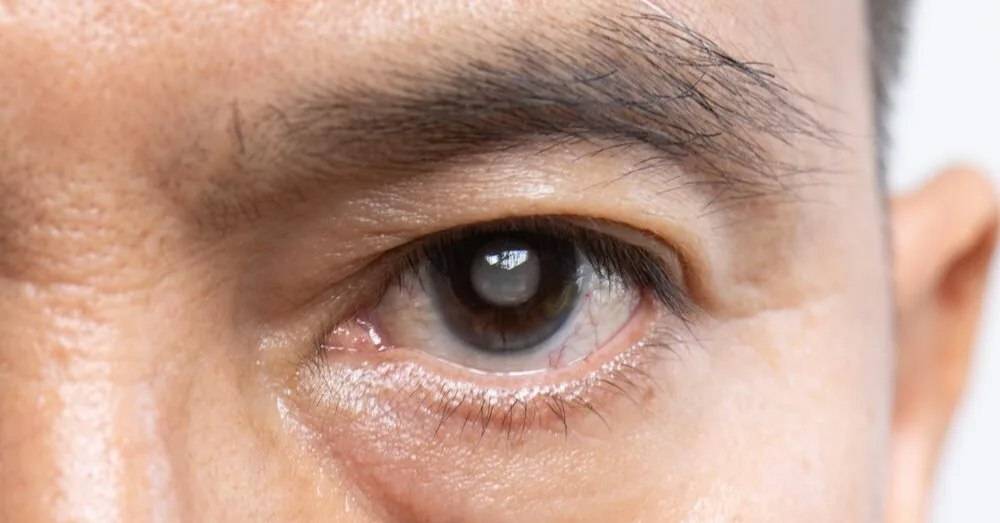
What is children’s myopia and why is it important to control it?
Myopia occurs when a child sees nearby objects clearly, but distant images become blurry. At first glance, myopia may seem like a simple problem that can be solved with glasses or contact lenses. However, the modern approach to children’s myopia is changing. It is important not only to help the child see clearly but also to slow down the progression of myopia as much as possible.
Read more When you want it here and now: when does buying on installment become a risk for young people?
Why is it important to detect myopia early?
It is especially important to detect myopia in childhood. If myopia starts early, it has more time to progress as the child grows. The higher the myopia develops, the greater the risk of long-term complications. In this case, eye diseases can irreversibly affect vision. Therefore, today there is increasing discussion not only about correcting myopia but also about managing it.
What methods can be used to manage children’s myopia?
Usually, children are prescribed regular glasses or contact lenses that help them see clearly into the distance. However, these measures do not necessarily slow the progression of myopia; they only improve vision. In some cases, other methods may be applied. For example:
- smart eyeglass lenses;
- special contact lenses;
- atropine eye drops;
- habit changes (more time outdoors, breaks from screens, proper distance when reading or using a phone);
However, not all methods are equally suitable for every child.
How do MiYOSMART lenses help manage children’s myopia?
One of the modern tools for managing children’s myopia is smart eyeglass lenses. This solution is offered by the international optical technology company HOYA Vision Care, which developed MiYOSMART lenses with D.I.M.S. technology. These lenses are made using a patented, unique, and completely non-invasive D.I.M.S. technology.
How does D.I.M.S. technology work?
The lens has a clear vision zone in the center, surrounded by a therapeutic ring made up of hundreds of microlenses arranged in a honeycomb pattern. These lenses help the child see clearly while also contributing to slowing the progression of myopia. Since they are used like regular glasses, this is a convenient, non-invasive, and easily adaptable method for children. Additionally, MiYOSMART technology has received international recognition in optical innovation. More than 8 million children worldwide wear the first-generation MiYOSMART lenses, and in Lithuania, thousands of children have been successfully wearing them for three years.

What distinguishes the new generation MiYOSMART iQ lenses?
Since science does not stand still, based on 8 years of practical global experience, Hoya presents MiYOSMART iQ – new generation eyeglass lenses. They combine the already clinically proven D.I.M.S. technology with the new Triple Enhanced Design (TED) optical design. This combination helps to control children’s myopia progression even more effectively while ensuring high visual quality and comfort. The world has received even more technologically advanced and improved myopia control lenses.
Triple Enhanced Design optical design, S.P.A.R.K. coating, FreeForm technology, and thinner lenses
In MiYOSMART iQ lenses, defocus segments are arranged closer to the geometric center of the lens, a stronger defocus power is used, and the therapeutic zone is expanded, along with a new S.P.A.R.K. coating that offers better scratch resistance and easier maintenance. Also, the new lens design is enhanced with FreeForm technology, which ensures visual comfort. The edge thickness of MiYOSMART iQ lenses is up to 10% thinner due to the aspheric back surface of the lens compared to MiYOSMART. Because of this, the glasses look neater, more stylish, and there are more options to choose from a variety of frames.
Safety and daily comfort of MiYOSMART iQ lenses
Like MiYOSMART, MiYOSMART IQ lenses are made from high-quality polycarbonate, impact-resistant, safe, flexible, and suitable for active children.
Photochromic function and UV protection
The lenses can be photochromic – light indoors and darkening outdoors. This is especially convenient if atropine drops are also used. This way, the eyes are not only treated but also protected from intense sunlight. Smart eyeglass lenses provide protection against UV-A and UV-B rays.
How do children adapt to MiYOSMART iQ lenses?
Although the technology is complex, children do not have difficulty adapting to these eyeglass lenses. MiYOSMART iQ lenses look aesthetic and do not differ from regular eyeglass lenses. This is important because the child can feel natural both at school and during leisure time, and others will not notice or suspect that the glasses are intended to control myopia progression.
What do MiYOSMART iQ clinical studies show?
In a randomized clinical trial involving children aged 4–12 years, MiYOSMART iQ showed very good results. According to the study data, on average, myopia progression was halted during the first 12 months (Tse DYY et al., 2026; HOYA Vision Care 2026). The scientific literature also evaluates the broader impact of smart eyeglass lenses. It has been found that such lenses, compared to simple single-vision lenses, significantly slowed children’s myopia progression and axial elongation of the eye (D’Andrea et al., 2026). Effectiveness was shown for the first time even in 4-year-old children whose myopia starts very early (Tse DYY et al., 2026; Optometry Times, 2026). Due to these improvements, the lenses help slow children’s myopia progression even more effectively, including the youngest patients, while ensuring excellent visual quality and greater daily wearing comfort.
How to recognize children’s myopia?
Parents should pay attention to the first signs:
- the child squints when looking into the distance;
- sits closer to the television;
- has difficulty seeing information on the board;
- complains of eye fatigue;
- experiences headaches;
- avoids activities that require good distance vision.
Sometimes children themselves do not realize they see worse because they think this is normal. For this reason, regular vision checks are very important, especially during school age.
How is the most suitable myopia management method chosen?
However, it is important to understand that myopia management is not just about choosing glasses. It is a consistent process that requires evaluating the child’s age, myopia strength, progression speed, axial length of the eye, family history, and daily habits. The most appropriate myopia control method should be selected by an eye doctor, considering the specific child’s situation.
Children’s vision check at the Optometry Center optical network
The Optometry Center opticians are chosen by people who value a very high-quality vision check; precisely selected and fitted glasses; a choice of fashionable frames; a clear price for exactly what the person needs; and proper attention to each of our clients.
Why is it worth turning to Optometry Center specialists?
The Optometry Center optical network was founded by practicing doctors who aimed to help Lithuanian people properly care for their vision and eyes. During this time, Optometry Center specialists – eye doctors and optometrists – have accumulated vast practical experience in diagnosing eye diseases and applying the most complex optical corrections. Continuously learning specialists have not only experience but also the most modern eye medical equipment, which will solve all questions related to your children’s vision.
Read more Electric cables and control equipment stolen from a farm warehouse in Šakiai district