Although their stories are very different, they are united by one thing – the people who appeared alongside them, who chose faith in the person instead of fear.
Read more Exactly one month left: if apartment residents do not take these steps, bills may increase
The community of the Alternative Movement Club “Eik” today unites children, teenagers, and adults with different disabilities. Here, there is no distinction about whose diagnosis is more severe or “more important,” because help, movement, acceptance, and community are needed by everyone, according to a press release.
The wheelchair did not stop moving forward
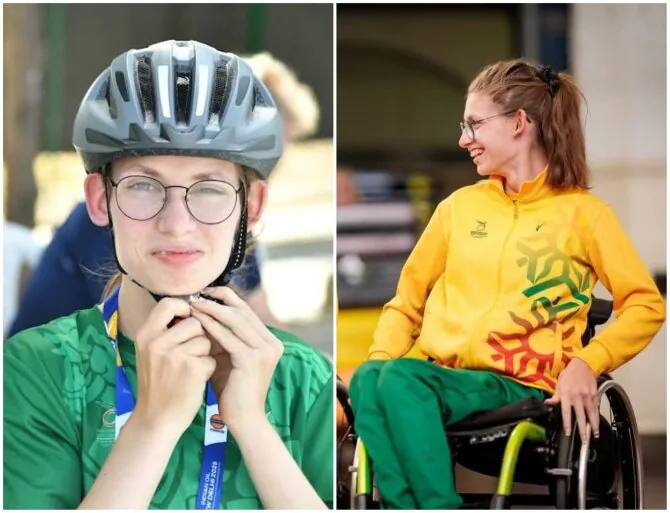
22-year-old Viktorija Žižmaraitė today speaks boldly about living with cerebral palsy. She practices sports, participates in international competitions, and says that movement has become not only a physical activity for her but also a way to regain a sense of freedom.
“I used to walk, and today I move with the help of a wheelchair, but it has never been an obstacle to living actively and pursuing my goals,” says Viktorija.
The girl was born much earlier than expected – in the seventh month of pregnancy. Later it was revealed that she has cerebral palsy. Her childhood was filled with rehabilitation, physiotherapy, difficult stages, and reactions from those around her.
“If someone wants to ask, they can talk to me – I will gladly answer. Of course, I reserve the right not to answer if the question is hurtful or illogical,” she says.
Parents taught how to adapt to life
According to Viktorija, the biggest influence on her attitude towards life was her parents, who encouraged her from a young age not to shut herself between four walls.
“My parents always said that the world does not have to adapt to you – you have to learn to adapt to life. Now I understand how much that gave me,” shares the girl.
In childhood, sports were more of a necessity than a pleasure for her.
“All the rehabilitation and physiotherapy were simply necessary. When you are a small child, you want completely different things,” Viktorija recalls.
But in adolescence, everything changed. At about fourteen, she and her sister attended a wheelchair outdoor tennis training for the first time.
“At that time, it seemed like just another activity, but that was where my path in sports began and my attitude towards movement and possibilities changed. There I realized that life is much more than four walls – there is always a choice and there are always opportunities,” she says.
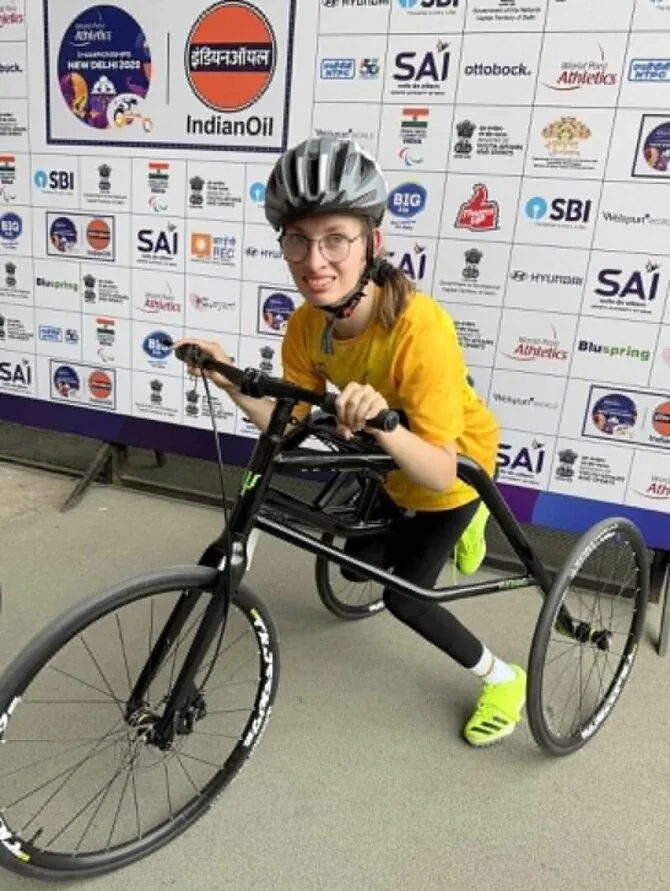
Later, the sport of racing tricycles appeared in her life. “This sport gave me the freedom of movement, self-confidence, and even more motivation to pursue my goals.”
Today, Viktorija participates in international camps and competitions. Last year, she competed in the “Grand Prix” in Paris and improved her result, allowing her to reach the level of European and world championships.
She did not hesitate for a moment when she saw him
But not all stories begin with sports, victories, or bold self-confidence. Sometimes everything starts in a hospital ward, where someone has to decide – to be afraid of diagnoses or to choose to accept the child with an open heart.
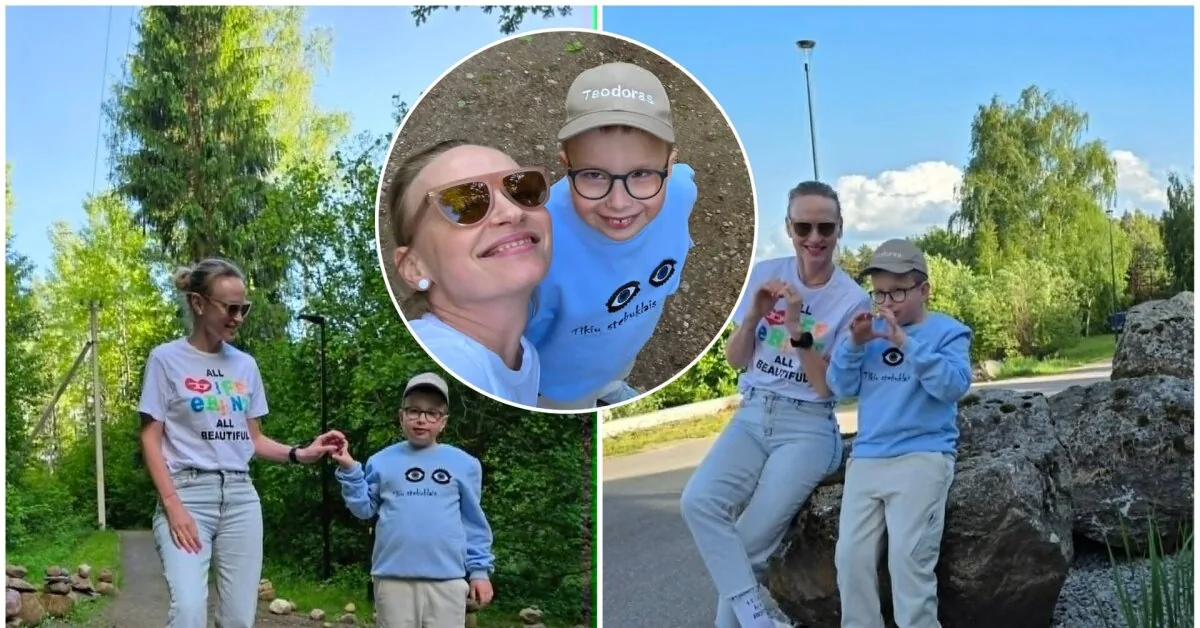
It was exactly such a decision that Rasa Vasiliauskaitė-Dacevič and her husband made nine years ago. She still remembers the first meeting with Teodoras.
“My husband and I had filled out documents that we were waiting for a child for foster care or adoption. I remember that day like it was today – it was an ordinary Monday at work. I received a call that a baby was left in the hospital and asked if we would agree to meet him,” Rasa recounts.
In the ward, they found two newborns. One of them was Teodoras. “They let us feed him with formula, rock him. There was a lot of confusion and excitement, but inside I had already made up my mind from the first moments of the meeting. I realized there were no doubts or uncertainties – we knew he was our heart child.”
Later followed conversations with doctors, diagnoses, and prognoses. “The doctors warned that such a small person has many diagnoses, congenital diseases, and not the brightest prognoses. I wanted to deny what they were saying.”
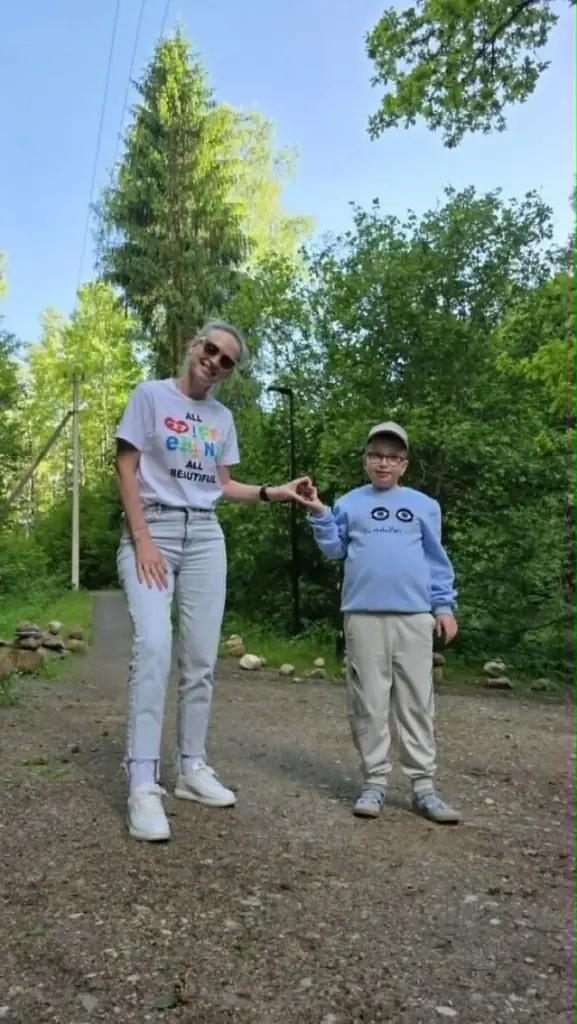
According to Rasa, at that time they only knew that the biological mother could not raise Teodoras, did not have suitable conditions or necessary skills, and her first child also grew up separately from her.
“I understand that this is her story – I do not judge or condemn. What saddened and pained me the most was her life situation,” says Rasa.
The words of the doctor left a mark on the heart
Still, Rasa says that when she decided to raise Teodoras, she thought most not about his diagnoses or congenital diseases, but about whether she could help him as much as needed, represent his interests, and be a strong support in all life situations.
She does not hide that the family’s daily life was different from many others from the very beginning. “All the routine and decisions were related to the child – how to navigate between therapies, how to balance what is necessary for my son and what can wait or what we have to give up. But the most important thing for me was the connection with the child and his full childhood.”
Read more Vladimir Laučius caught by police in Vilnius: blew over 2 per mille
Although Rasa and her husband, raising Teodoras, have gotten used to looks, questions, and remarks from others, one phrase from a doctor she still cannot forget. During a routine examination, assessing the boy’s development, the doctor told Rasa that she could still change her mind and not take this child.
“I was shocked. Those words will stay with me forever. I did not understand how doctors could speak like that. This is our child – how can we reject him?” she says.
A place where you don’t feel different
Today, Rasa works with children experiencing developmental challenges and says that this experience helped her rediscover herself.
“After maternity leave, I changed my career path. I realized that I want and have to work with children who need help, just like my son. It is a true gift to me that my child helped me find myself.”
Both Viktorija’s and Rasa’s stories eventually merged in the Alternative Movement Club “Eik,” which today has become a safe place for many families raising children with different disabilities.
“There you are accepted, welcomed, you don’t feel different. You are with your abilities, not disabilities,” says Rasa.
The club’s leader, Jūratė Mackevičiūtė, knows well what it means to seek help for her child. She herself raises a son, Džiugas, who suffers from a very rare genetic disease – Aicardi-Goutières syndrome.
“After Džiugas’s first birthday, we went down a dark path. He began to lose what he had learned – standing, crawling, speaking,” Jūratė recalls.
The diagnosis was very rare – Džiugas became only the second child with such a diagnosis in Lithuania. “Then everything turned upside down.”
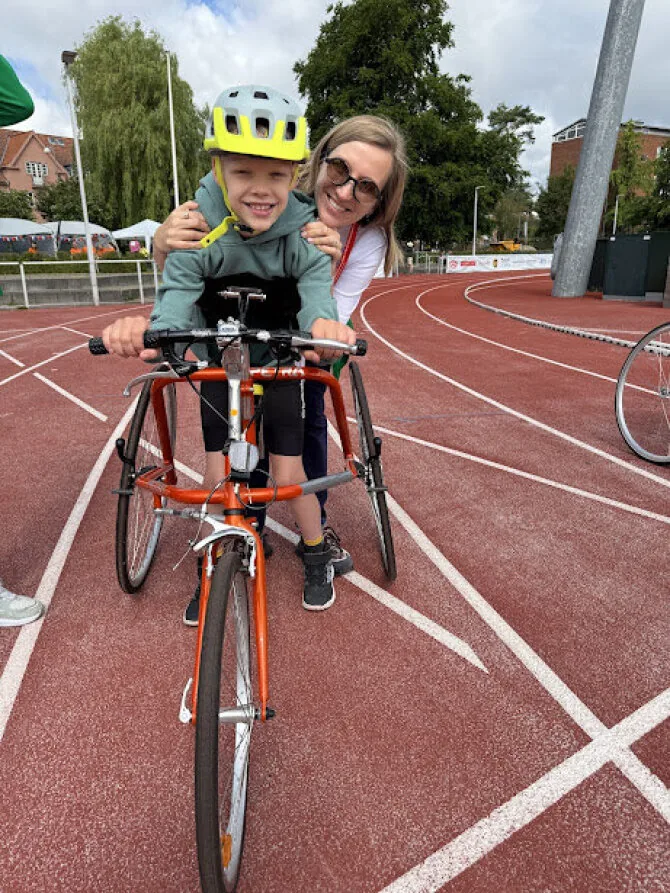
They found medicine in Australia
The family searched for medicine independently – correspondence with a family in Australia raising a child with the same diagnosis helped.
“We were lucky that the neurologist agreed to try an experiment, as did several families abroad. We received medicine that stopped the progression of the disease, and Džiugas began to develop again.”
The turning point came when a physiotherapist said a sentence that changed Jūratė’s perspective: “You need to find how to bring joy of movement to the child.”
That became the foundation of the “Eik” club. At first, Jūratė joined as a group activity trainer, later left her job at the bank, and devoted all her time to creating a community for children with movement disabilities and their families.
Today she leads the club and says the main goal is to show that movement for a person with a disability is not just sport.
“It is independence, health, the opportunity to experience the joy of movement and discovery.”
The club today unites people with very different stories and diagnoses – from children with cerebral palsy to families with rare genetic diseases.
“We do not divide disabilities. Help, movement, community, and strengthening are needed by everyone,” says Jūratė.
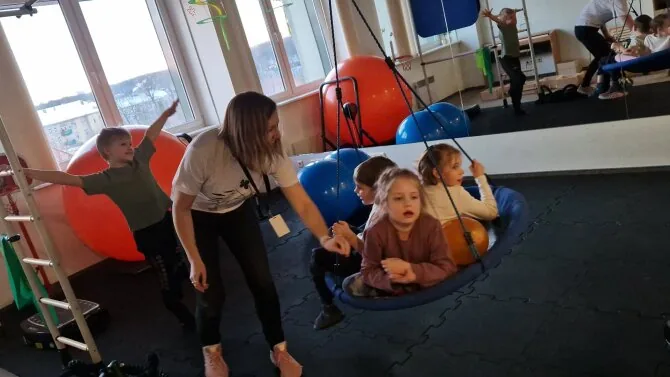
Strengthening camps – an opportunity to move and live
It was from this need that the “Kinetic Camp” strengthening camps were born.
Just a year ago, six children participated in the first camp, and today there are more applicants than the club can accommodate.
A one-week program, including physiotherapy, occupational therapy, speech therapy, myofunctional therapy, massages, and educational activities, costs about 1600 euros per person.
“For many families, this is a hard-to-reach amount, so we are constantly looking for ways to make these strengthening opportunities more accessible,” says Jūratė Mackevičiūtė.
If you want and can contribute to the activities of the “Eik” club, you can do so at www.klubaseik.lt/paremk
Read more As Jocytei stepped onto the court, the «Valkyries» heated up the WNBA champions