









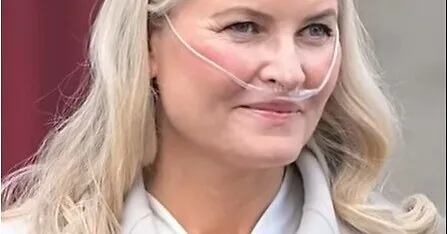
“The Crown Princess is seriously ill, and recently her condition has significantly worsened. I am worried about her health. She uses oxygen daily, and it helps a little,” said the heir to the Norwegian throne.
Read more The famous goalkeeper hangs gloves on the nail
Mette-Marit has been suffering from chronic pulmonary fibrosis since 2018 – an incurable disease where lung tissue scars, making it increasingly difficult to breathe. As early as January 2026, the Norwegian Royal Palace announced that her condition had significantly deteriorated and she might need a donor lung transplant. Preparations for a possible operation are currently underway.
When is a lung transplant needed?
Lung transplantation is usually considered when the disease is advanced, progressing, and all treatment options have been exhausted. In such cases, one or both lungs are replaced.
However, a suitable donor must be awaited – donor lungs are scarce. For example, in Germany in 2025, 308 lung transplants were performed, while at the end of the year, 323 patients were on the waiting list.
Who can be included on the transplant list?
For a person to be eligible for transplantation, they must meet certain conditions:
be in sufficiently stable health condition;
not suffer from severe comorbidities, such as cancer or organ failure;
not use tobacco, abuse alcohol or narcotic substances;
commit to lifelong use of immunosuppressive drugs and regular health check-ups.
Patient priority is determined by the so-called Lung Allocation Score (LAS). It assesses how urgently a person needs a transplant and the likely success of the procedure. Factors considered include age, height, weight, blood type, type of lung disease, severity of respiratory function impairment, and oxygen requirement.
How is the operation performed?
During the operation, the chest is surgically opened and the damaged lung or both lungs are removed. The donor organ is connected to the patient’s bronchi, blood vessels, and pulmonary artery.
Read more Iranian state television: US commits to ending maritime blockade in draft agreement
While one lung is being transplanted, the other supports breathing. After the operation, the patient is treated in the intensive care unit, and if recovery is smooth, they can leave the hospital in about three weeks.
What are the possible complications?
Although lung transplantation is considered a routine and well-refined procedure, the risk of complications remains high.
Almost one in three patients experiences acute rejection within the first year – inflammation occurs in the lung blood vessels. In such cases, doses of immunosuppressive drugs are increased.
However, these drugs weaken the body’s defenses, increasing the risk of bacterial, viral, and fungal infections. Narrowing of the airways at the connection sites may also occur.
The greatest long-term threat – transplanted organ failure
The most important long-term complication is chronic transplanted lung failure, where the body gradually begins to reject the donor organ, lung tissue scars again, and respiratory function worsens.
Statistics show that:
about every second patient experiences this within the first 5 years;
within 10 years – as many as three out of four.
In such cases, another transplant may sometimes be necessary.
How long do people live after lung transplantation?
According to the International Society for Heart and Lung Transplantation, survival rates after transplantation are as follows:
after 3 months – 89%;
after 1 year – 80%;
after 5 years – 53%;
after 10 years – 32%.
Despite the risks, doctors emphasize that for many patients, transplantation means a huge improvement in quality of life. Many can breathe easily again, be physically active, exercise, and some even return to work.
Read more «Ryto» player spreads wings to Portland


