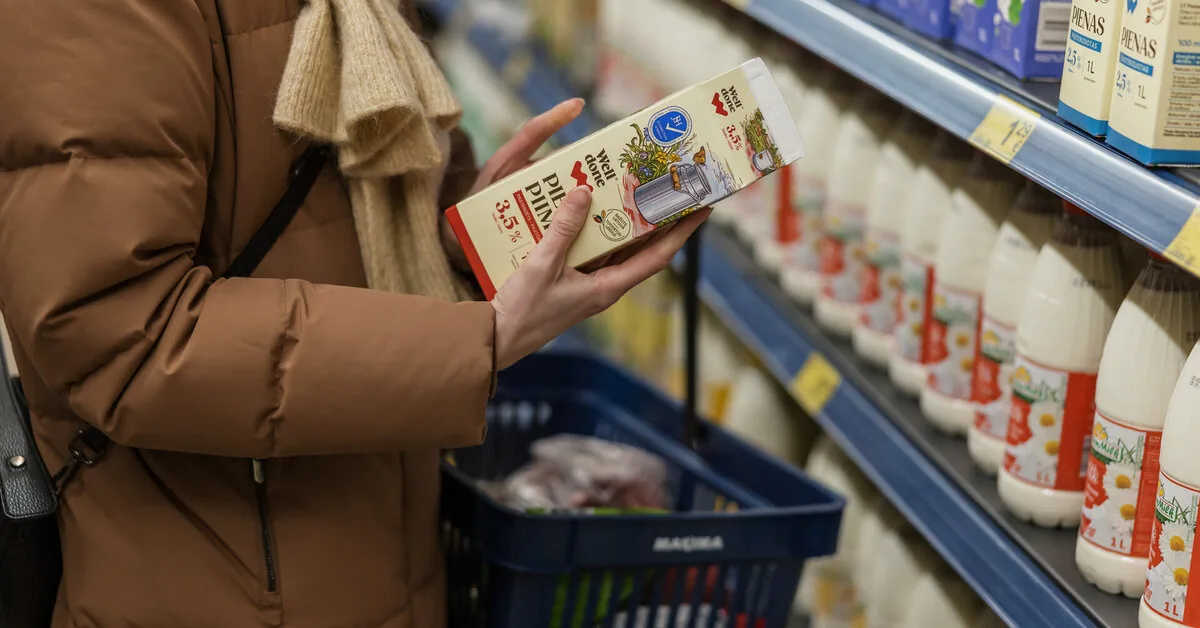
“Maximos” Purchasing Department Director Marius Tilmantas states that in recent years buyers’ attention to prices has noticeably increased, and promotions have become for many not a random opportunity to save, but a daily practice when purchasing goods.
Read more Funeral home director reveals what relatives regret most after the funeral
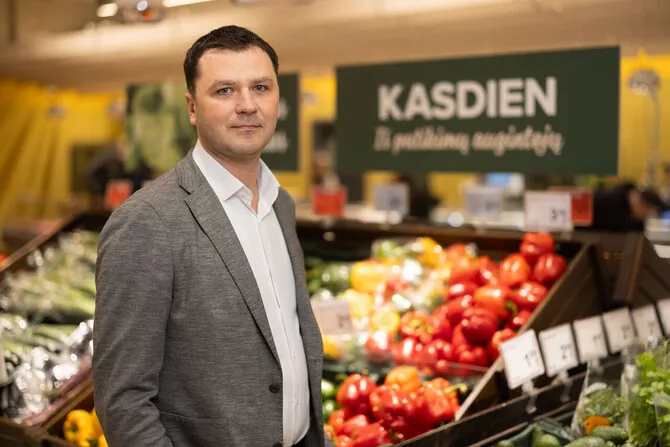
“Observing that in our stores the regular price was purchased only every second product, it became clear that compatriots planned their shopping according to promotional offers and waited for better prices to stock up for a longer period. Now this situation is changing – only every third product is bought on promotion, so buyers’ shopping habits are becoming more even,” says M. Tilmantas, adding that as buyers’ dependence on short-term promotions decreases, it becomes easier to plan supply and ensure product availability at an attractive price.
From sudden spikes to smoother product movement
The first data after the price reduction revolution showed that buyers visit stores more often, and in some categories buy fewer units of the same product per shopping trip. This trend is noticeable when buying curd cheese snacks, sausages, ice cream, chocolate bars, gummies, sugar, flour, pasta, spices, mayonnaise, or oil.
“This shows that for some buyers the need to stock up for a longer time and spend more in one shopping trip just because the product is cheaper on promotion at that time is decreasing. When a low price can be found daily, people can buy as much as they need at a given moment. This is important to us also from an operational efficiency perspective – products that move more evenly are easier to plan, deliver, and ensure their availability in stores,” says the Maxima representative.
According to “Maximos” data, after the price changes, the customer flow in the network increased by several percent. Culinary products, fruits and vegetables, buns, products for vegans, flour confectionery, canned groceries, and preserves are receiving more attention.
Stability is important for manufacturers
Although a promotion often seems to the buyer as an easy way to save, for manufacturers this model has a less visible side. In food production, a larger demand spike requires preparation in advance – reserving raw materials, planning production capacity, employee workloads, and logistics.
Lina Ruigienė, Commercial Director of “Iceco žuvis,” the company producing products under the “Zigmo” brand, says that in the long term the greatest value is created not by short-term promotion peaks but by steadily growing base sales and predictable cooperation.

“Evaluating the results of cooperation with Maxima, we see that after pricing changes the quantity of products sold at regular price has significantly increased, and the ratio of regular to promotional sales has become more balanced. Such changes encourage manufacturers to invest more in communication with consumers, strengthen brands, and seek additional ways to create product value,” says L. Ruigienė.
Read more 4 stages a family goes through when living with a person with dementia
Promotion spikes burden the entire chain
According to her, promotion periods always require greater preparation because sudden order spikes for a short period create additional strain on the entire supply chain. The smoother the demand, the more efficiently processes can be managed.
“Stability is very important in food production – both in planning raw materials and ensuring optimal production utilization. Therefore, for us as a manufacturer, the most sustainable model is steady growth of regular sales,” says L. Ruigienė.
According to the “Iceco žuvis” representative, predictable cooperation allows manufacturers to invest more in quality, innovation, and product development because both the retail network and the manufacturer can plan for a longer period.
“When there is more stability in the supply chain, processes and costs are managed more efficiently. Over time, this can contribute to a more stable price-quality ratio for the consumer. In a highly competitive retail market, it is very important to ensure that the buyer, when choosing products outside of promotions, feels they are getting a fair price-quality ratio. This requires consistent cooperation of all chain participants and a long-term approach to creating value for the consumer,” notes L. Ruigienė.
According to M. Tilmantas, more stable product movement throughout the chain ultimately creates a simpler everyday shopping experience for the buyer.
“When demand becomes smoother, it is easier for the retail network and manufacturers to plan product quantities, supply, and shelf replenishment. This increases the likelihood that the buyer will find the desired product in their usual store when needed, so they less often have to look for alternatives or shop elsewhere,” he concludes.
Read more “KN Energies” will request 100 million euros of EU funding for the CO2 terminal this year