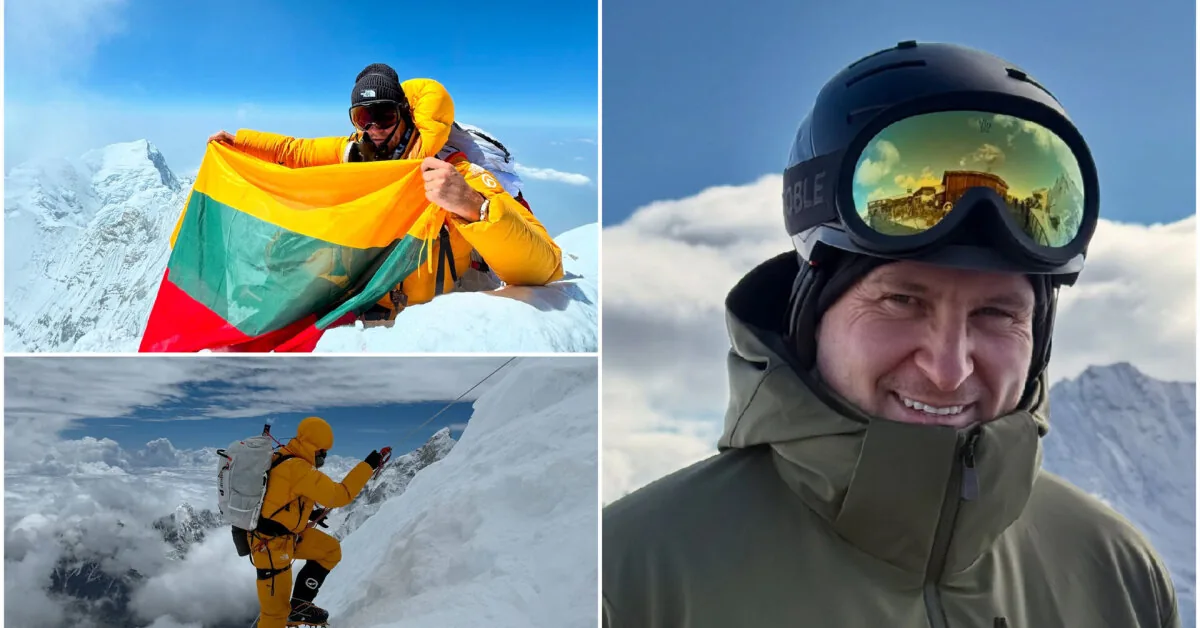
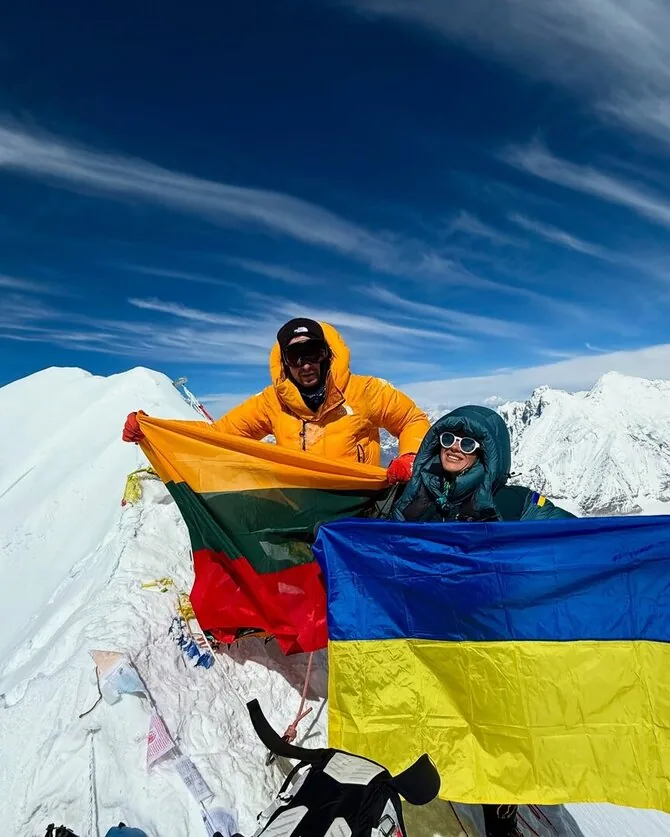
Mindaugas Šatkauskas, who is passionate about mountains, has set a goal to someday climb the 14 highest peaks in the world. The man has already raised the Lithuanian tricolor on the summits of Everest, Makalu, Lhotse, Annapurna I, Kangchenjunga, and Manaslu, according to a press release from M. Šatkauskas’s team.
Read more Estonian «E-Piim Tootmine» bankruptcy administrators prepare to sell factories for 90 million euros
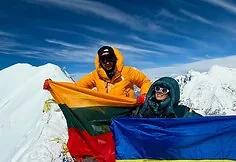
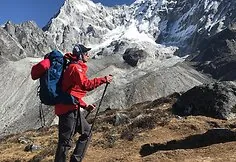
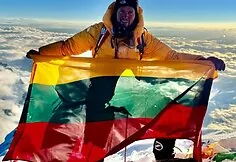
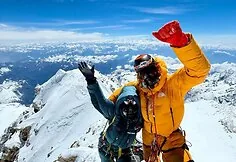
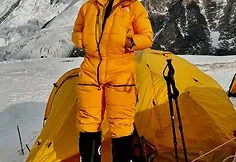
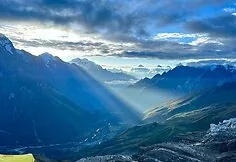
The founder of the insurance services business “Insurance Bee” plans to spend most of the summer in the mountains of Pakistan. Leaving at the beginning of June, M. Šatkauskas says he will try to climb as many of the highest peaks in Pakistan as possible.
According to the mountain lover, there are many unknowns in the mountains, and plans often remain just plans, so it is very difficult to predict anything here.
M. Šatkauskas says he will try to climb as many of the highest peaks in Pakistan as possible.
“It may happen that I only manage to reach the summit of one mountain. Or I may have to turn back without even starting a serious climb. It all depends on God’s will and if the stars align favorably, because a lot depends on weather conditions, how I feel, and other circumstances. It probably depends least of all on me,” says M. Šatkauskas.
Mindaugas speaks about the mountains with great respect, fully understanding their grandeur and how vulnerable a person is there, regardless of their mountain climbing experience.
According to him, this will probably be the biggest “mountain project” of his life. The most difficult and well-known mountains in Pakistan that M. Šatkauskas will try to climb during this expedition are K2 (8611 m) and Nanga Parbat (8126 m). No Lithuanian has yet climbed to the summit of Nanga Parbat in the western part of the Himalayas.
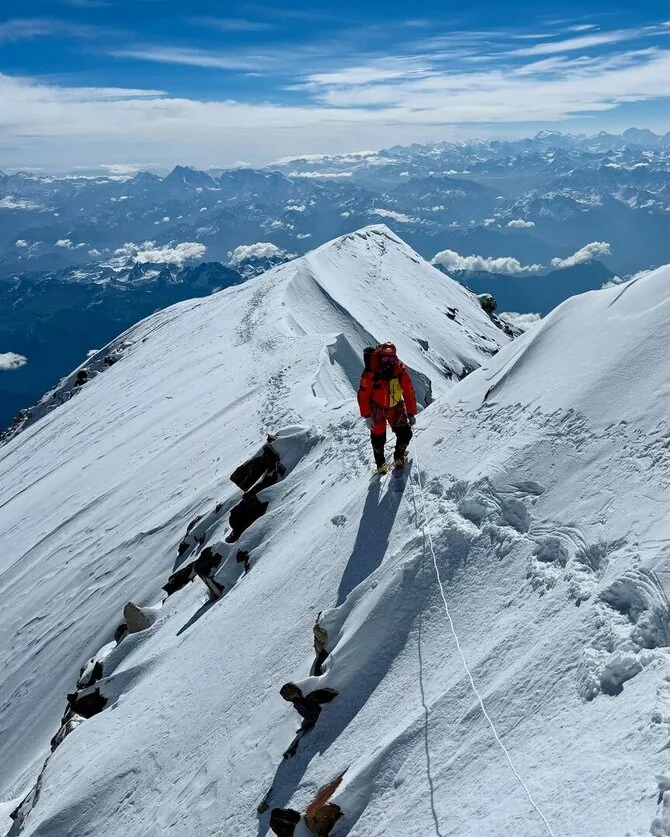
Last year, during one season, Mindaugas climbed three mountains in Nepal. After each climb, he took some time to recover in Kathmandu – spending about a week there to regain strength.
“In Nepal, you feel closer to civilization, but in Pakistan everything is much harsher, more remote, logistics are more complicated, and the crossings between mountains are longer.
If everything goes well and after Nanga Parbat we manage to move towards the K2 region, there will be almost another week of walking. There is not much comfort or opportunity to properly recover physical strength there,” says M. Šatkauskas.
The mountains quickly remind you of human limits
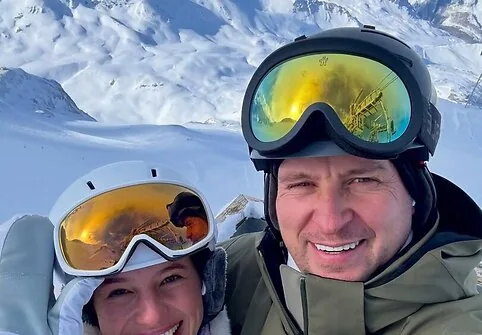
In the mountains, Mindaugas met his beloved, who will join him on the new expedition in Pakistan. Ukrainian Tonya Samoilova, who has a great passion for high-altitude climbing, will climb Nanga Parbat with Mindaugas. The couple has already climbed two summits from the list of the highest mountains in the world together.
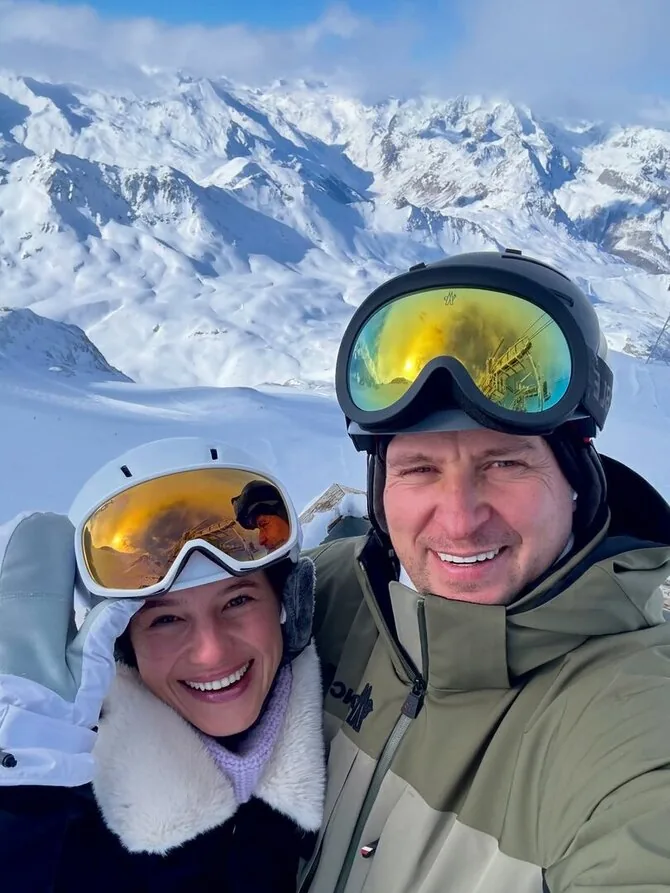
“When we climb, she is always faster than me. Half my size, but very strong,” smiles M. Šatkauskas.
Another very important person in the expedition is the Sherpa. According to Mindaugas, it is very important to go with a Sherpa you trust unconditionally, because your return home from the mountains may depend on him.
“Climbing high mountains is a team effort – from decision-making to simple everyday things,” says M. Šatkauskas.
Speaking about risk, Mindaugas avoids romanticizing danger or creating a heroic image of the mountains. According to him, the mountains quickly remind you of human limits.
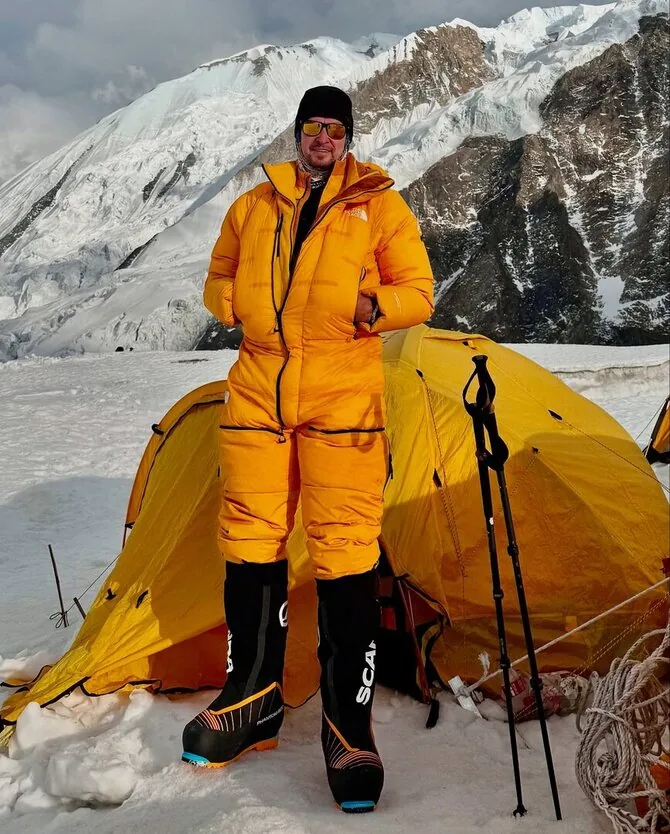
“There are many such stories. People died because they didn’t turn back when they should have. The mountains strongly blind people, especially Everest. I’ve seen how they lower the dead from the mountain,” says M. Šatkauskas.
Speaking about risk, Mindaugas avoids romanticizing danger or creating a heroic image of the mountains.
Mindaugas says that the mountains have never been a means for him to prove something to someone: “The mountains are not a place for egoism. It has always been most important for me to return home from the mountains. Earlier, I might have thought more about the goals themselves, but now I increasingly value the process itself, the people, the experience, and life in general. I don’t want to look at the mountains with suffering, as if climbing for the sake of climbing,” says the mountain lover.
This attitude was reinforced by his previous mountain climbing experiences. After three difficult climbs in Nepal last year, Mindaugas seriously considered going straight to Pakistan but ultimately decided not to rush and not to do it.
“Then I realized: no, I won’t go to Pakistan because I simply don’t want to. I realized that I don’t feel an inner pull for it now. Life is more precious to me,” he says openly.
Intensive preparation before the trip
According to Mindaugas, the mountains of Pakistan are remote and unpredictable. Last year’s season in the mountains of Pakistan was very unfavorable for climbers – due to high temperatures, snow melted, there were frequent rockfalls and avalanches.
Moreover, help in Pakistan is often much harder to reach than in Nepal.
“There are very harsh and remote areas. There are no villages around. You can’t just get on a helicopter because there are no private companies – only the military. When you need rescue, only the military can help,” he says.
Additional tension is caused by the technical climbing conditions. “Many ropes are old and unreliable. You don’t know which one will hold and which won’t. This adds extra danger and requires a lot of concentration,” says M. Šatkauskas.
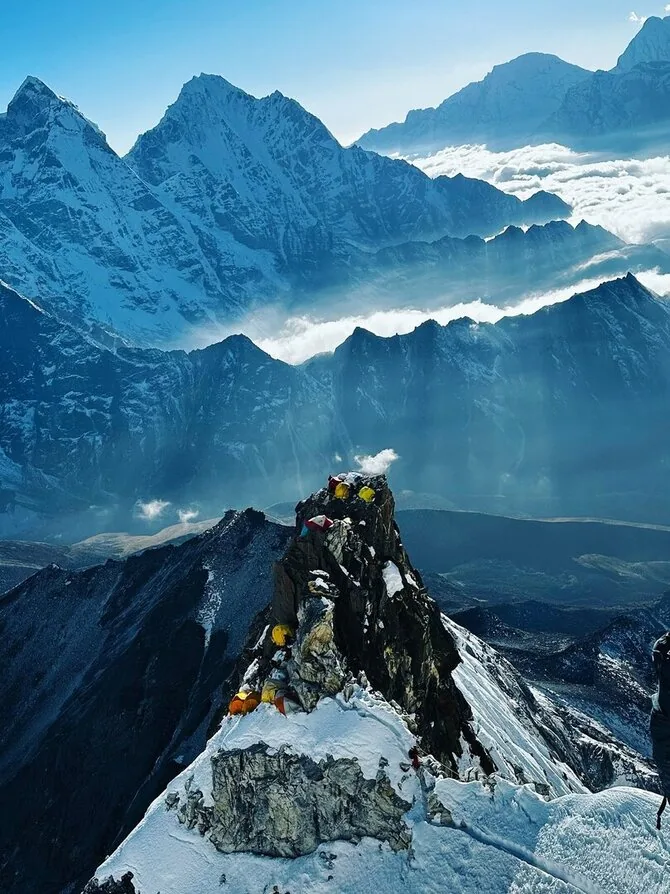
Currently, Mindaugas is actively preparing for the expedition – running a lot, working out in the gym, and building endurance. However, he says that even the best physical preparation does not guarantee success in reaching the desired summit in high altitudes.
“At high altitudes, the body gets tired even at rest. You can do nothing, but your body still works in a huge mode. Therefore, it is very important not only to be in good physical shape but also to be able to make the right decisions when tired, to know how to rest properly in a short time and under unusual conditions,” says M. Šatkauskas.
He plans to take a camera with him to Pakistan, which he will have at the base camp. Photography is one of Mindaugas’s newest hobbies.
“Wherever I go, I want to take pictures. The nature in Pakistan is very beautiful, so I can’t imagine it any other way,” he says.
Read more After the renovation, the «Iki» store opens its doors in Vilnius