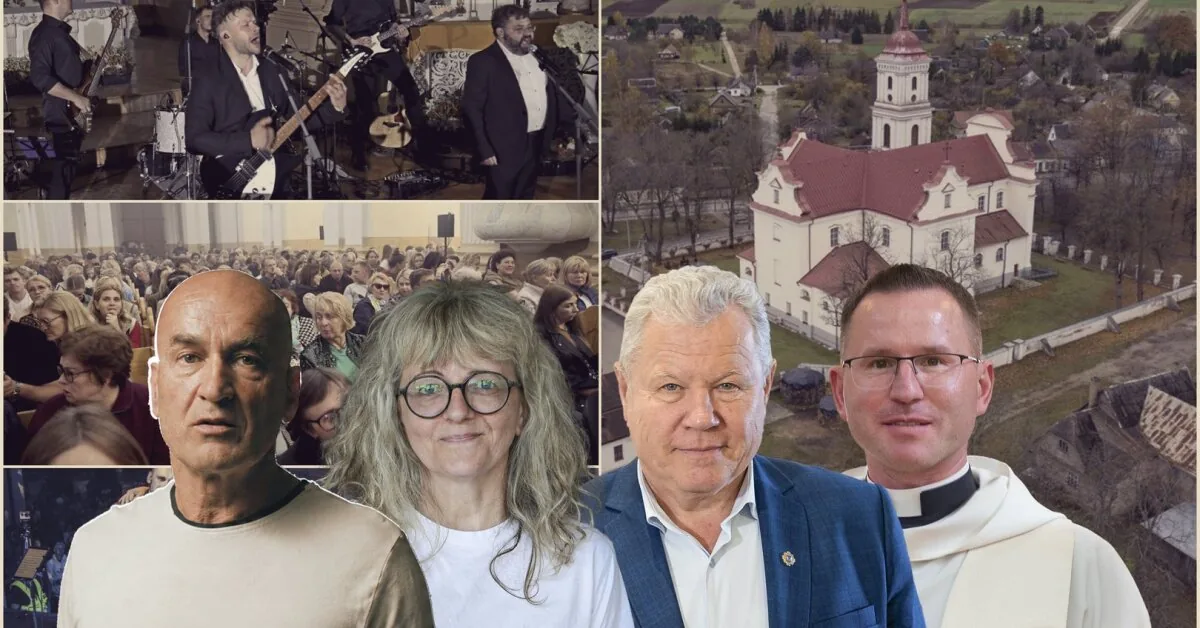
Former long-time parish priest of Troškūnai Saulius Filipavičius, who was instrumental in restoring and renovating the monastery complex, told 15min that dedicating parish-owned premises not only to religious ceremonies and pastoral activities but also to cultural events always seemed meaningful to him, as it brings the community together and some people find a reason to visit the church.
Read more Not just because of faith: researcher revealed why priests were actually forbidden to marry
This is exactly what led to, initially on the initiative of priest S. Filipavičius alone, and later with the efforts of the head of the Troškūnai Cultural Center Jolanta Pupkienė, high-level classical and entertainment music concerts being held in this Bernardine complex, and even performers from abroad appearing. The festivals and various events held in Troškūnai, a small town located between Anykščiai and Panevėžys, turned it into a center of attraction for unique cultural events.
In cooperation with the parish priest and with support from the European Union funds and the Lithuanian state budget, the dilapidated monastery school building was adapted and transformed into a modern multifunctional center for the community’s cultural, educational, and educational activities. Also, the church basement halls, where various events had been held for many years, were restored with EU funds.
At the end of 2023, after priest S. Filipavičius resigned from his duties, priest Tomas Paliukėnas was appointed administrator of the Troškūnai church six months later. Although his cooperation with the cultural center went smoothly for a year, the situation eventually changed. The current parish priest claims that he has not banned cultural events in the Bernardine complex but imposes certain conditions.
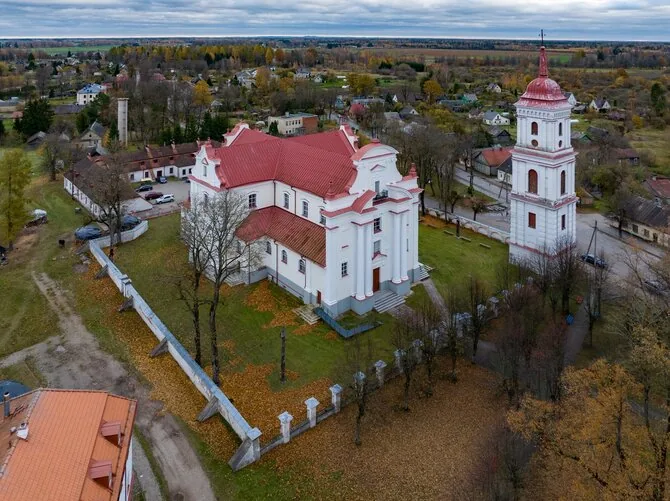
Unique complex revived from ruins
Appointed to work in Troškūnai in 1990, priest Saulius Filipavičius recalled his first impression upon seeing the condition of the old Bernardine monastery and church buildings.
“The monastery had turned into a pile of ruins, only the roof had not yet collapsed. Everywhere was a dump, a bonfire site. The roofs of the church and bell tower were leaky. I remember sitting on the church steps then, almost crying,” said the former parish priest who worked in Troškūnai for thirty-three years.
The monastery had turned into a pile of ruins, only the roof had not yet collapsed. Everywhere was a dump, a bonfire site. The roofs of the church and bell tower were leaky.
S. Filipavičius admits he had no distant vision for the future of the monastery complex. According to him, those were the first years of restored independent Lithuania, so the priority was to clean up the “tragic Soviet legacy” and gradually start restoration and renovation works.
To restore the Bernardine monastery complex and replace the church roof, the then parish priest sought support by traveling abroad, contacting Lithuanian emigrants, organizing various campaigns and collections. Over time, local supporters also began to appear, he said.
“Seeing how the monastery complex gradually came back to life, I realized that the building’s roof could be covered, brick by brick, restoring the former spaces, but the essential question was what it would serve. After all, bricks alone without people are worth little – there will be no life here. So from 1993, we started organizing youth camps, and gradually the restored monastery gained meaning,” the clergyman said.
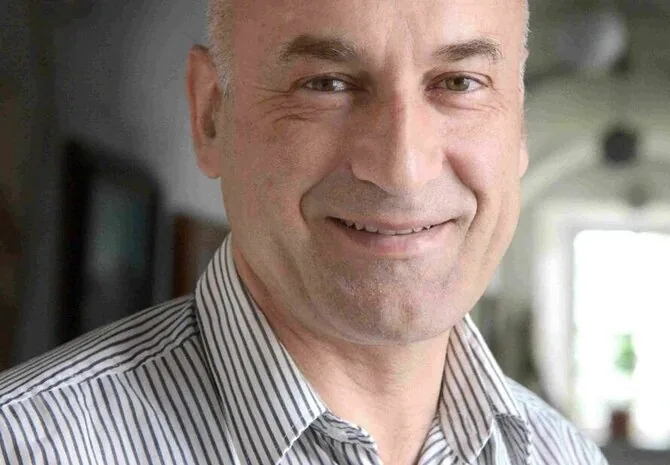
After establishing connections with professor Irena Veisaitė and her led “Open Lithuania Foundation,” youth from not only Lithuania but also various countries around the world – Canada, Japan, the USA, European countries – began coming to camps held in Troškūnai. Lectures were given by ambassadors of foreign countries, educational and cultural programs took place – various ensembles, groups, and well-known performers started coming to Troškūnai.
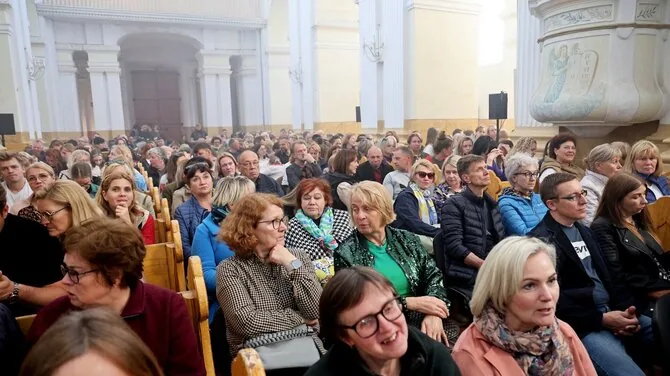
“These camps were never closed: young people eagerly communicated with local residents, and concerts were open to our town community. People participated in events with great enthusiasm. Seeing the impact these events had, how they united the community itself, we gradually began to expand cultural activities more and more,” said long-time Troškūnai parish priest S. Filipavičius.
At that time, the head of the Troškūnai branch of the Anykščiai Cultural Center, Jolanta Pupkienė, actively contributed to this activity. In cooperation with the parish and the parish priest himself, various youth educational camps, concerts, plays, city celebrations, etc., were organized.
Over time, Jolanta took over the organization of cultural events and wrote various projects. Their quality and the artistic level of performers grew over time.
“Over time, Jolanta took over the organization of cultural events and wrote various projects. Their quality and the artistic level of performers grew over time. She managed to invite even popular performers, so some concerts became truly massive. Jolanta succeeded in what was unimaginable in a small town before – bringing artists and performers from abroad – Japan, Mexico, and other countries. Thus, the number of events increased, and people from other Lithuanian cities began coming to Troškūnai,” said the priest, who always provided the necessary parish-owned premises for events and contributed as much as he could.
“This is how I understood my service to people”
According to S. Filipavičius, during the first decade of restored independence, the Bernardine monastery was restored, the roofs of the church and bell tower were replaced, the entire church was painted, and the church floors were restored and varnished several times. All this was done with funds collected by the priest himself from benefactors and patrons.
“I never saw the need to advertise or boast about these works. I was appointed administrator of this unique complex with great historical and cultural value, so I did everything out of duty – to preserve what we have in Troškūnai and to serve our people,” said the priest who worked here for more than three decades.
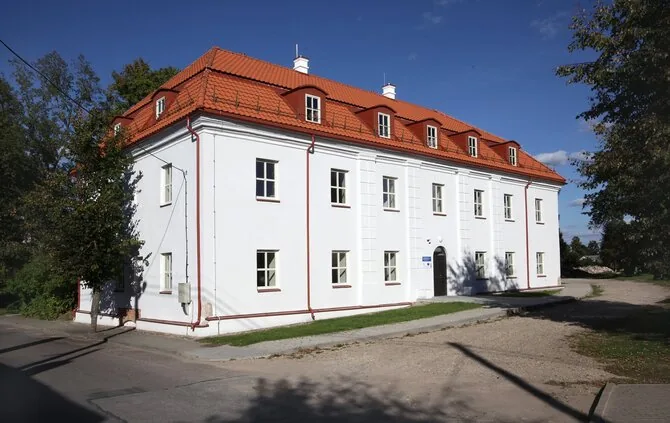
Over time, according to S. Filipavičius, he also took care of other parish-owned spaces – the impressive basement under the Troškūnai Holy Trinity Church itself and the former monastery school building.
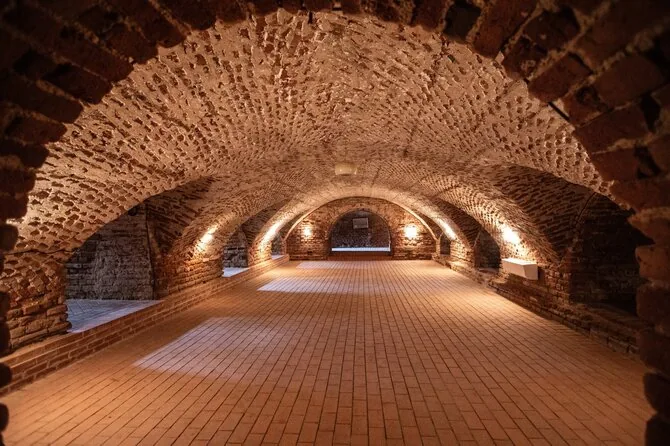
“When I arrived to work in Troškūnai, part of the church basement had been divided into compartments since Soviet times, where locals stored potatoes. The sight was dreadful – mold, rot, foul-smelling liquids… I asked the residents to clear these basements, and they did so without any anger,” recalled the former parish priest.
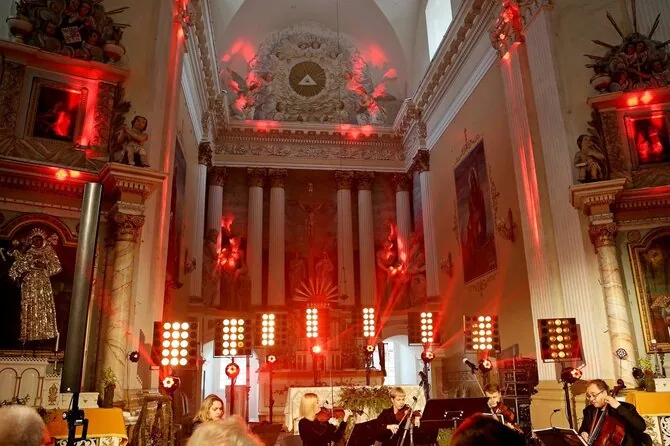
In the revived basements dating back to the Grand Duchy of Lithuania period, chamber concerts, plays, community meetings were held, and when needed, deceased parishioners were laid out or personal celebrations were organized.
More than a decade later, with the opportunity to attract EU and Lithuanian state budget funds, these basements were thoroughly renovated. In 2012–2013, 130,330 euros of EU and state funds were allocated for the renovation and adaptation of the premises to community needs. In the second phase of works in 2021, a similar amount – 135 thousand euros – was allocated.
In the revived basements dating back to the Grand Duchy of Lithuania period, chamber concerts, plays, community meetings were held, and when needed, deceased parishioners were laid out or personal celebrations were organized. “The basements were arranged for our town community, so they served according to its needs,” said the priest.
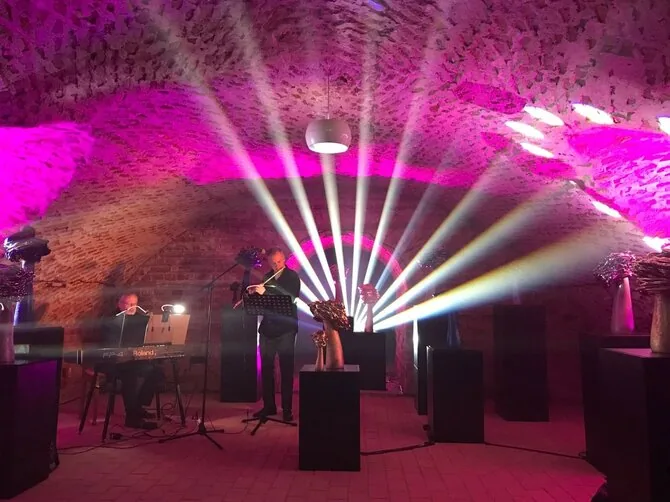
He also stated that he did not charge any rent for these premises from local residents – whatever people donated voluntarily was enough.
At the initiative of the then parish priest and the Anykščiai municipality, the former monastery school next to the church was also thoroughly renovated with EU and state budget funds. 914,376 euros were allocated for these works (EU support – 777,219 euros, from the state budget – 68,578 euros).
After the works were completed, in 2012 the multifunctional center was handed over to the parish, which undertook to “provide the building free of charge for cultural, educational, economic, social, and other community needs.”
“Of course, free of charge is a rather conditional thing – the premises were heated, electricity and water were used. So we agreed with the users that they would pay for utilities, and there were never any problems because of that,” said the priest.
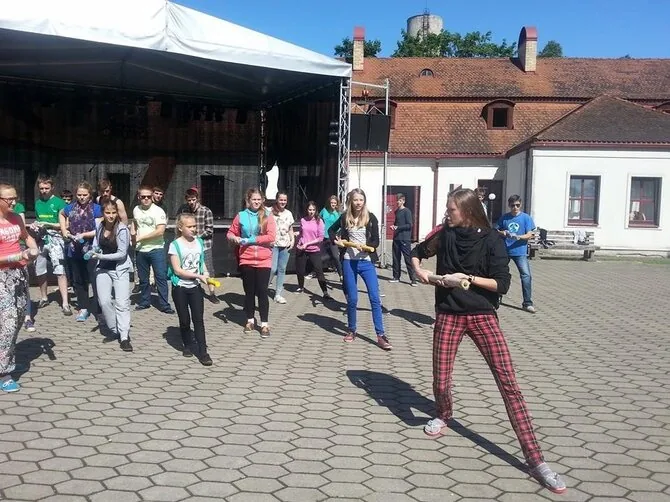
According to him, there was never a lack of activity in this building either – youth education, seminars, artists’ plein-airs, camps, priests’ retreats, various community gatherings, student graduations, rehearsals of groups, etc., took place.
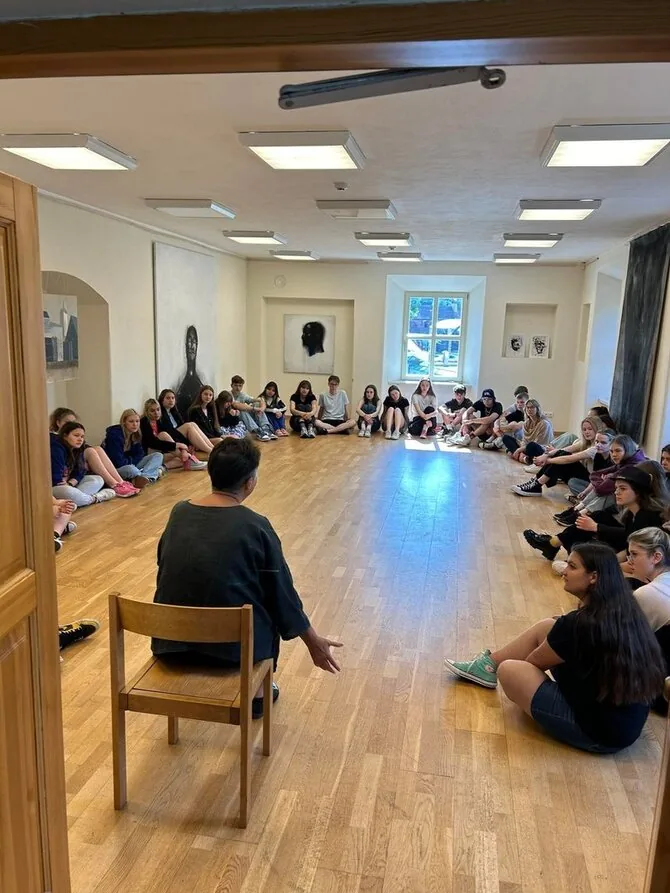
By the way, even in the partnership agreement signed on May 24, 2024, between parish priest S. Filipavičius and the director of the Anykščiai district municipality administration Jurgita Banienė, the parish undertakes to allow the Anykščiai district municipality’s subordinate cultural, educational institutions, Troškūnai eldership, and community to carry out some of their organized activities in this building both during and after the project implementation.
When the opportunity arose, commercial events were also organized, and the funds received from rent were used to maintain the premises and hold free events there.
Asked how he managed to maintain all these premises – both the monastery and the multifunctional center – the priest said the only way was to activate the premises. “When the opportunity arose, commercial events were also organized, and the funds received from rent were used to maintain the premises and hold free events there. You just need to do it, plan the budget, and try to keep the balance. A wisely organized budget helps maintain the entire infrastructure,” said the priest.
Unfortunately, according to the former parish priest, the situation of the multifunctional center is currently rapidly deteriorating: heating is turned off, floors are blackened, plaster is falling off the walls. “I was horrified – a perfectly renovated building is gradually returning to the state it was before all the repair works began. It turns out that currently no one needs it and no one maintains it,” said S. Filipavičius.
According to the former Troškūnai parish priest, all these premises are parish property, and it depends on the bishop and the administrator – the parish priest appointed by him – what will be done with the buildings and their spaces.
“You can take care of all this or neglect it. You can turn it into a center of attraction for people and get maximum benefit from it, or see the premises only as a headache and a problem. It all depends on the vision or the lack thereof. For three decades, we managed to use these premises for people’s needs. Unfortunately, it now seems that the new administrator has no long-term vision on how to use this asset for the community. And the worst thing is that those who have ideas, want to, and can do the work are not allowed near these premises,” said the priest S. Filipavičius, who worked in this parish until 2023.
For three decades, we managed to use these premises for people’s needs. Unfortunately, it now seems that the new administrator has no long-term vision on how to use this asset for the community.
Although the clergyman still spends part of his time in Troškūnai today, and on July 24 he was awarded the title of honorary citizen of the Anykščiai district for his merits to the region, the former parish priest, according to himself, has become persona non grata in the parish premises he helped renovate.
“Of course, it is painful because it is personal – I served the community for three decades by restoring, reconstructing, and dedicating these unique premises to the community. That’s how I saw and understood my service to people. After all, if the religious community’s life ends with three active grandmothers, you need to look for other ways to attract more people to the church. For me, that became culture, art, and youth camps – that’s where I saw meaning and calling. I understand that there is a beginning and an end. Other people come with different thinking and vision. I only regret the long-term effort of our community members that turned Troškūnai into a lively, active, cultured, and widely known town,” said the former parish priest.
Church open to culture
Jolanta Pupkienė, head of the cultural center who has made Troškūnai famous with various events for three decades, told 15min that due to active cooperation with the then parish priest S. Filipavičius, the town had become a true cultural attraction center of the region.
“Thanks to the efforts of the former parish priest to restore the monastery complex, renovate the church, adapt the church basements and multifunctional center for various activities, local residents gradually began to understand what a unique heritage site we have. Over time, a natural need arose to share this space with other people – to invite residents of surrounding towns to Troškūnai, hold concerts, celebrations, artists’ performances here so that everyone could see the beauty of this historic complex and understand its cultural value,” said J. Pupkienė.
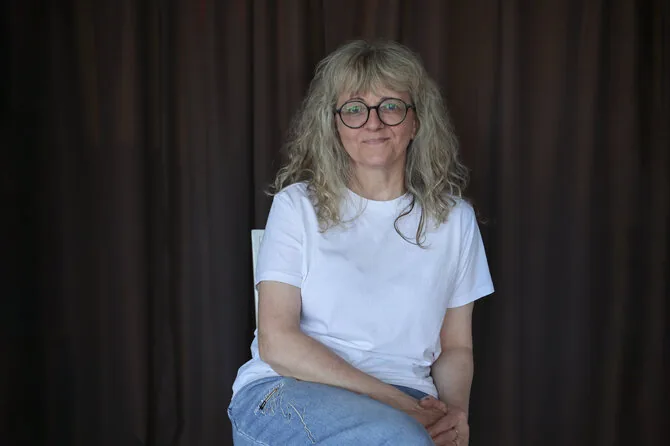
She emphasized that she paid particular attention to youth education in her work, so the newly opened spaces of the Bernardine complex provided opportunities to expand activities and create new projects and events every year.
According to the cultural organizer, a significant portion of events always took place in the Troškūnai Cultural Center hall, but every year there were multifaceted projects that could not fit in one place, so existing parish spaces – the monastery, multifunctional center, basements, and church – were also used.
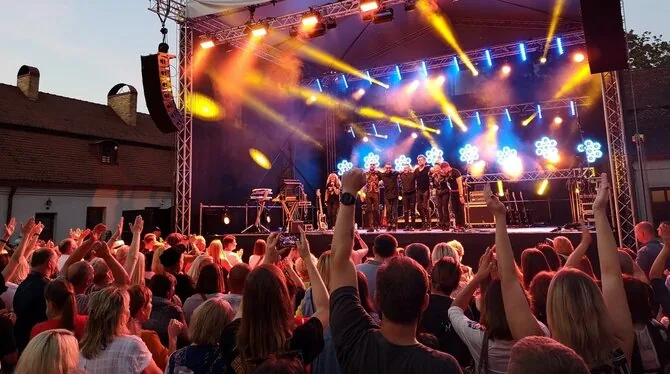
“Camp participants, artists, lecturers, and educators were accommodated in the monastery premises; in the multifunctional center, we held creative and educational workshops, seminars, lectures, rehearsals, etc. Chamber concerts, plays, and creative activities were held in the church basements. Large concerts took place in the monastery courtyard and inside the church itself,” said J. Pupkienė.
Asked to name the main projects carried out in Troškūnai in cooperation with the parish, the head of the cultural center began listing them one by one: the international educational camp “Troškimai,” the youth improvisational event series “Kita forma,” the ethnic culture and strange folklore festival “Folk-virus,” Troškūnai town celebrations in June, the biennial festival “Muzika veža,” the professional music evening series “Šviesos muzika,” and others.
Asked how cooperation with the former Troškūnai parish priest S. Filipavičius went so far, J. Pupkienė said that all projects were carried out after receiving funding from the Anykščiai municipality or the Culture Council and coordinating with the priest.
Read more Employer from hell: first work, then loans in your name
“The parish priest held the view that the buildings should serve the community, so after agreeing on future projects and various initiatives with him, he always allowed access to the monastery complex premises. From the projects, we financed accommodation and meals for youth camps, covered all utility costs, and he did not charge for renting the premises,” said the head of the Troškūnai Cultural Center.
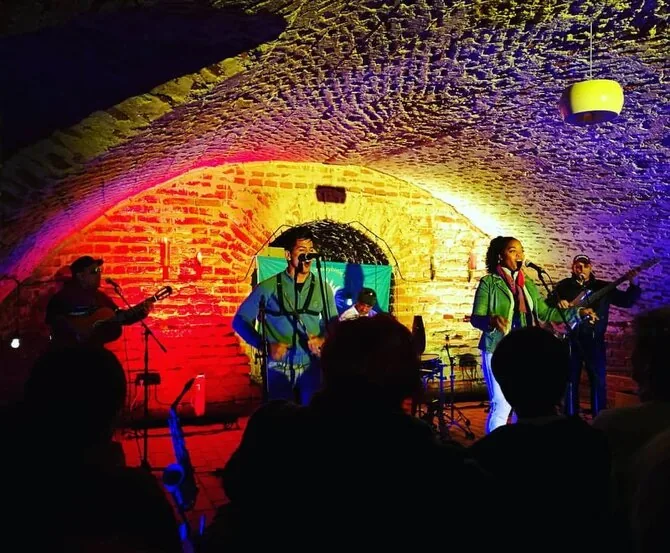
She emphasized that concerts in the monastery courtyard, church, or its basements were implemented under the same conditions: project funds were allocated for technical support (stage, sound, lighting) and performers’ fees, and no rent had to be paid for the premises themselves. According to J. Pupkienė, for this reason, all events in Troškūnai were free of charge.
J. Pupkienė said that all projects were carried out after receiving funding from the Anykščiai municipality or the Culture Council and coordinating with the parish priest.
However, she mentioned that over two decades of activity, there were a few paid concerts in the church and basements, and the reason, according to the cultural organizer, was very high performers’ fees that could not be covered solely from project funds. However, she noted that when the then parish priest said that paid events could not take place in the church, such formats were abandoned.
Promoting Troškūnai and bringing people together
In July 2024, priest Tomas Paliukėnas was appointed the new parish priest of Troškūnai church. According to J. Pupkienė, cooperation with this clergyman was also smooth and productive for a year, and all planned projects, events, concerts, and youth camps took place as scheduled.
“We coordinated everything with the new parish priest. He supported youth activities, allowed concerts and other events. We never received any complaints or remarks from him about our events, order, or repertoire. It was a businesslike and friendly relationship,” said the cultural events organizer.
However, everything changed after a concert in July 2025 at Troškūnai church. During it, songs by The Beatles were performed by well-known musicians Jokūbas Bareikis and Rafailas Karpis. After the concert, a complaint was received about such music, and the parish priest stated that such concerts would no longer be allowed in the church.
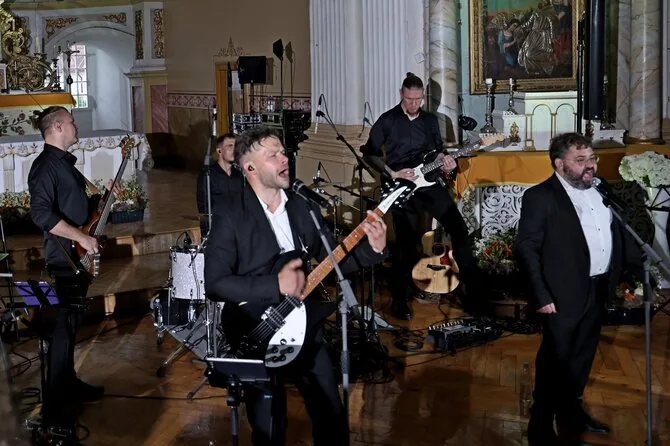
“I understand why people could be offended by The Beatles songs. I take responsibility and agree that this could have been my mistake. Unfortunately, after that time, the parish priest put up a wall of silence – I asked five or six times to sit down at the table and talk, discuss possible further activities in the Bernardine complex, solve the problem, find agreements acceptable to all, but I received no response from the parish priest,” said J. Pupkienė.
Since then, no event organized by the cultural center, youth camp, or concert has taken place in parish-owned premises. Even the 330th anniversary celebration of Troškūnai town in July this year was held across the street from the monastery, in the square in front of the eldership.
Since then, no event organized by the cultural center, youth camp, or concert has taken place in parish-owned premises.
J. Pupkienė emphasized that she does not receive any additional funds for organizing all projects and events, and it is not a matter of personal ambition. “In Troškūnai, we have this wonderful complex – thanks to Count Vladislovas Sakalauskas and the Bernardine monks who settled here more than three hundred years ago. Thanks to priest S. Filipavičius, who restored these buildings with the help of patrons, the EU, and the state. And for three decades, we did everything to spread the word about this place widely across Lithuania and even beyond its borders. That is how I understand my work and commitment to this place, this town, and the parish to which I also belong,” said J. Pupkienė.
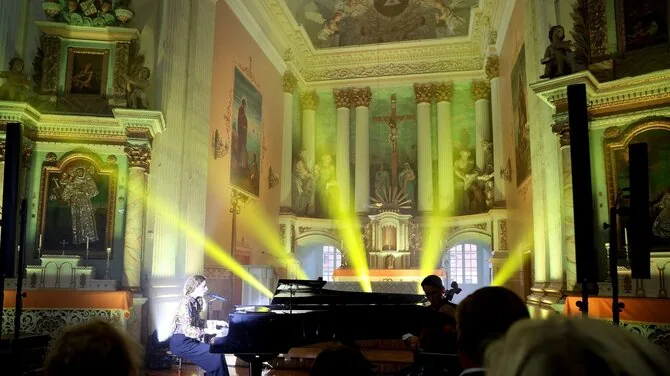
She said that many community members and local residents feel the event drought that has hit Troškūnai in recent years. “We have not become less capable of organizing events. We have ideas, the need for people to gather, meet, and attend high artistic level events held in Troškūnai is huge. The whole problem is that we can no longer get through to the new parish priest and talk to him about it,” said the head of the Anykščiai Cultural Center Troškūnai branch.
The whole problem is that we can no longer get through to the new parish priest and talk to him about it.
According to her, the saddest thing is that over three decades, audiences had become accustomed to various events in the Troškūnai Bernardine complex, and now this effort is going to waste. “For many years, we had to prove that it was worth holding events in Troškūnai, bringing the community together. And we did it – with joint efforts. We went a long way, established connections with local farmers, various organizations, and institutions from Anykščiai that supported and backed us. And now we have to look for new places to keep attracting people to our town,” said J. Pupkienė.
Tomas Paliukėnas: “The church is God’s house, not a cultural center”
Priest Tomas Paliukėnas, who has served in the Troškūnai parish for two years, told 15min that when he came to work here, he saw the huge effort left by former parish priest S. Filipavičius, who resigned from his position after more than three decades for personal reasons, both in restoring the monastery complex, bringing the community together, and organizing cultural and educational activities.
According to him, during his first year of service, he paid much attention to getting to know the local community, various activities carried out here, and also made efforts to renovate the worn monastery and church premises.
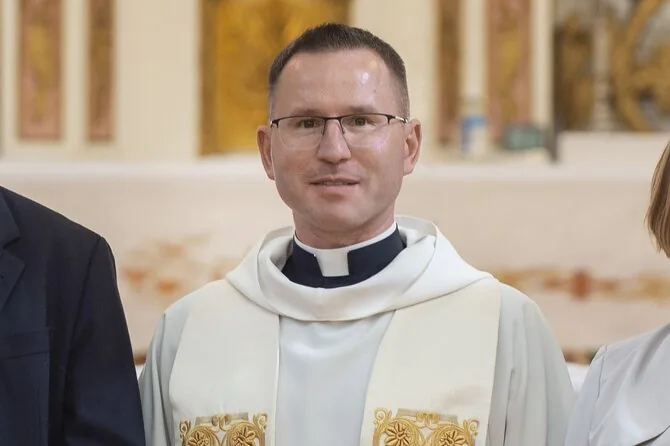
“The church was last renovated five years ago, so renewal was necessary. We changed the sound system, renovated and varnished the church floors, presbytery, and repainted the sacristy. Then we started work in the monastery – painted the premises, renewed the heating system, kitchen, rooms – changed bedding, toilets, beds, mattresses, lamps, water filters, etc. Pilgrims are still received in the monastery, camps take place, and various communities come, although perhaps not on the same scale as before – all weekends during summer are booked,” said the current parish priest.
Lithuanian bishops decided that only sacred music concerts can take place in Lithuanian churches, so he, as parish priest, heeded this decision.
According to T. Paliukėnas, a previously planned concert by Martynas Levickis took place in Troškūnai church at the beginning of his service. “The former parish priest called me and asked if I would allow the concert to take place. How could I refuse, it was already planned. I had no desire to forbid or disallow anything – I was a new person in the community,” said the clergyman.
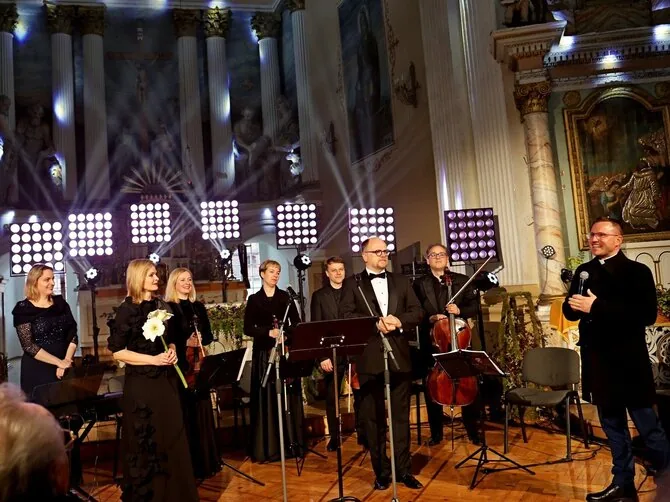
He said that soon after, Lithuanian bishops decided that only sacred music concerts could take place in Lithuanian churches, so he, as parish priest, heeded this decision, and since then no secular concerts have taken place in Troškūnai church.
“Then I myself started organizing sacred music concerts. This year, singer Saša Song and soloist Judita Leitaitė held hymn concerts in our church. Tell me, isn’t this culture?” rhetorically asked priest T. Paliukėnas.
He emphasized that the church’s purpose is not cultural events but the celebration of Mass and the sacraments provided to the community. “The church is God’s house, not a cultural center,” stressed the clergyman.
According to the priest, no cultural activities have been stopped in the monastery complex so far. He believes the whole problem arises because the events here are organized not by the head of the cultural center J. Pupkienė but by himself.
“I find it unacceptable that the head of the Troškūnai cultural branch uses the monastery premises as her own – organizing various camps, bringing people together, but the monastery gets nothing from it except project funds. But the premises used wear out, and all activities here are carried out free of charge. So with what funds should these premises be maintained and renovated – with the parish’s,” said the current parish priest.
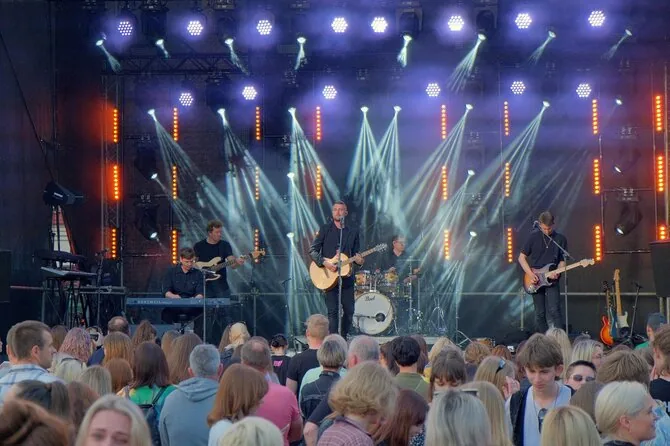
He said he does not object to cultural events taking place in the monastery courtyard, church basements, or multifunctional center, but no one from the cultural center contacts him about it.
“Jolanta does not come to me because she does not agree with the conditions I set, including financial ones. I informed her that to continue these works, she first needs to settle accounts for past events so that debts do not accumulate. But she has never come to me. This spring, a meeting was held in the Anykščiai mayor’s office, attended by the head of the Anykščiai Cultural Center Dijana Petrokaitė. After it, it was agreed that cultural events would take place in the Troškūnai Cultural Center premises in the future because the projects do not provide any expenses for rent in parish-owned premises,” said the Troškūnai parish priest.
He said he does not object to cultural events taking place in the monastery courtyard, church basements, or multifunctional center, but no one from the cultural center contacts him about it.
He also said that he is looking with the Panevėžys diocese for someone to rent the multifunctional center premises so that the building does not stand empty but is used. However, according to the priest, it is still possible to access these premises, and he has not banned any events.
“From this whole story, I get the impression that I have become an obstacle as a person because I disrupted the previous order, project, and financial matters. I understand that Jolanta has done a lot of good work for the community and its culture, but I cannot allow her to be the parish priest in the church,” said priest T. Paliukėnas.
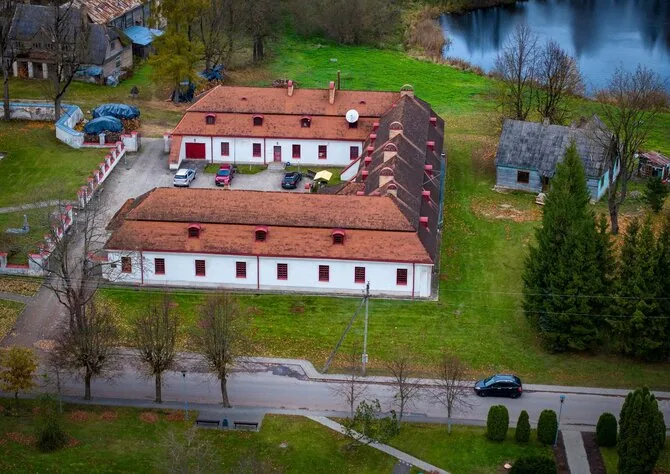
Asked why this year’s town anniversary celebration, which used to always take place in the monastery courtyard, could not be held in the usual Bernardine complex environment, the priest said that neither the elder, the head of the cultural center, nor any other organizers contacted him about it.
I have not slammed any doors and I am not hiding from anyone. It is always possible to negotiate, discuss, and find solutions. Just better not by letters and messages but by live conversation.
Asked what possible solutions he sees in this situation, the parish priest urged to come and talk to him. “I have not slammed any doors and I am not hiding from anyone. It is always possible to negotiate, discuss, and find solutions. Just better not by letters and messages but by live conversation. After all, if I did not care about this place, would I have renovated the church, monastery, planted flower beds, renewed benches, and maintained the surroundings?” said the parish priest.
Mayor of Anykščiai: “The parish priest should adjust his attitude”
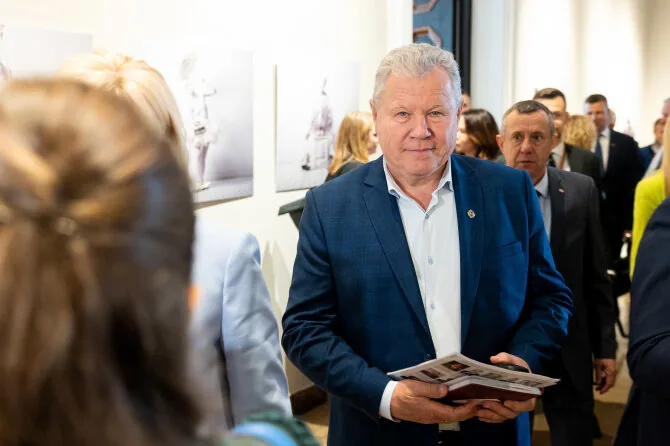
Kęstutis Tubis, mayor of the Anykščiai district municipality, said he is aware of the situation in Troškūnai. According to him, “it is very unfortunate that with the change of one person, the relationship with the community has essentially changed.” He said that during the time the previous parish priest S. Filipavičius served in the church, communication with people and local institutions was much warmer.
He stated that some time ago he met with members of the Troškūnai community and also spoke with priest T. Paliukėnas himself, with whom he maintains friendly relations. “I provided the parish priest with all the information about how much the municipality has contributed to the church’s renovation, basement restoration, and multifunctional center creation through various state and EU projects. Funds are also regularly allocated for the preservation of the monastery complex. We intend to continue this in the future, but we would like better understanding of the community’s needs from the parish priest’s side as well,” said the mayor of Anykščiai.
It is very unfortunate that with the change of one person, the relationship with the community has essentially changed.
According to him, this year the Troškūnai celebration took place for the first time not in the monastery courtyard, as was usual before, but in the square in front of the eldership. “We recently demolished a building in the former market square that was in emergency condition, so a new space opened up. It could be considered – if the parish priest does not change his attitude, does not become more open to the local community, then we will be forced to direct public funds not to the maintenance of the monastery but to the community’s needs in another space. After all, if there is this unique Bernardine complex in Troškūnai, we want it to be used by people,” said the mayor.
According to K. Tubis, due to the cultural events previously held in Troškūnai, this town, one of the smallest in Lithuania, was known as a cultural hub, famous even beyond the country’s borders.
“I have often seen how many people gathered at concerts held in the church – it was often packed. I think it was a huge benefit to the parish itself, as collections for parish maintenance were possible during concerts. Unfortunately, the current parish priest’s attitude is different,” said K. Tubis.
According to K. Tubis, due to the cultural events previously held in Troškūnai, this town, one of the smallest in Lithuania, was known as a cultural hub, famous even beyond the country’s borders.
Asked how he evaluates the fact that the former monastery school renovated with EU funds, now the multifunctional center, is mostly closed and the community cannot access it, the mayor of Anykščiai said he had already discussed this problem with Panevėžys bishop Linas Vodopjanovas.
“The bishop suggested that we activate this building, but I do not know who could take over this huge cultural heritage object and take care of it. We tried to invite a museum, but the premises seemed unsuitable to them. Unfortunately, it must be stated that the condition of the unheated building is definitely not improving,” said the mayor.
K. Tubis said he hopes that the new parish priest T. Paliukėnas will make proper conclusions soon and that there will be more connection and cooperation in the Troškūnai community.
Read more 16-year-olds at the European Championship were no match for the Slovenians