The cup will be handed over by Arne Schulz, the grandson of Lutheran priest Waldemar Kuther (Valdemaras Kiuteris), who served in Nida and Juodkrantė.
Read more Kotryna Teterevkova involved in a unique duel with a Russian: «Curious to see what happens next»
W. Kuther served as a priest in Nida and Juodkrantė in 1943–1944. His family, living in Memel (present-day Klaipėda), spent summers in Juodkrantė.
In 1944, W. Kuther was seriously wounded in Italy and taken to a military hospital in the Black Forest (“Schwarzwald”) for treatment. His family left Klaipėda to be with him. After the war, the family settled in Thuringia, but left it in 1951 for political reasons.
The history of the cup connected to Juodkrantė returned to the Kuther family’s life only after many years.
In 1988, W. Kuther’s daughter, baptized in Juodkrantė during her childhood, returned for the first time since 1951 to her childhood town in Thuringia.
Read more A new study revealed an unexpected benefit of tomatoes for the liver: eat more
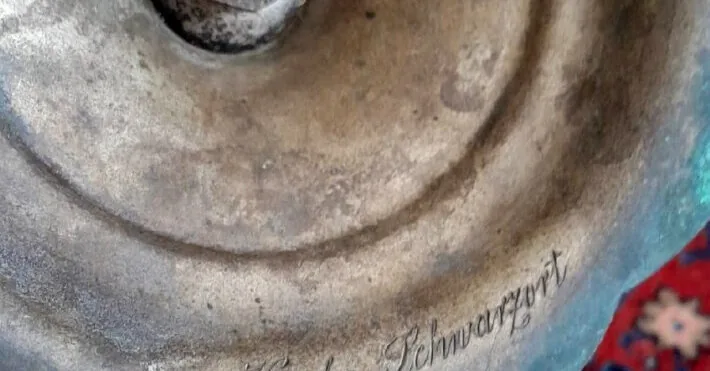
There, the local pastor showed her the cup and asked what the place name “Schwarzort” engraved on it might mean. The woman recognized the old German name for Juodkrantė and explained where this place is.
At that time, Germany was still divided into two states, so it was decided to secretly transport the cup from East to West Germany. It was disassembled and transported in parts from Thuringia to Hesse. How the cup had previously come to Thuringia remains unknown.
The connection of the cup to Juodkrantė is evidenced by the inscription engraved on it: “Kirche Schwarzort – 1875” (“Juodkrantė Church – 1875”). At that time, the wooden church built in 1795 still stood in Juodkrantė. Three years later, it was destroyed by fire, and later the current brick Evangelical Lutheran church was built in its place.
Doortje Schulz (maiden name Kuther), who recognized the cup, asked her son before her death to bring the cup back to Juodkrantė. The woman passed away in April this year.