








Ambassadors of mental health from the Lithuanian Autism Association “Children of the Rain” project “Look Deeper,” autistic women, share their pregnancy stories – from the first moments of expecting to preparing for childbirth. Their personal experiences are echoed by a study conducted in Lithuania by medical anthropologist Dr. Daiva Bartušienė on the pregnancy and childbirth experiences of autistic women, revealing the challenges women face and the changes they expect from the healthcare system, according to a press release.
Read more Pikul and Dirksčio’s divorce did not escape Stano’s eyes – he raised the only question
When you are pregnant and feel the world differently
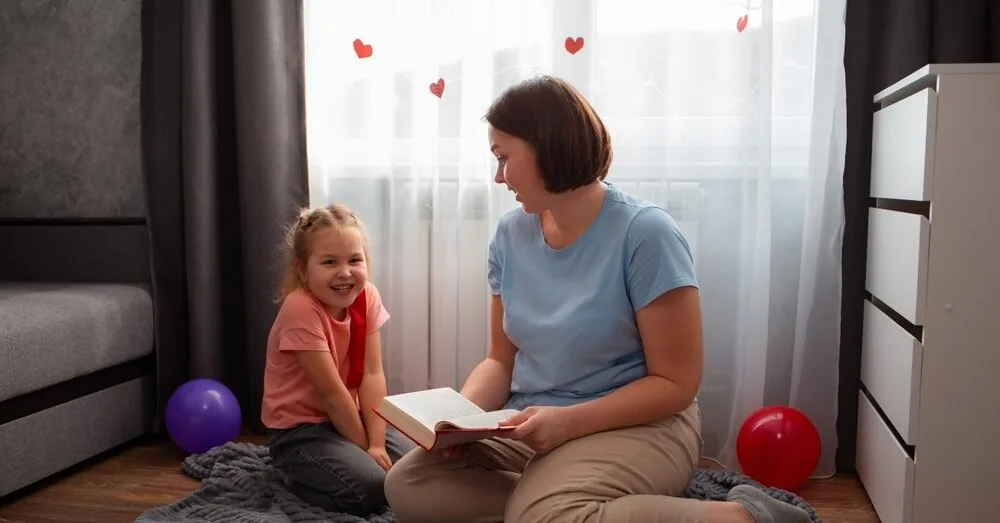
“When I first found out I was pregnant, I was shocked. The pregnancy was unplanned. I have always liked children very much, I even worked as a nanny, but the thought that a child was growing inside me was very strong and unexpected. At that time, I did not yet know that I was autistic. Only later, when autism was diagnosed in my son, did I begin to understand myself better,” recalls Irma.
According to her, the hardest part was getting used to the changes in the body and new sensations: “Many pregnant women talk about the joy of feeling the baby’s first movements, but for me, they caused great tension. It was scary to feel that something was moving inside me. I did not have the feelings that other women talked about. I wanted this stage to end as soon as possible because pregnancy was difficult for me.”

The experience of Raminta (name changed), who is currently pregnant, is quite different. Her pregnancy was planned, so the news of the expected baby brought more joy than anxiety: “I was very much looking forward to my belly growing and my body changing. What surprised me the most was that pregnancy changed my relationship with my body. Previously, due to sensory sensitivity, I could not stand the touch of water, but now I like a warm bath, I want more hugs and touches. I even became more open to new sensations and products. I expected to become even more sensitive during pregnancy, but the opposite happened – the environment became easier to accept.”
What the study shows: why it is important to hear the voice of autistic women
Medical anthropologist Dr. Daiva Bartušienė, who studied the pregnancy and childbirth experiences of autistic women in Lithuania, says that two main themes repeatedly appeared in the women’s stories: “The first is the uncertainty of social and communication situations in the medical environment. Every healthcare institution, whether a family clinic or a hospital maternity ward, operates according to certain social rules and cultural codes. However, these codes are not self-evident. They require a certain ‘reading’ ability: to understand not only what is said directly but also what is left between the lines.”
“It is precisely the staff’s expectation that these rules are self-evident and that patients should understand them themselves that, in some cases, ended not only in tension in relationships but also in real consequences. For example, one woman described a situation when hospital food was brought to her ward, but she was not informed that a planned cesarean section was scheduled, before which eating is not allowed. She ate the food because her logical interpretation was simple: ‘If they brought me food, it means I can eat.’ Later it turned out that the operation was already planned, and the responsibility for the ‘misunderstood situation’ was shifted to the patient,” explains Dr. D. Bartušienė.
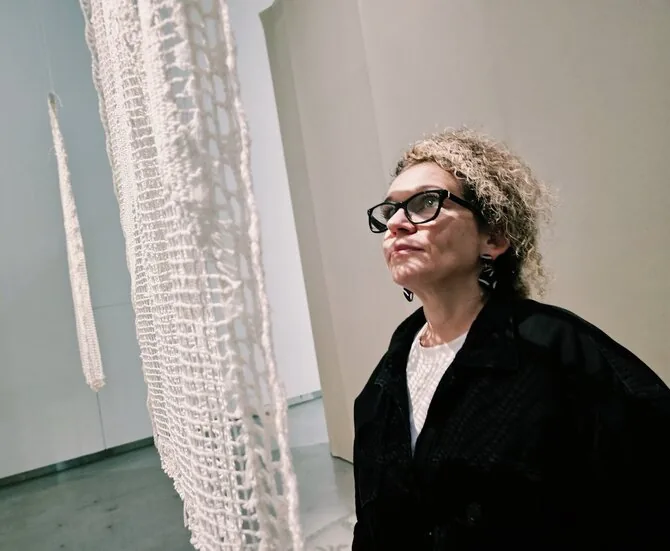
According to the medical anthropologist who conducted the study, the second theme is the non-recognition or even devaluation of women’s accumulated knowledge about their bodies, pregnancy progress, and health: “Many women said that pregnancy became a kind of ‘special interest’ for them; they intensively gathered information, were interested in their body’s changes, possible risks, and preparation for childbirth. However, this accumulated experiential and scientific information was usually not accepted as valuable. Sometimes it was even belittled with mocking comments about ‘moms who read too many forums.'”
When the system does not adapt to the person
According to Dr. D. Bartušienė, the experiences of autistic women allow us to look at a broader problem in the healthcare system: “For the most part, these challenges arise not because of autism itself but because the healthcare system is not adapted to different ways of communication, information processing, and participation. In a sense, this can be linked to the so-called institutional ‘imperialist thinking,’ where those in power have the privilege to believe that their form of knowledge is objective, rational, and important.”
“It is important to emphasize that autistic women by no means deny the professional authority of medical specialists or the importance of expert knowledge. On the contrary, they highly value it and do not oppose their experience to medical science. However, the problem arises when there is no dialogue and cooperation but a one-sided relationship in which the professional’s knowledge is automatically considered more important, and the patient’s experiential knowledge becomes less valuable or even suspicious,” explains Dr. D. Bartušienė.
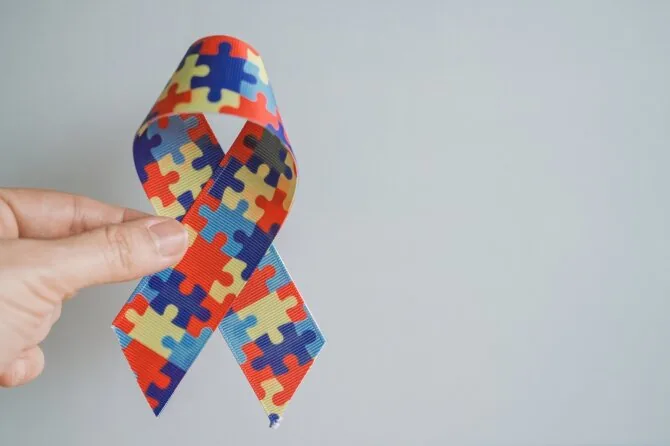
According to the medical anthropologist, autism becomes not an explanation for why women “do not understand” or “cannot adapt,” but reveals a broader systemic problem of how healthcare institutions are organized around a certain assumed “standard patient.” A patient who understands indirect instructions, can read social signals, trusts the institution’s logic, and adapts to its rules.
Read more Near Athens, two people died in a collision of firefighters’ helicopters
What kind of childbirth they expect
This, which the study talks about, is clearly reflected in the women’s own stories. As childbirth approaches, the most important thing for them is not only professional medical help but also clear, respectful communication.
Irma’s greatest anxiety was not the childbirth itself but the uncertainty and the feeling that she was expected to understand what seemed obvious to others. “What I missed most was clarity. I wanted someone to specifically say what would happen now, what would come next, what to expect. It seemed that all women naturally understood what was happening, but I was afraid because I did not understand what I was supposed to do. After childbirth, it was similar – it seemed that everyone expected me to know how to care for the newborn, but I really needed more explanations,” Irma says.

She felt calmer during her second pregnancy, but the need for clear and detailed information did not disappear. Irma shares that when it was decided to induce labor, she did not know what it meant or what would happen next: “I did not dare to ask because it seemed I should know. If I could change something, I would want more concreteness and details. I think autistic people would greatly benefit from childbirth preparation where everything is explained step by step. Respectful communication is also very important. Sometimes it is enough just to calmly explain rather than let a person feel as if they should understand everything by themselves.”
Similar expectations are expressed by Raminta, who is still awaiting childbirth: “From doctors and midwives, I expect calmness, understanding, and cooperation. It is very important for me to hear what they say and know what is happening. I believe that safety will also be provided by the fact that my husband participates with me in all childbirth preparation classes. And from the medical staff, I would most like to ask for understanding – to remember that this is the first time, not to rush, and to communicate as calmly and respectfully as possible.”
What changes are needed?
“First of all, it is necessary to strive to create such a midwifery care environment where women would not be afraid to reveal their autism, where they could openly talk about their challenges, atypical pregnancy experiences, sensory needs, or communication peculiarities without fear of prejudice. Currently, many women choose to mask their autism because they fear being judged as ‘difficult patients,’ insufficiently cooperative, or overly sensitive.
In other words, they try to meet the institutional expectation of a ‘convenient patient.’ Therefore, one of the most important changes would be to move from an approach where autism is seen as the main problem to an approach where neurodiversity is considered a natural part of human diversity. This means that midwifery care should be designed not only according to the statistical ‘average patient’ but taking into account different ways of perceiving information, communication, and sensory experience,” says Dr. D. Bartušienė.
According to the medical anthropologist, a very important change would also be greater preparation of healthcare professionals to recognize not only the medical but also the communication and social needs of autistic women: “Sometimes very small changes, such as clearer explanations, more specific instructions, informing about what will happen next, the opportunity to ask questions or discuss procedures in advance, can significantly reduce anxiety and increase the sense of safety.

Finally, it is important not only to educate specialists about autism but also to include the experiences of autistic women themselves in service development. True inclusion begins when women are not just research subjects or patients who need the system to be ‘adapted’ but become equal participants in knowledge creation.”
Pregnancy and childbirth experiences for autistic women can be very diverse. Personal stories and scientific research remind us that there is no universal “autistic woman’s pregnancy” scenario. The more we talk about different experiences and individual needs, the easier it will be for both women themselves and healthcare professionals to better understand each other.