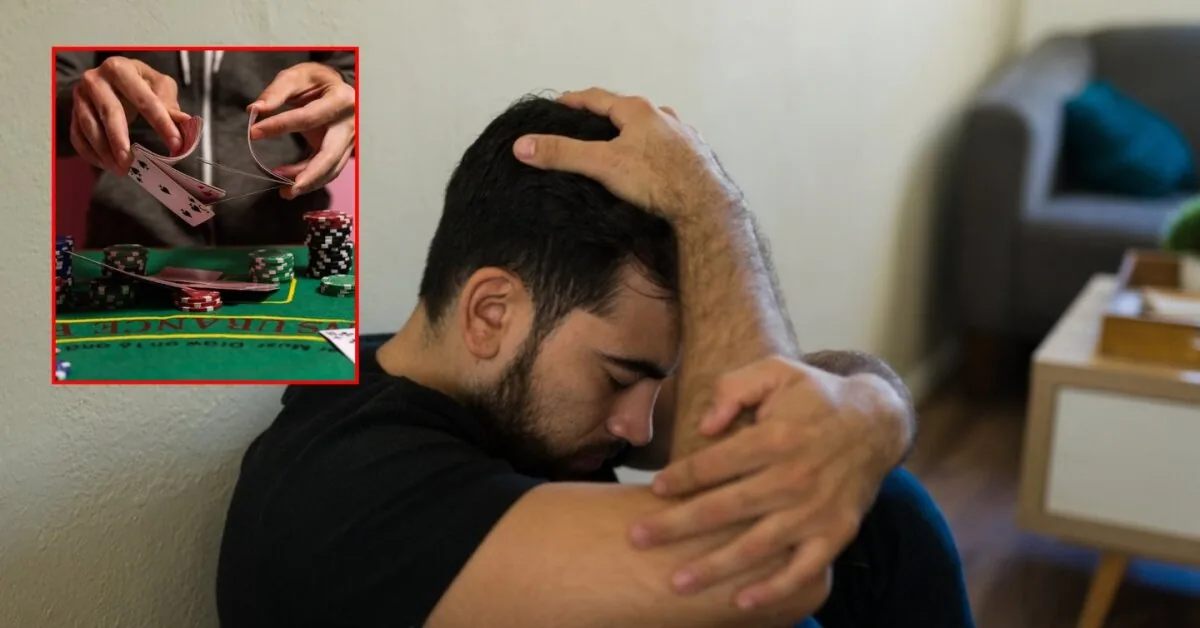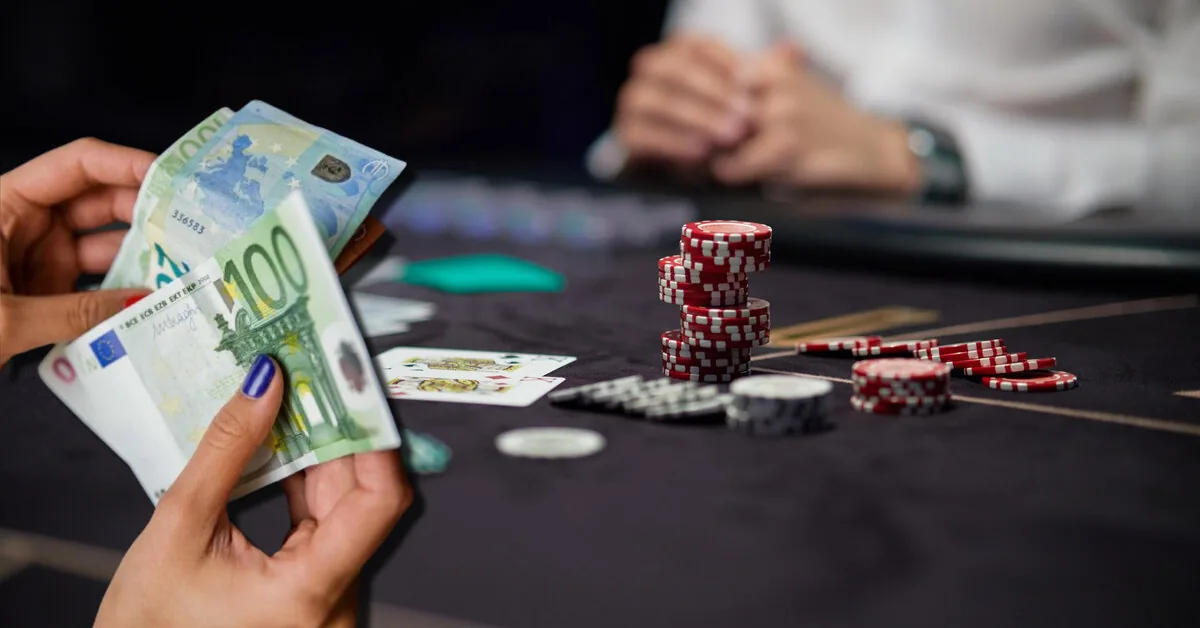
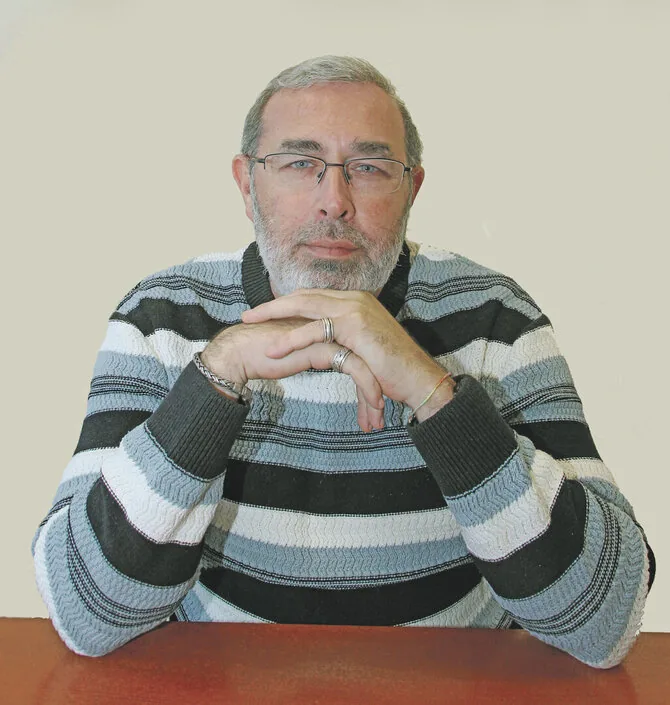
The chief specialist of the Gambling Supervision Service (GSS), psychologist Oleg Mackevič, says that the most important thing is to understand that the gambling problem is not just a matter of money. Often, it becomes a way to escape from poor well-being, emotional tension, or inner emptiness.
Read more Has the war turned against the Kremlin? «The Washington Post» assessed Putin’s position
The scale of gambling in Lithuania: what research shows
Speaking about the scale of the gambling problem in Lithuania, the specialist points out that the very concept of “problem” can mean very different situations. For some, it is a once-lost salary, for others – years of uncontrolled gambling that has already turned into addiction.
“If we consider a problem gambler as a person who no longer controls their gambling independently, based on studies conducted in Lithuania in 2017 and 2024, such people could be about 2.5% of the population,” says O. Mackevič.
Similar figures are mentioned by many European researchers. However, Lithuania still lacks consistent studies that would allow monitoring changes over a longer period.
The psychologist points out that many factors influence the popularity of gambling: advertising, accessibility, normalization of gambling in society, general attitudes. So the more visible and accessible gambling becomes, the more people will try it, and how many will become pathologically involved is only a matter of speculation.
A young person feels the thrill more strongly but evaluates the cost less accurately.
According to the GSS specialist, to reduce the problem, it is very important that responsible gambling policy and prevention become a long-term state priority.
Why do young people get involved so quickly?
One of the most vulnerable groups is young men. However, according to O. Mackevič, people facing financial instability, loneliness, emotional stress, symptoms of depression or anxiety, as well as those who already have experience with other addictions, are at greater risk: “A young person feels the thrill more strongly but evaluates the cost less accurately.”
According to him, this is also related to biological processes. In young age, brain areas responsible for impulse control and evaluation of long-term consequences are not yet fully developed. Meanwhile, the reward system operates very sensitively, so risk, quick results, and strong emotional stimuli affect much more intensely.
The digital environment also has a great influence. Today, gambling mechanisms are often presented through mobile apps, gaming elements, or even video games.
“For a young person, this environment seems familiar and known, so there is no longer a need to protect oneself. Gambling no longer appears as a dangerous activity but rather as entertainment, competition, or a quick way to earn money,” explains the specialist. Peer influence is no less important. If gambling is considered normal in the environment, it becomes even easier to get involved.
Gambling is not only about money
O. Mackevič emphasizes that for problem gamblers, gambling itself eventually ceases to be entertainment. A person gambles not because they want to, but often because they cannot stop.
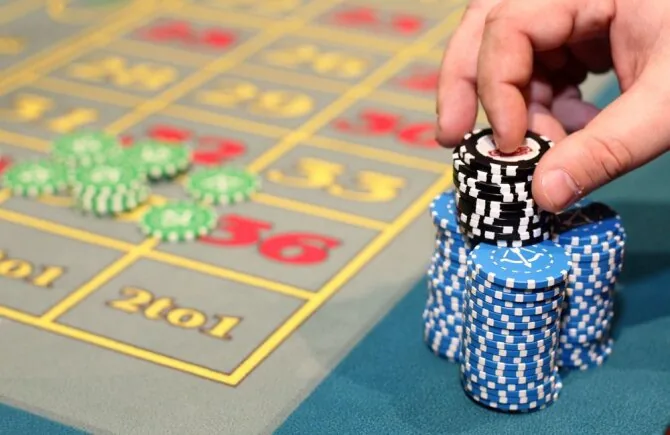
Many people, according to the psychologist, choose gambling as a way to regulate emotions. Some try to escape loneliness, tension, anxiety, or depressive experiences this way, others seek a strong thrill that temporarily suppresses inner emptiness or feelings of helplessness. Therefore, gambling becomes less a matter of money and more a way to cope with well-being.
It usually starts with curiosity. A person tries one or another type of gambling, and the brain quickly remembers the feeling of pleasure. “Entertainment itself provides psychological satisfaction, so the brain wants to repeat that action,” explains the specialist.
The mechanics of gambling also contribute greatly to involvement: sounds, lights, visual effects specially designed to enhance emotional impact. If a person manages to win money, the risk of involvement increases even more.
“Winning usually becomes the risk factor that most draws a person into gambling. The thought arises that this could be a way to earn money, forming a sense of power,” says the psychologist.
Read more Kuzminskas and Lekavičius did not stop «Olympiakos» in the semifinals
Over time, changes also occur at the neurological level, i.e., mechanisms related to the dopamine system strengthen. For some gamblers, even the thought of future gambling begins to evoke pleasure.
Casino or internet – which is more dangerous
Speaking about gambling in casinos and online, O. Mackevič states that the problem is not the type or place of gambling itself, but how a person gambles: “I often hear talks about more or less dangerous gambling. However, I have seen more than one person who fell into hundred-thousand debts gambling on low-stake slot machines.”
Online gambling is more often chosen by those who value accessibility, speed, and privacy.
The psychologist compares this to alcohol: “Is cider less dangerous than vodka? Have not many people started their addiction with an evening beer?” – the specialist rhetorically wonders.
According to him, casinos are more often chosen by people who value the atmosphere itself, e.g., lights, sounds, a sense of status, ritual, social contact. For some, it becomes not only gambling but also a lifestyle. Meanwhile, online gambling is more often chosen by those who value accessibility, speed, and privacy. “You can gamble anytime and anywhere, unseen by anyone. This way, a person has fewer witnesses to their gambling,” says the psychologist.
Scientists increasingly say that online gambling is more addictive due to its accessibility, privacy, and constant stimuli to the brain. The psychologist is convinced that over time, online gambling will increasingly displace traditional land-based gambling.
The mechanics of “loot boxes”
Although today gambling is much easier to access than before, GSS specialist O. Mackevič emphasizes that a phone or the internet alone does not create the problem: “Almost everyone has phones and internet, but not everyone gambles.”
However, he admits that the modern environment creates many new forms of addiction – from social networks to computer games, pornography, or excessive internet use. Society still lacks prevention and awareness-raising programs.
“Not all parents are properly prepared to talk to children about internet dangers or excessive use,” says the psychologist and urges parents to be interested in new forms of gambling in computer games, especially the so-called “loot box” mechanics. Because children, due to their age, are not always able to properly assess risks, it is necessary to talk to them about this.
Gambling addiction is not a whim or simply bad behavior; it is a serious disease.
It is important not to be alone
O. Mackevič emphasizes that gambling is primarily entertainment, but for certain people, it can become a serious disease. Therefore, he advises monitoring oneself and one’s emotions. “If after gambling you feel gloomy emotions or discomfort, it is worth seriously considering whether this is the right entertainment for you,” he says.
The psychologist also urges reducing the stigmatization of addicted people: “It is not a whim or simply bad behavior. It is a serious disease, and people suffering from it experience very gloomy emotions and experiences.”
Often, it is very difficult for a person to start the recovery path alone, so the most important thing is not to be alone and to seek help as early as possible. If a person or their relatives face a gambling problem, help can be provided by psychologists from the Gambling Supervision Service, addiction centers, and other mental health specialists.
Funded by the State Public Health Promotion Fund (state budget) resources.
Read more Dominykas Dirksčio’s threat to a famous man backfired like a boomerang