









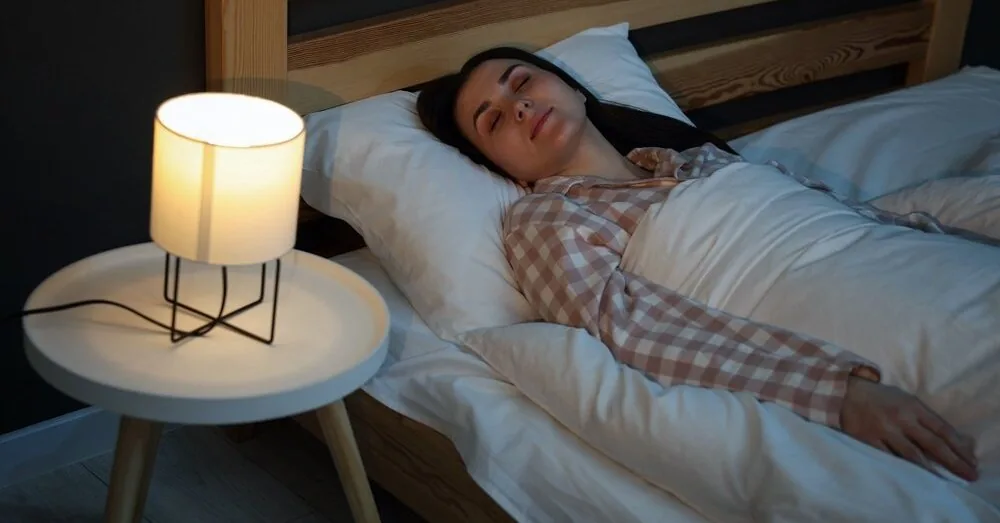
As reported by Medical Xpress, the study involved 11,071 people from the UK Biobank. Its results were published in the scientific journal European Heart Journal.
Participants wore a special sensor on their wrist for seven days, which measured the intensity of light reaching them at night. About three years later, they underwent a cardiac magnetic resonance imaging scan, which allowed a detailed assessment of the structure and function of this organ.
Scientists compared people who slept in almost complete darkness with those exposed to more than three lux of light at night. Three lux is very dim light, but according to the study data, even this amount can be significant.
Observed thickening of the heart wall
Researchers found several differences in the hearts of people exposed to higher light levels at night. One of them was thickening of the left ventricle wall. This reduced the internal space of this heart chamber.
It was also noted that the heart muscle relaxed less well between contractions. This may be an early sign of heart function impairment. Changes were also found in the right ventricle and left atrium.
The study leader, Professor Lu Qi from Tulane University in New Orleans, explained that night light had previously been associated with an increased risk of cardiovascular diseases. However, until now, there was a lack of knowledge about what happens in the heart itself in such cases.
“This is the first study of its kind. It shows that stronger light exposure at night is associated with cardiac remodeling – changes in its structure and function. We usually see this as the body responds to chronic stress or heart damage,” said the professor.

According to him, initially such changes may be part of the body’s adaptation to the experienced load. However, over time, the heart may become stiffer and weaker, which is associated with a higher risk of heart failure.
Read more Sikorski visiting Kyiv: Russian attacks near the Polish border are an escalation
Not only the night lamp may be to blame
Light at night does not necessarily come only from a lamp left on in the room. The body’s rest can be disturbed by a turned-on TV, light from phone and other screens, glowing electronic device indicators, street lamps, or bright advertisements outside the window.
Artificial light can disrupt the circadian rhythm, which affects sleep, hormone production, blood pressure, and metabolism. However, this study did not identify the exact biological mechanism that could explain the observed heart changes.
The authors of the commentary accompanying the study publication urged doctors, especially those caring for patients with heart failure or atrial fibrillation, to pay attention to their sleep environment. It is important not only how much a person sleeps but also whether their bedroom is sufficiently dark, whether they work at night, and how much time they spend in front of screens in the evening.

The cause is not yet proven
Scientists emphasize that this study revealed an association but did not prove that night light caused the observed heart changes. Other health and lifestyle factors of the participants could have influenced the results.
Moreover, lighting was measured only for seven days, so these data do not necessarily accurately reflect people’s long-term sleep habits. Further studies will be needed to confirm the results and help understand whether reducing light exposure at night can protect the heart.
Nevertheless, ensuring a darker sleep environment is not difficult. Unnecessary devices can be turned off, blackout curtains used, bright night lamps avoided, and screen light exposure reduced before sleep.
Read more An apartment is on fire in Klaipėda: firefighters rushed to the scene
Prepared based on Medical Xpress.