







Even worse – following the mentioned stereotypes, some people do not even know they have already had a heart attack. Therefore, according to Robertas Pranevičius, head of the Emergency Department at Kaunas Hospital of the Lithuanian University of Health Sciences and cardiologist at the Heart Center of Kaunas Clinics of the Lithuanian University of Health Sciences Hospital, the biggest problem is not the lack of information. According to the expert, the most dangerous is the false belief that heart diseases always appear as dramatic and obvious as shown in movies.
Read more „Employees are not trash“: About 20 „Energesman“ employees demanded social guarantees in Vilnius
Myths write sad scenarios
R. Pranevičius often hears patients’ conversations, and the same myths keep repeating: heart diseases are a problem of older people, a heart attack always starts with severe chest pain, and the hearts of those who exercise cannot be ill. According to the expert, it is also popular to think that heart palpitations are just a consequence of stress, while a good electrocardiogram shows excellent health.
“The most dangerous are the first two myths – about age and the importance of necessary pain, because they directly delay a person’s decision to see a doctor. Many think it is still too early to be ill or that the sensations are too minor to indicate a serious problem. Unfortunately, it is precisely the lost time that often determines how severe the consequences of the disease can be,” says the interlocutor.
Although, according to the cardiologist, older age indeed increases the risk, this does not at all mean that younger patients are protected.
“Atherosclerosis in blood vessels begins to form already in childhood or adolescence, and its first effects are often determined not by the birth date but by risk factors accumulating over many years – smoking, high blood pressure, overweight, improper diet, or low physical activity. It is no coincidence that in recent years myocardial infarction is increasingly diagnosed even in people under 40 years old,” explains the cardiologist.
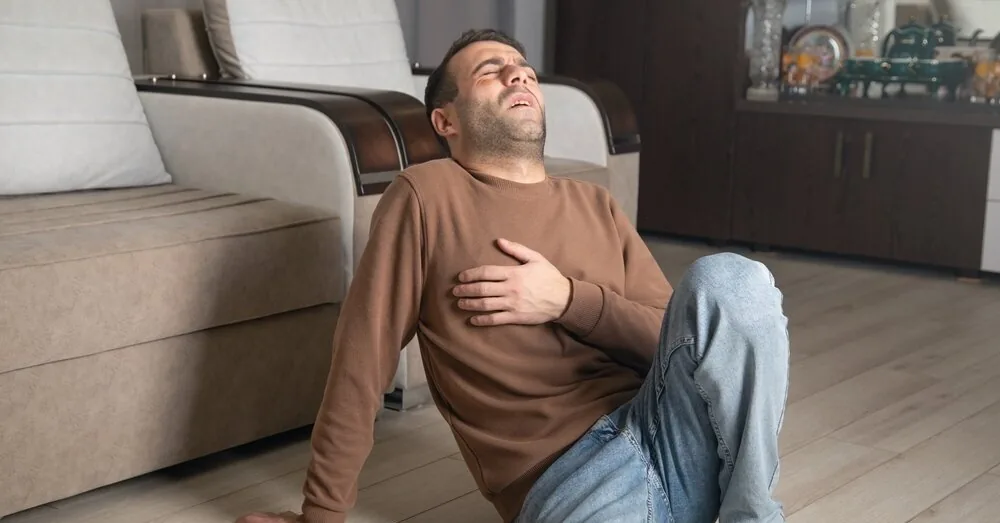
“No less dangerous,” continues R. Pranevičius, “is the belief that a heart attack always starts with crushing chest pain. The reality is completely different. About one in five heart attacks is so-called silent. Patients do not feel it at the time or attribute symptoms to other causes. The situation is even more complicated for women – almost half of them do not feel chest pain at all when a heart attack occurs. Instead, they experience shortness of breath, nausea, weakness, pain in the back, jaw, or abdomen. Therefore, the diagnosis is often made much later.”
One test is definitely not enough
Another very common myth, according to the cardiologist, is widespread among those who exercise. Often these people think their heart cannot be ill.
And although, according to the expert, regular physical activity indeed strengthens the heart muscle, slows the resting pulse, and increases heart volume, this is a normal adaptation of the body called the athlete’s heart.
“It is important to know that similar changes can sometimes hide dangerous diseases. For example, heart muscle diseases. Therefore, good well-being or excellent physical condition alone does not allow making balanced decisions. It is often difficult to reliably distinguish where physiological adaptation ends and disease begins. For this reason, periodic cardiological examinations are important for people who exercise intensively – not just trust in their body,” emphasizes R. Pranevičius.
Another mistake, according to him, is the belief that all heart palpitations are caused by stress. The cardiologist agrees that most isolated extrasystoles are indeed harmless. However, if palpitations recur, occur during physical exertion, or are accompanied by dizziness, shortness of breath, or near fainting, this may signal more serious heart rhythm disorders.
“It is similarly wrong to think that a single electrocardiogram performed in the doctor’s office definitively rules out all heart diseases. After all, it records only a few seconds of heart activity. If there is no rhythm disorder at that time, the test may be completely normal. And the problem may appear at other hours or even other days. Therefore, one normal test is not a lifelong health certificate,” stresses the cardiologist.
Answered what must be remembered
According to the Ministry of Health of the country, cardiovascular diseases remain the leading cause of death in Lithuania. Although mortality rates have slightly decreased in recent years, the situation remains one of the worst in the European Union.
Speaking about this, R. Pranevičius also notes another trend – in practice, it is most common to see not people who completely ignore symptoms but those who wait too long.
“Patients, thinking that it is ‘still too early’ for them to get sick or that the sensations ‘do not fit’ the imagined heart attack image seen in movies, simply underestimate the seriousness of the situation. The most important thing to understand is that heart disease does not have one correct scenario – neither by age, symptoms, nor physical condition. Every person, regardless of whether they are thirty or seventy, should know their main risk factors: blood pressure, cholesterol level, glucose indicators, family history, lifestyle. And it is essential not to wait until a dramatic symptom appears. Thinking should start now,” warns the cardiologist.
Still, people, he adds, often hope that their situation does not match the classic heart attack image, so they delay seeking help for hours or even days. And time in treating ischemic heart disease is one of the most important factors – the faster blood flow is restored in the coronary artery, the less damage is done to the heart muscle.
“Clinical studies confirm this with concrete numbers. Every additional hour lost before interventional treatment can increase mortality by about 55%, and every additional 30-minute delay adds about 7.5% extra risk. A similar scenario repeats in atrial fibrillation. This heart rhythm disorder may not cause obvious symptoms for a long time, but untreated it significantly increases the risk of stroke. Timely diagnosis and treatment can avoid such risks in many cases,” he says.
Therefore, the cardiologist reminds – if new or recurring shortness of breath, unusual fatigue, palpitations, or chest pressure appear, it is not worth trying to decide on your own whether it is serious enough. It is much more rational simply to get checked.
“Statistics show – up to 80% of premature heart attacks and strokes could be avoided by timely recognizing and managing risk factors. Therefore, it is worth knowing your blood pressure, cholesterol levels, and pulse as well as you know your phone number,” concludes the head of the Emergency Department at Kaunas Hospital of the Lithuanian University of Health Sciences.
Read more Meteorologists: this July was one of the wettest – where did it rain the most?