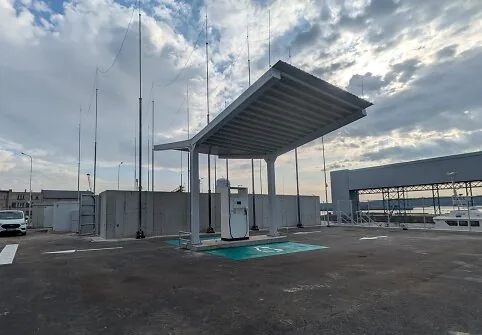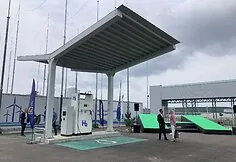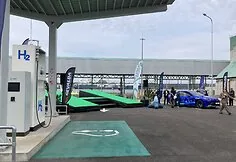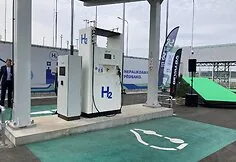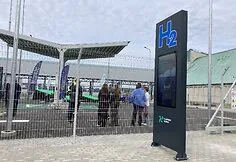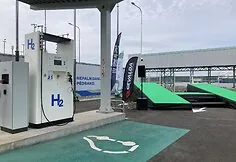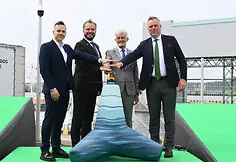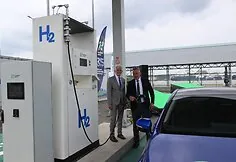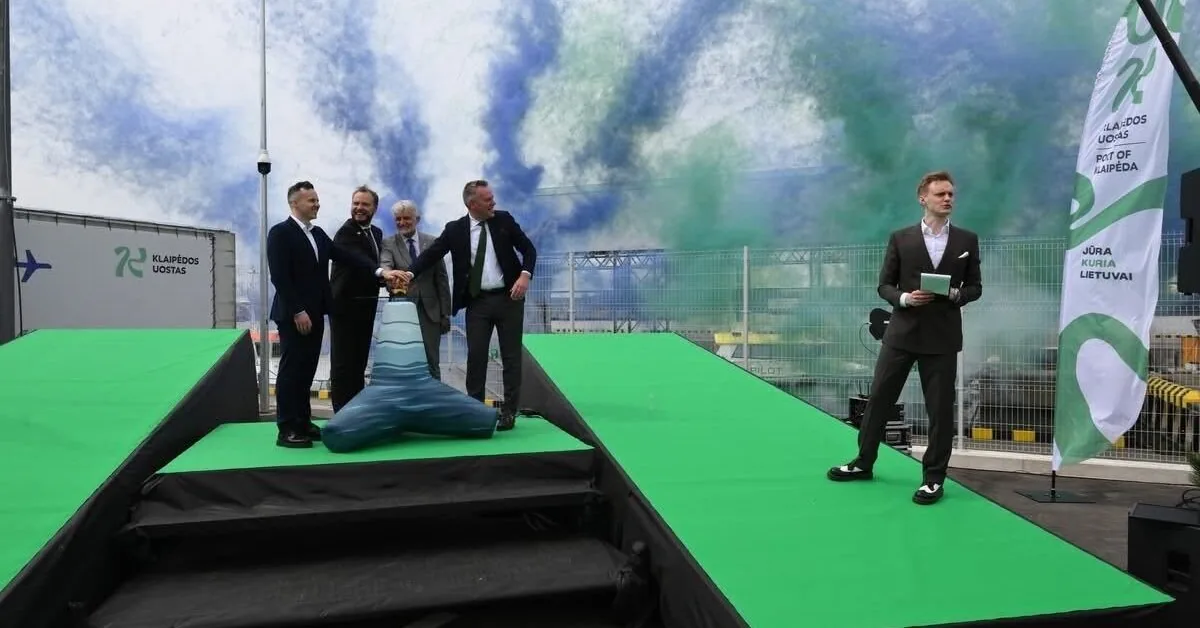
Klaipėda resident Elijus Vilimas became the first customer at Klaipėda Port’s green hydrogen refueling station. The “Toyota Mirai” acquired in Norway became the second hydrogen-powered car registered in Lithuania. The man brought the vehicle to Lithuania last August, but until now he could not use it, as there was no possibility to replenish hydrogen reserves in his homeland and surrounding countries. E. Vilimas, the owner of the hydrogen-powered car, said that after filling the tank with 5.6 kg of hydrogen, he drove about 800 kilometers.
The transport services company “Saugos” was also waiting for the hydrogen station. The company has several hydrogen-powered cars, but until now it was not possible to operate them in Lithuania. The company’s head, Vladislovas Medingis, stated that such vehicles are characterized by comfortable driving and quiet operation, similar to electric cars.
It is estimated that there could be a dozen vehicles powered by innovative fuels in Klaipėda alone. With the opening of the first station, it is undoubtedly expected that their number will increase.
Future Fuels Are Already Here
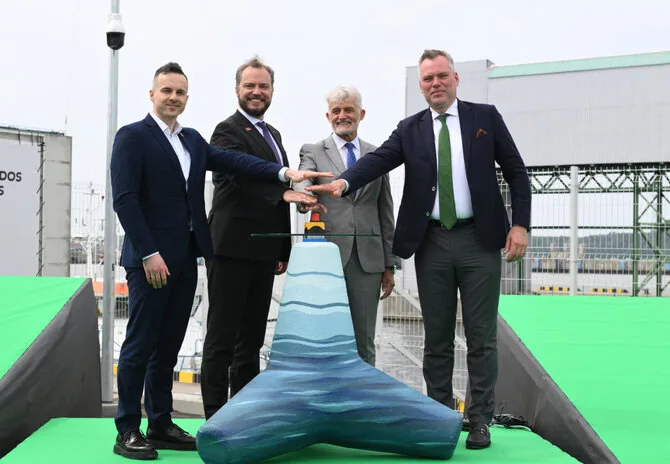
Minister of Transport Juras Taminskas stated that hydrogen stations are the future in the present. “Let’s remember how the electric car fleet started in Lithuania and what we have now. It’s like the eternal dilemma: which came first – the chicken or the egg? We see that without infrastructure, we will not create the entire fleet,” the minister noted.
Deputy Minister of Energy Airidas Daukšas stated that green hydrogen can be used in both industry and transport: for cars, trucks, and ships.
“This is part of energy independence. We see this as a long-term solution precisely for achieving energy independence, where alongside electrification, we would also have other alternatives. Green hydrogen, in particular, can be used in both industry and transport – on land, at sea – and in other sectors. And derivative products, such as methanol, can be produced from the same hydrogen,” says A. Daukšas.
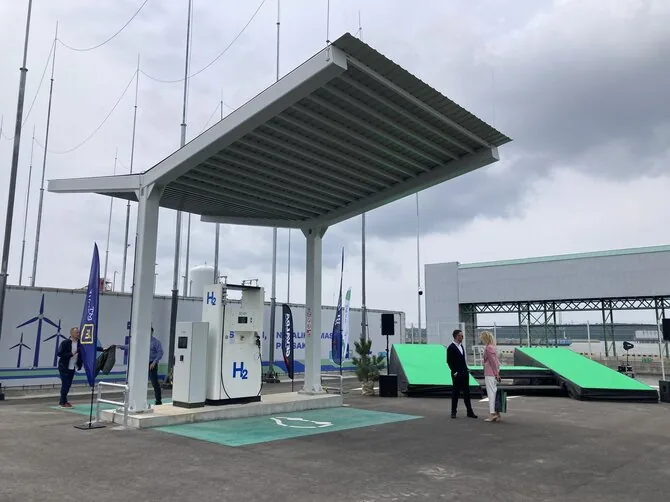
Algis Latakas, head of Klaipėda Port Authority, states that the port, having chosen the green direction, is consistently pursuing it.
“A few years ago, green hydrogen in Klaipėda Port was just a vision, a bold dream that gave no peace and invited us to embark on a journey on an untrodden path. This path was not simple – in many areas, we were pioneers, solving questions for which, it seemed, answers had not yet been found, but it allowed us to accumulate invaluable experience,” says A. Latakas.
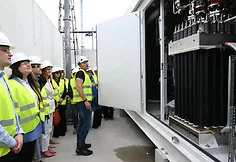
According to A. Latakas, the new station is not very large compared to others being built. “It’s a 2.25 MW station that can produce 127 tons of hydrogen per year. The use of hydrogen is quite broad. First, we will use it for our own needs. We will look for the best solutions to make production efficient and achieve maximum productivity. In the near future, we will be able to enter the market and sell the hydrogen produced at this station,” the port director explained.
Just a few months ago, the electric and hydrogen-powered vessel “Rasa” reached Klaipėda Port, and the Port Authority’s car fleet was supplemented by the hydrogen-powered “Toyota Mirai Ambassador”.
Read more You are not welcome here: revealed which European countries’ residents would like to expel tourists
Klaipėda Port has already received several vessels powered by green hydrogen. The new production station will make the port more open.
The project cost about 12 million euros, with about half of the amount coming from EU funds.
KTU scientist: green hydrogen in the port – a necessary step
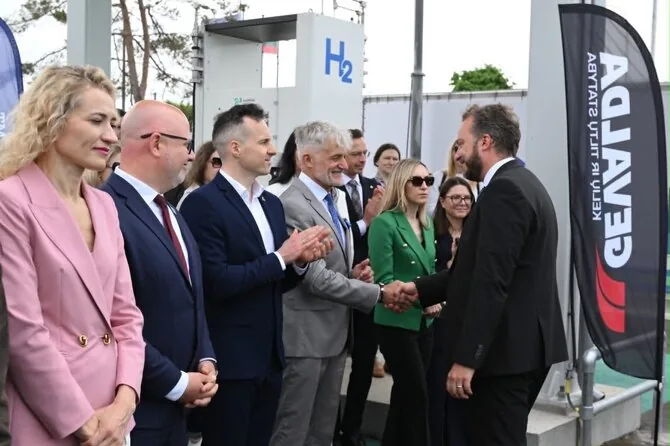
Kaunas University of Technology (KTU) scientist Dr. Benas Gabrielis Urbonavičius positively evaluates Klaipėda Port’s decision to start green hydrogen production. According to him, the project is important both due to European commitments and innovations. Scientists see the greatest potential for hydrogen in industry and specialized sectors.
According to Dr. B.G. Urbonavičius, Klaipėda Port’s green hydrogen production project is a logical step, as Lithuania must implement the European Union’s alternative fuels infrastructure requirements, and at the same time, an opportunity arises to test new technologies.
“On the one hand, there is a directive obligation to do so, and on the other hand, a very modern and new vessel is appearing in Klaipėda Port, so this is definitely the right decision. (…) The project being implemented by Klaipėda Port is truly unique in the world, as the vessel can use both hydrogen and batteries. No one has done this yet, so time will tell how successful this solution will be, but the direction itself is very interesting and important,” says the KTU scientist.
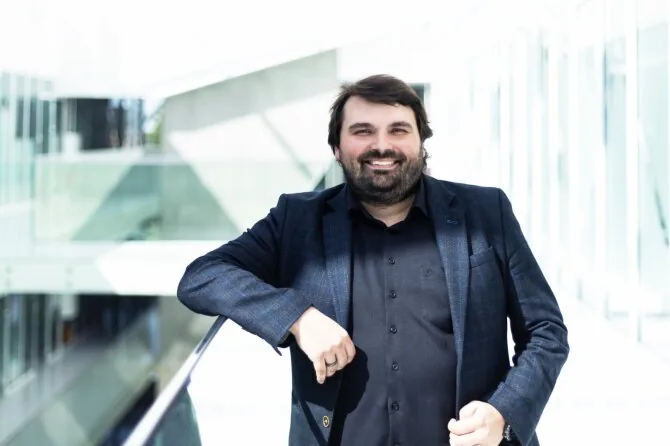
He also notes that Klaipėda Port is becoming one of the first in the region to implement a hydrogen project of this scale.
“Since we will be the first in the region with such a project, from this perspective alone, I think it’s a great thing. The pioneers always face many challenges – both technical and legal – but it is precisely through such projects that practical solutions and the necessary infrastructure emerge,” says the scientist.
“Today, there are only a handful of long-distance ships powered by hydrogen – ammonia is more often used there. However, if we talk about ferries, hydrogen ferry projects are already underway in Norway, and in Lithuania, the port service vessel becomes an interesting practical test that will allow us to understand the real capabilities of the technology,” the scientist emphasizes.
Representatives of science see the greatest potential for green hydrogen in maritime transport and industry – in fertilizer production and oil refining, where hydrogen is already used in large quantities. According to the KTU scientist, if Lithuania could produce more green hydrogen locally, it would strengthen energy self-sufficiency and reduce dependence on geopolitical fluctuations.
Read more Summer travel by electric car: how to drive further and pay less