Botulinum – not just for beauty treatments
Achalasia is a disorder of esophageal innervation causing difficulty swallowing, nausea, and vomiting. Specialists at the Republican Šiauliai Hospital have been treating achalasia for many years. The coordinator of the Endoscopy Department at the Diagnostic Center, J. Birutis, explains that until now pneumatic balloon dilation was used – this expands the muscle spasm-affected area of the esophagus. However, this is only a temporary solution – the spasm usually recurs after a few months or years, so the procedure must be repeated.
Newly introduced botulinum toxin injections are also not a permanent cure – the procedure will need to be repeated after six months or a year. However, doctors choose this method because the risk of complications is much lower than with balloon dilation. Specialists are pleased with the support of the new hospital administration, which enabled the purchase of the medications needed for the injections.
“Many know botulinum toxin as a beauty industry product, but we successfully use it in medicine to restore a person’s ability to swallow food normally,” says experienced endoscopist J. Birutis, the first in Northern Lithuania to start using this method for achalasia treatment.
The botulinum toxin injection procedure is quite quick, simple, and painless. It is performed in the operating room, and the patient is discharged home the same day.
Modern method brought from Milan
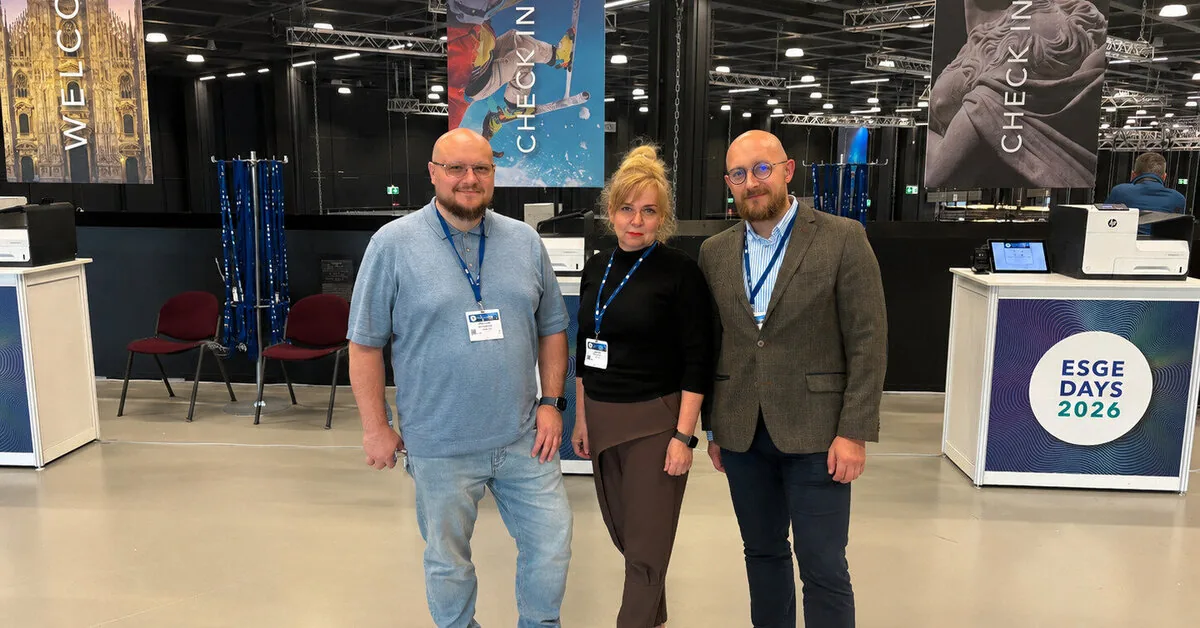
Doctors Justas Birutis, Laurynas Kameneckas, and endoscopy nurse Sigita Dulaitienė from the Republican Šiauliai Hospital recently returned from the annual ESGE conference in Milan (Italy). During the three-day intensive training, gastroenterologists, endoscopists, and nurses observe live endoscopic surgeries and analyze the latest treatment methods. Broadcasts are interactive and take place simultaneously from several operating rooms, with specialists immediately explaining the procedures and possible complications. In Milan, the medical team observed achalasia treatment with botulinum toxin injections.
“Previously, when we returned from such events full of impressions, it was difficult for the department staff to understand what we were talking about. We brought back innovations we wanted to apply, but it was challenging to explain and train the team,” shares doctor J. Birutis. This prompted attending the conferences together with nurses. This idea proved completely successful. Endoscopy nurse S. Dulaitienė brought back not only impressions but also valuable practical knowledge from Milan, making the doctors’ desire to implement the new method a reality. The team was very satisfied with the performed procedure. For nurse Sigita, who saw the process herself at the congress, assisting in Šiauliai was much easier because the whole team knew the exact sequence of actions.
Specialists’ qualifications continuously grow
Doctors L. Kameneckas and J. Birutis from Šiauliai Hospital have attended the annual conference for the fifth time. For the second consecutive year, nurses also participate – this time Šiauliai nurse S. Dulaitienė and KUL nurse Akvilė Minelgė attended.
Read more “Deepstate”: Russians are penetrating deeper into Kostiantynivka
A separate session is held for nurses at the conference. It covers current issues in endoscopy department care, ensuring service quality, patient care, preparation of medical instruments, and specifics of assisting. Therefore, the joint work of doctors and nursing staff as a team is very important.
“Doctor Laurynas Kameneckas and I have been attending ESGE conferences for five years, and we feel our growth as specialists. Each year we better understand global trends. We already successfully perform many procedures observed there in our hospital,” says J. Birutis. Not only the botulinum toxin injection method but also a complex polyp removal technique introduced after previous conferences, which can last up to ten hours, have been started in the hospital. The number of these procedures in Šiauliai is constantly increasing.
According to the medical staff, all endoscopy innovations of the past five years at the Republican Šiauliai Hospital have come thanks to this conference. “At the conference, we establish new contacts, communicate with foreign colleagues, and receive invitations to courses,” says J. Birutis. The doctor is pleased to have the opportunity to attend a three-day intensive practical course in Berlin (Germany) in September with a colleague.
Department activity and emergency care expanding
Nurse S. Dulaitienė recalls that previously doctors had to spend a long time preparing staff for new surgeries and explaining the upcoming steps in detail. Now, after international congresses, this is no longer necessary.
“When you see with your own eyes how world professionals work, you start to understand the process completely differently. It helps you grow. Before performing a new procedure, doctors no longer need explanations on how to prepare or which instruments to bring. We feel safer and more professional,” notes nurse Sigita. The specialist is glad that by decision of the new hospital administration, doctor J. Birutis returned to the team and continues ambitious plans. A particularly important achievement is that thanks to the Endoscopy Department team, emergency care is now provided to patients 24/7.
“Without the professional and dedicated help of nurses, we could not provide emergency care,” confirms J. Birutis. The department’s medical staff work as one team, and a great proof of this is the constantly growing number of endoscopic services and procedures performed in the operating room.