The problem does not necessarily lie in the quality of the plant or lack of attention – most often the cause is improper care.
Read more A minor allegedly with narcotic substances detained in Panevėžys
Orchids can bloom almost without long breaks, but this requires creating controlled stress conditions, not an environment resembling a greenhouse. Constant warmth, excessive watering, and nitrogen fertilizers encourage the plant to grow leaves rather than flower spikes.
Understanding the conditions in which orchids grow in nature allows you to choose the right care strategy. The most important thing is to abandon the approach that the more attention you give the plant, the better the result will be.
In nature, orchids grow on trees, and their roots get moisture from the air and short tropical rains. Therefore, watering directly into the center of the leaf rosette according to a set schedule can lead to water accumulation and root rot. The plant directs energy to survival rather than bud formation.
The proper watering method is to immerse a transparent pot for 15–20 minutes in a container with water at 30–35 degrees Celsius. The bark should absorb moisture, and then the excess water must be completely drained. Water residues from the leaf axils should be removed with a tissue to prevent the growth point from rotting.
Watering should be done not according to the calendar but by observing the roots. Silvery gray roots indicate the plant needs water, while bright green means there is enough moisture. On average, the watering interval is 7–14 days: less often in winter, more often in summer. However, the most important thing is to consider the plant’s appearance and the pot’s weight. A transparent pot is very useful because orchid roots also participate in photosynthesis.
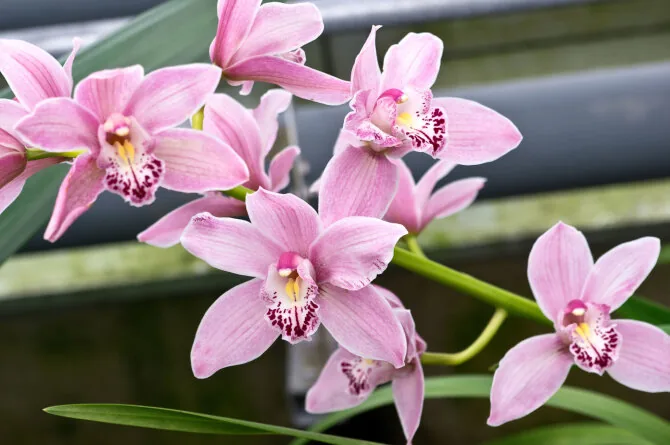
The temperature difference between day and night is one of the most important signals that encourage the orchid to bloom. The plant needs about a 4–6 degree difference: 23–25 degrees during the day, 15–18 degrees at night. Such conditions mimic natural processes and can stimulate the plant to produce a flower spike.
In autumn, you can open a window at night or place the pot in a cooler spot. If there is no such temperature change, the orchid may continue to grow leaves but not bloom.
Fertilization should also be adjusted. Nitrogen promotes green mass growth, while phosphorus and potassium are important for flowering. Fertilizers with higher phosphorus content, such as the 10-30-20 formula, are recommended for bud formation. Monopotassium phosphate, used at 1 g per liter of water, is suggested once every two weeks.
Folk remedies: lemon juice with honey (10 drops of juice and 2 tablespoons of honey per liter of water), aloe juice used for watering, onion peel decoction, banana peels as a source of potassium and phosphorus, and an apple placed on the substrate, which releases ethylene and is said to stimulate bud development.
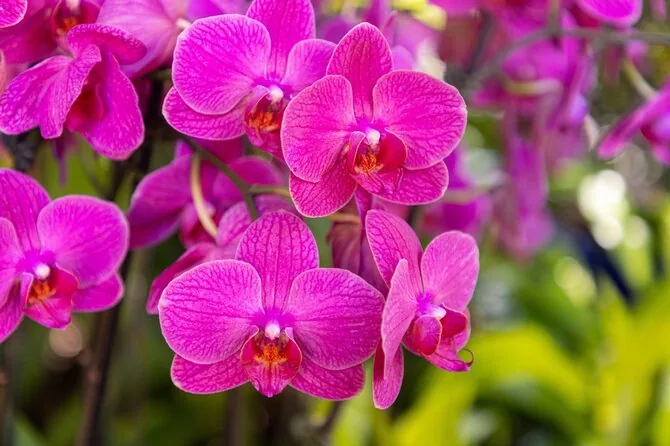
After flowering, you should not immediately cut the flower spike close to the base. If the spike remains green and alive, it can be shortened slightly above the second or third flower below the old flowers – new branches may grow from dormant buds. A dried and yellowed flower spike should be removed at the base.
It is important not to move the pot during flowering, as orchids are sensitive to changes in location and position, which can cause buds to drop.
Read more Explained why milk causes pain in some people?
To have an orchid bloom all year round, a light duration of 10–12 hours is very important. Therefore, in autumn and winter, when natural light is scarce, it is recommended to use a phytolamp. Direct sunlight in summer can burn the leaves and severely damage the plant, so orchids prefer diffused light.
Even a perfectly cared-for orchid cannot bloom forever. After 5–6 months of almost continuous blooming, it may need 1–1.5 months of rest. During this period, watering should be reduced, fertilization stopped, and the temperature slightly lowered.
The plant regains strength and accumulates resources during this time. Later, the blooming cycle can be stimulated again by temperature difference and phosphorus and potassium fertilizers. After some time, a new flower spike may appear.
Thus, continuous orchid blooming without any breaks is more of a myth, but almost continuous blooming with short pauses, with proper plant care, is possible.
The most common reasons for not blooming are too frequent watering, excessive nitrogen fertilizer, or insufficient temperature difference between day and night.
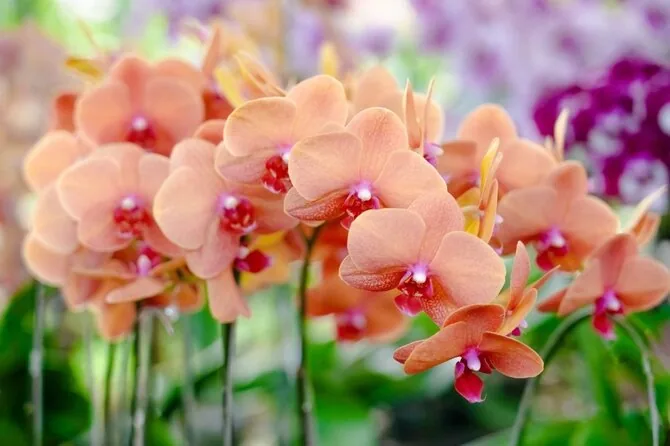
Brown and soft roots may indicate that rot has started due to excess moisture. In this case, the orchid should be repotted into fresh soil, damaged roots removed, and cooler conditions created. It is also recommended to move the plant to a cooler place for 2–3 weeks, where the night temperature is 15–18 degrees, and reduce watering. Nitrogen fertilizers should be avoided during this time.
Buds may also start to drop due to sudden temperature changes, drafts, dry air from radiators, moving the pot, or excessive moisture in the root zone. In such cases, roots should be checked, air humidity around the plant maintained, but flowers should not be sprayed, no fertilization during flowering, and the pot should not be moved.
Orchids need not capricious but specific care based on understanding their natural physiology.
Six most important things to achieve good results:
10–12 hours of light per day, using a phytolamp in the cold season;
watering by immersing the pot only when roots turn silvery gray;
4–6 degree temperature difference between day and night;
phosphorus and potassium fertilizers, avoiding excess nitrogen;
pruning green flower spikes above a dormant bud;
about a month of rest after long flowering.
Over-fertilized and kept in warmth, an orchid may not bloom for years, while properly balanced watering, lighting, and temperature regime can encourage more abundant flowering.
The article states that this method works in practice – supposedly, two weeks after using monopotassium phosphate and folic acid, a long non-blooming Phalaenopsis orchid can produce a new flower spike.
However, success depends not on the amount of care measures but on properly created conditions that closely resemble the orchid’s natural environment.