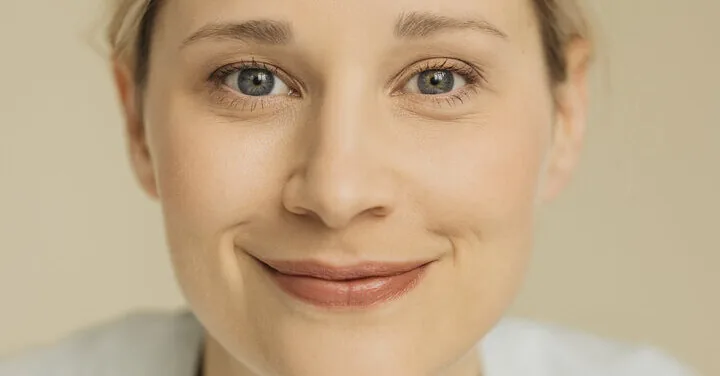
G. Enders’ book “Gut: The Inside Story of Our Body’s Most Underrated Organ,” published in 2014 (Lithuanian edition by “Kitos knygos,” translated by Kristina Sprindžiūnaitė), became a bestseller with millions of copies sold shortly after its release. She was invited to important medical events, gave lectures, and shared interviews. In the book, she managed to convey knowledge about the body with wit, vividness, and suggested changing established stereotypes.
Read more Outraged by the «organ elite» project: what does the shocking idea of «bodyoids» really hide?
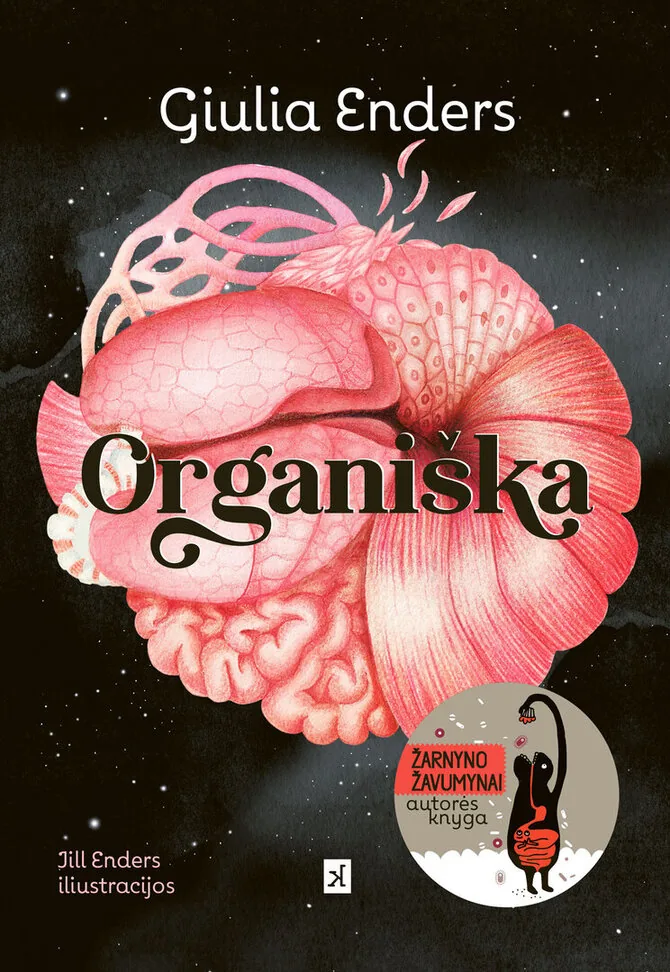
In the book “Organic” (Lithuanian edition by “Kitos knygos,” translated by Kristina Sprindžiūnaitė), she continues the journey of self-discovery, this time offering a broader perspective on how bodies function and how we have lost connection with them. Offering practical advice, she says the most important thing is to change our attitudes.
In this interview, she not only shares her main ideas but also suggests concrete steps to make life healthier.
– Your book “Gut: The Inside Story of Our Body’s Most Underrated Organ” became an international bestseller, with about two million copies sold in Germany alone. Did you expect this? And why do you think this topic resonated so strongly? What does it say about our society: why are we increasingly concerned about our health and want to understand how our bodies work?
– My first book came out at a time when everything was rapidly digitizing. Social networks started to become popular, and people were spending more and more time working on computers. And then there came a moment when we felt very disconnected from our bodies.
And then there’s this twenty-something woman talking about the gut, about bowel movements, what we do in the bathroom, and how digestion works. I felt it was time because we had distanced ourselves from our bodies and needed to take care of them again, not just digitize ourselves. The wellness wave had already begun; people were increasingly interested in diets, what to eat, and similar things, but they didn’t really care about what does the main work – and that, when dieting, is the gut.
Also, I think people felt that I truly love this organ. I wasn’t ashamed of it. And I believe it’s really worth knowing everything possible about the gut. I was very happy that the book achieved such unexpected success, but while writing it, I really didn’t think about whether it would be successful or not. When I wrote it, I just wanted to create something I would like myself.
– Although your first book was a huge commercial success, your new book “Organic” is also receiving great attention. You haven’t given up practical work in medicine and continue conducting research. How do these two activities – writing books, speaking at events about science, and working in medicine – fit together in your life?
– These two roles complement each other perfectly in my life because if you only write and give interviews, it’s very easy to become detached from reality. You can talk about all those beautiful things, but you don’t know if they really help anyone, you don’t know if it all works. But when I work in the hospital, I see if it helps people. And I wrote the first book precisely because during my medical studies, encountering so many people in the hospital, I realized that the gut is indeed a very important area. I understood that almost everyone has some gut-related problems. It was the same with the second book. I didn’t plan to write a second book, but I felt that people misunderstand their bodies very much. How can one understand the body differently? All these questions arose while working with people.
Also, many doctors don’t necessarily have enough time to focus on science communication. They have to spend all their time reading the latest research and dealing with bureaucratic documents. Some doctors, even if they have a lot of knowledge, don’t explain it well, and there’s nothing wrong with that. I like explaining. And I enjoyed that after work at the hospital, I could go home and think about how to approach very complex topics innovatively – in a way that helps people. When you think about research – just last year, 100,000 articles about the microbiome were published. No one can read everything. So science communication should become increasingly important in summarizing information and providing people with brief overviews of these studies. I think medical professionals should do this, although artificial intelligence will probably contribute as well.
– Since you became so popular, constantly appearing on TV shows and giving interviews, have you noticed that patients started treating you differently, more willing to share health-related stories?
– Honestly, many of them don’t recognize me. At the hospital, when I’m without makeup and not wearing my usual “TV” clothes, I look a bit different. At the hospital, I’m just a small person in a gown. I had patients who read my book but didn’t recognize me. One doctor even advised me to read my own book. He said, “There’s a very good book about gastroenterology. You should read it.” I thought, “Well, I wrote that book, but okay, thanks.”
Comparing organs to family members
– In this new book, you write that when talking about the body and organs, we use many technical, even economic terms. Even thinking about ourselves, do we become too technological? You write that we live in a world where information often becomes more important than senses, we lose connection with our feelings, with what developed organically, we have created an environment where there is almost no place left for the body, and this environment gives nothing to the body. You write: “Our bodies are not machines. They are organic systems.”
– Yes, and that is completely understandable. What do we do during the day? We sit in front of computer screens, have phones next to us that constantly beep and flash. We don’t notice how our bodies feel, what smells we perceive, we don’t think about whether we can touch or hug something – all these things don’t matter in the digital space. And so we somewhat detach from our bodies because those 8 hours we usually work don’t matter to them. Applying the language we hear all day – that of economics, mechanics, social media – to the body causes problems. The body has its own principles, which are actually very meaningful. Sometimes understanding them can even change our outlook on life. But if we detach from our bodies, we detach from reality.
I noticed that many of my patients sometimes perceive their bodies more as servants, as if they were mechanical.
Sometimes this can even become a bit dangerous. I noticed that many of my patients sometimes perceive their bodies more as servants, as if they were mechanical. You can follow health advice, do everything necessary: eat right, drink, move the required number of minutes. But if you misunderstand your body, it hinders everything from really working out. That’s exactly what I wanted to write about.
– The book “Organic” is very personal – describing your relationship with the body, you also talk about your family. In one interview, you said that when thinking about how different body organs work, you compare them to your family members. What does such a personal approach give you?
– I wanted the book to be personal because we already have enough books that just provide information – information can also be found online, on Wikipedia. I think writing books is not just about conveying information. I wanted people to get to know their organs as they know people, and maybe because of that, the attitude would change a bit. So when writing the book, I chose people who, in my opinion, fit perfectly for this.
At first, it was difficult for me to write about organs, so I went to a couples therapist and asked her: “I have a very good relationship with my gut. How could I establish better relationships with other organs?” Then she asked: “What kind of people do they remind you of?” That’s how it all started.
And then I realized, for example, that the lungs are so soft, so passive. They just follow the movements of the surrounding muscles. I thought they were very weak. But when I remembered my great-grandmother, who was also very passive, following her husband’s example, I thought: “Oh no, that’s not just weakness.” I understand that by adapting, she achieved a lot. What she wanted, she got – in her own way, gently. And in our society, we often don’t notice the more passive, gentle, adaptable people, but they are just as important. Unity cannot be achieved when two people constantly confront each other. We need people who perform various social tasks, take on different roles, sometimes adapting to others.
I realized that the body’s gentleness is very important. It is connected to the most important need – breathing. So why should we think it’s not important in society? And it was precisely these moments that prompted me to write this book “Organic.” That’s when the body started teaching me, and I began to see it differently. Economics wouldn’t have told me that. Social networks wouldn’t have told me that, nor mechanics. But the body told me.
It is important to cooperate with your body
– In the book, you also provide specific practical advice. How important is it for you to give very clear guidelines, or is it perhaps more important to encourage philosophical reflections? Are these connected? You say the body is not an opponent of thinking; it is the foundation of thinking.
– It’s probably similar to a doctor’s work or writing – both are important to me, sometimes equally important. I really enjoyed writing something very philosophical about the body, and then I would insert very practical advice, for example, how to breathe or how to cough, because I don’t think one thing is more important than the other. I think maintaining a good relationship with your body, helping it with smart exercises, is just as important as thinking.
I think maintaining a good relationship with your body, helping it with smart exercises, is just as important as thinking.
– You say we need to learn from our bodies, not about them. What do you mean by that?
– When you find health information online, you think: “I should sleep 9 hours, run every day, lift weights, and eat only raw vegetables.” There are all these tasks you should do if you want to improve your body’s condition. But when you really look at the body and try to understand it, you realize you can be a bit more humble, you can learn something from it. For example, I learned a lot from the lungs, from the immune system: it was like sitting in a student’s chair and looking at the body as a source of inspiration or a teacher from whom you can learn. And then I noticed that my relationship with my body changed.
It’s important not only to ask how to optimize the body, how to “paint” it nicely, or how to feed it properly. I realized: “I respect you.” And this respect is not only about how I look or how my body functions; the very awareness that I have a body is important. Over millions of years, bodies have perfected their functioning and problem-solving: for example, the body heals a wound on my skin to preserve life. And when you start thinking like that, everything gains a different value. Such values don’t exist in social networks and economics. For most companies, it doesn’t matter whether you are alive or not. If you die, they hire someone else. I want to have a counterbalance – something that helps me realize the wonderful value of life.
– Writing books about the gut and other body organs, you probably not only tried to explain them to others but also learned something new yourself. What are the most important things you discovered while writing the book?
– In every chapter of the book, there are at least two things I constantly apply to myself. For example, I understand that when talking about the lungs, it’s most important to consider your physical needs: we often don’t think about the real effect of breathing, but breathing affects stress hormones, metabolism, and has a huge impact on our daily life. In tense situations, we can regain calm precisely by controlling breathing. I take my body more seriously in processes I previously considered only cognitive. I understand things like air pollution differently. Now, before going for a run, I look at my app and check air quality, which I never did before. It’s healthier to stay home than to run in poor air quality. I take these things more seriously.
Talking about the immune system, I now value safety differently. To be safe, you not only have to avoid what’s bad but also cooperate with what’s good and tolerate unimportant things. I learned this from the immune system. When I catch a cold, I now behave differently. I sleep much more. In winter, ventilating rooms is as important as washing hands. I think people should understand this balance. Also, I now value physical contact more. When I traveled to Southern European countries for book presentations, journalists hugged me, kissed me on the cheeks, and I thought: “Oh, in these countries, there is much more physical contact than with us.” I think this is really healthy because touch can have a very similar effect to sedatives. In Northern Europe, we stopped doing this because of certain disease outbreaks – for example, the flu pandemic in 1918. So I started to value touches more.
Talking about muscles, I didn’t really enjoy exercising before; it always felt like a duty. After better understanding my body, I started to understand sports differently; I just want to exercise even more. Now I see it more as friendship. After a workday, I ask my brain and muscles: “Hey, do you want to hang out together after we’ve done all these duties? Do you want to do something fun?” I started doing acroyoga – it’s like acrobatics with other people, where you can make funny figures together, and it’s much more fun than just going to the gym and staring at the wall while exercising. I not only started cooperating more with my body but also enjoy it more. I look at my body with more respect and friendliness, and it gives me more joy. And now, after writing the book, I respect my brain a little less, and I think that’s very healthy because it has to work together with other organs. It’s not the only leader, boss, or manager. Now I see my body as all parts cooperating more.
Read more „Politico“: A favorable signal for Ukraine from Hungary
– You already mentioned the immune system, and in the book, you write that the safest place is not where there is no risk. The safest place is where problems are solved. Is this one of the mistakes we make – living too sterilely?
– Already in the 1990s, it was noticed that people from rural areas, living with animals, having many siblings, are much less likely to suffer from allergies and autoimmune diseases than city children living in very clean apartments. Scientists started thinking: “Maybe the problem is that we clean our apartments too much and don’t encounter ‘bad’ bacteria?” This theory has been somewhat updated now. We see that it’s actually not good to catch colds often – it doesn’t train your immune system as we thought before. It’s also not so important how clean your apartment really is. But it is important that children have contact with animals during the first few years, that they have siblings, and often spend time in nature. It’s not so important to avoid bad things or constantly clean and maintain cleanliness; it’s important to go outside, have contact with good microbes, and thus train the immune system. Now we know that safety is mostly about seeking good things, not just avoiding bad things.
– Recently, there are many theories and tips on how to live healthily. Even regarding diets, dietitians often present completely different theories about what works best. How can a person not get lost among all these theories?
– I think we often need to better understand the reasons – because often, even when talking about breathing techniques, we are just told: “Inhale for 4 seconds, exhale for 6 seconds.” And people repeat this but don’t really understand why it should be done that way. And if we talk about hygiene – for example, experiencing stress for 3 weeks in a row is less hygienic than not washing your hands after using the toilet. People often forget stress hygiene, and constant stress hormones in the blood promote the growth of various bacteria in your body because some bacteria can thrive in stressful environments. Then the immune system becomes more aggressive. And when bacteria realize the immune system is more aggressive, they themselves become more aggressive.
I think people sometimes don’t see the whole picture and, for example, constantly disinfect their hands. But disinfecting makes hands very sterile. So a lot of free space appears on the skin. Then various fungi, spreading in the air as spores, can land on your hands, and they get more space to spread.
Who would you recommend “Ozempic” to?
– How do you think the coronavirus pandemic changed our relationship with our bodies and the medical system? I think many people became much more interested in medicine, and our attitude towards hygiene also changed significantly.
– After the pandemic, there were both good and bad things. I think in the cold season, we should take a little more care of ourselves – wash hands often or, if you are sick, not go to work but just stay home, rest, and let the body heal itself. We understood this better during the pandemic. But I didn’t quite like that there was so much fear and spreading of fear at that time. In Germany, one of the biggest media outlets, when the “Omicron” variant appeared, announced that it was “armed to the teeth.” I thought: why does the media use such war jargon? And after a few weeks, it turned out that this variant was not as dangerous as initially thought. Maybe we could have just waited and been a bit more precise? That’s what we would expect from science. I think there was a lot of panic and fear-mongering. I didn’t like that because I love science, work, and live for science because it can help us get out of anxiety-inducing situations.
For example, when we invented antibiotics, children no longer had to die from minor infections. Science usually helps us get rid of fear, not create it. I thought: why don’t we explain that if you behave like this, your risk decreases by this percentage? It gives people useful information and reduces the greatest fear. That’s exactly what I wanted, but everything turned out differently. People are different, journalists are different, and that’s how it should be; we can choose. But unfortunately, I think many people turned away from medicine and science because they didn’t like how it was presented. And in some respects, I understand them.
And speaking about the immune system and immunity, I thought: “Many newer studies conducted since the 1990s were not even mentioned.” And this is not an esoteric or controversial scientific field. It’s evidence-based science known to most immunologists. But why don’t we spread this knowledge during the pandemic? We still only talk about destroying something bad and don’t talk about other aspects or just a broader picture. For example, if you looked at the world, you would see all the microbes in it. There are about 1,200 known species of pathogens. They can cause diseases. This is one example I give in the book. Every second, we inhale viruses, and none of them cause diseases. Because viruses usually don’t care about humans unless by accident. 99% of viruses on the planet do not affect humans. They affect other living beings, mostly bacteria. So we have to understand that our perspective was a bit narrow and a bit too egocentric. Of course, pandemics happen, and that’s scary, but we need to see the bigger context.
– Speaking of practical advice, people probably often ask what food to choose to be healthier? And what daily habits cause more harm than we usually imagine?
– I always choose what tastes good to me, and luckily, it’s also healthy. That’s exactly what I would advise everyone: just look at what vegetables are available and think about which ones you like. Then just eat them a bit more often. Often, just eating the vegetables and fruits you like more often makes it easier to eat other vegetables and fruits. But if not, stick to those you like. I personally really like asparagus, onions, garlic. And if I eat starchy products, like potatoes or pasta, I boil them and then cool them. Because when you boil them, starch is released, so the food is very easy to digest. But when cooled, the starch crystallizes again. So digestion happens more slowly because the body processes crystallized starch longer. So your blood sugar level is more stable because sugar is absorbed more slowly.
I think this is very beneficial for everyone’s health, for example, to avoid gaining weight. If you don’t want to gain much weight but like carbohydrates, just cool them after boiling. It’s a simple trick, but it works. Also, we have data from Asian islands where rice cookers became popular – in them, rice stays warm after cooking. And people gain a lot of weight eating it. But if they return to traditional rice cooking – cooking, cooling, then reheating – they lose weight. It’s very simple, and I do it that way.
Other habits whose real harm people don’t realize are soft drinks. The worst habit is if you drink soda, Coca-Cola, sweet drinks every day. For a long time, I didn’t talk about this in interviews because I just didn’t think about it, as I don’t do it myself. But when I visited the United States and several other countries, I realized that people there drink soft drinks daily. And then too much sugar enters the body. This is the fastest way to get sugar; bacteria in your small intestine suddenly get so much sugar that it becomes simply too much. So it can cause bloating, extreme fatigue. I think this is one of the simplest things not to do. Also very harmful is insufficient sleep. I think giving up soft drinks and getting more sleep is a good start.
I think giving up soft drinks and getting more sleep is a good start.
– Worldwide, including in Lithuania, there is now huge interest in “Ozempic.” It is used not only by those who need it for diabetes treatment but also by those wanting to lose weight quickly. How do you personally assess the spread of “Ozempic” – does it cause concern?
– It all depends on each situation – there are different groups of people. If a person has severe overweight and also struggles with food addiction, then “Ozempic” is not enough. Maybe it will help lose a few kilograms, but the food addiction will remain, the main problem won’t disappear, and if the overweight is very large, that weight loss won’t be enough to achieve a positive health effect. That’s why in Frankfurt, we opened a completely new hospital department for people with diabetes and depression. Since people often suffer from both diseases, we can really solve the problem. For such people, “Ozempic” is like just a small patch; it doesn’t solve the problem. Maybe at first, it can motivate a bit, but later the effect disappears.
There are also people whose bodies are harmed by industrial food. They drink soft drinks when they feel sad, eat sweets, eat a bit too much because it calms them, food is like a reward for them. They really just need to change a few habits so they are not victims of industrial food. For such people, “Ozempic” would not be necessary.
But there is a group of people for whom “Ozempic” can be useful. They may have genetic risk factors. These people eat like the first group but gain much more weight than the first group. These people probably should ask themselves how much weight they want to lose. If they start using “Ozempic” and lose weight, they will feel what it means to exercise when it becomes easier. So for them, these drugs are not necessarily a bad choice, but there are certain risks – you can get pancreatitis, suddenly lose fat in the face, and sometimes these effects are hard to reverse. So maybe it’s worth trying something else first, and if that really doesn’t work, then you can try “Ozempic” – and if it works, I have nothing against it.
But it’s not that simple; it’s not enough just to say – now we will solve the problem like this. Because problems often arise due to modern food industry, modern working conditions, when we are constantly stressed. And if you just want to put a patch on these problems, you don’t solve the problem. And when you stop taking those expensive drugs, you just gain weight again. So what do you want to do? Do you want to inject drugs for the rest of your life? Although it’s a very interesting drug, it’s not a long-term solution for everyone. The real solution is to change some food-related legal regulations and the attitude towards environmental protection.
We don’t realize how stress works
– You mentioned stress so many times during this interview. Do you think we don’t fully realize the impact of stress?
– Yes. I like to compare it to muscle training. Because often, based on the current societal view, we think the right way is to do more and more. We are valuable only when we are very productive, right? Economically, that’s true. We are valuable only when we are successful, productive, look good, and are very tough. And if we are not like that, it’s bad. So people try to be valuable. Athletes aim for exactly that during training. They want to run fastest, lift the heaviest weight. They are valuable only when successful. But looking at the body, you have to understand that it doesn’t work if you do it all the time. If an athlete trains and the next day his muscles hurt, he has to rest. If he continues training while in pain, not fully recovered and relaxed, overtraining occurs.
If people behave like this for weeks, they become weaker and weaker, even though they go to the gym every day. We also see this in the workplace because we encounter burnout syndrome. There are people who, although trying to answer all emails, do all the work every day, can do less and less until they finally can’t do anything. They find it hard to get out of bed. This is related not only to stress, psychology, modern life. It’s related to the fact that we don’t think our body has value. We think we have to work for it to have value. And that’s a wrong understanding. Looking at muscles, you see that rest, energy recovery, sleep – all these are valuable to the body. Otherwise, you weaken. After a few days without sleep, you start having mental problems, and after a few weeks, you die. So not only adaptation, internal processes have value. As funny as it sounds, people need to relearn this information. It’s strange what the world has become that people need to learn this again. If we think we are machines, we might be surprised that these things have value, but if we understand we are humans, we understand these things have value. It requires a change in thinking.
– One of the problems you often talk about is that our bodies are unnecessarily exploited. Is this also related to our perception of the body?
– Yes, someone can exploit you only if you think you are almost worthless – then another can take that value from you. Otherwise, there is no exploitation. Believing that our bodies have no value, people can easily do that.
– When presenting your books, you travel around the world. What differences in attitudes towards the body and nutrition do you notice in different countries?
– I think in Germany, people are interested only in health advice. What to do when I catch a cold? How to exercise more effectively? For example, they ask: “How to breathe better?” They want very practical advice. But when I went to Scandinavia and France, people were very interested in the attitude towards life, society, what we can learn from the body. It was very nice because it seemed they understood my idea, what I want to talk about in the books. But when I went to the United States, it seemed Americans had a hard time accepting the idea of not optimizing the body. In many interviews, they asked me: “But how can you improve it? How can you optimize the body?” And I just answered that that’s exactly what my book is about – that you don’t need to optimize. But I got the impression they just couldn’t get rid of the constant thought of optimization. It seems that in their brains, the belief that they have to be productive is entrenched, and even this book associates with optimization for them, although it really doesn’t.
– If you had to highlight the main advice expressed in this book, what would it be?
– I don’t think I can highlight one most important thing. But I like to ask myself every morning: “How do I want to feel? How do I feel today?” Because with this question, I can use the power of emotions. Emotions have so much power, and we often don’t use them. Yes, emotions are unstable, but when you understand emotions, you realize how powerful they are, only consciousness deals with them unreasonably. We should not underestimate emotions but deal with them wisely.
I would say the same about the whole body. You need to understand that the body is much smarter than we often think, and if you cooperate well with it, it will be the most effective and take you the farthest. You don’t need to fight your body but cooperate smoothly and wisely. I often see people in the clinic before death or when they have a really terrible disease, and then they understand the value of the body. But then it’s too late; I wish people realized it earlier. And then they would make some decisions differently.
– Maybe you already have ideas about what you would like to write your next book about?
– I would really like to explain to children why they like gummies, TV, and ice cream so much. So that they understand the reward system early, it would give them more power, which various companies now exploit – we often don’t understand how it works. I would like to do that, but I really need my sister’s help – she is a great illustrator. If she agrees, maybe we will do it.
Read more Volodymyr Zelensky warns of a possible new massive night attack by Russia