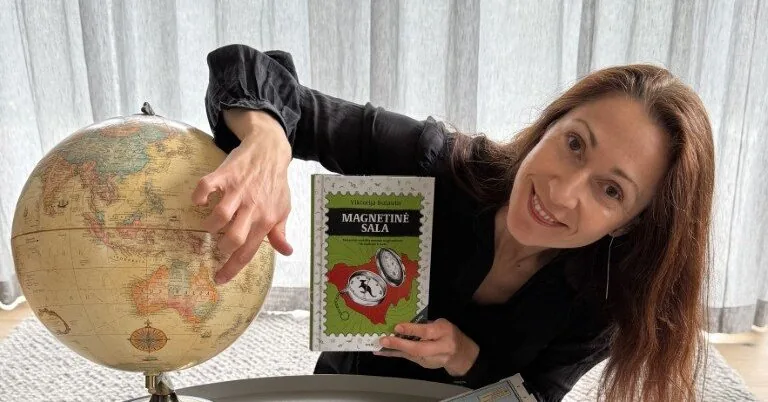
Viktorija’s novels “The Canary Secret” and “Magnetic Island” were titled the best books of the year for teenagers in the Book of the Year awards. The first book about Emma and her pet Mars’s adventures has already been published in Chinese in Malaysia, it can be read in Macedonian, it will appear on bookstore shelves in the USA and Poland in the fall, and is being translated into Arabic. So the writer undoubtedly knows the secret of how to engage children with stories told on the pages of books! Irma Laužikaitė talks about this with the writer, as stated in the press release.
Read more LVMH: sales grew faster in the second quarter
– Are there any tricks to get children used to books? How do you handle it?
– I am one of those who likes paper books, I enjoy walking through bookstores, flipping through books, their smell, beauty, and mystery. I passed all this on to my daughters abundantly. When they were little, we often visited bookstores, I spared no money on books, I read to the girls from a very young age and not only before bedtime. When we traveled and stayed longer in one place, we rushed to the library. I didn’t force the girls to get used to books; books were always part of my world and naturally became part of theirs.
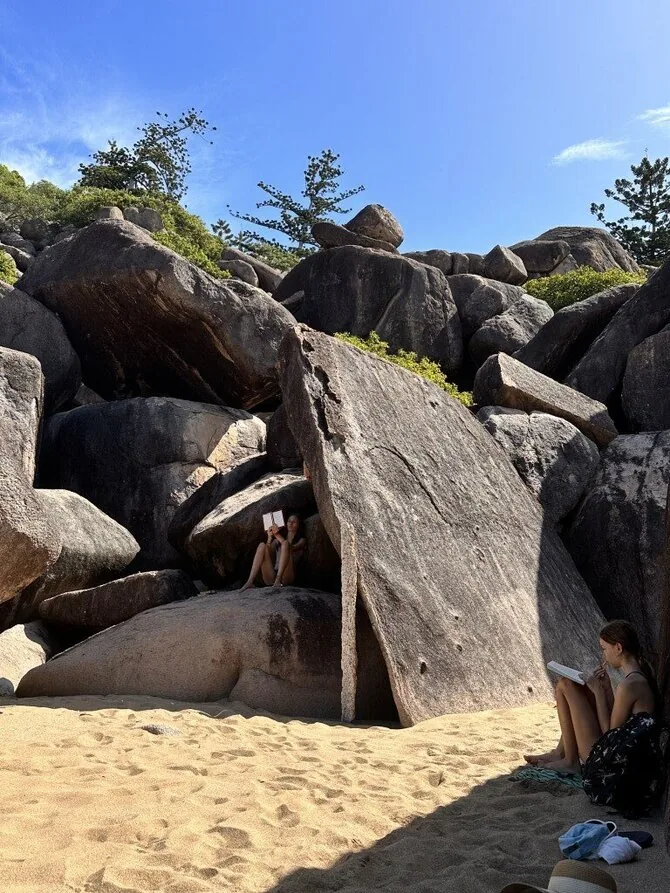
Moreover, reading to my daughters, then with them, was not just reading. Traveling together through the pages of stories, various questions arose, and we looked for answers. Sometimes reading turned into drawing, modeling, acting, playing, or something else. I myself liked to create stories for the girls, especially when they started attending kindergarten. There were all kinds of misunderstandings there – from teasing to choosing friends. I racked my brain on how to help them navigate the changed environment, so I decided to create stories about little animals facing a problem that we wanted to discuss. Later, both daughters created and wrote down stories themselves, one finished, the other not.
To this day, we have a family tradition of sometimes collapsing into a big bed in the evening or during holidays and reading one randomly opened story from the same book – Sergei Kozlov’s “Hedgehog in the Fog.” Why this one exactly, I don’t remember, maybe because its stories are multilayered? And Sigutė Ach’s illustrations are wonderful. After so many years, we still discover unread stories or they are forgotten – we are amazed that we really never read these.
We have a tradition of sometimes collapsing into a big bed in the evening or during holidays and reading one randomly opened story from the same book – Sergei Kozlov’s “Hedgehog in the Fog.”
One story – “The Australian Avenger” – stuck with our family the most: a little frog pretends to be a dog and tells a rabbit that he is an Australian avenger dog who flew in a dirigible from Australia. Recently, I read it again after a long break when my eighteen-year-old student daughter came home for a short vacation. Of course, now it symbolizes family reunion, but I hope to preserve this tradition.
– When your daughters learned to read, what strategy did you choose to get them to pick up books themselves?
– No special measures were needed. Marija, who is now eighteen, seriously got hooked on reading after picking up the Troll Moomin comics. Since then, my firstborn started reading nonstop and not only comics. Luka, now fifteen, was always in a hurry to learn everything, and the same happened with reading. Her reading speed is cosmic. She is a representative of Generation Z and Alpha, who successfully juggles screens and does several things at once. Neither I nor my husband interfere with how the daughters choose to learn and what they choose to read. When they were little, I bought books, later they actively used school libraries, and when they read “Diary of a Wimpy Kid,” I did not forbid it.
I was and am sure that after reading these or similar books, they will not become empty; they will choose for themselves what is important at each stage. My task is to enjoy my readings and, when the time is right, share insights with my daughters. The elder often asks me what I would recommend for her to read. Then I gladly travel my eyes across the shelves and talk about books. This does not mean she immediately chooses to read them, but I notice that the books I recommend end up on her shelf.
When we lived in Lithuania, the girls would return the books they had read and buy a new unread one in the same bookstore. This gave them special joy.
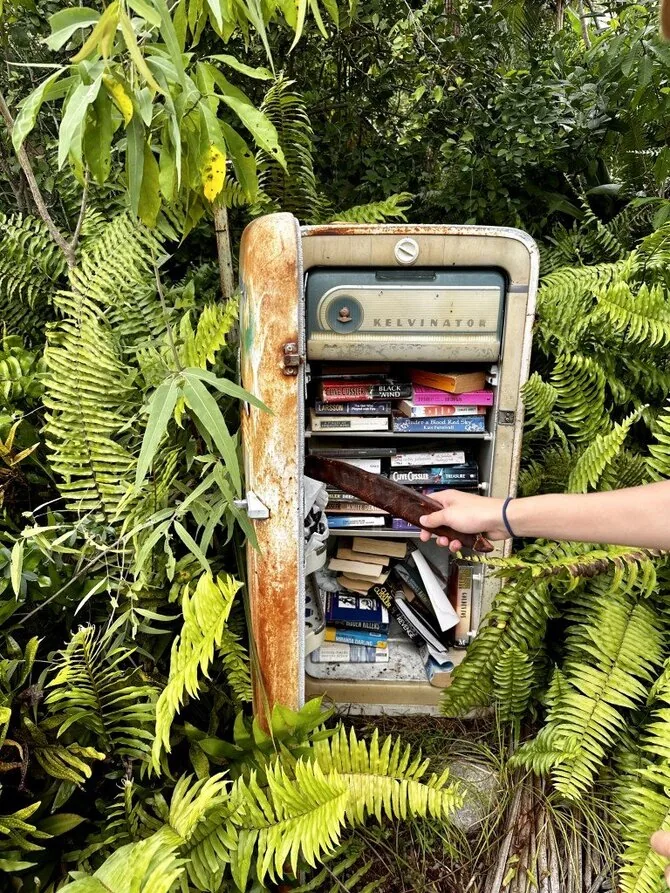
True, both actively read books until mandatory school literature took up all reading time. We just had a vacation, and I saw with what pleasure the fifteen-year-old finished reading her chosen book, not the mandatory one.
The best thing is when they ask for books for Christmas or birthday. Reading becomes fashionable. For young people, it is a sign of education: if you read, you are educated. Therefore, giving books as gifts is good. Libraries are also fashionable. Both my daughters and their friends sometimes go to the local library or even to the state library in downtown Melbourne to prepare for lessons.
– Do your daughters also read in Lithuanian – your family has been living in Australia for some time?
– Both daughters first learned to read in Lithuanian because they spent their childhood in Lithuania. Now the elder reads with the same pleasure in Lithuanian and English, and sometimes in Spanish – we lived in the Canary Islands for several years. The younger feels more comfortable reading in English but also reads in Lithuanian. We always visit bookstores in Lithuania, but we have to set a limit because books are heavy and hard to bring back to Australia.
I can confidently say: reading is like breathing; if you cannot live without it, it becomes a natural action and simply comes into children’s lives unconsciously. It happens that children of non-reading parents read, but more often it is the opposite. Reading is a parental position, an attitude towards the world that is passed on to offspring without special effort. Children grow up in an environment created by parents; interest, curiosity, openness lead to the desire to learn, experience, and apply. The foundation laid in childhood, including reading, remains for life. At some stage, reading may be overshadowed by other activities, I noticed this growing up with both daughters, but as the situation changes and more time appears, the book always returns.
– What books did you like most in your childhood? Did they also engage your daughters?
Read more «Main character syndrome» empties wallets: expert warns about a new trend
– I have kept my favorite books – flipping through them, I still feel the great joy and pleasure I experienced in childhood. But none of them interested my children!
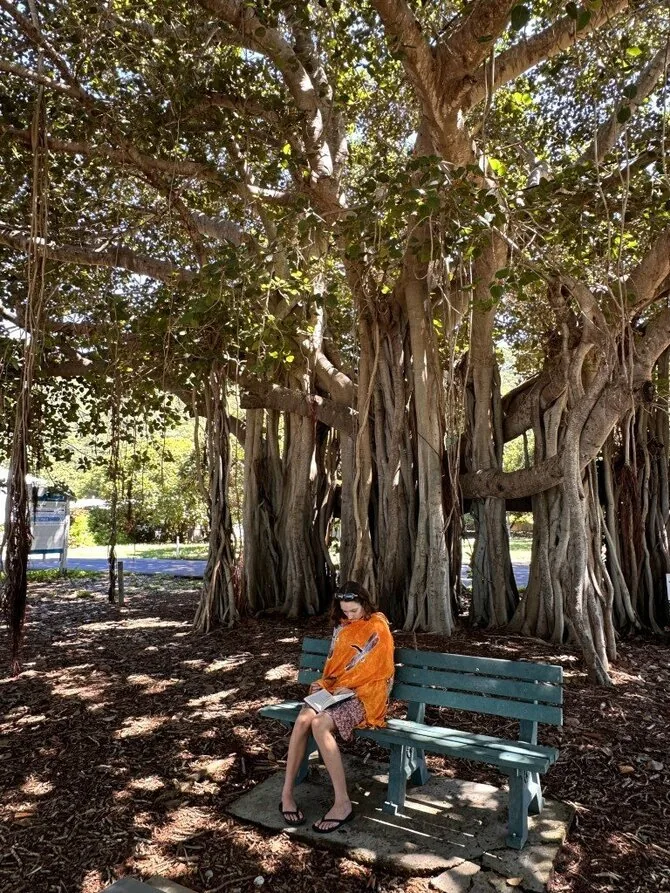
The first book I remember is Charles Torson’s “Kick.” I read it to the last bit. I read it to my daughters, but they don’t even remember this story.
Mark Twain’s “The Adventures of Tom Sawyer and Huckleberry Finn” took me to a wide world.
I still have Liudmila Vasilieva-Gangnus’s book “Lessons of Interesting Works,” wonderfully illustrated by Kęstutis Kasparavičius. It is an adventure story where you can make the characters yourself while reading (the book teaches how to do it).
Also, Hans Jürgen Presso’s book “Learning by Playing” made a deep impression; it describes how to perform many experiments. I still remember how dried peas swelled in a glass of water and spilled onto a tray at night – waking everyone up.
Vladimir Zhitomirsky and Lev Shevrin’s “Geometry for Little Ones” was a gift from my primary school teacher on my eighth birthday. That book was something completely unreal to me. The story – adventures take place in the Land of Geometry – is interspersed with tasks. I recently opened it and thought it somewhat resembles the books I write for teenagers. It would be more accurate to say that similar elements appeared in my books – the reader is invited not only to read but also to perform various tasks. Imagine the impression this book made on me! It is just another proof that good books leave a mark and shape us much more than we sometimes imagine.
– Indeed, your books about Emma and Mars’s adventures are complemented by many puzzles that readers solve together with the heroes!
– I write about what surprised, engaged, and fascinated me. Adventures are as necessary for teenagers as air, and with them comes knowledge – mistakes, achievements. Since we travel a lot with the family to exotic places, I want to tell the reader about the world I managed to get to know and see. Puzzles in my stories are a tool, the driving force of adventure and knowledge; they engage and give the opportunity to experiment, look at the world from a different angle. Reading should evoke emotion, the desire to act, strive, and learn new things.
– You emphasize that your books are intended for teenagers. What age group is that?
– There is no term in Lithuanian to define ages 9–13; they are no longer children but not yet teenagers (in English, this is pre-teen or tween). Since children develop and mature differently, the books indicate a broader age range – 8–14 years. I have received feedback from eight-year-olds who read my books several times themselves, as well as from fifteen-year-olds who are driven by adventures, learning about different countries, and who are in no hurry to grow up. I myself was a childish teenager for a long time; it is a particularly colorful age that everyone experiences differently and grows up at a different pace.
When parents read “The Canary Secret” and “Magnetic Island” together with their children, I am sure adults see the thoughts hidden between the lines, which they can explain, discuss, solve a more difficult puzzle together, or google one or another fact. Moreover, adults also learn a lot of new things because there is a lot of information about exotic countries in the books.
– You already told us what books raised you. What books did your daughters like?
– The daughters are three years apart, but they listed different childhood books that made a special impression. Both mentioned Astrid Lindgren’s novels, Jurga Vilė’s and Lina Itagaki’s “Siberian Haiku,” and the Geronimo Stilton series once inspired us to raise a hamster because the elder fell in love with these animals. That’s what books can do!
– And to end the conversation: a few tips for parents who want their children to read.
– Those parents whose children did not read and who did something to change that can say what to do. My children read and are reading, so reading is a natural thing in my family. I think this is because I really like to read myself, as does my husband.
Parents shape values by their behavior, which children adopt. But it also happens that parents read, and the child does not. This is similar to parents eating a lot of vegetables, and the child refuses. Still, I believe that parents’ example forms a positive attitude towards reading; the time will come when the child will immerse in a book. I hope this will also happen with vegetable eating in my family. Non-reading parents should not complain about a non-reading child.
Read more Economists: industry showed better results than expected
So the advice would be:
Read to children from infancy.
Read together with children.
Read yourself.