What should you know before starting canning?
There are many methods of preservation that protect products from spoiling. Some are healthier, others less so, which is why it is very important to choose the right one. Therefore, before preserving vegetables and fruits for winter, first ask yourself a few questions: do you want only tasty, high-energy preserved supplies to satisfy hunger, or is it important to you that they retain as many minerals and vitamins as possible? To improve taste and increase preservation properties, acetic acid is poured into the winter supplies, and sugar is sprinkled. According to healthy eating specialists, these are unhealthy products. And oil, if indicated in the recipe, should be of the highest quality.
Read more Doctor warns about favorite drinks: when can electrolytes do more harm than good?

What are the most popular preservation methods?
Besides the arguably healthiest preservation method – freezing, which we wrote about in the previous magazine issue, a popular and reliable preservation method is high temperature, which destroys microorganisms. Depending on the heating temperature, products can be pasteurized or sterilized. The temperature regime is selected based on the product being preserved and the resistance of individual microorganisms to temperature exposure and their type. Although many bacteria, molds, and yeasts die at about 60 °C, there are bacteria that remain viable even when heated to 80 °C. Sometimes bacterial spores survive in meat, fish, peas, beans, mushrooms, and other protein-rich, low organic acid foods, so it is advisable to sterilize them.
What is the difference between pasteurization and sterilization?
During pasteurization, products are heated to 63–95 °C. The lower the pasteurization temperature, the longer the heating time required. Sterilization, where products are heated to 100–110 °C, is a safer preservation method, though it is more commonly used in industrial production because at home, without special autoclaves, it is only possible to raise the boiling point of water above 100 °C by adding edible salt. Although sterilized products have a longer shelf life and are safer to consume, the nutritional properties of the product change because enzymes are destroyed, vitamins break down more, and many proteins change.
What is healthier: heat treatment, freezing, or drying?
According to healthy eating specialists, frozen and dried vegetable supplies for winter are much healthier than pickled ones. First of all, because heating vegetables at high temperatures kills not only microbes and fungi but also most vitamins and minerals. Secondly, preserved products are usually covered with acid, and a lot of it, as mentioned, is unhealthy for the body. Especially if you use synthetic rather than natural acid.
Is it possible to preserve by drying?
Yes. Drying is one of the oldest preservation methods. In the past, supplies were dried in the sun or ovens; now vegetables and fruits are dried industrially in vacuum dryers under reduced pressure, and at home – in ovens or sunny attics.
If you choose drying, know that at home it is best to dry small berries, such as blueberries, cherries, or finely chopped fruits: apples, pears. Just consider how much this process will cost you, especially if you do not have a special, fast-drying electric dryer and oven – in an oven heated to 50 °C, fruits and vegetables are dried for about 12 hours, and then the products finish drying at a higher temperature for several more hours.
How does the fermentation process work?
Fermentation is a preservation method loved by Lithuanians since ancient times, where selected goods – mushrooms, cucumbers, tomatoes, etc. – are densely layered with spices into a clay or wooden pot or bucket, covered with brine, pressed with a wooden board and weight. Just fermented vegetables are kept at a warm temperature for several days, then taken to a cold room or placed in jars and pasteurized or sterilized with the same brine poured over them.
What jars are best for preserving?
For preserves, glass containers resistant to heat and acids, which do not react with them, with screw-on, preferably tightly sealed glass lids, are best (besides being airtight, they are also very convenient: no need to screw on with a special device, so it is cheaper because you do not have to buy new metal lids every time).
Choose jar sizes based on the products you are preserving. Jars of 0.5–1 liter capacity are best for jams, jellies, or vegetable salads. Once opened, you will consume them quickly. Larger fruits and vegetables – pears, apples, cucumbers (especially if the family is large) – should be placed in 2–3 liter jars.
What should you know about lids?
Uncomfortable plastic lids for jars with preserved fruits and vegetables are not very suitable because they are not airtight, so supplies can quickly turn sour. But such lids can be used to close preserves kept in the refrigerator that you plan to consume quickly (jams, syrups, tomato sauces, jellies).
Metal lids screwed on with a special machine are a good choice if you close them professionally to prevent microorganisms from entering the preserves.
Economical reusable screw lids must be carefully inspected every year because their edges rust from long storage, and the lids wear out from frequent twisting.
Is it necessary to sterilize jars when preserving vegetables?
If you really want your carefully prepared supplies, colloquially speaking, not to “explode,” not to spoil, and to have no bacteria left, then it is necessary.
Read more A 30-year-old man rampaged in a store in Kaunas: curses flew, shelves were damaged
How to do it? First, scrub the jars for preserves well with a rough sponge or brush using a soda solution, rinse well with running hot water, pour boiling water over them, and leave them upside down to drain. Boiled jar lids should be disinfected before screwing on with a gauze cloth soaked in alcohol and left to dry. Lids are screwed onto jars dry because if water droplets remain and evaporate, gaps may form through which air and microorganisms can enter.
What to pour over vegetables when preserving with heat?
Usually, fruits and vegetables are preserved with acetic or citric acid, wine vinegar, and oil is added to salads. Vegetables are usually covered with a sour marinade (for example, vinegar, citric acid and salt, lemon, quince juice, and salt).
The classic marinade is boiled following these proportions: for one liter of water, 100 ml of 9% vinegar, 50 g of salt and sugar each, and various spices specified in the recipe: bay leaves, peppercorns, mustard seeds. If the acetic acid concentration is low (0.5–1.2%), products are additionally pasteurized. If the concentration is higher, pasteurization is not necessary, but pickled products must be stored at no higher than +6 °C.
How much marinade to pour and how to seal jars?
When pasteurizing vegetables filled with hot marinade, do not overfill the jars – leave about a 2 cm gap at the top. Then screw on the jars heated in a pot (place a cloth on the bottom so jars do not crack) or oven, and while cooling, be sure to turn them upside down – the lids will sterilize better, and you will see if the jar is sealed tightly.
What pots and tools are best?
Use stainless steel or enameled containers for cooking marinades. The tools used – knives, forks, spoons, ladles – must also be stainless to minimize vitamin C loss and prevent darkening or metallic taste in fruits and vegetables. If chopping products, use stainless steel graters, cutters, and even stainless steel strainers for draining products.
Which vegetables are suitable for preserving?
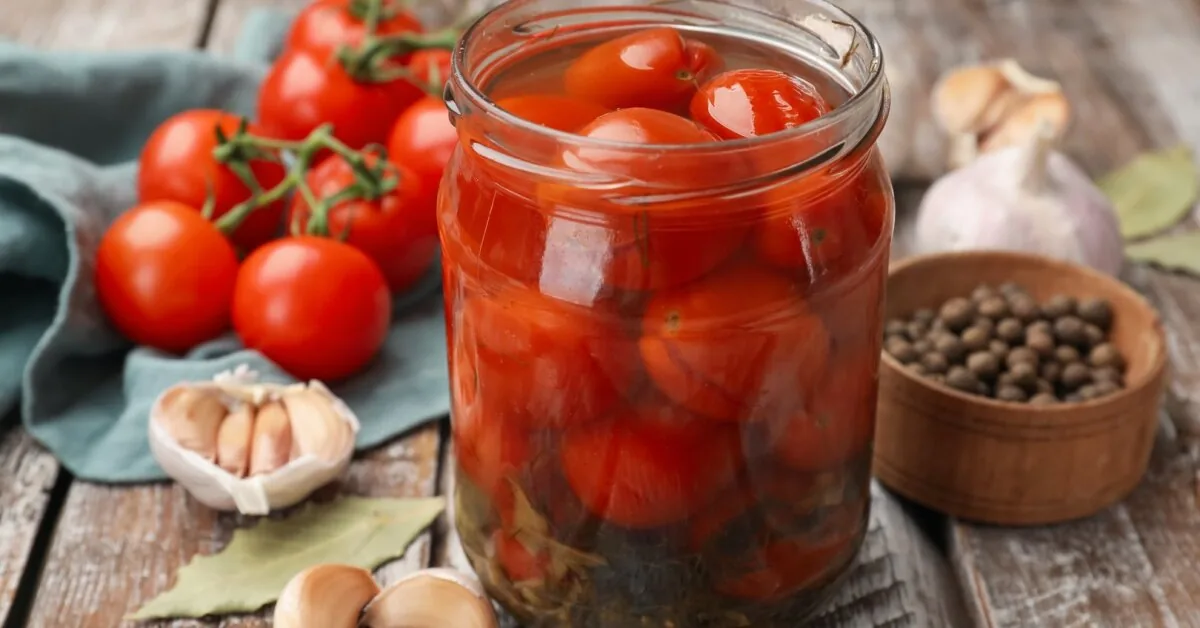
Only completely healthy, ripe, preferably freshly picked from the garden, not wilted, and free from various diseases and pests. However, some vegetables can be preserved raw, such as tomatoes. Also, the younger and smaller the vegetables you pick or dig up, the prettier they will look in the jar and the tastier they will be – the taste of overgrown peas, beets, or zucchinis does not compare to young ones.
When choosing fruits and vegetables, know that harder ones are suitable for pickling, and softer ones for jams and purees.
What to do to prevent glass jars from breaking due to heat when placing vegetables?
First, put only a small amount of hot liquid preserves (jams, salads) into a sterile jar. Shake the jar so its walls warm up, and only then fill it to the neck. To avoid burning your fingers and to prevent the jar walls from dripping, wrap them with a paper towel or napkin.
Which vegetables are suitable for sweet preparations?
Pumpkins, carrots, ginger roots, zucchinis, tomatoes are also suitable for sweet preparations. Prepare preserved pumpkins for winter: cut the pumpkin into pieces, put them into clean jars, add 300 g of sugar (per liter of water), pour in 5–7 tablespoons of vinegar, and simmer a little. Pour the syrup over the pumpkins and screw on the lids. You can add lemons, Caucasian plums, quinces, plums, pears, and apples to preserved pumpkins.
However, zucchinis alone will be tasteless when sweet, so combine them with apples or cranberries.
Which fruits are used to flavor vegetable preserves?
When pickling cucumbers or zucchinis, sour yellow plums, quinces, and apples are added. Tomatoes can be preserved with red currant juice.
What type of oil is suitable for preserving vegetables?
The most important thing is that the oil is first cold-pressed, fresh, and free of impurities. The type is not so important; it only affects the taste: preserves with olive oil will have one flavor, and with sunflower oil – another.
Read more Vilnius District Council rejected the proposal to establish a historical memory commission
Which spices suit what?
- Oregano. Fresh, it flavors preserves of tomatoes, eggplants, zucchinis, and legumes.
- Rosemary. Suitable for spicy eggplant, tomato, cucumber salads; it is also added to marinades.
- Parsley. Suitable for almost all types of vegetable salads and mushrooms.
- Dill. Indispensable for preserving cucumbers, tomatoes, zucchinis, beets, peppers, green beans. It is also added to mushroom preserves.
- Basil. Suitable for flavoring tomato, cucumber, red cabbage, and spinach preserves.
- Thyme. Used to flavor tomatoes, eggplants, zucchinis.
- Sage. Fresh leaves are suitable for flavoring bean, pea, and carrot preserves.
- Marjoram. This spicy-flavored spice can flavor salads with onions, carrots, and sweet peppers.