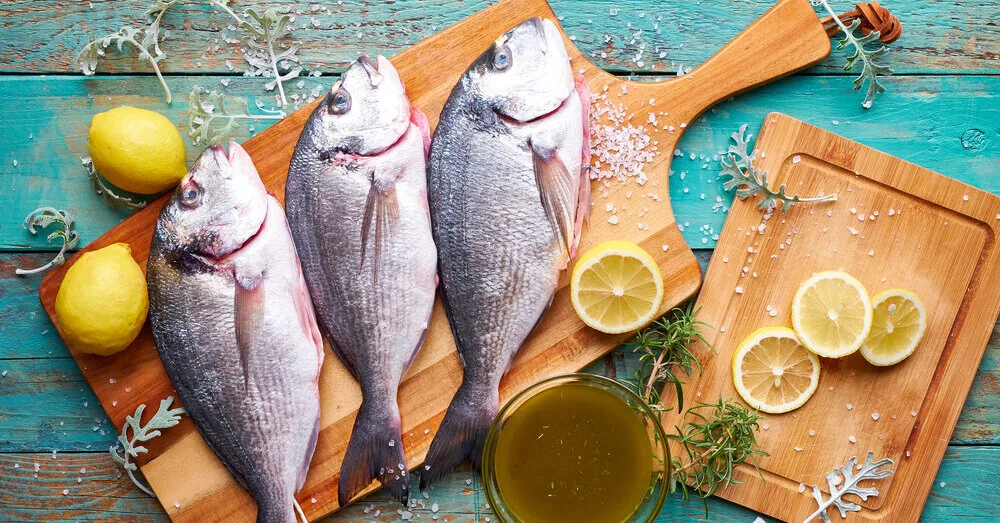
Which fish to choose – experts answer.
A wide assortment offered to buyers
Antanas Šiuša, head of the “Rivona” fish workshop, says that the company prepares and supplies two categories of fresh fish to “Norfa” stores. The first category includes fresh fish raised in ponds in Lithuania and just caught: carp and crucian carp. Also fresh doradas, trout, salmon, which “Rivona” receives chilled.
Read more The anti-tank weapons shooting range complex has been completed at the Rūdninkai training ground
The second category includes frozen fish thawed in the workshop. These are sea bass, mackerel, herring, sprats, horse mackerel, and plaice. “Frozen fish is defrosted in the workshop. This process is very important because only properly thawed fish does not lose weight, moisture, and remains of good quality. The temperature of frozen products is raised from -20 degrees to 0 degrees over 6-8 hours,” says A. Šiuša.

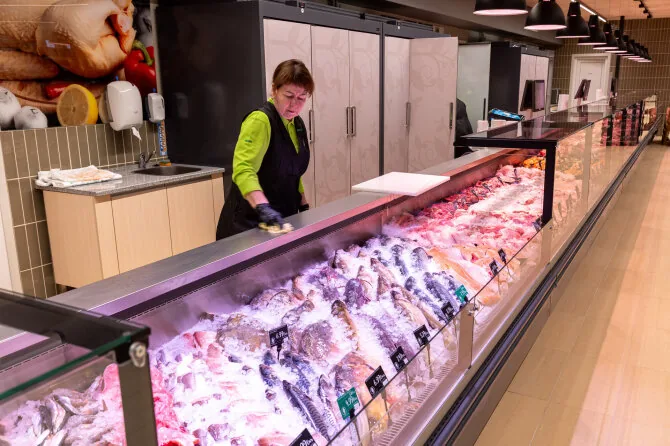
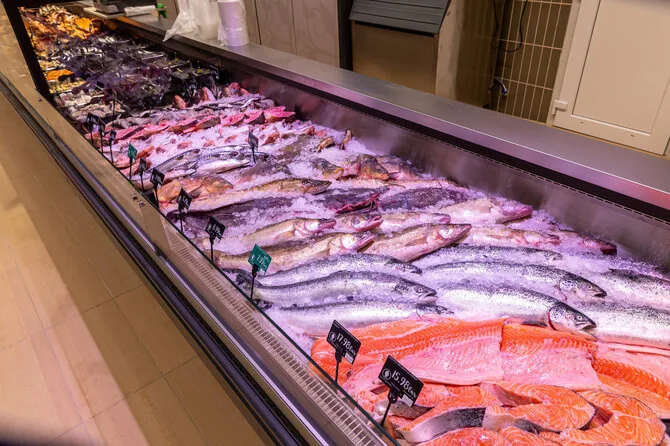
Thawed fish is delivered to stores and displayed in showcases on ice. “The fish is always fresh because we deliver to ‘Norfa’ the amount sold in one day,” says the workshop head.
Last autumn, the defrosting equipment capacity was increased fourfold because the workshop could not keep up with preparing fish according to trade demand. Previously, 4 tons of fish were thawed overnight in the defrosting chamber; now it thaws 16-17 tons. Part of the thawed products goes to smoking devices where hot and cold smoked fish is prepared.
Buyers increasingly choose fish
According to A. Šiuša, there used to be a clear seasonality in fish sales. More fish is sold from autumn to spring, peaking in November-December when sales jump 2-3 times. The turning point is recorded at Easter, after which sales decrease. In summer, perhaps people catch fish themselves in lakes and rivers.
In December last year, 267 tons of fresh fish were sold at “Norfa”. In April this year – 127 tons. Annually, 1386 tons of fresh fish are sold.
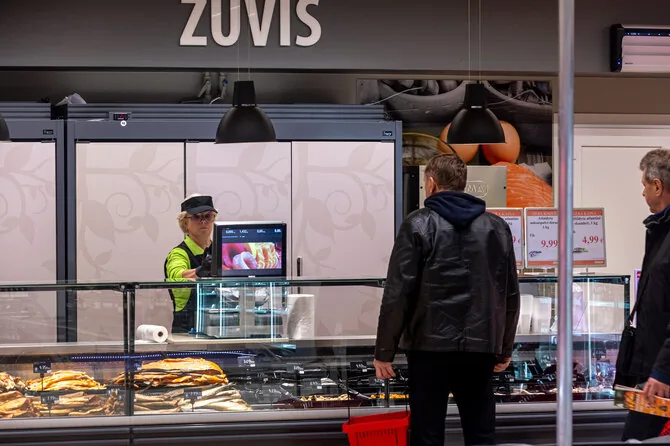
“Recently, the seasonality of fish purchases has become less relevant. This is due to changing eating habits, fish is eaten more often, and we can serve more of it,” says A. Šiuša.
Sales were also boosted by the Monday 50% discount in “Norfa” stores. Regular Monday fish sales started in February last year, increasing sales by 15-20%. This year, it increased by another 10-15%.
In Lithuania, one of the most popular fish is mackerel, but recently buyers increasingly choose more diverse fish. “This was caused by the doubling of mackerel prices in global and Lithuanian markets. On the other hand, despite the price increase, mackerel sales did not decrease,” says the workshop head.
Myth dispelled – cooking fish is simple
Although more buyers discover and buy fish more often, some people think it is difficult to prepare and are unsure if it will taste good. According to “Rivona” fish workshop technologist Ieva Bagackienė, preparing and cooking fish is very simple.
Universal spices suit many fish: herbs, garlic, lemon, butter, salt, pepper. “Better less than more, so as not to overpower the natural fish flavor. Cook fish in a pan or oven in a closed baking dish. You can also grill it wrapped in foil – the fish remains juicy and tender, stewing in its juices, retaining nutrients and is very tasty,” advises I. Bagackienė.
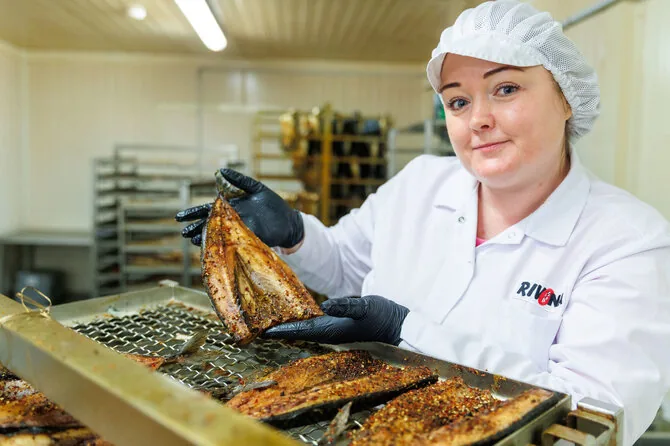
The fish will be even tastier if marinated for a few hours with lemon, dill, soy sauce, and honey, but it can also be cooked immediately – the flavors will blend during cooking.
Different flavors and preparation methods
The technologist recommends choosing a more diverse fish selection and trying different flavors. If you like fattier fish, buy salmon, carp, herring, mackerel, trout, halibut. Less fatty are dorada, crucian carp, cod, plaice, sea pike, perch, etc.
In Lithuania, mackerel, carp, and salmon are especially popular, but more buyers are discovering plaice, which is very valuable and contains a lot of iodine. It is a tasty fish with few bones. “You can cook plaice in 15 minutes and enjoy tender, melt-in-the-mouth fish,” says I. Bagackienė.
Read more A fairy tale-like place in Germany: breathtaking views
Doradas have a distinctive flavor and few bones. It is cooked with the whole head, cut crosswise in several places. Fry garlic in butter in a pan and pour over the fish. Rub with salt and pepper. Cook in a pan or in a 180-degree oven for 20-25 minutes.
The cheapest fish dish can be made from sea pike. If you don’t like bones, before cooking, cut the back and remove the spine – you won’t have to pick out bones while eating. But if the fish is well cooked, the bones separate easily – they can be removed before or during eating.
If you want a more gourmet flavor, I. Bagackienė advises seasoning the fish steak by placing an orange or lemon slice on top and sprinkling with greens. Cream sauce goes especially well with fish.
Salmon stuffed pie
Ingredients:
- About 800-900 g “Rivona” salmon fillet,
- 1 tsp salt,
- ½ lemon juice,
- a handful of dill.
For the sauce:
- 2 tbsp butter,
- 200 g spinach,
- 1 onion,
- 2-3 garlic cloves,
- 1 tsp salt,
- ½ tsp pepper,
- 250 g cream cheese,
- 500 g puff yeast-free dough,
- 1 egg for brushing.
Preparation:
Prepare the salmon fillet – if it has skin, remove it, rub with salt and season with lemon juice, sprinkle with chopped dill.
Melt butter in a pan and sauté onion, garlic, spinach. Cool, add cream cheese and mix. Season with salt and pepper.
Place half the sauce on one dough sheet, leaving about 3 cm edges uncovered.
Place the salmon on the sauce, then more sauce on top, and cover with another dough layer. Brush edges with beaten egg and seal.
Bake in a 200-degree oven for about 30-40 minutes.
Gently stewed sea pike
Ingredients:
- About 1 kg “Rivona” sea pike,
- 2 eggs,
- 4-5 tbsp flour,
- 1 onion,
- 1 carrot,
- 2 garlic cloves,
- a handful of chopped dill,
- 150 ml heavy cream,
- a sprig of fresh thyme,
- 2 tsp salt,
- ½ tsp pepper.
- 1 cup chicken broth.
Preparation:
Clean the sea pike, scale if needed, cut off fins, wash and dry. Cut into small pieces.
Rub the fish with salt and pepper.
Coat sea pike pieces in flour, then dip in beaten egg. Fry for 2-3 minutes on all sides until nicely browned.
Separately sauté chopped onion, carrot, garlic, dill in a pan, pour in broth and cream, add thyme sprig. Heat until sauce thickens.
Add sea pike pieces to the sauce and stew for about 5 minutes until the fish easily separates from the bone.
Easy to prepare plaice
Ingredients:
- 3 “Rivona” plaice,
- 1 lemon,
- a piece of butter,
- 1 tsp salt,
- pepper to taste,
- 2 tbsp oil.
Preparation:
Clean the plaice, scale if needed, cut off fins, wash and dry inside and out.
Rub the fish with salt and pepper. Brush with oil.
Place the plaice in a baking dish, put pieces of butter and lemon slices on top.
Read more Official: Japanese club said goodbye to Dainius Adomaitis
You can also bake on a baking sheet wrapped in foil.
Preheat the oven to 220 degrees and bake for about 20 minutes.