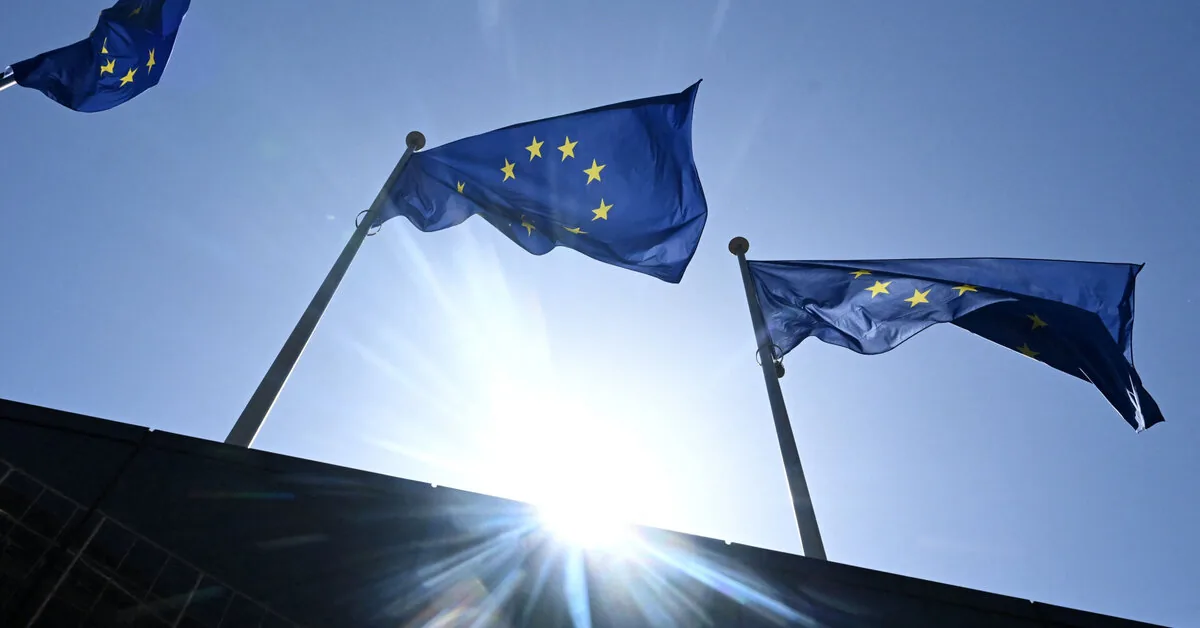
With reduced trade tensions with the US after the EU approved the trade agreement signed with Washington last year, Brussels is turning its attention to China. And it is not alone.
Read more Fish without fear: how to prepare it deliciously even if you cook rarely?
Experts and governments are increasingly warning about the “China shock 2.0,” as a flood of cheap goods made in this Asian country threatens manufacturers not only in Europe but worldwide, as the trade deficit with China grows. Last year, the bloc’s trade deficit with China was about 360 billion euros, meaning China’s exports far exceeded EU imports.
“China’s industrial dominance is no accident. It is the result of decades of state subsidies and asymmetric market access,” said Stephane Sejourne, the European Commission’s Executive Vice-President responsible for prosperity and industrial strategy, to EU ministers in Brussels on Thursday.
Later, he told journalists that, based on data from the European Central Bank, “due to the trade deficit, there is a very high risk to 29 million jobs in the coming months.”
However, the EU’s trade concern about China is not new. Since 2023, European Commission President Ursula von der Leyen has advocated a “risk reduction, not decoupling” approach, balancing concerns about over-dependence on China with maintaining ties.
On Friday, she and her team of European Commissioners will lead a discussion on what the EU should do to protect the continent’s companies from what Brussels describes as unfair competition from Chinese competitors.
At the same time, Europe seeks to diversify its trade partners, especially in the rare minerals sector dominated by China, after Beijing’s strict export controls last year revealed how vulnerable the EU is.
The EU also expects new rules, to be announced next week, to strengthen local production of chips used in various electronic products.
Read more The anti-tank weapons shooting range complex has been completed at the Rūdninkai training ground
More tariffs?
Without mentioning China, the four largest EU economies – France, Italy, the Netherlands, and Spain – released a document over the weekend stating the need for stricter measures to combat the “spread of unfair trade practices.” However, this position may cause problems with Europe’s largest economy, Germany, which exports many goods to China, such as cars and manufacturing equipment. Berlin is more cautious, fearing to anger Beijing and face possible painful consequences.
On Thursday, the Financial Times quoted S. Sejourne saying that the EU will more actively apply import quotas and tariffs on China to protect certain sectors, including chemicals, metals, and clean technologies.
In response to S. Sejourne’s comments, Mao Ning, a spokesperson for China’s Ministry of Foreign Affairs, warned that China “will take all necessary measures” to protect its legitimate interests.
In recent years, the EU has tried to address the imbalance by imposing higher tariffs and conducting numerous investigations related to state subsidies in the clean technology sector, which has caused increased trade friction between Brussels and Beijing.
China’s attempts to invest in Europe also face growing resistance.
The latest case was reported on Thursday when the EU launched an investigation into the Chinese e-commerce giant JD.com’s proposal to acquire the large German electronics retail group Ceconomy, suspecting that the deal was encouraged by state subsidies.
Read more A fairy tale-like place in Germany: breathtaking views