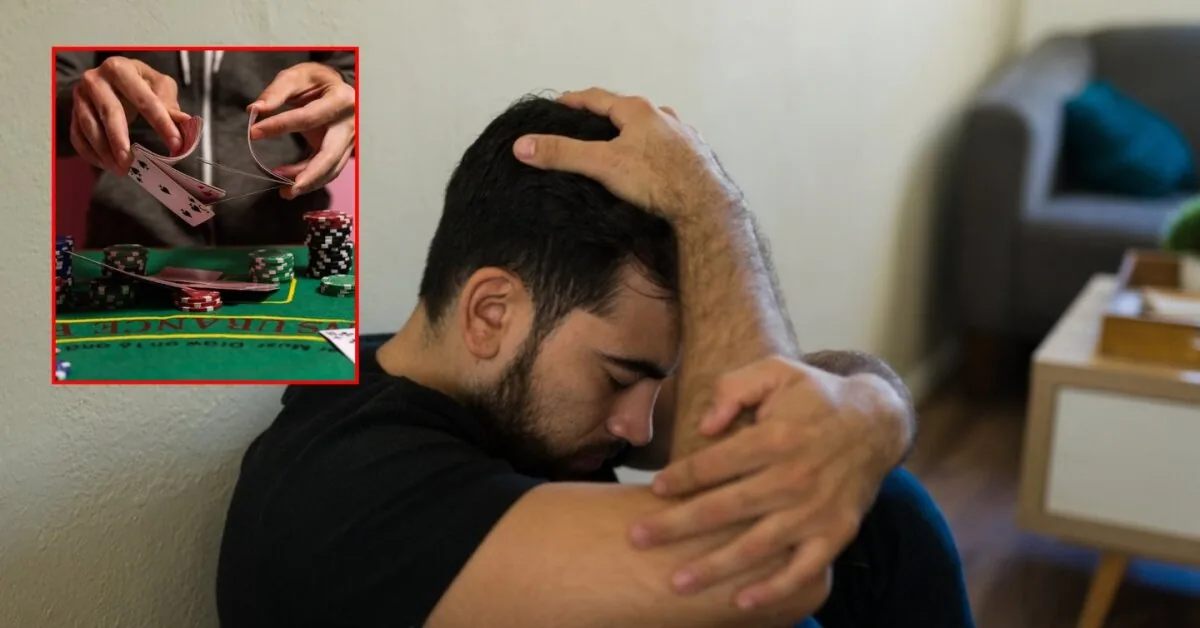
The man got involved in gambling for the first time when he was 17–18 years old, at the end of the last century, when the first slot machines, called “one-armed bandits,” were just starting to be established in Lithuania. Later, casino salons appeared. Everything, as Petras says, started with friends and shared evenings. At that time, he was already working and earning quite a bit, so according to him, neither losses nor wins seemed particularly significant.
Read more Sad news: Member of Parliament, athlete Jevgenijus Šuklinas has died
However, over time, gambling began to take up more and more space in his life. “I am a person with compulsive decisions, so I fell into gambling immediately. I found a good gambling environment and it became everything – the greatest love, a calming place, a place where I could hide from everyone,” the man confesses.
“First, the conscience died”
Today Petras says he understands that he lost much more than money in gambling. Gradually, there were no close relationships or peace left in his life. There was constant lying, debts, manipulation of people. “I lost my time, friends, conscience, loved ones, feelings, everything that is sacred now,” he does not hide.
Just as a drug addict needs a bigger dose, I needed a stronger emotion.
The more he gambled, the stronger emotions he needed. Eventually, there was no logic or attempt to “earn” in gambling. The most important thing for him became the state, adrenaline, and the process itself: “Just as a drug addict needs a bigger dose, I needed a stronger emotion.”
Even winnings did not pull him out. Petras admits that the money won never became an opportunity to fix his life or pay off debts. On the contrary, they only drew him deeper into gambling. “It was a pseudo-illusion,” he says.
When money started to run out, borrowing began. The man does not hide that at a certain point, he no longer cared how to get that money. He borrowed from friends, acquaintances, lied, and manipulated people.
“To get money, I could do anything. I no longer had any conscience. It died first,” the man admits.
Empty fridge syndrome
Petras says that at one stage of his life, he was somewhat distant from gambling. At that time, he started a family, so it seemed that life was gradually settling down. But it did not last long.
“The greatest suffering began after starting a family because then I started gambling again. I returned to gambling with full force and fell like everyone else – into the abyss,” the man recalls.
Then, it was not he who suffered the most, but his wife. There was constantly a lack of money at home, debts accumulated, and the whole life revolved around his addiction. “The home became the empty fridge syndrome,” he smiles bitterly.

As soon as they pay off my debts, I gamble again. It was a “bear’s favor.”
Petras’s relatives tried to save the situation, covered his debts, tried to believe his promises. But today, as he says, no one around fully understood what gambling addiction is. The man is convinced today that this only allowed him to stay addicted longer: “As soon as they pay off my debts, I calm down and then continue gambling. It was like a ‘bear’s favor.'”
He remembers how more than twenty years ago he tried to consult a psychologist, but today he understands that at that time the specialist simply did not understand what was happening to him: “Now I realize that he did not even know how to help me. He was a simple psychologist, not working with addictions, especially gambling addiction.” Therefore, after consultations, he would go straight to the gambling establishment.
Thoughts about withdrawing from life
Petras does not hide that there was a stage when he no longer wanted to live. He thought about ending his life more than once because, he admits, he could no longer live like that.
When he could not gamble, he started drinking alcohol: “I needed to forget because I could no longer see how I live and what I had become.”
The turning point for Petras was the anonymous gamblers’ community, which his wife took him to for the first time. He says he probably would not have dared to go there himself. At first, he thought everything would work out quickly, but after a while, he relapsed. “I grew wings,” Petras briefly recalls.
Later, he returned to the community and gradually began to accept what he heard there. “There are certain rules on how to live if you want to help yourself and not relapse,” the man explains.
At first, I wanted to fight the disease. I was wrong. You just have to learn to live with it.
Today, the man still participates in anonymous gamblers’ groups and the 12-step program. He says he has realized that addiction does not go away. “At first, I wanted to fight the disease. I was wrong. You just have to learn to live with it,” he is convinced.
Some friends turned away from him. Only a few people remain with whom he still has contact. But his wife stayed by his side, and Petras himself says he is finally living a full life today.
“Yes, I have a gambling addiction. It will always be with me, but I have already learned to live with it,” the man asserts.
He does not hide that gambling addiction is still very stigmatized in society, so many people remain silent about it. “I cannot openly tell everyone about my problems because I would become a ‘black sheep,'” Petras admits.
Nevertheless, today he urges people not to try to cope alone and to seek help as early as possible. “You have no idea how many people want to help you, i.e., various communities, organizations, specialists. But the key is to want to accept help,” he emphasizes.
We asked psychologist Gabrielė Glušauskaitė from the Gambling Supervision Service under the Ministry of Finance of the Republic of Lithuania to comment on Petras’s story.

– Petras says that over time it became completely unimportant to him how to get money for gambling (“I could do anything”). What happens in a person’s psyche that gambling addiction so strongly changes their values and behavior?
– Addiction changes values and behavior because for an addicted person, the most important thing becomes continuing to gamble. As the interviewee says, “I needed a bigger emotion.” This happens because the brain reacts to an uncertain, random outcome and possible gain by releasing adrenaline and dopamine, which cause pleasant sensations and thus encourage the person to repeat gambling again and again, while everything else in life pales because it does not cause such intense experiences.
Knowing that money is needed to sustain gambling addiction, the person tries to get it in various ways because staying in the gambling process is more important than the values they have. Then, when their own money is no longer enough, lying, manipulation, theft, even from the closest people, begins.
For relatives in such a situation, it is important to understand that the person does not consciously choose this, and the change in the gambler’s values is exclusively related to the progression of their disease, not to stopping loving their loved ones or wanting to belittle them. Unfortunately, I often encounter that relatives take such gambler behavior very personally.
Also, in this story, it can be noted that Petras himself confirms that relatives who choose to pay off his debts only sink him deeper into the addiction swamp. Still, it is very important for the addicted person to experience the consequences of their behavior themselves because after experiencing this, the person can associate their behavior with those consequences and then make conclusions: continue gambling or start the recovery path.
Relatives who pay off debts create an opportunity not to experience those consequences, so the addicted person develops the perception that there is no point in changing because the relatives do everything for them.
The expression of addiction is about irresponsibility: values, relationships, obligations stop mattering, so it is important for addicted persons to develop responsibility. By doing such “bear’s favors,” relatives take part of the responsibility from the gambler onto themselves, so they become “hyper-responsible,” while the gambler continues not to be responsible for their behavior and consequences.
– Petras openly talks about moments when he no longer wanted to live because he could no longer “see what he had become.” So the person himself understands what is happening but does not know where to go? Why does this disease so often lead a person to complete emotional bottom?
– Both with gambling and other addictions, there is a lot of devaluation from society and from within. So even if they know where to turn, for example, that there are Anonymous Gamblers groups, psychologists, psychotherapists, rehabilitation centers, it is often difficult to seek help because it means admitting the problem.
Recovery is a long process, which is usually not always pleasant.
Along with admitting the problem comes a lot of self-devaluation, so starting the recovery path is a big challenge for many. During the recovery process, I notice that for many, this wave of devaluation weakens, and as in Petras’s case, people begin not to fight the addiction but to accept it as part of themselves and learn to live with it. And when you accept yourself with these difficulties, there is no room for devaluation.
Another reason why it is difficult to seek help is that recovery is a long process, which is usually not always pleasant, while staying in gambling means guaranteed intense excitement and thrill. So staying in addiction, when the brain is used to quick dopamine and adrenaline, may seem easier than going on the recovery path, even when thoughts of suicide come.
Funded by the State Public Health Promotion Fund (state budget) funds.
Read more May 30 Horoscope: The Upcoming Full Moon May Bring Emotions and Important Decisions