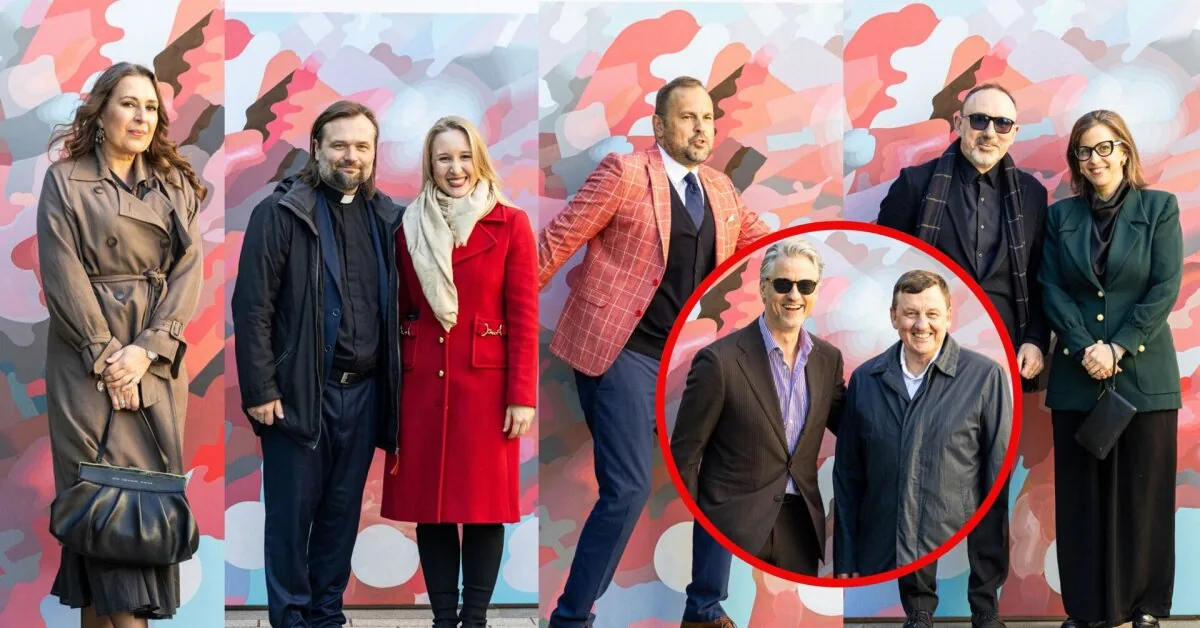
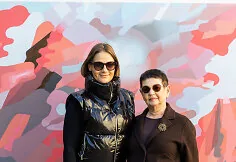
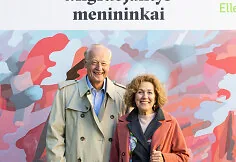
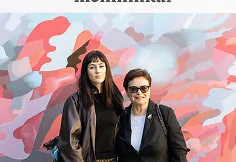
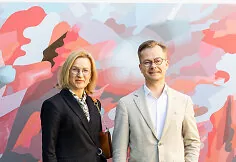
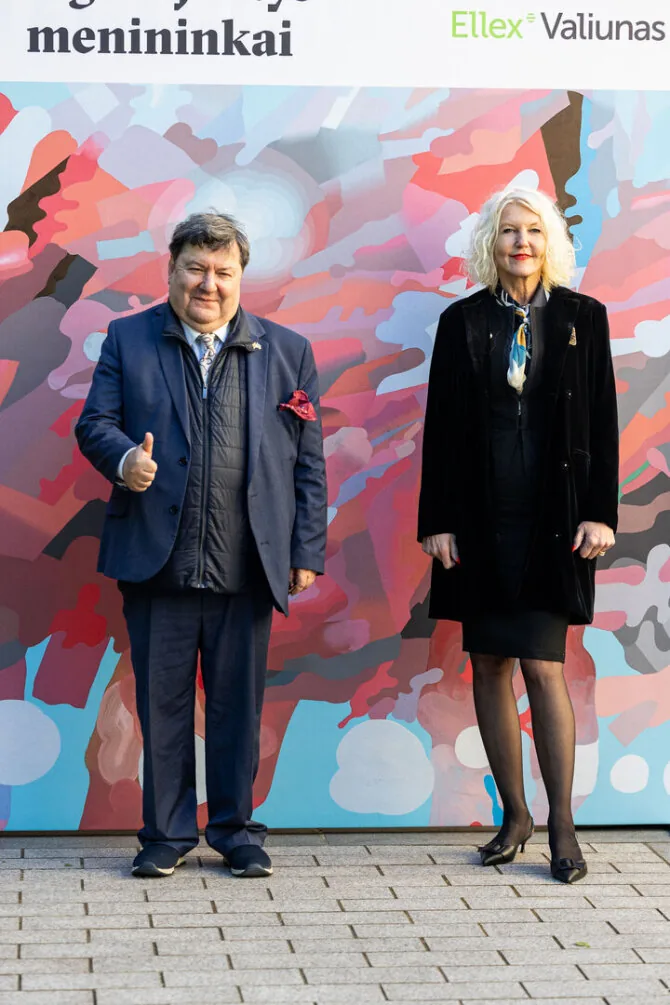
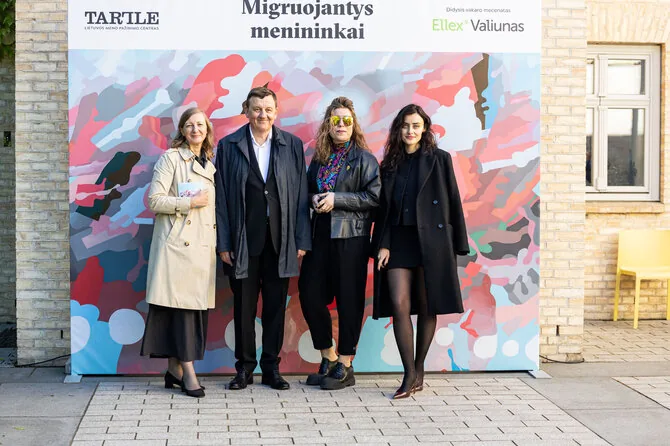
On Thursday evening, invited guests gathered at the art discovery center “Tartle” – well-known representatives of the art, business, and entertainment worlds. Kristina Sabaliauskaitė, Arūnas Gelūnas, Thomas Plantenga, Dominykas Vizbaras, Kara McDonald, Shinsuke Shimizu, Agnė Grigaliūnienė, Jogaila Morkūnas, Paulius Grigas, Virginija Vitkienė, and others arrived.
Read more May 30 Horoscope: The Upcoming Full Moon May Bring Emotions and Important Decisions
“The exhibition reviews the period from the 2nd decade of the 20th century studies at Paris academies to the peaks of modernism and the maturity of exile at the end of the century. It is a story about the artist-wanderer who carries his home on canvas, clay, or graphic sheet, navigating between walls and political upheavals,” says Lithuanian diaspora art and artist migration researcher, art historian Prof. Dr. Rasa Žukienė, who curates the new exhibition together with art historians Dr. Ieva Burbaitė and Emilija Vanagaitė.
Photo gallery:
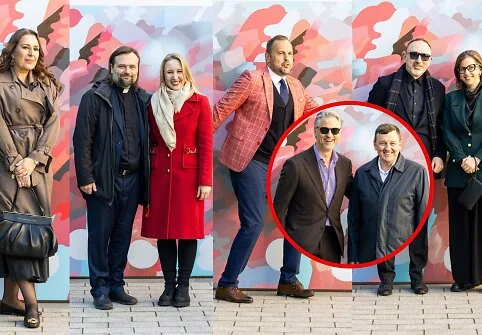
Migrant stories and works – by geographical directions
The axis of the exhibition is the geographical and creative shift. The story begins in interwar Paris, which became the cradle of Lithuanian modernism. Here, the Lithuanian worldview encountered Western modernism. The next stop is Freiburg. Artists and visitors of the Freiburg School of Arts and Crafts, driven to Germany by the war, preserved cultural continuity even in temporary camps. Finally – the opened Western horizons: artists who moved to the USA or stayed in France developed a distinctive, free, though often nostalgic creative style. The exhibition presents their most mature works, born after taking root in American metropolises, European capitals, or South Africa, where Pranas Domšaitis found refuge.
Art is not a luxury – it is a responsibility to society and a gift to future generations
“Although the exhibits of the exhibition were not created in Lithuania, they and their authors’ stories are an integral part of our culture. One of the essential goals of the museum is the return and publicizing of Lithuanian heritage, so thanks to us, many of the exhibition’s exhibits have returned to the authors’ homeland by various means,” says “Tartle” director Jurgita Semenauskienė.
Among the most prominent examples are the paintings of Jonas Rimša. A large collection of them reached Lithuania in 2008 after “Tartle” founder Rolandas Valiūnas met the artist’s sister living in Argentina. To R. Valiūnas’s surprise, she, over 90 years old and having spent her entire life in a foreign country, still spoke Lithuanian fluently. “Her only wish was for Rimša’s works to return to the homeland,” recalls the collector.
Soon after, in 2014, with the help of the Lithuanian community in Argentina, four sculptures by Matas Menčinskas, made from exotic quebracho wood grown in South America, returned to Lithuania. By the way, one of the sculptures in the collection – “Motherhood” – also has undeniable historical value: it was a representative gift from the Lithuanian community in Argentina to the then Prime Minister Juozas Tūbelis, long considered lost. “In this exhibition, my favorite phrase is justified: art is not a luxury, it is a responsibility to society and a gift to future generations,” says the museum founder.
A broader view of migration
Although the reasons why the exhibition’s heroes had to leave Lithuania are complex, migration encouraged the spread of ideas, and as artists wandered, knowledge, experiences, influences of authorities, and artistic ambitions traveled with them.
Read more Juozas Olekas: The Seimas will lack the intelligence and maintenance of Jevgenijus Šuklinas
“This exhibition became an opportunity to look at the phenomenon of migration more broadly. I will not be wrong to say that the issue of migration surrounds us daily, often with negative connotations. But this exhibition is not only about migration as a loss – it tells about searches, discoveries, and the imprints left by Lithuanians in the world. Looking back at history, we can see the positive impact such twists of fate had and look at the present with that knowledge,” says curator E. Vanagaitė.
Exhibition intrigue
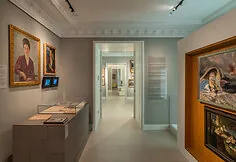
One of the intrigues of the new exhibition is a portrait by Simone Petitjean, purchased at a small London auction in the winter of 2026, painted in 1947 by Irena Jackevičaitė-Petraitienė, who graduated from the Royal Academy of Fine Arts in Rome. “The sensitive history of this work testifies to the warm relations between the administration and Lithuanian war refugees in the Kempten DP camp, where a large Lithuanian community was concentrated. The painted woman is Simone, the wife of Claude Petitjean, deputy director of the United Nations Relief and Rehabilitation Administration (UNRRA), and a nurse,” explains I. Burbaitė.
An inscription in the corner of the painting states that this portrait is a thank you to the Petitjean family for their care of Lithuanians who ended up in Kempten. According to I. Burbaitė, it is also important that until now, there were only a few examples of I. Jackevičaitė-Petraitienė’s work in national collections. The most prominent of these is the painting “Subjugated Vilnius,” kept at the Vytautas the Great War Museum, which became almost an iconic allegory of the lost capital during the interwar period.
“Simone’s portrait only confirms that I. Jackevičaitė-Petraitienė was indeed a talented painter. Thus, the experiences of Lithuanian artists’ migration are revealed in the exhibition not at all as a story of losses or unfulfilled expectations. Migration, then and now, is a condition of a modern and dynamic society – we invite exhibition visitors to feel this,” notes exhibition curator I. Burbaitė.
A puzzle of personalities and stories
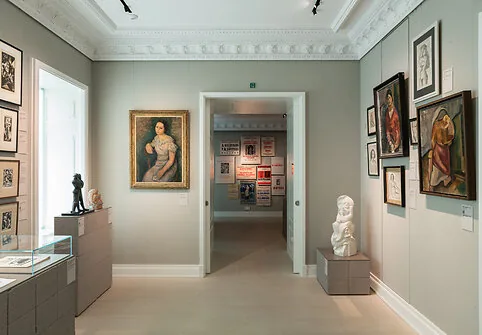
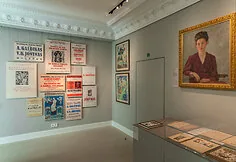
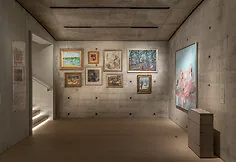
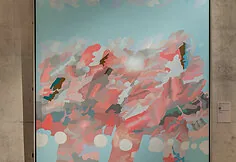
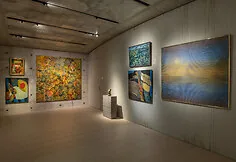
The “Migrating Artists” exhibition features more than 100 works and documents. They reveal individual artists’ life and creative stories and together compose a kaleidoscopic image of the migrant experience in a broad sense. The exhibition presents not only works by the most famous Lithuanian artists – Pranas Domšaitis, Jacques Lipschitz, Jonas Mekas, Jonas Rimša, Kazys Varnelis, Viktoras Vizgirda, Kęstutis Zapkus – but also the work of lesser-known authors – Ona Dokalskaitė-Paškevičienė, Irena Jackevičaitė-Petraitienė, Mykolas Paškevičius, Albertas Veščūnas, and others.
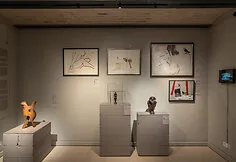

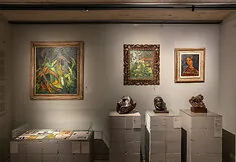
The exhibition will be open from June 2 until next May
The Lithuanian art discovery center “Tartle” houses one of the largest private art collections in Central Europe. The Lithuanian collection, comprising nearly 8,000 objects, includes paintings, sculptures, historical and artistic graphic works, maps, books, examples of goldsmithing, photographs, and various historical artifacts. Opened in 2018, the museum presents Lithuania’s past, its social, political, and artistic context through works of art and other visual sources. Since its opening, the museum has welcomed over 27,000 visitors. The founder of “Tartle,” who opened the opportunity for visitors to discover art, is art collector and managing partner of the law firm “Ellex Valiunas,” Rolandas Valiūnas.
Read more Mindaugas Sinkevičius expresses condolences for the death of Jevgenijus Šuklinas