The first time Viktorija learned about her husband’s addiction was when Armandas (name changed) was not yet her husband. Living together, one day she accidentally found many TOPsport receipts in his pockets.
Read more „NEO Rally Žemaitija 2026“ – dramatic Vaidotas Žala’s victory
When she asked what it was, she sensed his confusion, perhaps even a little anger. It soon became clear that gambling had been in his life for a long time. Even in his teenage years, Armandas used to visit casinos and work at card tables at events. Later, Viktorija also heard about his large debts, which his parents once had to cover.
When she asked how they reacted, she heard that he had never had a close relationship with his parents. They simply paid the debt and warned him that they would not do it again.
I always saw Armandas beyond his addiction. To me, he was more than just gambling.
“That time I got very scared. I moved out of the apartment where we lived together. It seemed like a boundary I couldn’t cross. But after a while, we still reconciled. I always saw Armandas beyond his addiction. To me, he was more than just gambling,” Viktorija recounts.
Later, they got married civilly. Viktorija admits that a civil marriage always seemed more of a formality to her – changing surnames and a signature on documents. Therefore, both dreamed of getting married in church a year later. They attended engagement courses, planned a future together, and prepared to buy a house.
However, the day came when it became clear that Armandas had not stopped gambling. “While living with me, he wasn’t deeply in debt. But I was burdened by the very fact that the addiction hadn’t disappeared. “What should I do now?” I asked myself many times, crying. I realized I couldn’t walk down the aisle. So we decided to call off the wedding. It was one of the most painful decisions of my life. Although a year has passed, sometimes it feels like it all happened yesterday,” the interviewee recalls.
She realized she had to save herself
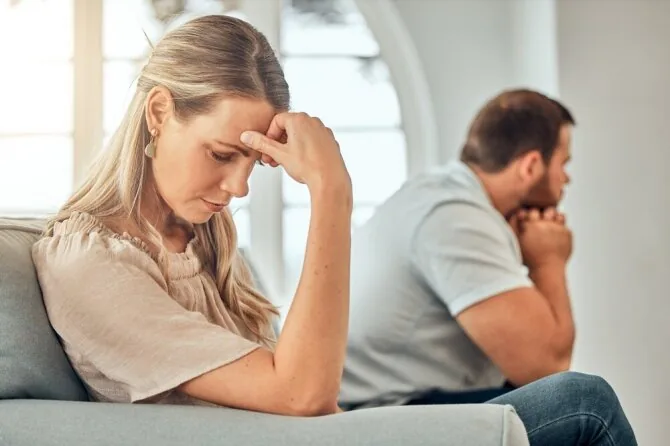
Nevertheless, Viktorija couldn’t find the strength to end the civil marriage. They stayed together. She started attending self-help groups for relatives, and the couple signed a postnuptial agreement. Armandas also started attending groups and sought help from a psychologist. But even then, he couldn’t avoid a relapse.
Today, the woman says she sees that not only her husband but also she herself has changed over the years: “At first, I tried very hard to understand Armandas’s addiction, its causes, to help, to save, to find solutions. Later, I gradually began to learn to take care of myself. To understand what is important to me and why, and to listen to my needs. I am happy when I manage to avoid accusations and talk calmly, respectfully, constructively.”
Over six years of living together, Viktorija understood one important thing – it’s impossible to change another person: “How he fares will depend solely on his own desire, effort, and determination to recover.”
Today, I am still by his side. Will I always be – I don’t know.
However, that doesn’t mean all doubts have disappeared. “Today, I am still by his side. Will I always be – I don’t know. One part of me still wants to build a life together, restore trust, and believe in our relationship. The other part fears that one day I will still have to experience the pain of separation. I know I will never be the same woman who once met Armandas,” the woman openly admits.
The hardest part was staying silent
Quite recently, Armandas decided to openly talk to his parents about his addiction. Viktorija says it was the end of a long and difficult journey. All that time, she had consciously chosen not to speak to his biological family herself about what he was going through.
“The hardest part was listening to stories about what a wonderful child Armandas was, what a good son and husband he was. Sometimes, a huge helplessness would arise inside me. I wanted to shout: “See what’s happening. Hear how difficult it is for him.” But most of the time, I stayed silent.”
Only once did she say that children tell their parents as much as they themselves want them to know. But her words went unheard.
When the truth finally came out, Armandas’s parents were hurt. Nevertheless, they did not seek help for themselves. Viktorija even suggested that Armandas’s mother attend relatives’ groups, but she saw no point in it.
“There was a time when she would call me, ask me not to rush into divorce, and inquire about our lives. Today, I understand that I said too much. At the time, I thought she had a right to know. Now I see things differently,” says the interviewee.
“And where am I in this sentence?”
Today, Viktorija tries to think less about her husband, his addictions, and his biological family. She says it’s not because she doesn’t care, but because it’s not her responsibility. She is now learning to rediscover herself and take care of herself first.
She still remembers one conversation with a psychologist: “I started the sentence with the words: “My husband is addicted to gambling.” And suddenly I stopped. I thought: “And where am I in this sentence?” After all, I am not his addiction. I am a person who lives next to a person with an addiction.”
According to Viktorija, that’s when her attitude towards herself began to change. “Yes, he is trying to recover. Yes, he is walking his own path. And I, meanwhile, can grab a cup of tea and go for a walk on my own.”
I know that Armandas’s addiction is not about me. It is part of his journey.
The woman says she doesn’t know how their future will unfold. But today, she feels much stronger than a few years ago. She believes that, regardless of what the future holds, she will find the strength to live on, preserving self-love, respect for Armandas, and trust in life. The interviewee does not hide that this experience changed her – perhaps made her stronger, or perhaps more sensitive to her own needs.
Read more Within 48 hours in Southern Lebanon, the Israeli army struck 150 “Hezbollah” targets
“I know that Armandas’s addiction is not about me. It is part of his journey, just as learning to take care of myself is part of mine. My life is a huge canvas, painted with the most diverse colors. It contains much more than my husband’s addiction. It contains love and hope, friendship and growth, pain and joy, darkness and light, and most importantly – faith,” says Viktorija.
Expert’s comment
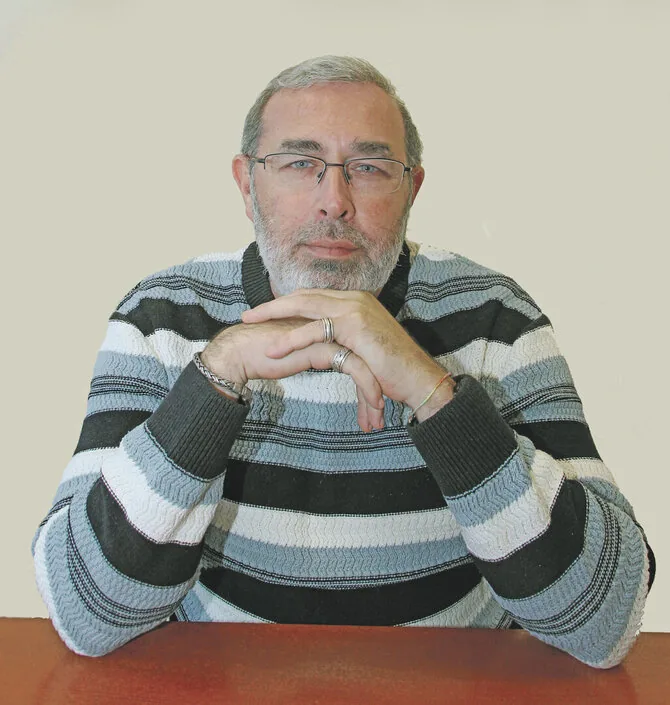
Viktorija’s story was commented on by Oleg Mackevič, chief specialist and psychologist at the Gambling Supervision Authority (LPT).
– Viktorija says that for a long time she tried to understand her husband’s addiction and help him, until she finally realized that she couldn’t change another person. Why do loved ones so often take responsibility for an addicted person’s recovery, and why is it so difficult to let go of it?
– I believe the main reason why loved ones take on responsibility that isn’t theirs is that they care about the addicted person. However, there’s another side – addiction strongly affects the well-being of loved ones, so there’s a natural desire to quickly reduce anxiety, fear, anger, or helplessness.
People have a natural desire to save others. By saving, they feel needed and useful.
Often, a kind of formula forms: “I will feel good when you don’t gamble.” And if the person doesn’t gamble, it means something needs to be done: control, persuade, save. In general, people have a natural desire to save others. By saving, they feel needed, useful, and influential in the situation. Sometimes, the belief arises that if not for them, no one else will help. This is especially true when the gambler’s own motivation to change is low or inconsistent.
On the other hand, doing nothing is also very difficult. Often, those around perceive such behavior as indifference or lack of care. Moreover, the person themselves finds it hard to accept the idea that they cannot solve a loved one’s problem. Therefore, attempts to save often become a way to cope with their own emotions.
I believe one of Viktorija’s most important discoveries was the realization that it’s impossible to change another person’s behavior if they don’t want to change themselves. This understanding often becomes an important step in starting to take care of oneself. Addiction should be viewed as a disease that requires professional help, not the efforts of loved ones to “cure” it on their own.
A loved one’s addiction often also causes feelings of guilt and shame. Parents often ask themselves: “What did we do wrong for our child to become addicted?” Partners wonder if they could have noticed something earlier, acted differently, or helped more. Such questions rarely have one clear answer, but they can draw a person into very intense experiences that, over time, not only exhaust but also encourage the formation of co-dependent relationships. In such relationships, a person’s emotions, well-being, and behavior begin to revolve around the addict’s problem.
Sometimes the word “let go” sounds threatening, as if it means to discard, reject, or abandon a person. But in reality, letting go does not mean ceasing to care. It means returning responsibility for recovery and related decisions to the gambler themselves. Paradoxically, it is precisely this separation of responsibility that often becomes a liberating step for both the loved one and the addicted person themselves.
– The woman’s story talks a lot about lost trust. Is it possible to restore it while living with a person who has an addiction?
– It is obvious that when a gambling person lies, denies the problem, or does not choose the path of recovery, loved ones become disappointed, hurt, and lose faith. The loss of trust is a painful experience that one also has to learn to live with.
It is certainly possible to restore trust, but usually, it is not a quick or easy path. It is important to understand that trust is lost not only due to the act of gambling itself but also due to broken promises, concealment, lies, and other behavior patterns associated with addiction. Therefore, its restoration happens not through words, but through consistent actions over a longer period.
Much depends on the gambler’s own motivation to change. Loved ones usually observe not what the person promises, but what they do: whether they acknowledge the problem, seek help, adhere to agreements, or take responsibility for the consequences of their actions. The more consistency, openness, and transparency there is, the more opportunities for trust to gradually return.
The role of the loved one themselves is no less important. This requires the ability to set boundaries, take care of one’s emotional well-being, and give up constant control. It also requires time, patience, and often external help.
Nevertheless, it should be acknowledged that trust cannot always be restored. Sometimes the damage to relationships is very deep, and the fatigue arising from repeated relapses becomes too difficult to bear. In such cases, relationships may end. That is why we always recommend that not only the addicted person but also their loved ones get involved in the help process. Addiction affects the entire family system, so the path to recovery often becomes easier and more effective when everyone affected by this problem receives help.
If gambling causes concern for you or your family, it is worth seeking help from mental health professionals or contacting the psychologists at the Gambling Supervision Authority. Sometimes, a single conversation can be an important start to better understanding the situation and finding appropriate solutions.
Funded by the State Public Health Promotion Fund (state budget).