In 2020, after peaceful protests in Belarus, Alexander Lukashenko’s regime began a brutal crackdown on dissenters. Many opponents of the regime and freedom-seeking people were forced to leave the country, imprisoned, injured, or killed.
Read more Swedbank updated the customer service center in Vilnius: what is changing for customers?
When Russia started a large-scale war in Ukraine, a new wave of resistance arose in Belarus, to which the regime responded with even harsher repression. Publicly expressing dissent against the authorities in the country became impossible. Political prisoners communicated with the world through letters. These letters became the basis for the film “Letters from a Silenced Country.”
The contemporary portrait of Belarus created by A. Kutsila is sensitive and shocking. It contains much pain, despair, but even more – a thirst for freedom.
“It is very important that this film was noticed and selected for the program by the Venice Film Festival and that in one of the world’s most important cinema halls, a voice was given to the people whom the Belarusian regime tries to silence. Before the film’s premiere, director Andrei Kutsila handed political prisoners’ letters to the festival’s artistic director Alberto Barbera, and after the screening, we distributed them to the gathered audience. The film reveals stories that are surprisingly little known outside Belarus,” said the film’s co-producer G. Žickytė after the world premiere. In Venice, she received great attention and many questions.
“After the premiere, people came up saying they had no idea of the scale of repression happening right next to us today. Viewers said they were deeply moved by the film. The reality of Belarus revealed by the film became a painful discovery for them,” shared the film’s co-producer about the premiere impressions.
In the film “Letters from a Silenced Country,” director A. Kutsila weaves a story from observational documentary, archival footage, police recordings, letters from Belarusians hiding in exile, essays, and testimonies. The film is also enhanced by animation created based on drawings by freedom prisoners found in prison.
Documents of the repressive system in the film speak through personal, intimate correspondence, and private stories here become a cinematic space of dignity, closeness, and survival.
One of the film’s heroes is a father forced to hide and separated from his daughters. A former criminal investigator who fled Belarus and is in exile in Poland is interrogated, feeling lonely and powerless.
A young student Kasia, imprisoned for participating in protests, finds salvation in drawing. Drawings become a way for her to preserve her identity and express what cannot be spoken aloud.
The story of fifty-year-old Vitold unfolds in the film through photographs sent by a friend – carefully selected fragments of life beyond prison walls. They provide at least a brief sense of freedom.
Read more Mayor: two people died in a gas station in Kyiv after a Russian drone strike
“The premiere was extremely emotional. After the film ended, having relived the heroes’ stories, we could not calmly receive the ovations. We just wanted to hug, be together, and calm down,” shared G. Žickytė about the premiere feelings.
She decided to join the team of this film not only because of its original artistic solutions. The theme of human freedom and choice in the face of a repressive system is constantly explored in her own films.
G. Žickytė first discovered director A. Kutsila’s work at the Warsaw Film Festival, where she was a jury member.
“Then we awarded A. Kutsila’s film the main prize; this creator left a strong impression on me,” the producer recalls.
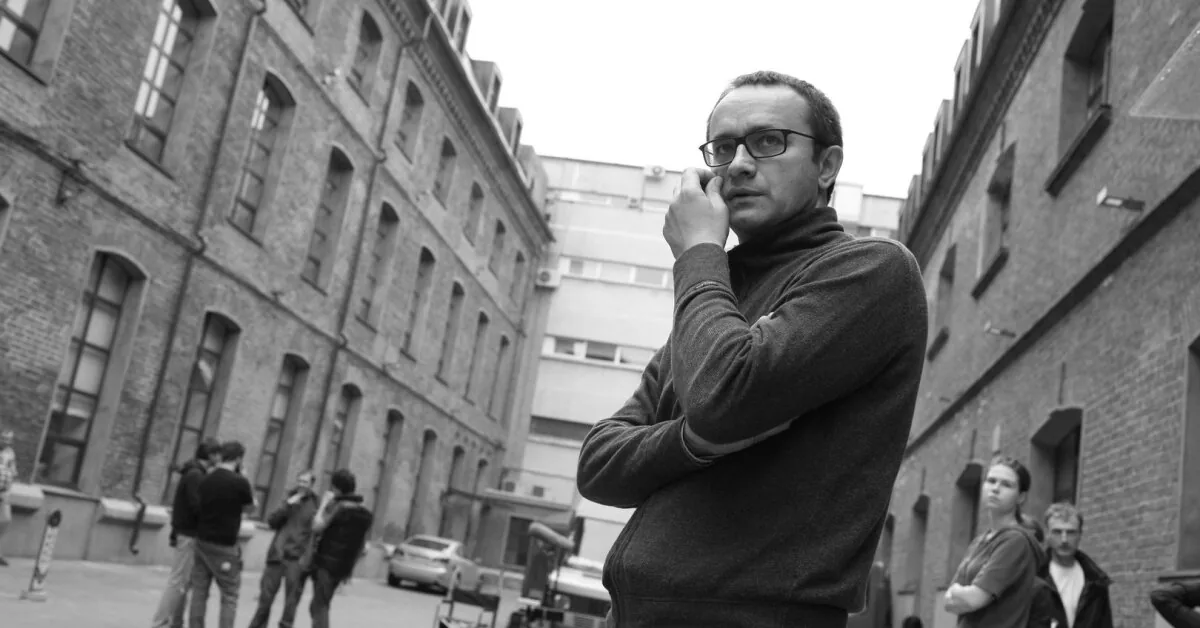
The films of Belarusian documentary filmmaker A. Kutsila, who lives in Poland, have been shown and awarded at major international documentary film festivals – IDFA, DOK Leipzig, Hot Docs, and the Krakow Film Festival.
The documentary “Summa” won the IDFA award in 2018 for the best mid-length documentary, and “When Flowers Are Not Silent” was recognized as the best feature-length documentary at the Warsaw Film Festival in 2021.
After the 2020 protests, the director was forced to leave Belarus. Settling in Poland, he continued his creative work and interned at the Lodz Film School. For the past five years, A. Kutsila has devoted most of his work to the stories of Belarusians experiencing repression and living in exile.
The documentary “Letters from a Silenced Country” was created in collaboration with film production companies DocEdu Foundation (Poland), Moonmakers (Lithuania), and inselfilm produktion (Germany). The production and presentation of the film at the Venice International Film Festival were partially funded by the Lithuanian Film Centre.
Read more LTSA will buy six truck scales for 155 thousand euros
The film will be released in Lithuanian cinemas in the spring of 2027.