


Although the film’s story takes place far from Lithuania, philosopher Dr. Mantas Davidavičius sees themes close to us in it. According to him, Lithuanians are also a “forest people” – in our history, the forest was a refuge, home, and a condition for survival. However, over several centuries, our relationship with nature has changed: wood became timber, and the forest a measurable resource.
Read more A new EuroLeague tournament has started: Šaras’s team narrowly missed the final
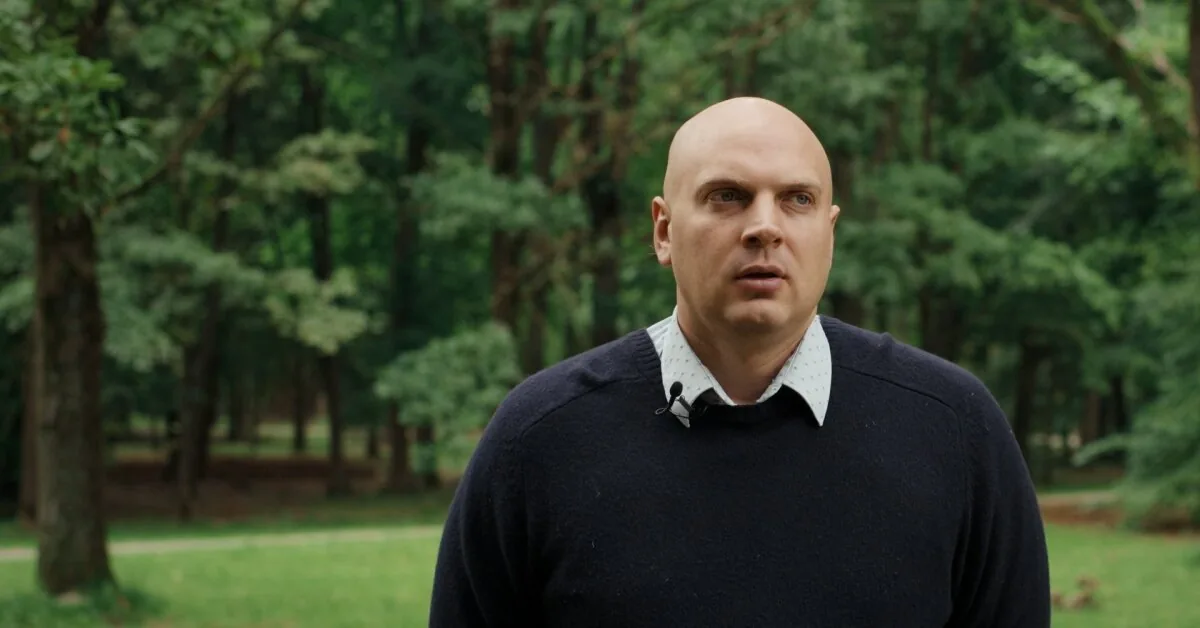
About when and why nature began to be perceived as a resource for humans, how this relationship was changed by the ideas of the Enlightenment, romantics, Marxism, and capitalism, what we could find in the legacy of Vydūnas or other ecological philosophy thinkers, and why it is important today to remember that the forest is not ours, but we are its fruits – a conversation with philosopher Mantas Davidavičius.
– The Rithy Panh film “We Are the Forest’s Fruits,” shown at Sengirė cinema, is about a people living far away in Cambodia who depend on the forest but are now experiencing significant changes due to deforestation. Although this is a very distant context, why do you think this film is relevant in Lithuania?
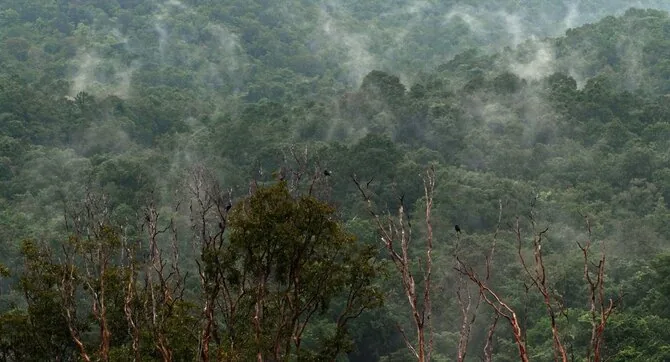
– I see a very clear parallel here with us as a forest people. We are inhabitants of the forest area. Forests helped Lithuanians survive through millennia. It was a refuge, home, habitat where people lived. Forest brothers hid from Soviet persecution in the forest; earlier, the Balts found shelter in the forest from the Teutonic Knights.
Now forests are disappearing, they are being cut down and turned into export timber, and although the total forest area does not decrease – young trees are planted in clear-cut areas – the forest changes qualitatively.
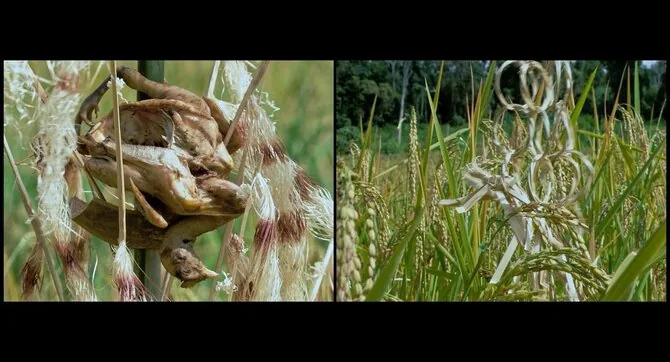
There is a clear parallel between us and the people of Cambodia – we are also dependent on the forest, we are its fruits, as the film’s title says. Forests are the basis of ecosystems; without the oxygen they produce, no organism on Earth, including humans, would exist. So the question of forest survival and protection becomes a central issue that unites us and them.
– You conclude your monograph “Inventors of Nature: Transformations of Lithuanian Ecosophy in the 20th Century” by stating that contemporary Lithuanian ecological thought develops without connections to the legacy of interwar thinkers like Vydūnas and that “we are experiencing a completely new stage of ecosophy that rebels against or finds no connection with the local tradition.” Why is that?
– To answer this question, I will return a bit to the people in the film who are experiencing a sudden leap of capitalism, expansion into their living space. The Bunong are people from the depths of the forest who previously did not trade – they simply exchanged, shared, and worked together. But suddenly money enters their lives. You have to earn, pay, borrow if lacking, and thus become part of global capitalism.
A similar leap happened in Lithuania. Maybe not as drastic, but still, after gaining independence from the Soviet Union, we moved from a closed internal economy to global capitalism, where trade with foreign countries rapidly increased, and in this circulation, the forest appeared as raw material that we supply to foreign furniture manufacturers or construction companies.
Capitalism does not tolerate diversity of values. The essence of capitalism is financial valuation. As Marx noted, money becomes the exchange value that replaces all other values. Different values are named by the same measure. It’s as if we compare our sentiments, time, objects, or other things that cannot be placed on scales as equally valuable. For example, feelings and an apple would be priced with the same monetary unit. Money equalizes the world.
Money equalizes the world.
If we focus on one capitalist logic, one capitalist circulation cycle, then in this world the diversity of values and worth levels out and disappears. We begin to no longer see the value of the forest and other lives as intrinsic value. Also, our own and others’ needs, which may be priceless. We transform everything into costs and expenses, which is a very damaging process.
We have a serious problem with the loss of value diversity, which also leads to the loss of diversity: species diversity, cultural diversity, diversity of traditions. We become uniform and turn into part of the global market economy.
We become uniform and turn into part of the global market economy.
– Speaking about Lithuanian forests – after World War I, there were practically no forests left in Lithuania, now we mostly cut forests planted during the Soviet era. When did the turning point in our relationship with nature occur, when it became just a resource?
– Capitalism appeared earlier in Europe, and a certain common paradigm or common thinking model combining capitalism, technological breakthrough, certain imperial and colonial thinking reached its peak at the end of the 18th century – beginning of the 19th century; it started later here, but already in the 19th century modern ideas and a modern approach to nature and environment dominated in Lithuania as well.
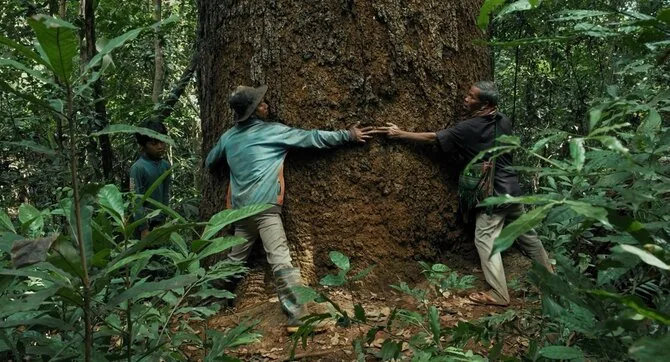
A clear distinction is drawn between humans and the rest of the environment. This process is related to the centralization of power. Humans feel able to control and change everything around, transform nature, take from nature as much as they need. And this view that nature can be managed according to oneself created conditions for industrial progress.
We “resource-ize” and turn into commodities most of the species around us. Also, at that time, some people were turned into commodities and part of capital circulation. It was the colonial era when some people, for example, indigenous peoples, were considered second-class, not quite human, because they did not participate in the “educated white European capitalist cycle.” Although they lived a completely different life, to be recognized, they had to take a step: put on a tie, attend institutions, get documents that Europeans had, and buy and sell like Europeans.
We cannot clearly mark when capitalism reached its peak, but it is quite an old process here as well. Just like with the Bunong, for centuries it has been pushing out other values, other ways of thinking, other identity models.
Coexistence with the environment, where we and other species could coexist fraternally, is replaced by the fact that a tree becomes timber. I would not idealize the past because even earlier, as historians testify, we cut forests and turned them into potash, burned and used ashes for glass production and other purposes.
Already in the late Middle Ages, during Jogaila’s time, large-scale forest exploitation began in the then Lithuanian territories. Preparing for the Battle of Grunwald, a very large number of animals were killed, their meat salted in barrels. Timber was cut and exported to the West.
But then there were still many forests and few people. And humans still did not feel as powerful as they did with the modern capitalist view and advanced technologies. With an axe, we can cut down one or two trees, but with a harvester, very quickly nothing remains in the forest.
With an axe, we can cut down one or two trees, but with a harvester, very quickly nothing remains in the forest.
– How has the relationship between people and nature historically changed?
– As historians and Baltic researchers say, in early Lithuanian history, the relationship with the forest was ambiguous. On the one hand, it was wood – a means to survive, make fire, build houses. On the other hand, all this was accompanied by the old Baltic religion with sacred traditions, respect for nature.
There were also fears – related to the fact that a large forest full of animals was not fully subject to our powers. During the times of Sigismund the Old and earlier, royal hunts were conducted as a symbolic confrontation between the ruler and the animal. The animal was fought with a spear, bow, or other hand-held instruments. Defeating a bison with a spear was a gesture proving the ruler’s superiority over nature. This transferred the title of forest king from a powerful animal to the ruler’s hands. This transfer of power in hunting indicates a certain respect for the animal, which was considered to have its own power capable of overcoming the ruler. It was a competitor with whom the ruler entered into battle.
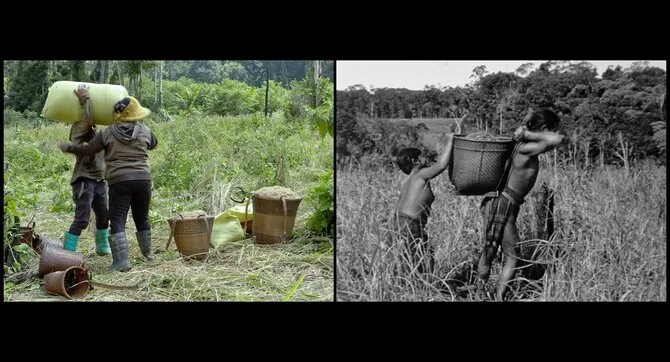
Moving forward, in early modernity, with thinkers like René Descartes and his contemporaries, a new, abstract, rationalist view entered the scene instead of the symbolic worldview, where humans began to dominate nature. They considered themselves separate from nature.
Humans became the sum of their thoughts, a process; even their body became alien to them. This was accompanied by disdain for the entire natural world, considered inferior, less perfect than the cold human mind. This pride in the natural world gave impetus to both technological sciences and industry. We began to move forward toward the Enlightenment.
In the Enlightenment, this culminated in a project where Immanuel Kant, Voltaire, and other philosophers brought the light of reason to all other unenlightened people. And when that light of reason was brought, it was suggested that those to whom it was brought were inferior, animalistic, less noble than the enlighteners. In other words, it was believed that as long as a person was uneducated, uncultured, and had not been shaped by the teacher’s hand, they were not quite human.
Education was to create a new human, a new civilization, a new world, and this new world was accompanied by a new vision of nature. In the Enlightenment era, parks like Versailles began to appear alongside manors, where fir trees were shaped into figures, flowers planted in lines, everything symmetrical, decorated by humans. And nature was supposed to become beautiful because, just as an untrained child is half an animal, so wild nature, uncarved, unshaped, was not considered valuable.
In the Enlightenment era, we took a step where nature, once our competitor, became a ward we protect out of pity but improve only by our own hands. And this is nothing other than admiration of our own actions. Humans, admiring themselves, form a completely new world.
– Did such attitudes prevail in Lithuania as well?
– In Lithuania, the Enlightenment era also had its actors and standard-bearers. For example, among Lithuanian philosophers, it was Jan Śniadecki, rector of Vilnius University, who greatly admired Enlightenment ideas. In Śniadecki’s writings, published in Lithuanian, there is even a pamphlet criticizing romantics, who were already emerging as a resisting force to the Enlightenment project.
In that pamphlet criticizing romantics, Śniadecki writes that none of our poets say we should enjoy slugs and thorn bushes, and that only what is beautiful is in the Puławy park. Śniadecki’s ideal was Puławy park, now in Poland, but very similar parks existed in Lithuania.
The ideal formed by the enlighteners was not the Kaunas oak grove but very strictly formalized nature. The alternative was the romantics criticized by Śniadecki, who began to emerge in Europe with Jean-Jacques Rousseau. Romantic nature philosophy culminated in the 19th century with American transcendentalists.
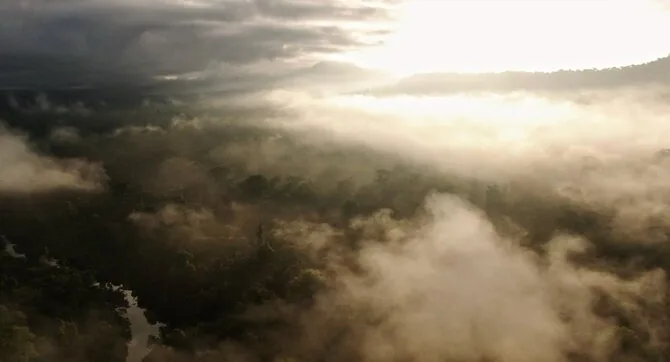
We did not have many romantic philosophers, but we did have Vydūnas. I think in Vydūnas’s philosophy we can find what gave hope and counterbalance to this nature domination project. These were the first attempts to give animals intrinsic value, talk about animal rights, criticize hunting. It was admiration of nature, which was not typical of other interwar Lithuanian philosophers, who mostly looked at nature anthropocentrically, diminishing it.
Read more Changes in Egidijus Dragūnas’s career: announced unexpected news
– Can it be said that changes in Vydūnas’s philosophy reflected changes in the broader society’s relationship with nature?
– Of course, there was some correlation between Vydūnas and broader society. Vydūnas was an interwar Lithuanian person who appeared publicly after the Tsarist empire finally left our land, and he drew inspiration, on the one hand, from the vitality of the nation, as one of his books is called, that ancient Lithuania. On the other hand, Vydūnas was inspired by distant India. He combined influences from very different traditions and harmonized them through his everyday feeling of nature.
The interwar society was open; it finally had conditions to be part of Western and global society, to have its language, educational institutions, country. It could write what it wanted without the Tsar’s censor. That freedom was reflected in other people, for example, in the personality of traveler Antanas Poška and his journeys. There were many others who at that time discovered their connection with the world beyond Lithuania’s borders. Freedom gave the opportunity to draw inspiration from the whole world.
The film “We Are the Forest’s Fruits” can be watched as Vydūnas would have watched it – by looking into the distance, we can see our roots, just as Vydūnas saw the ancient Balts when looking at India.
The film “We Are the Forest’s Fruits” can be watched as Vydūnas would have watched it – by looking into the distance, we can see our roots, just as Vydūnas saw the ancient Balts when looking at India.
– You conclude your monograph “Inventors of Nature: Transformations of Lithuanian Ecosophy in the 20th Century” by stating that contemporary Lithuanian ecological thought develops without connections to the legacy of interwar thinkers like Vydūnas and that “we are experiencing a completely new stage of ecosophy that rebels against or finds no connection with the local tradition.” Why is that?
– The Soviet era brought great changes to our country. Those changes were tragic for many compatriots, including philosophers. From independent Lithuania’s philosophical academics, only Vasilijus Sezemanas and for a while Lev Karsavin remained, but later he was exiled and died in exile. Many others either fled or were exiled – Vydūnas, Antanas Maceina with Stasys Šalkauskis moved to the West. Pranas Kuraitis was exiled.
During the Soviet era, there was essentially a vacuum in the academic philosophical field, an empty field later filled by academic Marxists. Marxism as a philosophy may offer positive insights in the social sphere, but it was tragically destructive to nature. Marx, seeing labor as the only driving force, also saw it as nature’s driving force, so labor’s intervention in nature was considered inherently valuable.
– What happened to our relationship with nature during the Soviet era?
– The Soviet era’s relationship with nature was reconstructive. The work of peasants and workers’ hands was the communist ideal of labor. And people like me – academics, scientists, doctors, teachers – their activity was not considered work. They did not perform that fundamental, world-transforming function, did not use their hands’ strength to create something, so it was not work.
Work was projected onto the natural environment around us. From the classics of Marxism – Engels, who wrote works about the role of labor in the process of ape becoming human or “Dialectics of Nature,” to Soviet pseudoscientific biology projects, for example, in the works of Trofim Lysenko or Ivan Michurin. There was a massive plan to transform nature according to human imagination and ideal – for example, deliberately introducing new species.
Pheasant breeding farms were established near Panevėžys, and thousands of pheasants were released into the forest to enrich it with new fauna; marked crayfish and raccoon dogs, which became invasive, as did Sosnowski’s hogweed, were released. Essentially, nature was played with like a constructor. Lake Dusios in Dzūkija was poisoned with chlorine to introduce grass carp imported from China. Wolves were declared enemies of the people and decided to be hunted, and more favorable animals were introduced instead. There were more examples. This drastically distorts ecosystems.
Nature’s distortion is also associated with megalomania, with projects like hydroelectric power plants; in Kaunas, we have a hydroelectric power station. The entire Soviet Union was crisscrossed with a network of huge construction and nature reconstruction projects. In Lithuania, melioration drained 90 percent of all wetlands in a couple of decades. All Lithuanian nature, including forests, changed very much – in appearance and composition.
Nature is modernized, and this has lasted in our lands for a long time, almost until the end of the Soviet era. And that nature transformation project was only partly condemned but never completely abandoned. In the late 20th century, in the 1980s, the scale was only reduced, it was said maybe not to transform everything, but smart intervention was still necessary.
Nature is modernized, and this has lasted in our lands for a long time, almost until the end of the Soviet era.
– How did things change after Independence?
– Capitalist logic also gladly uses the modern view and looks at the environment instrumentally, like communists. It also considers other species only as means.
It would be hard to say unequivocally that the situation improved. But the important thing is that we are free and can discuss nature’s problems, speak up for its rights, oppose the dominant view, and raise alternative ideas. This cannot be done under a totalitarian system.
However, the situation did not improve fast enough for problems to disappear. We are still losing forests, losing species. Both our communist heritage and current shortsightedness lead us to the dawn of ecological catastrophe. Species in Lithuania are not living their best times; forests are still disappearing, pollution is increasing. We could do much more than we do.
– Are you hopeful, and do you think philosophy can be the tool to push society to change its attitude toward nature?
– Yes, I have hope for the future. What we are talking about now and why we choose to watch this film shows that people still care about these topics and want to change something. So far, we change not enough, and resistance to this change is also difficult to find.
It is difficult because we do not have that ecological philosophy tradition; it is not abundant and alive. Vydūnas is insufficiently read by many, not very well known. Foreign ecological authors are somewhat translated, but I would not say that classics like Henry David Thoreau’s “Walden, or Life in the Woods” are widely read. Maybe they should be.
Although the future perspective is improving and philosophers contribute to it, we are only taking the first steps. After the collapse of the system that dominated the Soviet territory for a long time, we are only beginning to build something new. Construction is slow, sometimes too slow, but it is happening.
After the collapse of the system that dominated the Soviet territory for a long time, we are only beginning to build something new.
– Do you have more reading recommendations?
– Besides “Walden,” I also recommend reading Aldo Leopold’s “A Sand County Almanac” and turning to Vydūnas. It is hard to single out something from his writings, but there are many excellent works. I wish you to read at least something.
Since you spent a lot of time in the Białowieża Forest community doing your dissertation research, do you see certain similarities or distinctive approaches to nature conservation in Lithuania?
The Białowieża Forest conflict, which peaked in 2017 when Poland sued the European Commission over logging in protected areas, well reflects our situation because both we and Poland experience similar processes. On the one hand, there is an old socialist school with inherited ideas about how to manage the forest, represented in Poland and largely here by forest districts. Opposing them are various foundations, activists, and national parks.
This confrontation is also vivid here: the economic approach to the forest dominates – when it is managed, cut, pruned, and planted, but there is also the “Sengirė Fund,” aiming to protect the forest as an intrinsic value. Dialogue between groups, one seeing the forest as an intrinsic value and the other trying to calculate its value in money, is very difficult because two different value systems and logics meet here. Arguments do not have a common ground; they speak from different bell towers, and creating a common plan is very hard.
It is true that the forest unites us, but do we look at it the same way? Debates about logging and the fact that in the Forest Agreement the non-governmental sector people ultimately failed to achieve significant victories indicate that the state, like Poland, is still inert and lives according to an entrenched [Soviet] model that should be changed.
The very fact that the forest is a physical body, a system of organisms, gives hope that we can find a way to communicate. We must find support in new philosophical works or old but forgotten ones and start looking at the forest with a different perspective.
– It is not just a resource, but it is not a “beautiful picture” for us to admire either?
– The title of Rithy Panh’s film “We Are the Forest’s Fruits” well illustrates that different relationship we could and should strive for with the forest. Usually, from the beginning of modernity, through the Soviet era and the capitalist period, we tend to look at our everyday forest, our everyday environment as if it were our farm, as if the forest were our fruit.
We should think more often and understand that the forest does not depend on us, but we depend on it. We grow, live, and survive thanks to the forest. And protecting our roots in the forest is the duty of each of us.
The conversation takes place approaching the “Sengirė Cinema” week – when from September 21-27, the famous French-Khmer director Rithy Panh’s film “We Are the Forest’s Fruits” will be shown throughout Lithuania. More information can be found here.