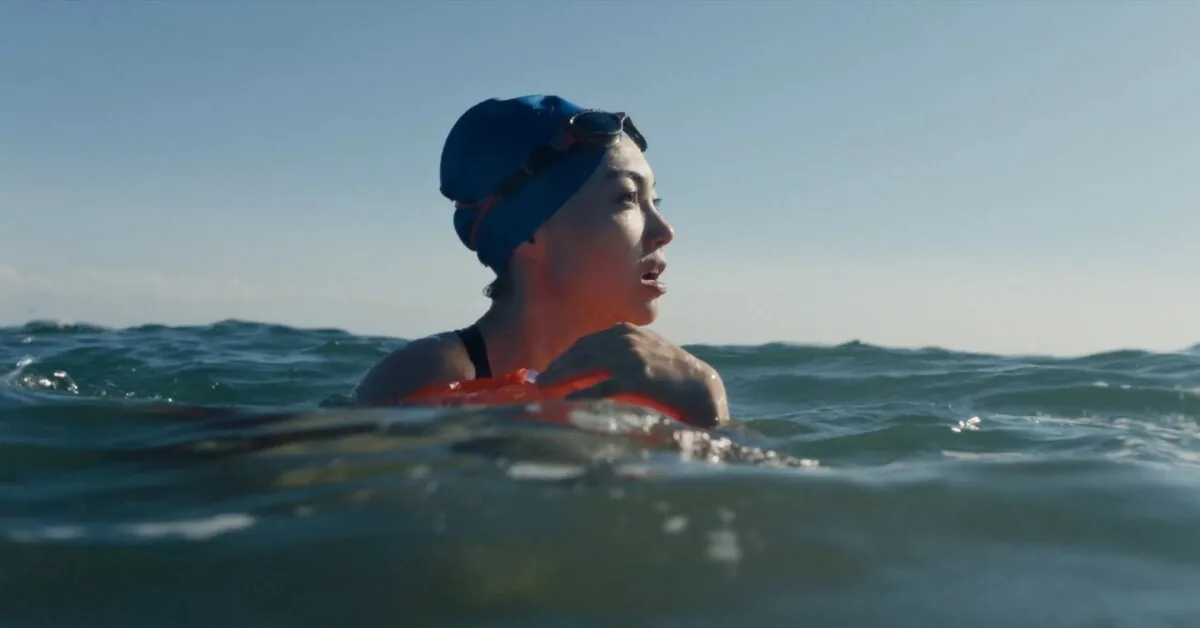





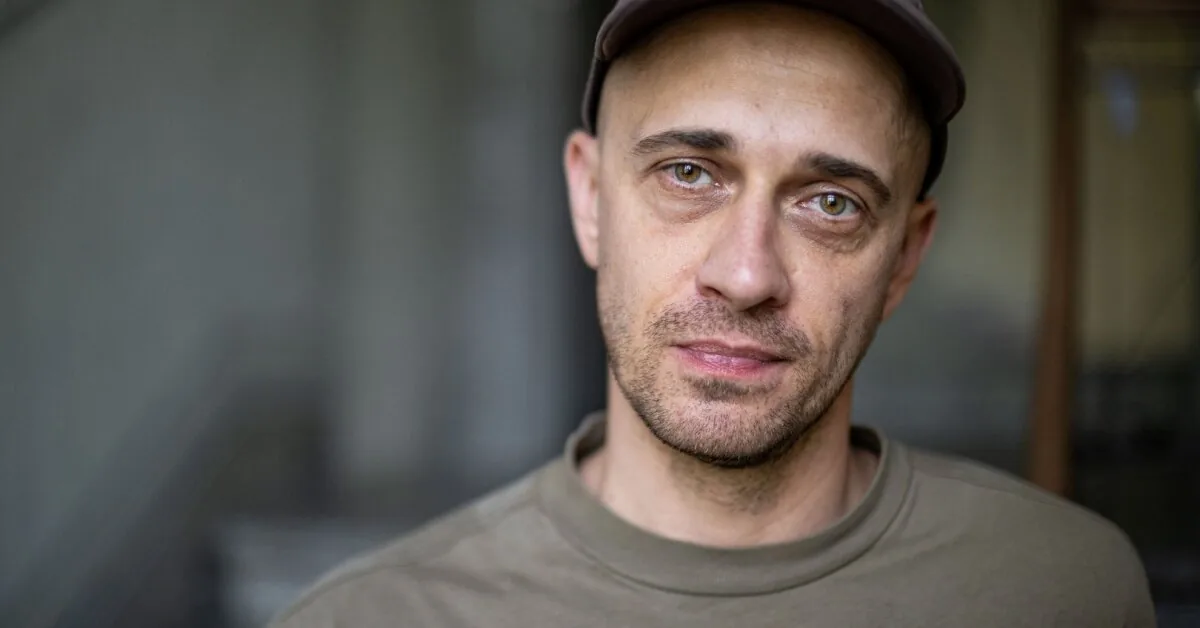
“Divorce During the War” is the third feature film by director and screenwriter A. Blaževičius. It tells the story of Maria – an ambitious head of a large advertising agency department – and Vytas – a film director searching for himself and currently experiencing a creative crisis – who have decided to separate. It seems their marriage lacks nothing, yet Maria feels unhappy and takes an unexpected step.
Read more Japanese Prime Minister Keeps Key Ministers in Their Seats After Cabinet Reshuffle
Alongside the family drama, another drama unfolds in the film – the war in Ukraine. A. Blaževičius almost documentarily captures the echoes of war in Lithuania: people’s reactions, differing viewpoints and mutual conflicts, emotions and their changes – from protests full of idealism and solidarity actions to acceptance of the new reality of war.
“This film raises questions about when we act according to values and when we pretend, whether we make the right decisions or if we have enough empathy. The film contains quite a bit of self-irony, which, as a society, we could sometimes have more of. Perhaps a viewer, placed in a similar situation as the characters, will act differently, think more. After all, it’s better to learn from films than from personal experiences. I am sure the film will spark discussions,” says A. Blaževičius.
It was recently revealed that “Divorce During the War” was selected as Lithuania’s candidate for the Oscar nomination in the Best International Feature Film category. This decision was made by the Lithuanian selection committee approved by the Academy of Motion Picture Arts and Sciences.
Before the film’s premiere, we spoke with the director about the reactions of audiences from different countries and why he himself is afraid to show the film in Lithuania, about humor and declarative idealism, why it is important for him to speak about the present time in his work, and when we can expect the first Lithuanian film to be awarded an Oscar.
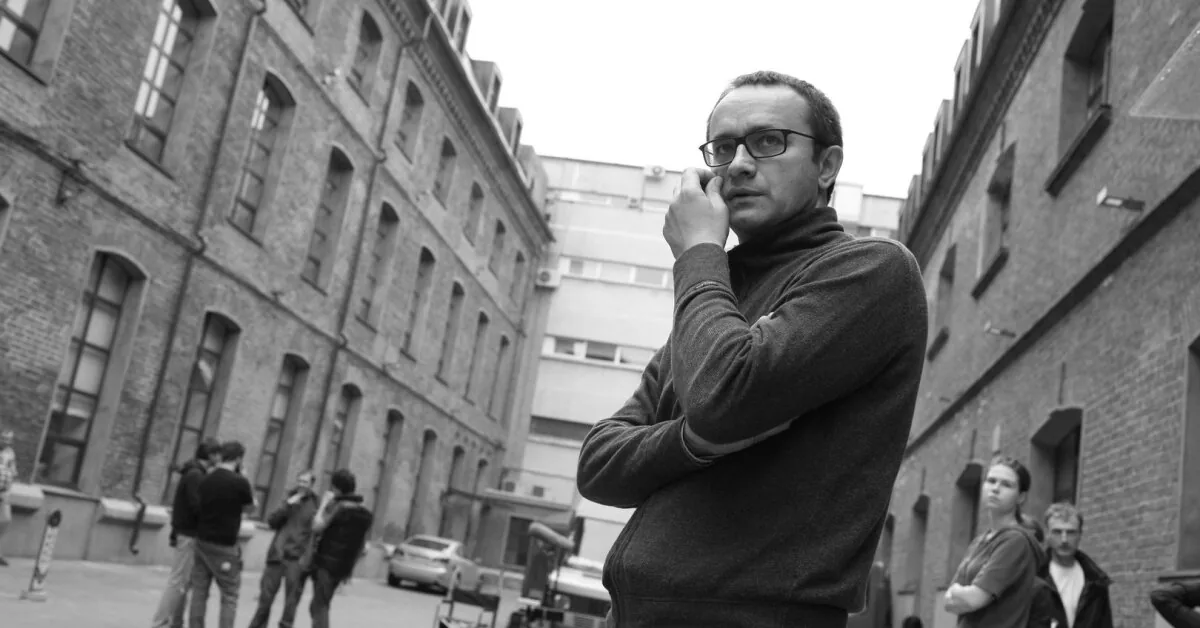
– Andrius, your film premiered at the Sundance Film Festival more than half a year ago, and it has recently started screening in US cinemas. I am sure you have received various reactions during this time. Were there any that particularly surprised you?
– What pleased me most was that foreign audiences understood the idea of this film. I admit, I was very afraid of that. Even when we received the invitation to the Sundance festival – which is already a great success – my producer Marija Razgutė and I discussed for a while whether it was really good to premiere the film in America, whether its theme would be relevant there. Of course, these doubts were short-lived because the very fact that your film was selected from a thousand others already shows that the film attracted attention.
I am also happy that the audience laughed where I expected them to laugh. But most importantly, people in America saw how we feel in Lithuania and what the war in Ukraine means to us. From the audience’s surprise and even a kind of shock, I understood that for many of them, our fears and anxieties are new.

Of course, in the Czech Republic and Slovakia, where the film was also shown, the audience reacted somewhat differently – our experiences are more understandable and closer to them. However, even in more distant European countries such as Ireland or Spain, the war theme also received the most reactions.
– The film is a kind of testimony to our attitudes, moods, and reactions to the war, and in this sense, I think it can demonstrate our need for security and necessity much more effectively than political statements.
– One of the reasons I started developing this film idea was precisely the unique experience that only the Baltic countries have. I think even the Poles, despite having a border with Ukraine, react to the war somewhat differently. First of all, this is because Poland is a much larger country that maintained partial sovereignty even during the Soviet era.
Meanwhile, we lost our state during the Soviet era. That is why the war that started in Ukraine reminded us of an experience buried in our collective memory – it has happened before and is happening again. I know people, and I am sure many of us know such people, who left Lithuania at the beginning of the war. And that is one possible reaction to feeling a real threat and danger.

I agree that culture is one of our security tools, capable of revealing much more effectively not only how we see this war situation but also how we feel about it. Viewers follow the plot line, the narrative, but at the same time experience emotions. And this, in my understanding, has a greater impact than just political messages.
– Still, I was surprised that at least a few American publications described your film as a black comedy. Yes, there are funny scenes in the film, but that alone does not make the film a comedy. So how would you define your film’s genre?
– It is definitely more of a dramedy than a comedy. And yet, humor is very important here. I wanted people to laugh where it is truly funny.
There is more than one scene in the film that some people will watch with serious faces, while others will see irony and absurdity. I have already experienced this with the film “The Saint.” There was a long scene where Marius Repšys talks with the employer played by Darius Meškauskas. Some viewers laughed hearing Paulo Coelho quotes, while others saw it as a peak of wisdom.
Similarly, in the new film, there is a seven-minute-long divorce scene – everything here is dramatic and very serious. But I am glad that at least some viewers find something to laugh at here. Of course, not every scene achieves such ambiguity, but in a way, that is my goal.
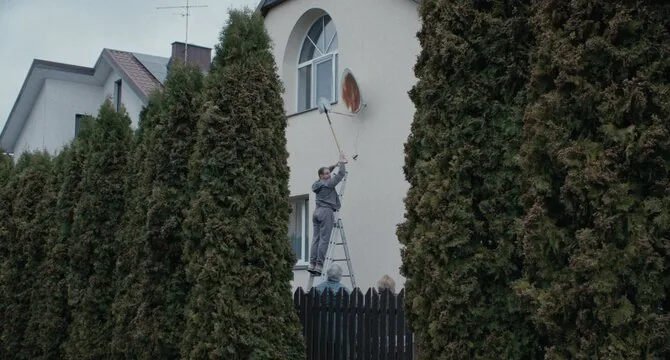
However, there are also literally funny scenes in the film. I was very pleased that they were recognized by audiences in America, Europe, and Hong Kong. For example, the dinner scene where the main character played by M. Repšys compares himself to Tarkovsky or when he hits the satellite TV dish with a shovel. I am glad when an absurd scene in a serious film is recognized as funny. And that it has an impact.
– For Lithuanian viewers, this film will especially resonate with the theme of the war in Ukraine. What was until recently our reality – the first reactions to this news, support actions, protests against the war, flows of Ukrainian refugees, etc. – becomes a parallel narrative to the divorce drama in the film. Is the war theme in the film for you a specific time marker, a dramatic background revealing a broader world view, or perhaps a kind of divorce metaphor?
– In the film, the war is definitely not just a background because it affects everyone’s lives and decisions: some get involved in support activities, protest actions, some try to make the right decisions, act according to conscience, some believe Russian propaganda. In a way, the war is a character, and although it takes place a thousand kilometers away, everyone is affected by it one way or another. That is why the film is called “Divorce During the War,” not the other way around.
Of course, there are many parallels between war and divorce. First of all, we are talking about societal division, polarization. This is most clearly reflected in the differing views of generations. And this does not necessarily mean that all older people are pro-Putin or blindly believe Russian propaganda – polarization is much broader, more diverse, and much subtler.
This theme resonates everywhere the film is shown because division is a huge problem in all countries. It seems to me that this is exactly why viewers strongly identify with this film. I heard a comment from a young American who said he wished his parents – active MAGA supporters who believe in the constantly spread Donald Trump propaganda – would see this film.

In the film’s context, one can also talk about changing gender roles in families and their impact on people’s relationships and expectations. All these themes intertwine into one main theme – the discord, conflict, and drama of two poles.
Besides that, it is also a film about conformism, comfortable living, and idealism, which is often public and declarative. The desire to appear better than we are, the inability to reflect on our decisions – this is a dead end. These themes are also very important to me personally in the film.
– It is a strange feeling to watch a film telling such a recent story of the first years of the war and at the same time realize that it is still our reality.
– I definitely did not want that… The film’s plot was formed during the first month of the war and then only supplemented with details that happened in reality. I could not predict that people would get used to the war and eventually behave as it is convenient for them, not based on higher principles or values.
Of course, our reactions in Lithuania are somewhat different, but seeing global trends, it is obvious that personal life comfort takes precedence over the reality of war.
Read more Cardiologists warn about a popular seasoning: it can seriously clog blood vessels

The full-scale war has been going on for almost five years, so it is our history. But the saddest thing is that it is still ongoing. Who could have thought it would last almost as long as World War II… Horrible.
– In your previous films, you explored sensitive, relevant, and well-recognized contemporary themes. For example, in “The Saint,” you depicted the 2008 crisis; in “Runner,” the theme of mental health and how it affects people’s relationships. So, is it fundamentally important for you to speak about your own time in your work, to reflect what is happening here and now?
– When I started making films over a decade ago, there were almost no feature films in Lithuania about the present. True, there were a few – Ignas Jonynas’s “Gambler,” Alantė Kavaitė’s “Summer of Sangailė,” works by Emilis Vėlyvis. But these were isolated works. Now, fortunately, there is much more of such cinema, and I think that is very good.
I have always been amazed that both in our literature and cinema, realism and speaking about the present were considered less significant themes than the past. As if that were inherently inferior art. But I categorically disagree. My work partly arose from the desire to resist such an attitude. Over time, it stuck and became my identity.
Eventually, of course, I found a rational explanation for myself: I see speaking about the present in cinema as a historical opportunity to capture who and what we are today. After some time, it will be very interesting to return to that time and see ourselves in cinema – how we looked, how we thought, what we felt.
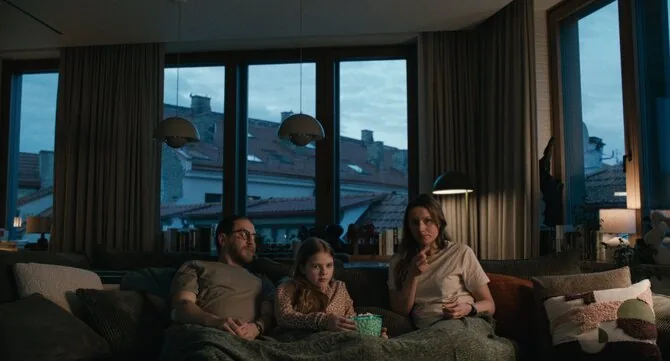
Such realistic films are often said to age quickly and become irrelevant. But I definitely do not think so. I recently watched my student short films, and it was incredibly interesting to see how we have changed over that time. So that is one of the reasons why I think it is worth making films about the present. At least for me personally, it seems very meaningful.
For example, we started writing the script for “The Saint” in 2013, five years after the crisis. Those impressions, experiences, and feelings were still very fresh. Imagine if I started making this film in 2030 – it would be a completely different perspective, a different memory, and a different film.
When a film about a certain period is not made at that time, a kind of empty spot remains, which can later only be filled with imagined, embellished memories.
– In this sense, your work is somewhat similar to documentary?
– Yes. But at the same time, we must not forget that it is still fiction.
On the other hand, my films do not just “document” the era but also tell a universal human story. For example, “The Saint” talks about a thirty-year-old’s crisis, self-searching, questions about the meaning of life, and the first efforts to recognize and articulate one’s feelings.
Different times, different universal themes and questions are raised in “Runner.” The same applies to the latest work “Divorce During the War.” After all, divorces and relationship crises will always exist – it is hardly possible to avoid them in human society.
By the way, making a film about the present is much harder than about the past.
– Why?
– When talking about the past, some viewers watch the film somewhat nostalgically and sentimentally – after all, it is also about their own lives. Memories immediately arise. Of course, different people remember different things, and everyone can claim that everything was different. Despite that, we are forgiving of our past.
For viewers who do not remember that specific era, it is simply a historical film about the past – and it does not matter whether it happened thirty or fifty years ago.
But when a film is about very recent events, many feel obliged to be outraged that things were not like that, that the director is wrong, that he emphasizes the wrong things. This only shows that the relationship with the present is very alive, relevant, and provocative.
By the way, I experienced this in Lithuania with the film “The Saint” – some people’s reactions were very sharp and categorical. I remember being even accused of daring to show “such Lithuania”…
– Are you afraid of the new film’s premiere in Lithuania?
– Very much. I am not as afraid of the world premiere abroad as I am of what reactions the film will receive in Lithuania – after all, it was made here and is about us.
By the way, I have a friend who, after his film’s premiere, could not handle the hype and simply left the country for a while. I do not intend to run away anywhere, but that does not mean I am not very anxious. To be honest, there are several places in the film that could cause outrage.
The only consolation is that I did nothing in the film to offend anyone. There are no statements or unequivocal assertions. And if something angers the viewer – maybe it is more about him, his worldview, but not the film itself.

– Your film was selected as Lithuania’s candidate for the Oscar nomination in the Best International Feature Film category. Can you tell us what procedure awaits now?
– The foreign film category at the Oscars is very specific, and few people in Lithuania know about it.
It works roughly like this: representatives of major American film companies “hunt” for foreign film premieres, acquire the rights to screen the works they like most, and then spend huge sums of money promoting them in America. Just to get into the top ten nominees, the so-called shortlist, they work for several months or more and spend millions of dollars. That is how the film industry works. Money plays a huge role here, which means advertising, communication, visibility.
This is exactly what happened with the Latvian film “Flood,” which won the Oscar last year in the Best Animated Feature category. From the outside, one might say the Latvians were very lucky. But in reality, it is a systemic thing – in May 2024, the American company “Sideshow” acquired the screening rights for this film. Knowing this, the Latvians selected this film as their official Oscar candidate.
Of course, it is a great honor for me that the Lithuanian film community selected “Divorce During the War” as a candidate for the Oscar nominations. This helped organize film screening sessions in Los Angeles, New York, and other American cities. And that alone is a lot.
However, that alone is not enough to realistically dream of an Oscar or at least making it to the shortlist. To be honest, I could already name films that will be on the Oscar shortlist this year – I think I would not be far off.
– And your film is not on that list?
– Definitely not. We will see a Lithuanian film among Oscar contenders only when a potential work by our authors is acquired for screening in the American market by one of the major distributors in that country – such as “A24,” “Neon,” “Sony Pictures,” “Netflix,” or similar.
Another option – having a good film, our country’s Ministry of Culture should allocate a huge sum specifically for the film’s communication in America. Then hope could also shine. The question is – is it really worth it? After all, with that amount of money, you could make a new film…
Read more Poachers caught at the scene with a shot fish: what fine is threatened for this