The article presents the example of Vadim Moskovich, who repeatedly changed his business in the post-Soviet so-called “wild capitalism” era – from vodka trading to apartment reselling. Eventually, he settled on commodity markets and founded the agricultural company “Rusagro,” which made him wealthy.
Read more «Apple» removed the Russian government-backed messaging app from its store
After decades of expansion, everything collapsed last month when a Moscow court ordered the confiscation of 49% of the family-owned company’s shares.
According to prosecutors, the businessman is guilty of violating the ban on combining public service with business activities while working in the upper house of the Russian parliament from 2006 to 2014, as well as abusing his political position to illegally enrich himself.
The latest charges against V. Moskovich will not go unnoticed by other members of the elite: five of the twenty richest Russians included in the Bloomberg billionaire index worked or still work in the state system.
Last year, Russia confiscated assets worth 1.1 trillion rubles (12.85 billion euros) in corruption cases. This is about eight times more than in 2024 and accounts for about one-third of all state-confiscated assets in 2025.
In many cases, the businessmen under investigation previously held elected positions in regional parliaments and, according to prosecutors, used their powers to benefit their companies.
“Anti-corruption lawsuits are becoming not only a tool to fight corruption but also a driving force in redistributing wealth for the benefit of the state,” assessed Ilya Shumanov, managing partner at TriTrace Investigations.
Just a few days after the court decision, the confiscated assets of V. Moskovich were transferred to the management of a branch of the state bank Rosselkhozbank.
Experts say this raises concerns about some of Russia’s wealthiest citizens who held positions in the political sector. The Kremlin’s system under Vladimir Putin often used loyal businessmen as instruments of influence in the regions. In return, oligarchs often gained the opportunity to lobby for their business interests.
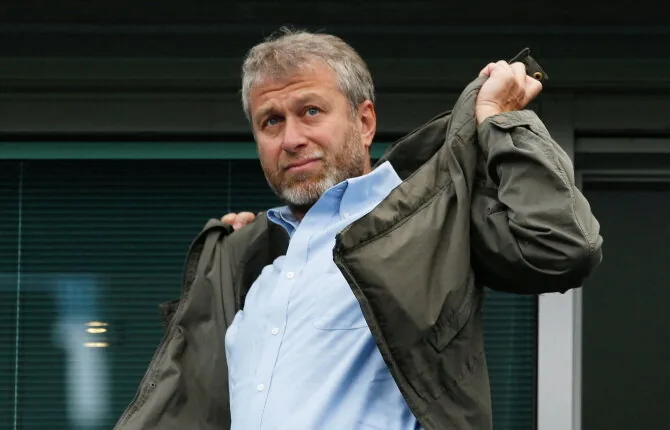
Roman Abramovich, once the richest man in the country, served as governor of the Far Eastern Chukotka region for seven years. Andrey Guryev, whose family owns the fertilizer producer PhosAgro, was a member of the Federation Council. No investigations or charges have been made against these individuals so far.
Until now, most businessmen whose assets were nationalized had weaker ties to the Kremlin than some of Russia’s most powerful businessmen.
Read more Jennifer Lopez in the child’s life – a mysterious change
Although V. Moskovich was not considered very close to the top leadership, he participated in several meetings with V. Putin, including a meeting with the Russian leader and billionaires on February 24, 2022, just hours after Russia launched a large-scale invasion of Ukraine.
Most of the people who attended that meeting, including the founder of Rusagro, were later subjected to sanctions.
The businessman sometimes openly criticized Russian policy and had some problems with authorities before 2022. In March 2025, he was arrested in a separate fraud case.
Legs are shaking
Konstantin Strukov was another person who was forced to give up his business empire, which included gold mining and agriculture, last year following anti-corruption charges. This move was unexpected for some of his colleagues, as the 67-year-old businessman had been considered loyal to the government throughout his career.
K. Strukov is a member of the ruling United Russia party and worked for more than two decades in the parliament of the Chelyabinsk region, where his now former main company – the gold mining company Yuzuralzoloto – operated.
“The Kremlin relies on the constant loyalty of insiders and key stakeholders, gluing the system together with a combination of carrot and stick,” says Maria Snegova, a fellow at the Center for Strategic and International Studies in Washington.
After the invasion of Ukraine, Russian companies’ fear of asset confiscation increased significantly. However, some of them adopted the opposite tactic and voluntarily donate funds to the state.
According to people familiar with the situation, Russian parliamentarian Suleiman Kerimov has already offered to donate 100 billion rubles (1.16 billion euros) to the budget during a closed meeting of V. Putin and Russian business leaders held in March.
It was previously reported that Russia reached a new record number of billionaires: over the past 20 years, their number has increased 6.5 times. The ranking leader by a large margin became Alexey Mordashov, owner of Severstal and the gold mining company Nordgold.
Read more Unpublished registry theft details: who knew what and when, and why did they stay silent?