
We talk with the well-known Lithuanian sports scientist, habilitated doctor of biological sciences, professor Albertas Skurvydas about which daily habits matter most for healthy aging, how much and how we should move, why just walking is not enough, and what we can do for the youthfulness of our brains.
– Professor, what really determines how long a person remains independent in old age?
– First of all, we need to talk about behavior, lifestyle, because it determines about 60 percent of all that independence in old age. And medicine, no matter how good it is, influences only about 10 percent.
Speaking about lifestyle, movement is unequivocally the king.
– But movement is often understood very subjectively. Could you specify what kind of movement it should be?
– The first principle is to have enough long, low-intensity physical activity per day. The classic saying is about 6 to 10 thousand steps per day. An hour, an hour and a half – any activity: walking, working in the garden, at home, going to the store to shop. It is any time spent on your feet for 60–90 minutes. This is an average.
The second very important thing is to do exercises that require strength about 2–3 times a week.
– Which ones specifically?
– Exercises that require some strength. For example, climbing stairs, for those who find it harder – climbing uphill for 20, 30, or 60 seconds. There are plenty of suitable exercises: push-ups, abdominal, torso, arm, leg exercises that require tension. The main rule is that it should be hard to do them. Lifting small weights is not enough. It has to be hard.
Why is that “hard” necessary? If we walk long and non-intensively according to the first recommendation, about 20 percent of muscle fibers work – the fibers of our largest organ, muscles. The other muscle fibers just rest. If they rest, they gradually begin to atrophy, fat starts to infiltrate those empty spaces, and internal muscle inflammation begins. And that inflammation is a huge scourge for various chronic diseases, starting with cancer and ending with many other diseases.
So, if we want those muscle fibers not to rest and not to atrophy, we need to exercise with weights or our own body weight about 2–3 times a week for 10–15 minutes.
In other words, we need to engage the main muscles. Which ones? No big science here. If we walk and want to move – we need leg muscles. If we want to stand straight, not to stoop, and be able to move, we definitely need to strengthen the abdominal and back muscles.
The third principle of movement is very important for the heart and blood vessels. In gyms, those who exercise use the word “cardio.” This is about the same. To prevent the heart from atrophying and the blood vessels from clogging, simply put, we need to do work like jogging, jumping rope, cycling, swimming – moving so that the heart rate, that is the pulse, increases.
For example, if the resting pulse is about 60–70, it needs to increase to 120–140, depending on age. And this also needs to be done about 2–3 times a week. Long “cardio” workouts are not necessary – 10–15 minutes is enough.
Of course, at the beginning, 5 minutes or even 1 minute may be enough. The important thing is to raise the pulse, to make our heart work harder. Because if we don’t make it work, blood circulation slows down, blood vessels weaken, and our heart atrophies. And most of all, we die from cardiovascular diseases.
It is important to understand that all three physical activities I mentioned do not compensate for each other. The heart needs an elevated pulse, muscles need strength so they do not atrophy. And to prevent inflammation in our body, we need to be on our feet for 60–90 minutes a day – walking at a pleasant pace, moving longer.
All three main recommendations are necessary. They are included in the main recommendations of the world’s scientific and medical organizations, starting with the World Health Organization and ending with prestigious global organizations in gerontology, aging, cardiology, and others.
To live longer and more independently, both seniors and young people should apply these forms of movement.
And it is never too late to start! You don’t have to think right away that you need to exercise very intensively. If you are used to walking only 10 minutes, gradually start increasing to 15. If you do not work with weights at all, start gradually. If you cannot raise your pulse at all, again start gradually from 1 minute of walking at a faster pace. Everything gradually.
– Professor, as we age, it is important to preserve not only physical independence but also “brain youthfulness.” What physical activity is most related to better thinking and emotional state?
– A complex of all three activities I mentioned. There is no single best one – whether walking or something else. Our body needs all three. If the body is healthy, the brain will be healthy too.
However, to keep the brain healthy, I would add a fourth type of movement. These are various exercises requiring more complex coordination.
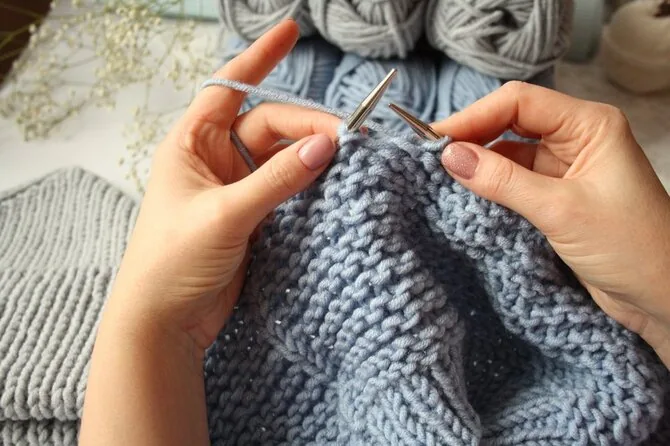
For example, knitting – finger movements, throwing a ball into a basket, precision exercises, walking in the forest where you need to overcome various obstacles. The more movement coordination, the better.
All this helps our brains remain plastic.
– How does poor sleep affect aging and independence in older age?
– Sleep is another super important factor. Those 7–8 hours for an adult are a super medicine. If there are no various diseases, first of all, sleep hygiene needs to be regulated. The same physical activity should be neither too much nor too little. Because both can worsen sleep.
It is especially important not to do heavy physical exercises 2–3 hours before sleep. Also, not to overeat 2–3 hours before sleep. These hours are meant to prepare for sleep, so it is worth following such recommendations: less TV, fewer screens, less work, less stress, less intense movement, less overeating.
It is extremely important to maintain a daily rhythm – go to bed no later than about 11 p.m., whether in winter or summer. For children – no later than about 10 p.m.
If we keep the rhythm, the body gets used to it. Around 10 p.m., melatonin starts to be secreted, and the person gradually begins to prepare for sleep, provided they are not eating intensively, exercising, studying, browsing the internet, or engaging in other activities that disrupt the body’s natural processes.
Speaking about the brain, it is important to mention stress. It is the great killer of our brains. The stress hormone cortisol negatively affects our brain.
Therefore, it is very important, as I mentioned, to avoid stress before sleep. And generally during the day – more joy, more happiness, more socializing, better mood, more laughter. This is needed to keep the brain from aging.
The basis of longevity – to be independent, you need to be active, happy, joyful during the day and, of course, get enough sleep and rest.

– Speaking about longevity, another important topic is nutrition. You have long talked about how to eat in older age, what to avoid, and what definitely not to give up. What should the diet be like to live longer and remain happy, healthy, and independent?
– I will not say anything new here – everything is written in the recommendations of the World Health Organization, cardiologists, and other international health organizations. I might just draw attention to what should be avoided, especially by seniors.
What is very bad for the body and brain? Sugar, sweets, sweeteners, all kinds of “Coca-Cola,” “Fanta,” also compotes, sweet teas – these increase inflammatory processes. They should be completely avoided. This is advice number one.
Second – it is especially necessary to balance so that there is not too much salt in the diet of an older person. Salt especially affects blood pressure, and many people worldwide die from hypertension. It is a huge scourge.
It is very important to understand that we consume salt not only pure but also through various processed foods, various meats, sausages, which are quite salty. So, if the first “no” is sugar, the second is salt and processed food.
The third very important thing is to avoid heated fats. For example, food should not be fried repeatedly in the same fats. French fries, chips, donuts, where fats drip – especially these heated, burnt fats are a huge scourge.
And then, what all specialists recommend: as many fruits and vegetables as possible, as much good fish and seafood as possible. This is the classic diet that determines longevity. Cold-pressed oil is a fantastic thing.
We almost do all this. Only we still abuse sweets a lot, abuse processed meat a lot. And, strangely enough, about 30 percent of people, according to my and other studies in Lithuania, overeat quite often. In general, no matter how healthy the food is, if there is too much of it, if the calorie intake is higher than you need, inflammatory processes will begin. First of all – through increased obesity.
Read more Psychotherapist Brigita created the perfect man with AI: revealed what happened after a month