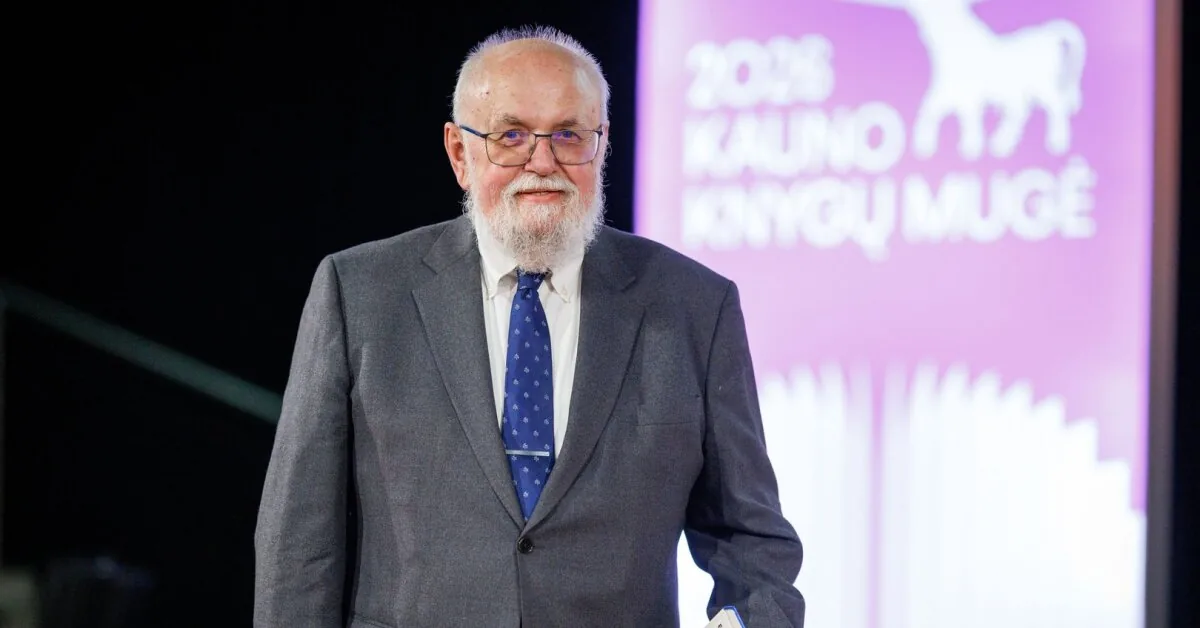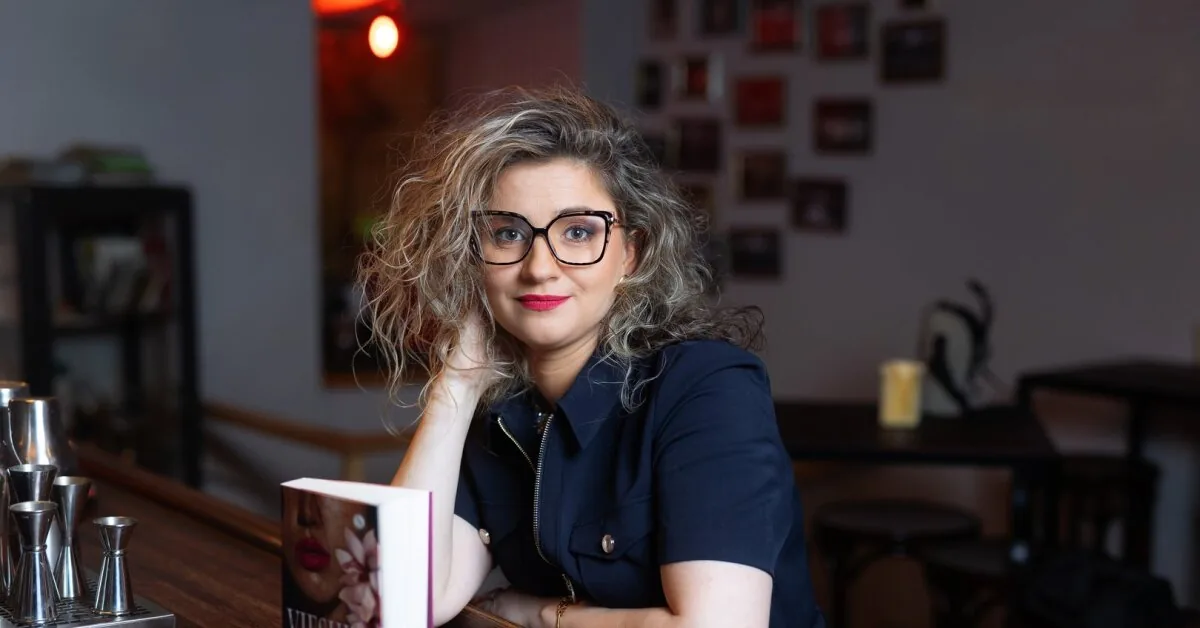








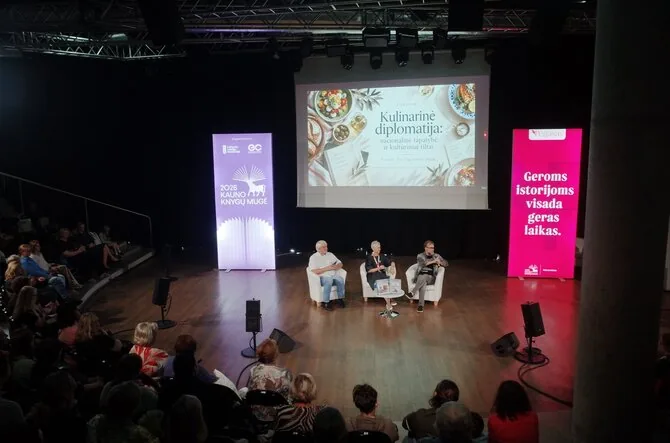
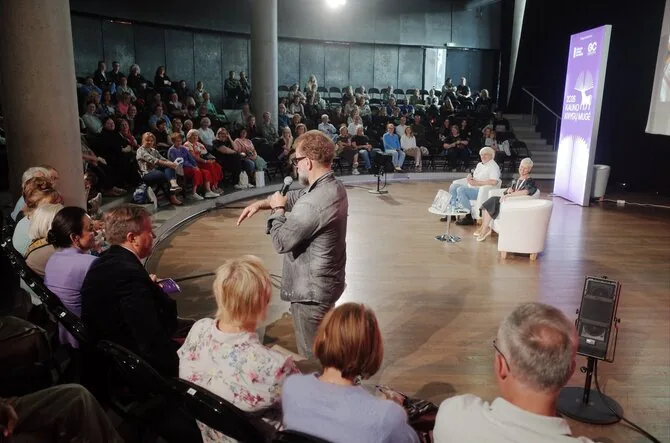
In response to the discussion moderator Ryčys Zemkauskas’s question about whether we have culinary diplomacy, traveler, professional chef, and author Nida Degutienė answered that “we can have it, but a lot of homework needs to be done to prepare it properly for communication, so that we can use culinary diplomacy for our purposes.” Another participant in the event – professor and heritage researcher Rimvydas Laužikas said that it is necessary to talk about our national cuisine: “Because if we don’t tell our story, others will tell it for us.”
Read more Gytis Volkavičius, who has 3 wives, announced sensational news: «I have made up my mind»
For example, in some countries, especially in English-speaking environments, Russian terminology has become prevalent when talking about our region’s cuisine, and according to the professor, it would be good if those dishes were at least called by Polish names.
“Of course, we would win if we did not look exclusively,” R. Laužikas replied to the question of whether it would be worth joining forces with other countries when presenting culinary heritage, not seeking uniqueness, but rather aiming for commonalities.
Dishes considered Lithuanian – also in other countries
In discussions about food, there is often talk about what we could consider Lithuanian cuisine, national dishes. However, R. Laužikas says that just because some of our dishes are traditional, coming from old times, it does not mean that they are not characteristic of other countries’ cuisines – Lithuania, like other countries, is connected to other regions and countries through various ties.
However, according to him, this actually creates new opportunities to get to know other countries and their cuisine, to discover that dishes considered national here exist in other countries under different names and variations. For example, in Greece, you can find an equivalent of stuffed cabbage rolls.
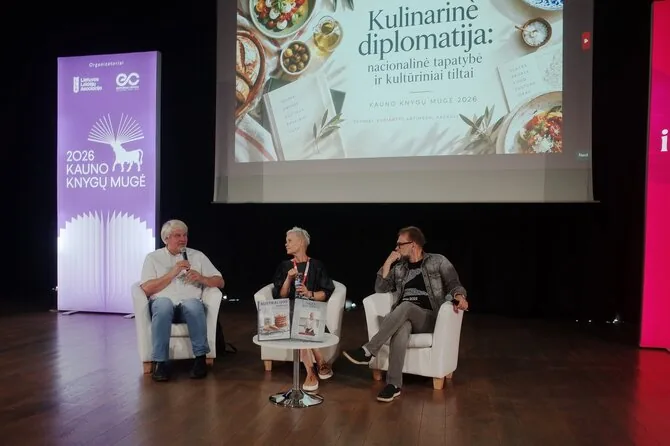
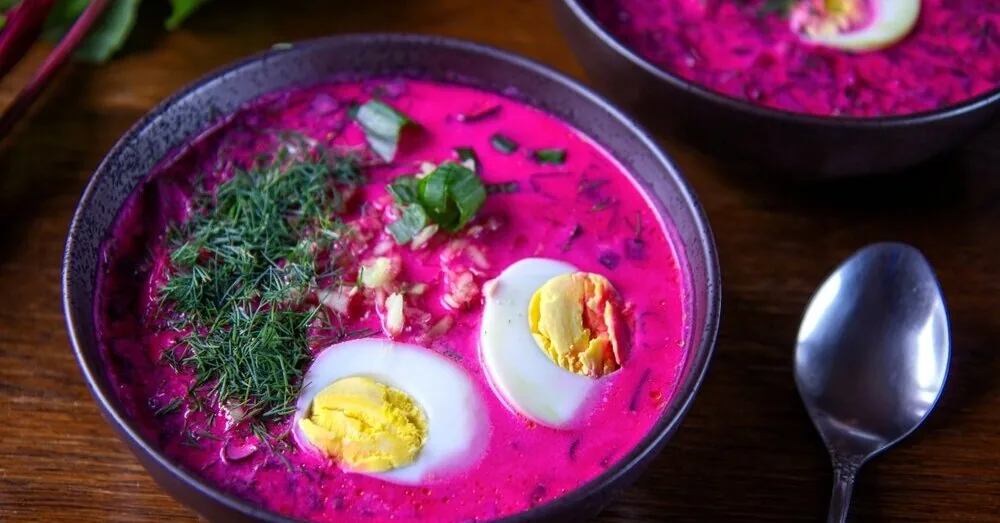
N. Degutienė shared her impressions of how she presented her book about Israeli cuisine in South Africa, where there is a large Litvak community. Upon arriving at the book launch, guests were served something common in Lithuanian cuisine – potato pancakes were served with a stronger drink, followed later by cold beet soup. However, the taste of the soup surprised N. Degutienė: “I tasted that cold beet soup and couldn’t eat it – it was so bad.” It later turned out that the cold beet soup was made according to an old recipe – beetroot juice diluted with sour cream. Meanwhile, Litvaks, accustomed to this variation of cold beet soup, said that when they came to Lithuania and tasted our version, they found it unpalatable. “They preserve our old traditions,” the participants said about how those who have left Lithuania often maintain old food preparation traditions.
Even in Lithuania itself, the recipes for the same dishes change. According to R. Laužikas, intangible heritage is constantly changing, and the most authentic form is not the one recorded, for example, in the 19th century, but the one that exists now. Moreover, there is no single “correct” recipe.
What now seems a natural part of Lithuanian cuisine is also changing. For example, if now, quoting N. Degutienė, out of twelve Christmas Eve dishes there is herring, according to R. Laužikas, before the First World War, this would have been a completely unusual recipe for Christmas Eve.
Now, when preparing food for the military and various related organizations, buckwheat porridge is often chosen. However, according to R. Laužikas, the prevalence of buckwheat porridge in the military came from Soviet times, while in interwar Lithuania it was cabbage with bacon.
Happy about the choice of cold beet soup
N. Degutienė said that she presents Lithuanian cuisine both abroad and that it often becomes a discovery for others. For example, while living in Australia, she prepared Lithuanian dishes, and Arab women attending the dinner learned for the first time that hot soup can be made from beets (borscht was made), and a Canadian understood why the smallest grater is on the box grater (cepelinai were made).
Living there, she also decided to revive memories of Lithuanian cuisine – dishes her mother cooked, which she inherited from her own mother. At that time, there were not many products, but she experimented and it was tasty. “It was a desire to return to a simple kitchen,” she said, and these recipes are included in her latest book so far.
Asked what she misses when coming to Lithuania, N. Degutienė said that she misses world cuisines – restaurants that cook dishes from various countries. Also, when she was in Poland and saw how they experiment with traditional cuisine, she felt envy. She would like the same in Lithuania – that we celebrate Lithuanian cuisine by combining it with other countries’ cuisines: “So that there would be much more food culture and joy in food.” On the other hand, she is glad that Michelin has finally come to Lithuania and that Lithuanian chefs finally have more to strive for.
But still, what are those Lithuanian dishes that could be presented to a foreigner? R. Laužikas said there are so many that at least several menus could be created: white cheese, honey, cucumber with honey, smoked meat products (including skilandis), stuffed pike, herring, cold beet soup, zrasai, dumplings, kvass (especially apple kvass), mead, beer, šimtalapis. Of course, not forgetting mushrooms.
R. Laužikas is also happy that cold beet soup is chosen to represent Lithuania and that there is a festival for it. He said that this dish has deep traditions – first mentioned in K. Donelaitis’s “Metai,” since the 19th century cold beet soup has been associated with Lithuanian identity.
Read more Country of origin – Russia? The buyer had questions about the cleanliness of the goods