More travel adventures can be found on the blog “After the Trip” and on this blog’s Instagram account
Read more Found out why and how Trump ended up in a food truck at Ankara airport
Correspondence on Friday afternoon:
– Do you have plans for the weekend?
– I haven’t thought about it yet, I’m working.
– Shall we go to Druskininkai?
– Okay.
– Here are some accommodation options (Booking.com link attached)
– Oh, how interesting, Liškiava! Maybe we choose this one?
Sometimes it turns out like this to plan a great weekend. More precisely, not to plan the whole weekend, but just to discuss the main points: we are heading towards Druskininkai, booking 2.5-hour treatments at the Druskininkai sanatorium, staying overnight in the Liškiava monastery complex, and we also want to: walk, pick berries or mushrooms, swim in the lake.
Now I can confidently say – this was one of those weekends when everything just falls into place by itself.
First stop – the forest
It is impossible to go to Dzūkija and not stop by the forest. So the first stop happened quite spontaneously – we saw a beautiful pine forest and decided to take a little walk. Of course, we also took a bag for mushrooms and a container for berries. Well, just in case. Mushroom pickers will probably understand – even if you are going for completely different reasons, the forest still tempts you to look around.
We found only a dozen or so saffron milk caps, it seems someone had already collected them before us. However, we stumbled upon a raspberry patch, and here we stayed a bit longer – crushed forest raspberries will be perfect for pancakes in winter. But let’s not hide it – the most pleasant part was not picking berries, but walking through the beautiful forest – silence, air scented with pines. An introduction to relaxation after a work week.
Shaking off cobwebs and ticks, we change clothes and shoes – now we are heading straight to the city – Druskininkai.
A few hours in Druskininkai
I had some doubts whether the sauna, exercise in the pool, therapeutic showers, and body scrubs were the best choice for summer when lakes invite you to swim, but it turned out that this, like all other weekend decisions, was really good.
While having dinner, we received a message – guests arriving at the Liškiava monastery are invited to a free tour of the entire Liškiava Holy Trinity Church and Dominican monastery complex. Unfortunately, we won’t make it on time because we want to finish dinner. And to be honest, I have already been on a tour of this complex.
Overnight stay in a former monastery
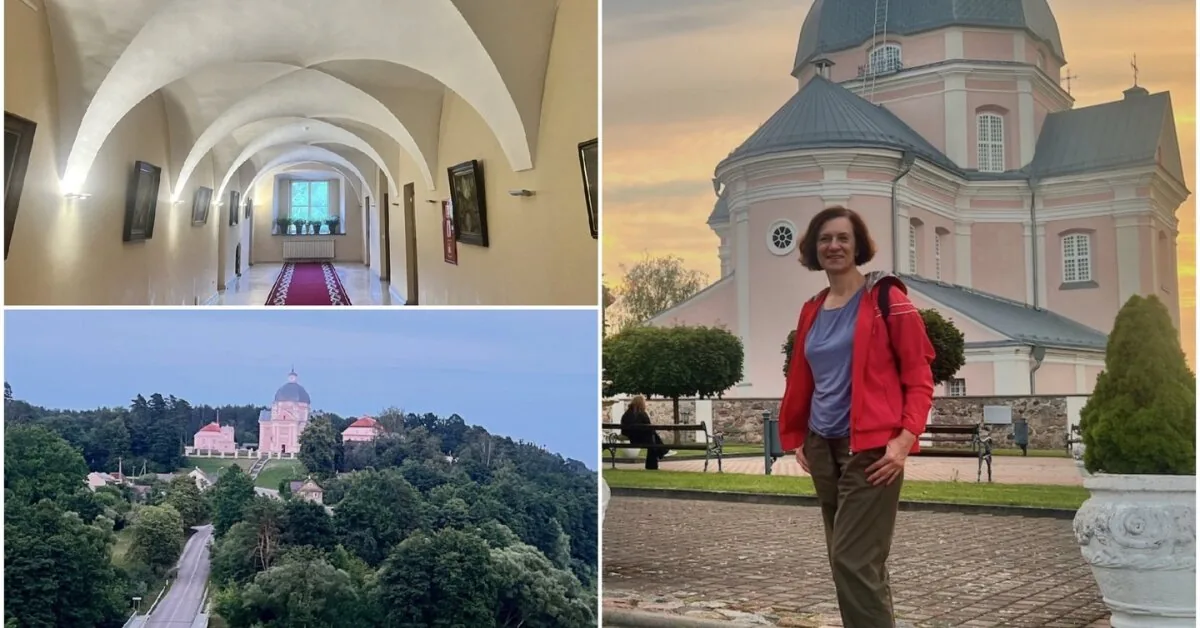
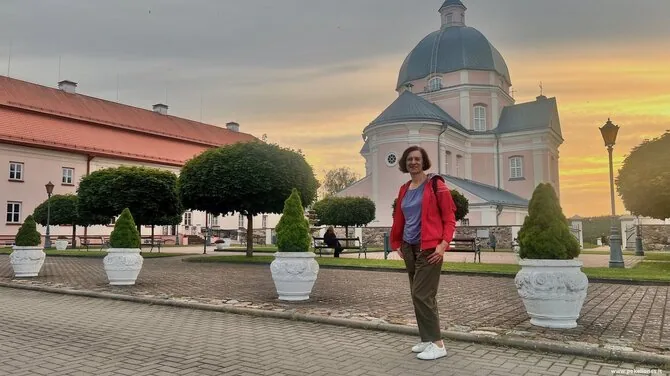
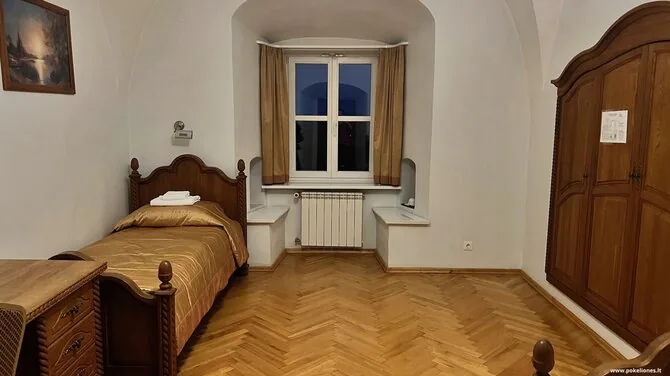
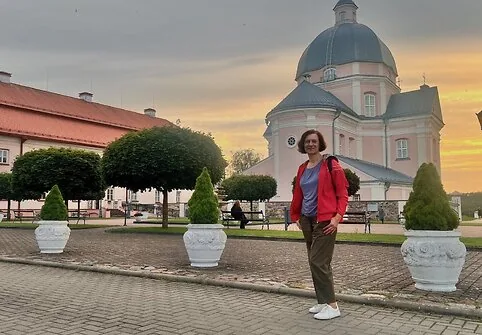
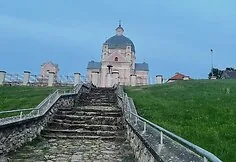
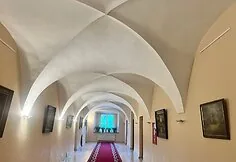
In the evening, we arrived in Liškiava. I won’t hide it – this was the cherry on top of this trip. The surprise was not the impressive church or even the Nemunas panorama, but the fact that we stayed overnight in a former Dominican monastery. And we didn’t get a room in an auxiliary building of the complex, but for a small extra charge, we had the chance to stay in the main monastery building. Well, it’s definitely not every day you get to stay in a place that is almost 300 years old.
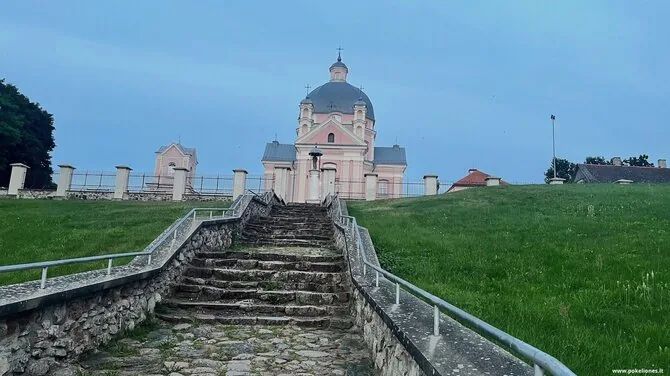
The Liškiava Holy Trinity Church and Dominican monastery complex was started in the early 18th century. It is one of the most prominent late Baroque sacred architecture complexes in Lithuania. The Dominicans lived here for more than a century until the monastery was closed in the 19th century by the decision of the Tsarist authorities. Later, the buildings were used for various purposes and were restored and brought back to life in independent Lithuania.
Well, it’s definitely not every day you get to stay in a place that is almost 300 years old.
Today, you can not only visit the church but also stay overnight here. When we visited, a christening was taking place in one of the conference rooms. It was nice to see that this historic complex is not just a museum – it is alive today, with almost all the building windows lit up in the evening.
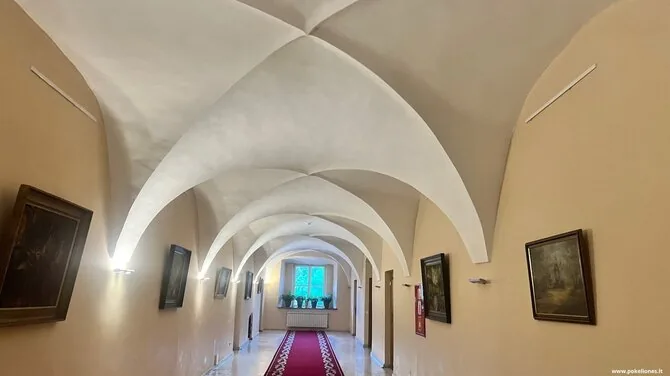
Walking through the old monastery corridors, the thought kept coming up of how many people lived here over several centuries, prayed, sought peace, or… served punishment. Yes, at one time this was a correctional home for offending priests.
The building is excellently restored but has preserved its spirit. Before staying, we asked the kind administrators if the monastery is haunted – in such places, the past does not seem distant – it is simply nearby.
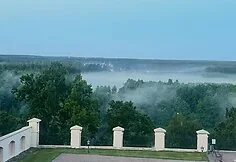
We were assured that it is not. And that was true – well, at least nothing disturbed our peace and we slept very well. I woke up once, early in the morning, probably just to lift my head and see how mystically the fog rising over the Nemunas looked.
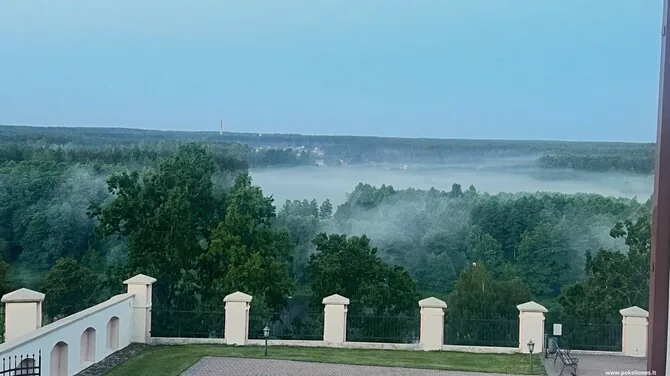
At one time this was a correctional home for offending priests.
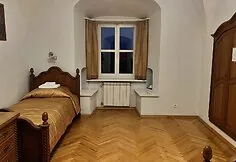
By the way, the room also pleased us – spacious, with a view of the Nemunas, as a colleague aptly described the photos on Facebook: “luxurious asceticism.”
Sunset over the Nemunas
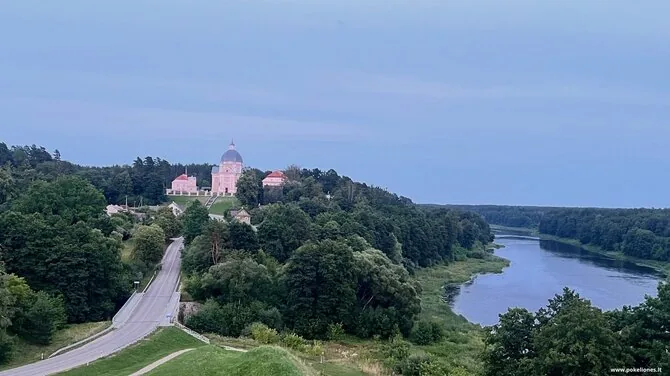
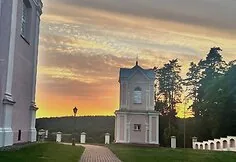
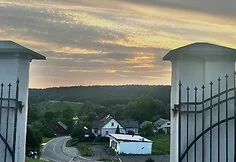
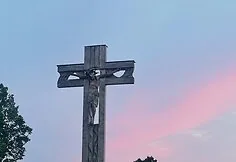
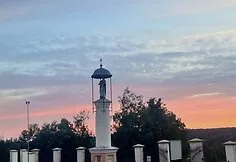
We managed to arrive in Liškiava just in time – at sunset. The church towers and monastery buildings against the backdrop of the reddened sky looked truly impressive.
Read more Putin set 1 goal for Russian special services
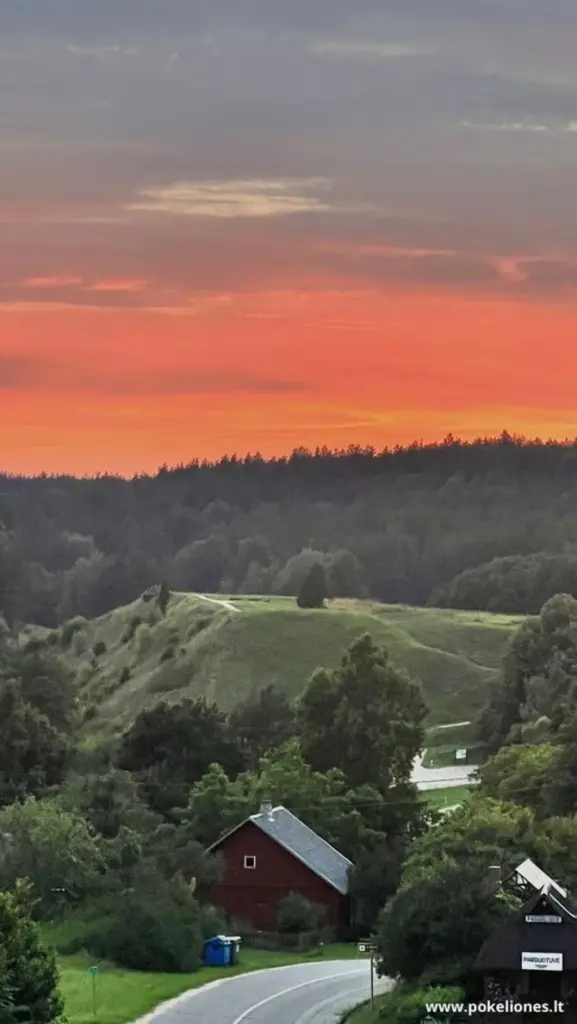
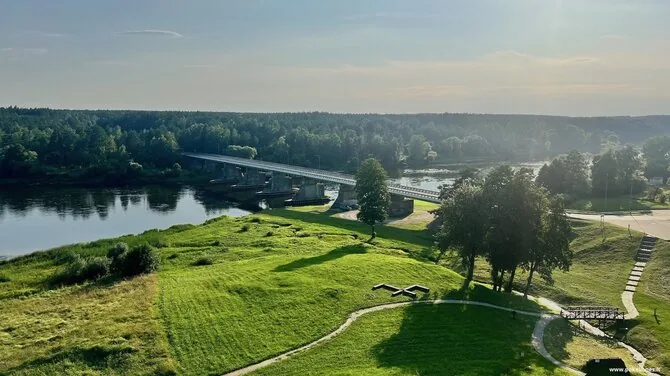
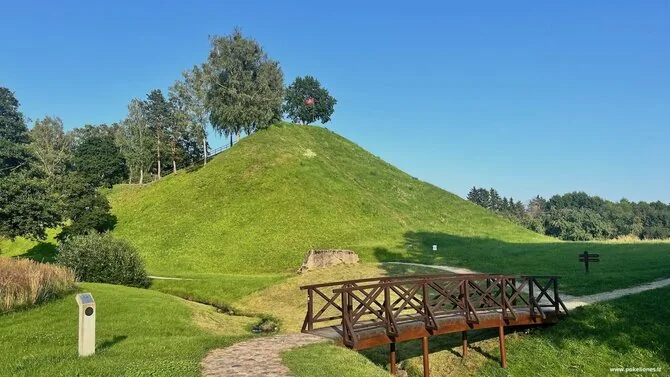
The views were so fantastic that while looking around, we didn’t even notice how we ended up right next to the Liškiava hillfort, also called Castle Hill. From it, there is a wonderful panorama of the Nemunas. The river bends, church towers, and surrounding forests looked different in the evening as the sunlight changed.
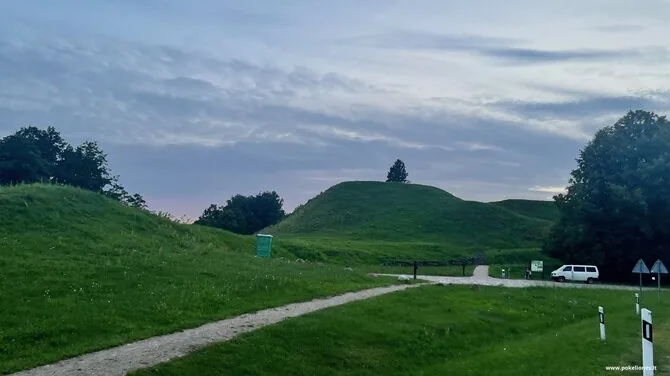
However, this hill is famous not only for its views. It is believed that at the end of the 14th century, the Grand Duke of Lithuania Vytautas began building a stone castle here, which was supposed to protect the Nemunas route from the Teutonic Knights. After the Battle of Grunwald, the defensive situation changed, so the castle remained unfinished. Only the remains of the tower and defensive walls have survived to this day – some of the oldest remains of stone defensive architecture in Lithuania.
The views were so fantastic that while looking around, we didn’t even notice how we ended up right next to the Liškiava hillfort.
Near the hillfort is also Alkakalnis. Historians believe that even before Christianity, there might have been an ancient Baltic sanctuary here. And locals still tell a legend about underground tunnels supposedly connecting the castle with the monastery. Although no evidence has been found, such stories add even more mystery to this place.
Fewer mushrooms, more blueberries
In the morning, we had a great breakfast outside with a view of the church. Delight!
We said goodbye to the hospitable and impressive accommodation and started planning a new day. Item number one – mushroom picking, which in reality again turned into berry picking. After picking the first handful of blueberries and putting them into the bucket, I thought – I definitely won’t pick a full bucket, there aren’t many berries, but soon we came to a place where the bushes were simply covered with juicy blue berries. Greed kicked in – no, we won’t leave them like that. The bucket filled up quite quickly.
But enough already, we deserved a rest. We chose the Aviris lake beach for it – we just found it as the closest on Google Maps. Good access, slowly deepening entry – everything seemed fine, except the downside that we weren’t the only ones thinking so, but many others too. So the beach was quite noisy.
After swimming, it was time for lunch. Again browsing Google Maps, we found a place we liked for lunch in Merkinė. Well, the next stop was clear. But on the way, a sign leading to the Leipalingis manor appeared. We knew it, so we turned there as well.
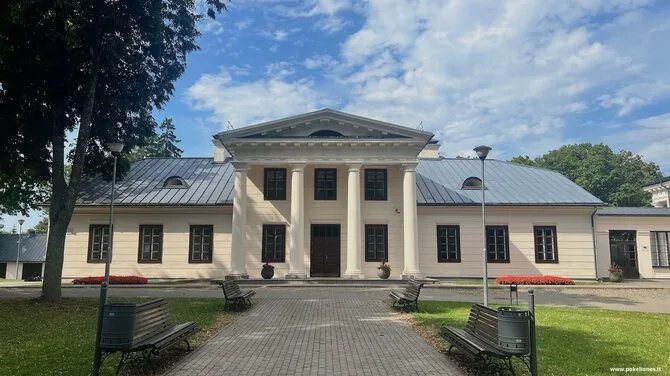
The current classicist Leipalingis manor palace was built at the beginning of the 19th century and is considered one of the most beautiful manors of this style in Dzūkija. Throughout its history, the manor belonged to several noble families, and today the restored palace again adorns the town.
Merkinė – a place you want to return to
After a short walk around Leipalingis, we continued our journey towards Merkinė without stops – hunger was urging us to hurry. After a late lunch or early dinner, we also walked around Merkinė.
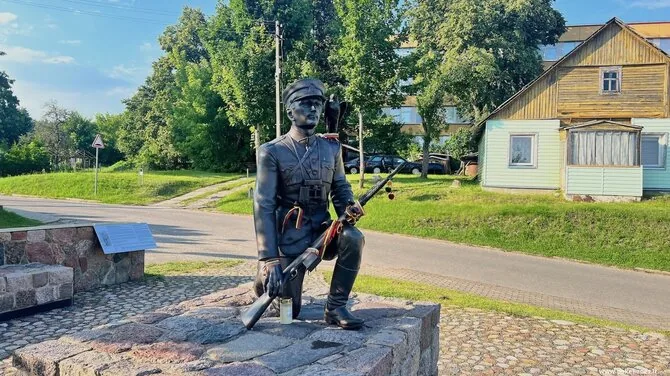
A spot I never miss here – Merkinė hillfort, rising about 30 meters above the confluence of the Nemunas and Merkys rivers. In the 14th–15th centuries, one of the most important castles of the Grand Duchy of Lithuania stood here, guarding the southern state border.
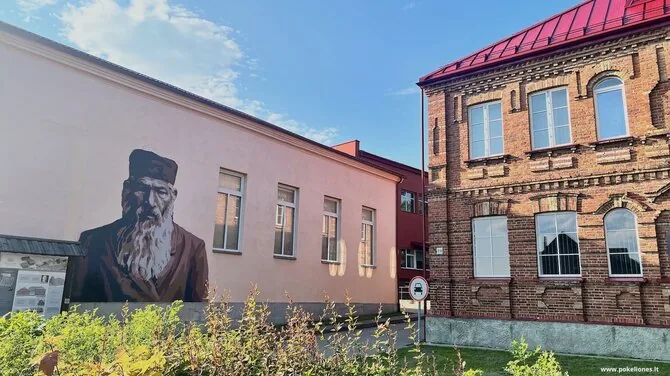
The castle was attacked by the Teutonic Knights many times, burned and rebuilt, but eventually fell into ruin. Today, its location is marked by the hillfort. For me, the view from it is more beautiful than from the nearby Merkinė observation tower.
From Merkinė, we drive straight to Vilnius without any stops.
This two-day trip reminded me once again that sometimes for a good weekend, you don’t need to look for cheap flights or drive hundreds of kilometers. In two days, we managed to walk in the forests of Dzūkija, relax in Druskininkai, stay overnight in a former monastery, enjoy the Nemunas panorama from Liškiava hillfort, visit Leipalingis manor, swim in Aviris lake, and end the day on Merkinė hillfort. All this is just a couple of hours’ drive from Vilnius.
For a good weekend, you don’t need to look for cheap flights or drive hundreds of kilometers.
Our route was improvised. It may not be very logical in terms of logistics, but we were not looking for logic, but for views and impressions.
And the fact is that sometimes the best trips start with just one message.
More travel adventures can be found on the blog “After the Trip” and on this blog’s Instagram account
Read more Luigi Mangione admitted to shooting the UnitedHealthcare executive