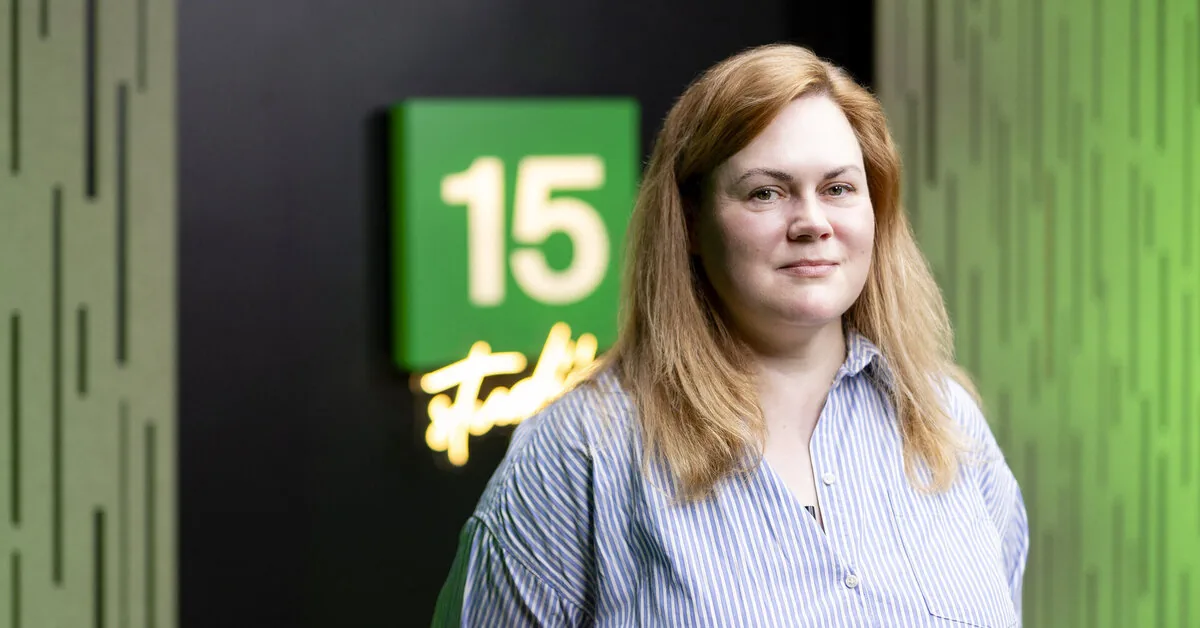
– Vilija, tell us, what kind of disease is this?
– This disease has many names, but we most often call it by its Latin name spina bifida. It is a congenital spinal hernia, it forms during pregnancy, characterized by damage to spinal cord nerves at different levels and the resulting consequences.
Read more See for yourself: French soldiers disembarked from a tanker sailing from Russia
– In Lithuania, the Spina Bifida and Hydrocephalus Association operates, and you are a member. These diagnoses are closely related, right?
– Yes, most often children born with spina bifida also have hydrocephalus – water on the brain, when fluid accumulates in the brain.
– And all this is revealed during pregnancy?
– It forms during pregnancy, and most women know during pregnancy. In my case, I did not know, doctors saw nothing, and we only found out at birth. A spinal hernia is visible on the back, and doctors see it immediately.
Only I did not understand right away, and no one told me those terms. Since the birth was a dream, quick and easy, I was euphoric and did not understand what was happening. Only after a day, when I sobered up and doctors began to say what to expect, did I understand what was going on.
The first to name it was the pediatrician, who did not really explain what the diagnosis was. But after a while, a neurosurgeon came, started explaining what to expect, what surgeries and what the child’s life would be like in the future, then it became very scary.
– What do parents typically hear?
– In my case, doctors spoke very cautiously, did not throw out terrible diagnoses, did not say that the child would not walk, speak, or sit, and so on. But they indicate what might roughly be, and you accept it as the worst, hoping for the worst.
– What symptoms are typical for children with spina bifida?
– I cannot say that all children with this diagnosis will have the same consequences. It is called the snowflake effect, when the diagnosis is the same, but the outcomes vary greatly. They can be completely paralyzed from the waist down, or not paralyzed at all but have difficulties with bowel and bladder control, such invisible issues. Very individual, so doctors cannot say exactly what awaits that child.
Does this disease affect only the physical body or also the nervous system, intellectual development?
Hydrocephalus can affect development, but most children with this diagnosis have normal intellectual development, are social, only have physical challenges.
How does your son live, what is his name, how old is he now?
My son Paulius is eleven, he is in fifth grade. Such a long journey has been walked… At first, I could not imagine what life would look like. After the diagnosis, there was a feeling – life collapsed, we would not be able to do anything. Now I think he lives quite well, he is cheerful, communicative, studies in a general education school, easily makes friends.
We mostly use a wheelchair for mobility, he walks a little with the help of special braces. There are physical limitations, but we are glad that he is such a lively, cheerful, and social child.
– How much care does the disease require from you and your family, do you need many rehabilitations?
– In the first years, when the child grows, there are many exercises and rehabilitations, efforts are made to make the child sit, stand, and start walking. Paulius only started to walk a little independently at 4.5 years old, with the help of special braces, he cannot walk barefoot, it is difficult for him.
His ankles are paralyzed, but he moves his legs at the knees. We tried to make him live a normal child’s life, we did not want him to just work, although we were told: “You have to work at home, you have to work everywhere.” We really wanted the child to be a child, not just work.
– I read an interesting thought from a doctor that sometimes parents put so much effort into making the child walk that they forget to care about everything else, and that moving in a wheelchair might be easier for the child and maybe he would feel happier. Do you resonate with such thoughts?
– Yes, very much, and I even know which doctor said that. If you fixate on the idea that maybe [he will walk – editor’s note], it is very hard both for the child and the parents, but maybe he would be very happy riding a wheelchair, socializing, not just with some hope that maybe someday he will walk.
– Did you yourselves go through those stages, was it hard to accept that the wheelchair would be part of your life?
When Paulius was born, it was very hard. In the hospital, they brought me a book published by the “Lopšelis” rehabilitation center, on the cover was a child in a wheelchair. And it was such a shock… I thought, why are they bringing me this book here. Denial, that maybe it won’t be like that for us, maybe we won’t need that wheelchair. And I won’t lie, probably all mothers go through this and hope that maybe they won’t need the wheelchair.
The wheelchair is help for the child, not a sentence.
But then we very quickly got involved in the association’s activities and saw how happy children are with those wheelchairs, how they socialize, play, run, are active, and other mothers encouraged us not to be afraid, that it is help for the child, not a sentence, that if he sits in that chair, it does not mean he will never walk.
When they bring you a book and show that your child will likely sit in a wheelchair, of course, it was very sad and I did not want that book, I put it aside and did not read it. All mothers with such a child’s diagnosis get this book and say the same thing, that it is very hard at first to see the image that your child will be like that.
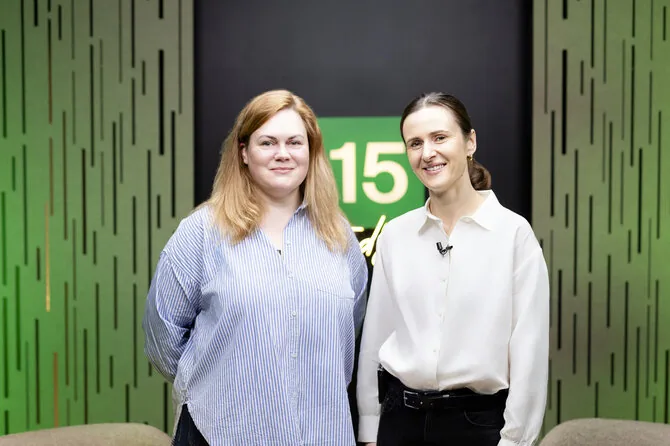
– Does environmental adaptation change for the better?
– Of course, it changes, but after starting to use the wheelchair, the realization came that if the environment were adapted, the child could fully integrate. Then there would be no problems, but when the environment is not adapted, there is that step between others and you.
And very often, when traveling somewhere with the family, you have to think, call, assess whether we can pass, go through, many daily difficulties arise because the environment is not adapted.
– Adults understand what mobility disability is, that it happened for some reason. What does your son reflect about school, are children mature enough to accept him as different?
– In his school, definitely, because he has been there since first grade and all the children know him. Maybe new children look at him, but after they interact, no questions arise. But in other situations, of course, there are those looks, as my child says – staring. He does not like that staring when turning around, but I tell him it is normal, you also look when something looks different, you are just curious why it is so.
Read more Taiwan opposition leader says she wants deeper trust from the US
I mostly teach my child to try not to pay attention, not to get upset about it, because those looks have always been and will be. Recently he went with his class to another school, it was like an exchange program, I said, prepare yourself to be looked at, he said, I know, mom, they always look at me. He accepts it calmly, I would say, only that long staring annoys him.
– I am always curious when children with one or another diagnosis consciously start to have questions about what is wrong with me, why it is, how it will be further. What did you say as parents?
– I try to remember… My son realized at five or six years old that he is different and cannot do something that other children can. But we always explain that it is so, you were born like this, Paulius, your legs work differently, why they work differently, and somehow, when you explain everything, it seems he understands and accepts it quite well. Of course, there was a stage when his biggest wish was not to have a disability, such a sensitive moment.
– Probably at such a moment it is important to talk…
– You tell the child that if he wants, he can achieve everything, but this is not that thing… We just said, Paulius, it will not be otherwise, you just have to learn to live as it is. Now, I think, he no longer dreams about it, he has accepted it as it is, and everything seems quite good.
Last case: we were in a shopping center, the disabled toilet was occupied and we were just waiting. He says, but mom, if a non-disabled person comes out, I will be so angry. So he is learning to live in a society that is all kinds, but I think he has already accepted his identity and everything is quite good. If only the environment were adapted…
– Sharing this moment is very sensitive because we know a different life and would want it for ourselves and our children.
– Yes…
He sees the disease as some kind of limitation, but he does not identify himself as someone incapable and who should be somewhere in a corner. He is really very brave and participates, inspires us, his older brother, to go boldly and not be afraid, for example, to collect Žalgiris fans’ signatures. He is an expressive child, an inspiration in our family.
– You mentioned the older son, how has it changed him that he has a brother whom most of the family cares for more and he has to take care?
– It definitely has an impact, I do not yet know how, it will become clear later. When parents give most of their attention to the other child, and when he was little, he did not understand why, it definitely has an impact.
Overall, he is very empathetic, two years older, he is almost fourteen. He looks at others’ disabilities naturally, is not afraid to help, talk, because other people do not know how to communicate with disabled people, Paulius’ brother does not have that. And how it will be further, I do not know, but it definitely affected him.
– We started talking about family, please share, let others understand what family life is like caring for a child who has challenges. How do you and your husband share, how do you manage to keep the family harmonious?
– Apparently, we naturally do well. There have never been problems. In the hospital, when we found out, my husband said: “Calm down, we will raise him no matter what happens.” He is such a support for me, I know that no matter what happens, he will always support, and he equally cares for Paulius, knows how to perform all the necessary procedures.
He does not identify himself as incapable – he is a brave, expressive child.
I can confidently leave him with dad for a longer time if there is a business trip. I am very happy because we both raise him. It is incomprehensible to me when I hear that a woman leaves her husband, how would one live then if that were the case.
– Often one parent takes on full care, right?
– For women, it probably naturally happens, I think I take more of the household, but because I care and want to be with the child, take him to clubs and sports. But if I cannot, my husband does it, so I think the division in the family is good.
– Have you noticed that fathers experience the child’s disability differently?
– Our association has about 33 members, and the fathers who come to meetings are wonderful – they love those children immensely, care for them, carry them, lift them. I do not hear other stories, maybe they do not share difficult stories. But what I see live – all are great fathers.
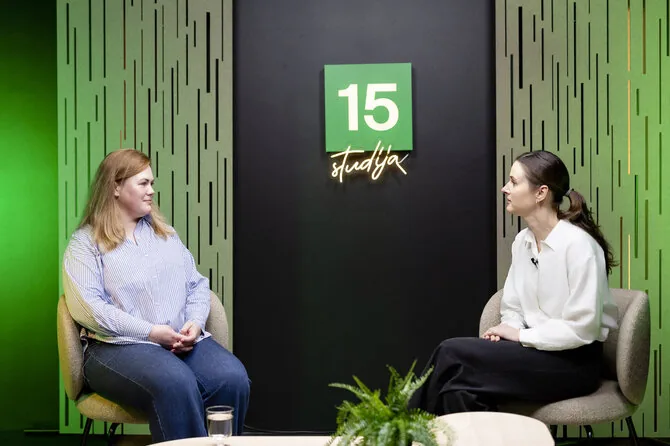
– How do you manage to maintain balance – yourself, work, family, care?
– Hard, to be honest… If you want to work full-time and care for the child, care for both children, and still have time for yourself and hobbies, it is very hard. Whether you want it or not, raising a disabled child requires more care than raising a healthy child. And he needs you much more, and there is less time left for other things.
It is hard, I balance as best as I can. You choose decisions that are more favorable, and I want to talk a lot about this topic so that mothers raising disabled children are heard, especially in the labor market. Employers just need understanding. There are good examples, but there are also those unwilling to understand, to have a different employee.
– Do you mean more flexible work schedules or other things?
– Understanding the challenges mothers face. Sometimes you wake up and cannot come to work because of the child’s health condition. They may not give you sick leave because there are all kinds of nuances even with a spina bifida diagnosis.
Such understanding, when they accept a woman at work who has a disabled child, that they just ask what challenges there might be, what they might need from us, how work can be coordinated. Flexibility, but also sincere interest. Sometimes working from home is a lifesaver.
– What dreams, plans, and wishes do you and your husband have for your child? What would you wish for him, how do you see where you could contribute?
– First of all – adapted environment, not only in society but also at home. We are just setting up a new home to be adapted because then daily life is easier. So he can study with children at school, socialize, make friends, get an education. So he has friends, can work, get a job, can live a simple human life, not be isolated at home because someone does not want to see such people or the environment is not adapted. Such simple things, but they make the essence of life.
Listen to the whole conversation here:
The podcast “(Not) Rare Stories” is organized by the patient organization “Rare Diseases” together with 15min.
Read more Where it is safe to swim: published water test results of Panevėžys district