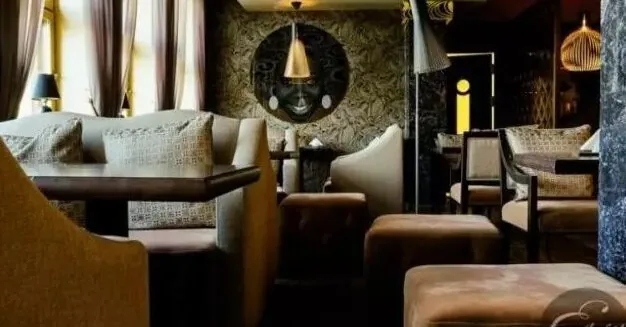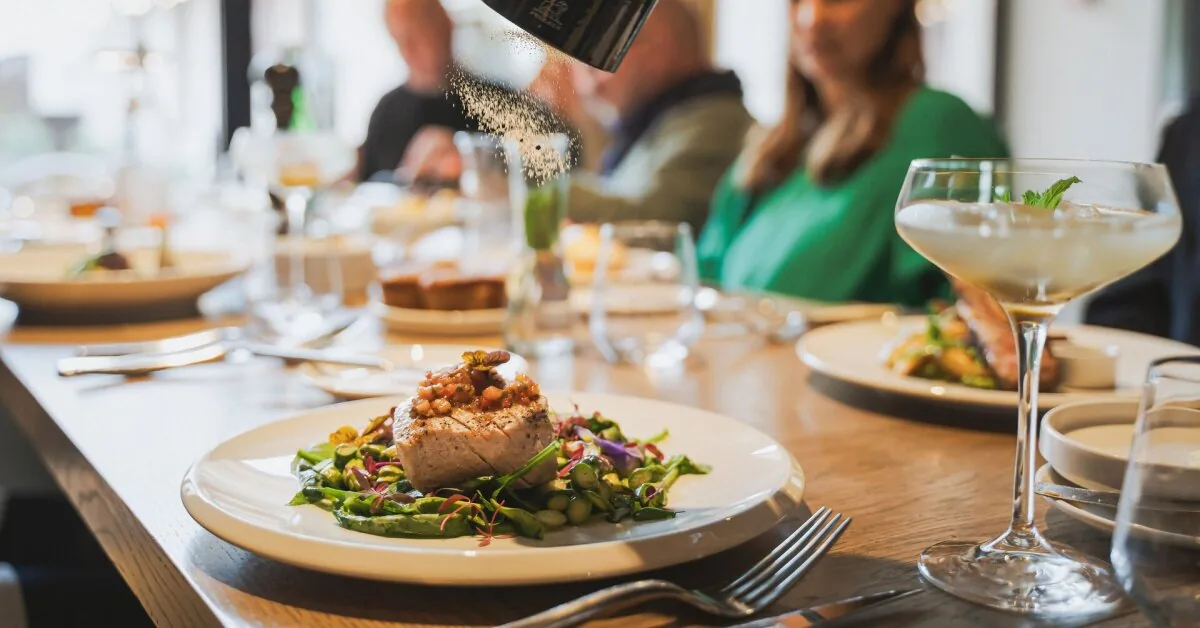
Of course, as every year, everyone is most concerned about which restaurants will receive the highly coveted stars, but the most renowned Lithuanian chefs note that all other recognitions are equally important – inclusion in the Michelin recommended places list or the Bib Gourmand award for the best price-quality ratio. The more such restaurants there are, the louder the message sent to the world about the uniqueness of Lithuanian gastronomy.
Read more Iran URM: ceasefire in Lebanon remains a condition for agreement with the US
Deputy Minister of Economy and Innovation Guoda Burokienė points out that every Michelin recognition means not only international acknowledgment for Lithuania but also an additional contribution to the country’s economy.
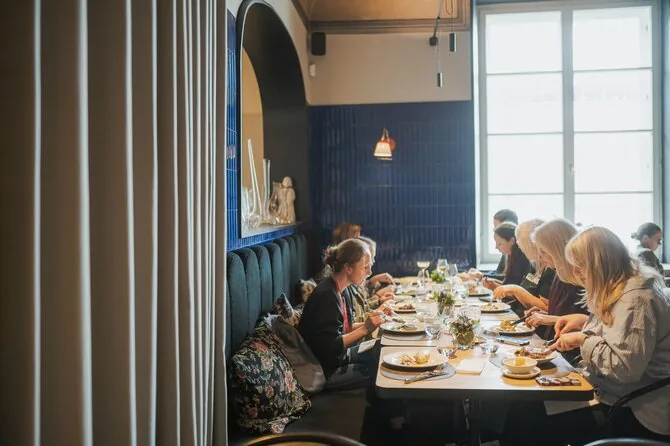
“High Michelin standards encourage our entrepreneurs to seek unique concepts, implement sustainable solutions, create new jobs, invest in local product supply chains, and boldly experiment. Moreover, such recognitions not only help foreign travelers discover our country but also strengthen Lithuania’s image as a modern and hospitable nation worldwide,” says G. Burokienė.
Gaspar Jonas Fernandes, founder and chef of the Vilnius restaurant “Gaspar’s,” which has received the Bib Gourmand award for two consecutive years, says that any Michelin recognition primarily gives restaurants confidence and assurance.
“Even before Michelin came to Lithuania, many of our restaurants operated very well, but now there is a stronger conviction that local restaurants can compete internationally, and the entire hospitality sector generally feels more connected to the broader European gastronomy scene,” notes G.J. Fernandes.
According to the speaker, greater self-confidence encourages restaurant chefs and owners to take the consistency of dish quality, service, wine selection, product supply, and overall guest experience more seriously.
Now there is a stronger conviction that local restaurants can compete internationally.
The chef of the Klaipėda restaurant “Monai,” Gražvydas Tamkevičius, whose restaurant has been included in the recommended places list for two consecutive years, also speaks about how the arrival of the Michelin guide in Lithuania has established the country on a broader gastronomic map. According to him, this has special significance in the port city.
“Guests arriving by cruises from abroad now find us not only through Google or TripAdvisor but also by browsing the Michelin guide. However, of course, restaurants included in the guide have become visible not only to foreigners but also to Lithuanians, sparking their curiosity to visit and share impressions. I think for some people, such restaurants have become another topic of conversation at home, work, or among friends. They share their experiences, exchange recommendations, or simply gossip about places they have visited,” smiles G. Tamkevičius.
He is supported by Vaiva Gumbienė, head of the Kaunas restaurant DIA, which was included in the Michelin recommended places list last year and the year before. According to her, this recognition has noticeably increased the flow of foreign guests.
“So the Michelin guide provides visibility and at the same time opens more opportunities to show that Lithuania has many talented chefs creating world-class dishes,” emphasizes V. Gumbienė.
The National Tourism Promotion Agency, the public institution “Travel in Lithuania,” emphasizes that Michelin’s presence in Lithuania has become a clearly noticeable factor giving an impulse to gastronomic tourism.
“We see that gastronomy is becoming one of the main reasons why foreign guests choose to travel to Lithuania and why they return. Guests brought here by culinary curiosity discover not only excellent restaurants but also the country’s culture, architecture, and nature. Therefore, every new Michelin restaurant selection is a message to the world that Lithuania is a destination worth attention,” says O. Gončarova.
According to her, other events also confirm that Lithuania’s name is shining more brightly in the gastronomy world – this year, our country participated for the first time in the prestigious Bocuse d’Or competition, international Falstaff guide experts visited and evaluated local restaurants, and the first Baltic Gastro Summit brought together professionals from the entire region.
Pressure encourages improvement
However, restaurant owners note that Michelin recognition greatly raises guests’ expectations, and meeting them requires hard daily work.
“The recognition helps the restaurant be more visible, attracts more curious guests, and gives the team confidence. It is the best confirmation that the right direction is being taken. But the daily pressure is very high,” openly says Greta Baleikaitė, head of the Vilnius restaurant “Augustin.”
According to the manager of the restaurant that received the Bib Gourmand award for the first time last year, Michelin recognition motivates but also reminds that quality is not a one-time achievement – it must be maintained every day and with every guest served. Therefore, in restaurants of this level, every team member is especially important because only the skills, decisions, and attentiveness of the staff determine whether the same level can be maintained daily.
“Monai” chef G. Tamkevičius adds that the pressure is especially felt every time a new menu is created.
“When going to a restaurant with a Michelin plaque on the door, people want to get something they haven’t experienced abroad. However, Lithuanians are already hard to surprise because they have traveled a lot and tasted many things abroad. Moreover, prices are important, which we must consider when creating new dishes or techniques. We cannot disappoint guests’ palates, but we also must not hurt their wallets. We want guests to return because restaurants survive best on regular visitors, who must be valued and cherished,” is G. Tamkevičius’s conviction.
Meanwhile, G.J. Fernandes from “Gaspar’s” says that the pressure is not only related to food quality. It is equally important to ensure consistent standards of service, hospitality, atmosphere, and attention to detail.
“In daily work, this means being disciplined, focused, and constantly improving. Recognition should not lead to relaxation. But at the same time, I believe the healthiest approach is to cook food not for guides but to focus on creating sincere and memorable experiences for your guests. Recognition should be a consequence, not the sole goal,” says the head of “Gaspar’s.”
DIA manager V. Gumbienė notes that rising guest expectations also have a clear positive effect – they push restaurants to improve and seek uniqueness.
“In the past two years since the Michelin guide arrived in Lithuania, more and more new restaurants with thoughtful concepts have appeared and continue to appear. So Michelin’s presence naturally raises the bar for the entire sector – and that is only good news,” the speaker is convinced.
Lithuanian identity – increasingly distinct
Chefs are convinced that along with the growing restaurant sector, a distinctive Lithuanian gastronomic identity is also forming.
“The restaurant scene is very lively. Both new and older places are looking for their direction, but I think a large part of that Lithuanian identity consists of nostalgia, our seasons, and childhood flavors. Lithuanian cuisine uses more and more seasonal products because they create a very clear emotional connection. Now we have a good opportunity to rediscover the Lithuanian essence in the kitchen – not necessarily by directly returning to tradition but by creating contemporary Lithuanian gastronomy that includes both memories and the present,” says “Augustin” manager G. Baleikaitė.
“Monai” manager G. Tamkevičius also notes that Lithuanian chefs are increasingly boldly experimenting with local products: “It’s nice that dishes made from seasonal vegetables can be found in kitchens, and traditional Lithuanian recipes are reborn using unusual techniques or presentations. Maybe it’s even patriotic.”
Meanwhile, G.J. Fernandes believes that foreign guests also increasingly recognize the Lithuanian signature – not only because of traditional dishes but also due to the modern cooking style.
“Lithuania is now entering a very interesting stage where gastronomic identity is becoming clearer and bolder. I think today’s restaurant guests are much more interested in authenticity than traditional luxury or formality. People want to understand who is behind the food, where the ideas come from, and what emotional or cultural story is being told,” says the chef of “Gaspar’s.”
Read more Exactly one month left: if apartment residents do not take these steps, bills may increase